What if the "Low Salt" light on your control panel is actually a lie? You've likely spent the last week hauling heavy bags of salt into your pool, yet the water remains stubbornly cloudy while those confusing Hayward or Pentair error codes refuse to clear. It's a common frustration for Northern NJ homeowners who fear spending significant money on a new part only to find the problem was actually a faulty control board. When it comes to salt cell replacement Old Tappan residents deserve a solution that goes beyond a simple part swap. It requires a full system calibration tailored to our specific local water profile.
We understand that a pool is more than a utility; it's a sanctuary for your family. This guide will teach you how to accurately diagnose a dead cell, select the right 2026 technology like the Hayward S3 or Pentair IntelliChlor Plus, and ensure your equipment meets the latest NJ Electrical Subcode requirements. You'll learn the exact steps to restore your water to a shimmering, swimmable state while maximizing the three to five year lifespan of your new equipment. From identifying sensor failures to professional installation, we provide the clarity you need to keep your backyard oasis pristine all summer long.
Key Takeaways
- Learn how to distinguish between a genuine hardware failure and false "Low Salt" readings triggered by Northern NJ's fluctuating spring temperatures.
- Discover why an "oversizing" strategy for your salt cell replacement Old Tappan provides superior chlorine production and extends the life of your equipment.
- Understand the critical calibration steps required to ensure your new cell communicates perfectly with your existing Hayward or Pentair control board.
- Master the relationship between calcium hardness and scale inhibitors to maintain peak efficiency and double the interval between manual cleanings.
- Identify which auxiliary components, such as flow switches and temperature sensors, must be inspected to guarantee a safe and crystal-clear swimming season.
Recognizing the Warning Signs of Salt Cell Failure in Old Tappan Pools
A salt chlorine generator acts as the silent guardian of your pool's sanitation. Understanding how salt water chlorination works reveals that the electrolytic plates inside the cell are consumable components, not permanent fixtures. Most high-quality cells provide a reliable lifespan of three to seven years. In Old Tappan, where our swim season is condensed and intense, the demand on your equipment is high. When a cell begins to fail, the transition from a shimmering sanctuary to a cloudy, green eyesore can occur in just a few days. Recognizing these signs early allows you to schedule a salt cell replacement Old Tappan before your backyard retreat becomes unusable.
Failing cells are often the culprit behind mysterious algae blooms that seem to appear out of nowhere. You might find yourself constantly adjusting the system output to 100 percent just to maintain a basic chlorine reading. This desperate measure overworks the remaining life out of the plates and spikes your energy costs. If you're adding shock weekly but the water won't hold a residual chlorine level, the cell has likely lost its ability to convert salt into sanitizer efficiently.
Digital Error Codes and "Inspect Cell" Indicators
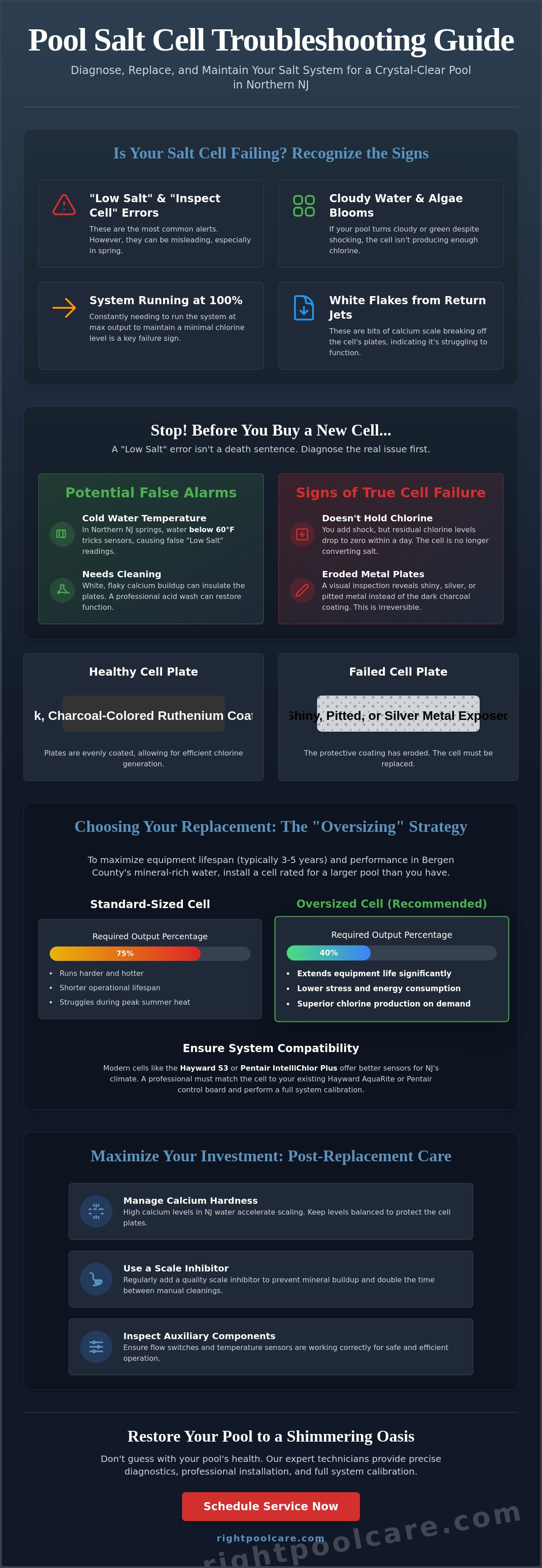
"Inspect Cell" or "Low Salt" lights often trigger a sense of dread. Don't rush to purchase a replacement immediately. Hayward and Pentair systems calculate salt levels based on conductivity, which fluctuates with water temperature. During the chilly Northern NJ spring, water below 60 degrees frequently tricks these sensors. You might see a "Low Salt" reading even if your salinity levels are perfect. Always perform a manual water test before committing to a new cell. Our team specializes in professional pool repairs and can verify if a simple cleaning or a rise in water temperature will resolve the issue.
Visual Indicators of Internal Plate Depletion
Peering inside the cell provides the most honest assessment of its health. Healthy plates feature a dark, charcoal-colored coating of ruthenium. If you notice shiny, silver metal or deeply pitted surfaces, the precious metal coating has eroded. This is irreversible plate depletion. While white, flaky calcium scaling can be removed with a professional acid wash, the loss of ruthenium means the cell has reached its end of life. When you see those white flakes blowing into the pool through the return jets, it's a sign that the cell is struggling to manage the mineral content in Bergen County's water. If your system is throwing error codes despite balanced chemistry, it's likely time for a salt cell replacement Old Tappan to restore your pool's safety and clarity.
Selecting the Correct Replacement Cell for Bergen County Water Profiles
Choosing the right equipment for your pool isn't just about matching a part number. It's about understanding the specific chemistry challenges in our region. According to New Jersey American Water quality reports, mineral content varies significantly across Bergen County. High calcium levels can lead to rapid scaling, which makes your choice of cell capacity critical for long-term success. A salt cell replacement Old Tappan must be selected with these local water profiles in mind to ensure the system doesn't fail prematurely under the strain of heavy mineral loads.
Compatibility is the second pillar of a successful upgrade. While many cells look similar, their communication protocols are highly specific. A Hayward AquaRite power center requires a T-Cell 3, 9, or 15, while Pentair systems rely on the IntelliChlor series. In 2026, we're seeing a shift toward the Hayward S3 line and Pentair IntelliChlor Plus models. These newer units offer improved sensors and modular designs that handle Northern NJ's temperature swings with much better accuracy. If you're unsure which model fits your current automation, our experts provide precise equipment repair and replacement services to guarantee a perfect match.
Sizing Your Salt Cell for Maximum Longevity
The most effective strategy for Old Tappan homeowners is "oversizing." If you have a 20,000-gallon pool, don't buy a 20,000-gallon cell. Running a smaller cell at 100% output to maintain chlorine levels during a July heatwave will burn through its lifespan in just a few seasons. By installing a 40,000-gallon cell, you can run the system at 50% output. This reduces the wear on the electrolytic plates, lowers your electricity consumption, and significantly decreases the need for supplemental pool shock.
The OEM vs. Generic Debate: What Homeowners Need to Know
Generic or aftermarket cells often tempt homeowners with a lower upfront cost. However, the trade-off is frequently found in the thickness of the precious metal coating on the plates. Genuine OEM parts from Hayward, Pentair, or Jandy use a robust ruthenium coating designed for durability. Aftermarket cells may also void your existing manufacturer warranty on the control board. We prioritize high-quality, branded components because they offer the most reliable performance and the best cost-to-lifespan ratio for your salt cell replacement Old Tappan project. Investing in a superior cell now prevents the frustration of a mid-season failure next year.
The Professional Replacement Process: Ensuring System Calibration
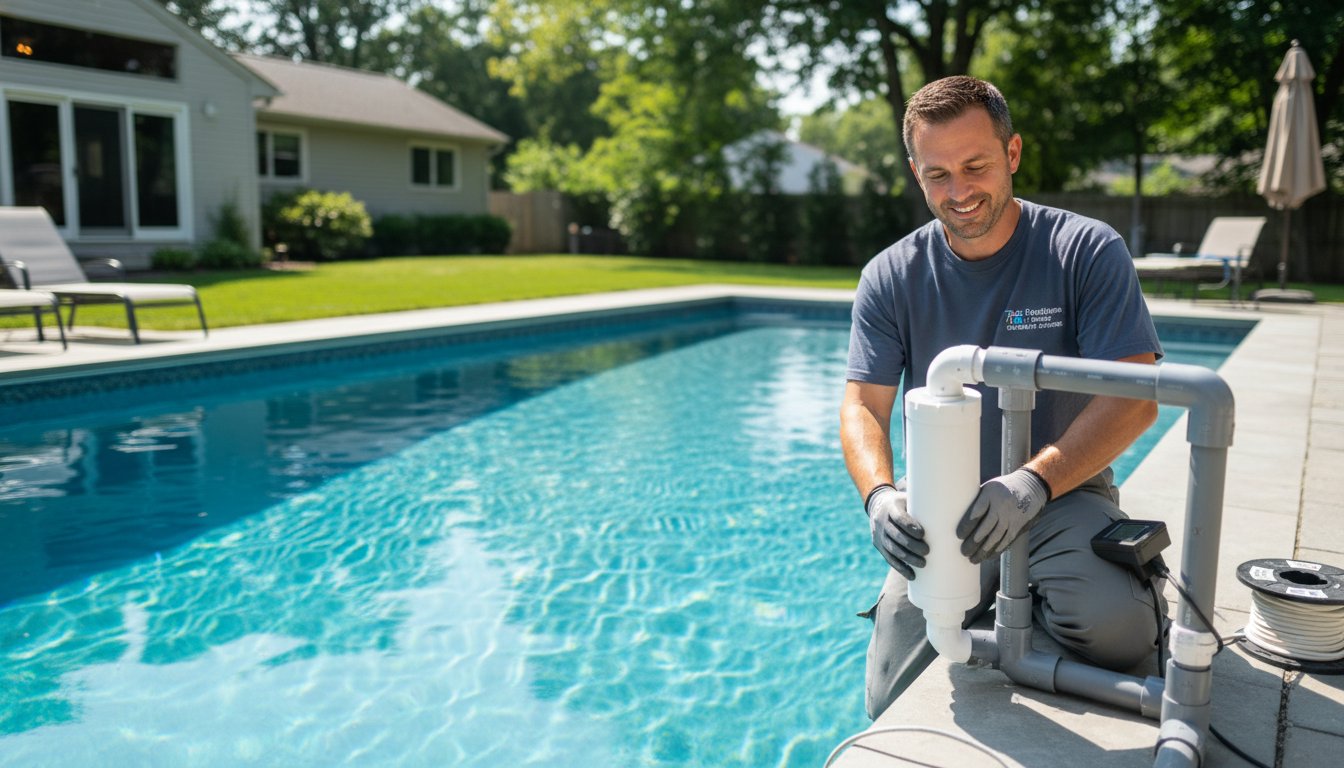
Many online tutorials suggest that replacing a salt cell is as simple as unscrewing two unions and plugging in a new cord. This oversimplification ignores the critical calibration and safety checks that define a professional installation. A true salt cell replacement Old Tappan involves a deep dive into your system's brain. If the control board isn't properly synced with the new hardware, you'll face persistent error codes and inefficient chlorine production. A "plug and play" approach often leads to "no flow" errors or incorrect salt readings that can shut down your sanitation entirely.
Our team follows a rigorous 10-point salt system audit with every installation. We don't just swap parts. We examine the entire electrical ecosystem. This includes checking for scorched terminals or heat damage inside the power center. Under the 2020 National Electrical Code (NFPA 70), which New Jersey adopted as its Electrical Subcode, virtually all pool motors and adjacent receptacles require GFCI protection. A professional salt cell replacement Old Tappan verifies that your system remains compliant with these safety standards. This focus on security ensures your family's peace of mind while protecting your investment.
Software Configuration and Board Calibration
Your control board maintains a memory of the old cell's performance. You must update the "Cell Type" setting in the diagnostic menu to match your new equipment precisely. If you've upgraded from a T-Cell 9 to a T-Cell 15, the board will miscalculate salt levels unless reconfigured. We reset the "Average Salt" metrics to clear historical data that no longer applies. Finally, we calibrate the system to match the actual salinity of your water. This ensures the digital readout matches your manual test results. Proper calibration prevents the system from overproducing or underproducing chlorine based on outdated data.
Power Center and Flow Switch Inspection
A faulty flow switch often mimics the symptoms of a dead cell. We test the switch's magnetic trigger to ensure it's actually closing when the pump runs. Replacing a cell without checking the flow switch is a recipe for continued frustration. We also inspect the transformer and rectifiers in the main control box. These components convert your home's AC power into the DC current needed for electrolysis. Ensuring watertight seals at the unions is our final step. This prevents slow leaks from damaging your new equipment or the surrounding pad. For homeowners seeking reliable equipment repair and replacement, this level of detail is non-negotiable.
Maximizing Your Investment: Post-Replacement Care in Old Tappan
A successful salt cell replacement Old Tappan is only the beginning of your journey toward a maintenance-free summer. In Northern NJ, our water presents unique challenges that can shorten the life of even the best equipment. High calcium hardness levels, often exceeding 400 ppm in local wells or municipal supplies, lead to rapid scale buildup on the plates. We recommend using a professional-grade scale inhibitor chemical at the start of the season. This proactive step can double the time between manual cleanings by preventing minerals from bonding to the electrolytic surfaces before they cause damage.
Establishing a consistent maintenance schedule for 2026 is the best way to protect your investment. We suggest a visual inspection every three months to catch issues before they escalate. However, the most critical check happens during your annual pool openings. This is when technicians can perform a full system diagnostic to ensure your chlorinator is primed for the heavy demand of the peak swim season. Catching a calibration error in May prevents a green pool in July.
Managing Local Water Chemistry
Maintaining the "Sweet Spot" in your water chemistry is vital for cell health. Keep your pH between 7.2 and 7.6 and your total alkalinity between 80 and 120 ppm. If these levels drift too high, the environment inside the cell becomes highly scaling. Additionally, monitor your Cyanuric Acid (stabilizer) levels closely. While stabilizer protects chlorine from UV degradation, levels above 80 ppm force the cell to work harder, reducing its overall efficiency. High calcium levels in Northern NJ water create a magnet for scale on electrolytic plates, essentially suffocating the cell's ability to produce chlorine.
Routine Maintenance and Acid Washing Protocols
When you notice calcium deposits, start with a "light" cleaning using a mild vinegar solution rather than jumping straight to harsh chemicals. A deep acid wash using a diluted muriatic acid solution should only be performed when scale is stubborn and visible. You must be careful; over-cleaning with acid is a common mistake that eats away at the precious ruthenium coating on the plates. Each acid wash removes a microscopic layer of the catalyst, eventually rendering the cell useless. If you see white flakes in your pool or the "Inspect Cell" light persists after a basic cleaning, it's time for a professional tune-up. To ensure your system is running at peak performance, schedule an equipment repair and replacement audit today.
Why Old Tappan Homeowners Trust Right Pool Care for Equipment Services
Right Pool Care has spent over 20 years mastering the intricacies of saltwater systems in Bergen County. We understand that your pool is a significant investment and a center for family memories. Our team brings a "no-nonsense" approach to professional pool repairs; we ensure that every diagnostic is accurate and every solution is permanent. We live and work in the communities we serve. Whether you reside in Closter or need a salt cell replacement Old Tappan, our local accountability is your guarantee of quality. We don't just provide a service. We offer a partnership in protecting your backyard sanctuary.
Our expertise extends across the entire spectrum of high-end pool needs. From technical salt system calibration to complex vinyl liner replacement, we handle the heavy lifting so you can enjoy the water. We believe in transparency and physical results. This commitment to excellence has made us the established leader for discerning property owners throughout Northern NJ. We prioritize safety and long-term reliability over quick, temporary fixes.
Expertise Across All Major Brands
Our technicians are highly skilled in the mechanics of Hayward, Pentair, and Jandy equipment. We maintain direct access to genuine OEM parts that big-box retailers simply don't carry. This ensures your salt cell replacement Old Tappan meets strict manufacturer specifications for safety and longevity. During the peak of the NJ heat, we provide rapid repair services to prevent your water from turning. We value your time. Our organized, detail-oriented process ensures your equipment is restored to peak efficiency without wasted motion.
A Transformative Approach to Pool Care
We view every repair as an opportunity to enhance your pool's structural and mechanical health. Our goal is to move beyond mere utility. We want to create a transformative experience for our clients. By integrating precision equipment repair with comprehensive swimming pool renovation, we ensure your pool remains a beautiful, life-enhancing space. We focus on security as a core brand pillar. Contact Right Pool Care today for a comprehensive salt system diagnostic in Old Tappan. Let us restore the clarity and confidence you deserve in your swimming environment.
Secure Your Crystal-Clear Pool Season Today
Restoring your pool's health requires more than just buying a new part online. You now understand that a successful salt cell replacement Old Tappan hinges on accurate diagnosis and professional calibration. By choosing the correct cell size for Northern NJ water and ensuring your control board is properly reconfigured, you protect your equipment from premature failure. This technical precision is what keeps your water shimmering and safe for your family all summer long.
Right Pool Care brings over 20 years of Bergen County expertise to every project. As a fully insured, local owner-operated business, we specialize in Hayward and Pentair salt systems. We focus on long-term results rather than quick fixes. Our team ensures your equipment meets the latest safety standards while delivering peak performance. Don't let confusing error codes or cloudy water ruin your backyard sanctuary. Schedule Your Salt Cell Diagnostic in Old Tappan Today. Let us handle the technical details so you can get back to enjoying your pristine pool.
Frequently Asked Questions
How long should a salt cell last in a typical New Jersey pool?
A salt cell typically lasts between three and five years in a residential New Jersey pool. This lifespan depends heavily on water chemistry balance and how many hours the system runs each day. Intense summer heat and high mineral content in local water can stress the plates, while proper winterization helps preserve the internal components. If your cell is over five years old and struggling to maintain chlorine levels, it has likely reached its end of life.
Can I replace my salt cell with a different brand or size?
You must match the brand of the replacement cell to your existing control panel to ensure the software can communicate with the hardware. However, you can often increase the size of the cell, such as upgrading from a Hayward T-9 to a T-15. This "oversizing" strategy is a smart move for a salt cell replacement Old Tappan because a larger cell doesn't have to work as hard to sanitize the water, which ultimately extends the life of the equipment.
Why does my salt cell keep getting covered in white crusty buildup?
White crusty buildup is calcium scaling caused by high pH, high water temperature, or elevated calcium hardness levels. Northern NJ water often contains significant mineral content that bonds to the electrolytic plates during the chlorination process. This scale acts as an insulator, preventing the cell from generating chlorine and forcing the system to work harder. Using a scale inhibitor and keeping your pH between 7.2 and 7.6 will help minimize this buildup.
Is it cheaper to clean a salt cell or replace it?
Cleaning a salt cell with a mild acid solution is much cheaper than a full replacement if the plates are still physically healthy. A professional acid wash can remove stubborn scale and restore production for a season or two. However, if the precious metal coating on the plates has eroded, the cell is functionally dead. If your system continues to show "Low Salt" or "Inspect Cell" after a thorough cleaning, a salt cell replacement Old Tappan is the only permanent solution.
What happens if I run my pool with a dead salt cell?
Running your pool with a dead salt cell stops the production of sanitizer, which allows algae and bacteria to flourish. Your water can turn from crystal clear to cloudy or green within 24 to 48 hours during a typical NJ heatwave. Until you replace the cell, you must manually add liquid chlorine or shock to keep the water safe for swimming. Neglecting the system can lead to costly cleanup efforts and potential damage to your pool's surface.
Does a new salt cell come with a warranty if I install it myself?
Most major manufacturers, including Hayward and Pentair, significantly reduce or entirely void the warranty if the salt cell is not installed by a professional. These companies require professional installation to ensure the system is correctly calibrated and complies with the 2020 National Electrical Code. Hiring a professional protects your investment and ensures that any hardware defects are covered by the manufacturer's full term. Always check the specific warranty card before attempting a DIY swap.
How much salt should I add when I replace my salt cell?
Replacing the cell itself doesn't usually require adding salt unless your salinity levels were already low or you recently drained water. Most systems require a salinity level between 2,700 and 3,400 ppm to operate efficiently. While a typical 20,000-gallon pool needs 600 to 1,000 pounds of salt for an initial startup, a simple cell replacement only requires you to test the water and top off any salt lost through backwashing or splashing.
Will a salt cell replacement fix my "No Flow" light?
A salt cell replacement will rarely fix a "No Flow" light because that indicator usually signals a problem with the flow switch or the pool pump. The flow switch is a separate safety component that tells the system when water is moving fast enough to safely generate chlorine. If the light stays on, we first check for a dirty filter, a failing pump, or a broken flow switch. We include a full inspection of these components during our equipment repair and replacement process to ensure the root cause is addressed.