In Alpine, a screaming pool pump isn't just a nuisance; it's a potential violation of local noise ordinances that limit residential sound to 50 decibels after 8:00 p.m. When that rhythmic hum turns into a high-pitched screech or a heavy grinding sound, your backyard sanctuary disappears instantly. You're likely worried about the motor burning out completely or the risk of a stagnant, green pool if the system fails. This noisy pool pump diagnosis Alpine guide helps you pinpoint the mechanical cause before a minor vibration turns into a major equipment failure.
We understand that you value both the performance of your equipment and the silence of your outdoor living space. You'll learn to distinguish between simple debris clogs and serious bearing failures that require technical intervention. We'll also explore how modern variable-speed standards and New Jersey appliance laws impact your repair or replacement decisions. This overview provides the clarity you need to handle basic troubleshooting yourself or verify when it's time to bring in an Alpine expert for specialized equipment repair and replacement.
Key Takeaways
- Learn to decode specific pump sounds like high-pitched screeching or low rumbles to distinguish between minor clogs and catastrophic bearing failures.
- Conduct a thorough noisy pool pump diagnosis Alpine by evaluating how local environmental stressors like high water tables and forest debris affect your suction lines.
- Utilize a professional-grade checklist to clear skimmer blockages and verify water levels before small mechanical issues lead to a burnt-out motor.
- Identify the critical threshold where simple maintenance ends and professional equipment repair and replacement becomes necessary for safety and performance.
- Explore the transformative benefits of variable-speed pump upgrades to achieve near-silent operation and comply with current New Jersey efficiency regulations.
Identifying the Sound: What is Your Alpine Pool Pump Telling You?
Your pool pump communicates its internal health through a specific vocabulary of sounds. Recognizing these signals is the first step in a successful noisy pool pump diagnosis Alpine. A high-pitched screech or whine is rarely a minor issue; it typically signals that the internal motor bearings have reached the end of their functional lifespan. This friction occurs when the sealed environment of the motor is compromised, often due to a slow-leaking mechanical seal that allows chlorinated water to corrode metal components. Understanding The Mechanics of Noise: Cavitation, Bearings, and Blockages helps you realize that these sounds are physical reactions to pressure imbalances or mechanical failure within the heart of your filtration system.
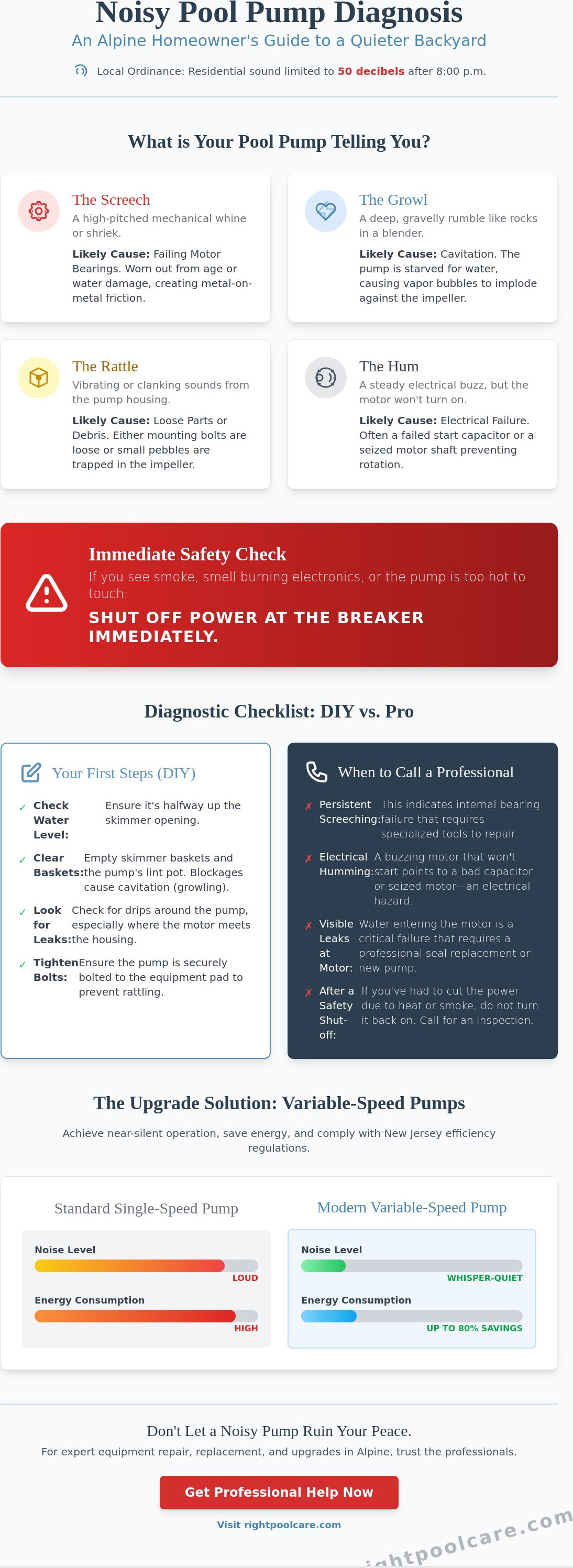
Different sounds require different diagnostic paths. Consider these common auditory red flags:
- The Screech: High-pitched mechanical friction indicating motor bearing failure.
- The Growl: A deep, gravelly rumble that suggests the pump is starved for water, also known as cavitation.
- The Rattle: Usually caused by loose mounting bolts vibrating against the equipment pad or debris like pebbles trapped in the impeller.
- The Hum: A steady electrical buzz without the motor spinning, often pointing to a failed start capacitor or a seized internal shaft.
The Language of Pump Failure
Cavitation is technically the implosion of water vapor bubbles caused by a sharp drop in pressure within the pump head. In the lush, wooded landscape of Alpine, a sudden change in pump pitch often occurs immediately after a heavy summer storm. These weather events dump large volumes of oak tassels and pine needles into the water, which can quickly clog skimmer baskets and starve the system of necessary flow. You should be able to distinguish a normal operational hum, which is a steady, low-frequency vibration, from a distress vibration that feels erratic or causes the PVC plumbing to shake. If the sound changes abruptly after a Bergen County downpour, the culprit is likely an environmental blockage rather than an immediate mechanical breakdown.
Immediate Safety Checks
Safety is the most critical element when performing a noisy pool pump diagnosis Alpine. If you detect the scent of burning electronics or see wisps of smoke emanating from the motor housing, shut off the power at the main breaker immediately. These symptoms are common in aging Bergen County systems where the insulation on the motor windings has begun to degrade. Never attempt to touch a pump motor that appears to be struggling. A failing motor can reach temperatures high enough to cause severe burns. If the pump is too hot to touch or emits a buzzing sound without the shaft turning, the internal components may be seized. In these instances, professional Equipment Repair and Replacement is the only secure path forward to prevent electrical fires or a total system meltdown.
The Mechanics of Noise: Cavitation, Bearings, and Blockages
Understanding the physics of your pool equipment is vital for a successful noisy pool pump diagnosis Alpine. When a pump begins to struggle, the sounds it emits are physical reactions to internal stress. Cavitation is perhaps the most common hydraulic issue, occurring when the pump is starved for water. This creates a vacuum that causes water vapor bubbles to form and then implode violently against the impeller. Homeowners often describe this as the sound of "rocks in a blender." Over time, these tiny implosions can pit the surface of the impeller, leading to permanent damage and decreased efficiency.
Mechanical failure often starts at the bearings. These small, steel components allow the motor shaft to spin at high speeds with minimal friction. However, they are vulnerable to moisture. When the mechanical seal fails, chlorinated water seeps into the motor housing and strips the bearings of their lubrication. This results in a persistent, high-pitched whine that only worsens as the metal-on-metal friction increases. While some online resources suggest bearing replacement is a simple weekend task, modern high-efficiency systems often require specialized pullers and press tools to avoid damaging the motor windings.
Small debris also plays a significant role in equipment noise. Even if your baskets are clear, tiny fragments of Alpine’s local flora can bypass the filtration mesh and lodge themselves in the impeller vanes. This creates an imbalanced spin, much like an unbalanced washing machine, leading to rhythmic thumping and excessive vibration. If your system is bolted poorly to the equipment pad, this vibration transfers into the ground and your home's foundation, amplifying the disturbance. Upgrading to quieter, energy-efficient pool pumps can eliminate these vibration issues while significantly reducing your monthly utility costs.
The 'Wet Side' vs. The 'Dry Side' Diagnosis
Technicians divide the pump into two distinct zones. The "Wet Side" includes the volute, impeller, and seal plate, where water-starved noise or clogs originate. The "Dry Side" consists of the motor and electrical components. A persistent leak at a pool repairs site often bridges these two zones, allowing moisture to migrate from the wet side into the dry motor housing. This transition is the primary cause of electrical shorts and bearing seizures in Alpine pool systems. If you notice salt or calcium buildup at the base of the motor, your dry side is already under threat.
The Role of the Mechanical Seal
The mechanical seal is the unsung hero of your pool system, acting as the primary barrier between the water and the expensive motor. Alpine's specific water mineral content can accelerate the wear of these seals if the water chemistry isn't perfectly balanced. A failing seal typically shows itself through a subtle drip between the motor and the pump housing. If you catch this early, you can often save the motor through professional equipment repair and replacement before the bearings are compromised. Ignoring that small puddle today almost guarantees a noisy pool pump diagnosis Alpine tomorrow.
Alpine-Specific Culprits: Local Debris and NJ Environmental Factors
Alpine is celebrated for its lush, wooded estates, but this dense canopy is often the hidden culprit behind mechanical distress. A comprehensive noisy pool pump diagnosis Alpine must account for the specific environmental stressors found in Northern Bergen County. Unlike suburban pools with minimal tree cover, Alpine properties contend with a seasonal onslaught of pine needles and oak tassels. These fine organic materials are notorious for bypassing standard skimmer baskets and lodging deep within the pump's impeller. This creates an imbalanced spin that manifests as a rhythmic thumping or a sharp rattling sound, signaling that the motor is working against an internal obstruction.
The local geology also plays a significant role in equipment performance. Bergen County is known for high water tables, particularly following heavy spring rains. This groundwater pressure can cause subtle shifts in the soil surrounding your pool's plumbing. These shifts often result in hairline fractures or loose fittings in the suction-side lines. When the pump draws water, it also pulls in air through these gaps, leading to the turbulent "rocks in a blender" sound of cavitation. Identifying these air leaks requires a keen eye for Alpine's varied terrain and an understanding of how local soil movement impacts PVC integrity.
Seasonal transitions in Northern New Jersey are exceptionally harsh on pool hardware. A poorly executed pool closing can leave residual moisture in the pump housing, which then expands during the deep freezes of January and February. This expansion stresses the plastic components, often leading to structural weaknesses that don't reveal themselves until the following summer. Additionally, the annual "pollen surge" creates a fine, sticky film that clogs filter media with surprising speed. This increases back-pressure on the pump, forcing the motor to run at higher temperatures and significantly louder decibel levels to maintain flow.
Wooded Lot Challenges in Alpine
Homeowners with heavy tree cover should consider high-capacity skimmer baskets to prevent pump starvation. Standard baskets often fail to catch hemlock needles, which are small enough to slip through the mesh and clog variable speed pump impellers. To maintain a pristine backyard environment, it's essential to clear these baskets daily during the peak shedding seasons of spring and autumn. This simple step prevents the vacuum pressure from rising to dangerous levels that could implode the pump basket or damage the mechanical seal.
Bergen County Seasonal Stressors
Temperature swings in Alpine can range from sub-zero winters to humid, 90-degree summers, causing plastic pump housings to expand and contract repeatedly. Many noise issues are first identified during a pool opening service near me, as the system is pressurized for the first time after months of dormancy. If your pump sounds strained upon startup, it's often a sign that the winter weather has compromised an O-ring or a seal. Addressing these minor air leaks early prevents the motor from overheating during the peak swimming season.
The DIY vs. Pro Diagnostic Checklist: When to Call Right Pool Care
Restoring the mechanical harmony of your backyard sanctuary begins with a systematic approach. Before assuming the worst, follow this diagnostic sequence to determine if your noisy pool pump diagnosis Alpine reveals a simple maintenance oversight or a complex mechanical failure. Many issues arise from basic environmental factors that don't require technical intervention if caught early. By working through these steps, you can often silence the system before the motor sustains permanent damage.
- Step 1: Check the water level. Ensure the pool water is at the midpoint of the skimmer opening. If it's too low, the pump draws in air, creating a turbulent, growling sound that mimics mechanical failure.
- Step 2: Clear the baskets. Alpine's heavy tree cover quickly fills skimmer and pump baskets. Restricted flow forces the motor to work harder, significantly increasing decibel levels and heat.
- Step 3: Inspect the weir door. A stuck skimmer flap starves the system of water. This creates a rhythmic "gulping" noise that echoes through your PVC plumbing.
- Step 4: Examine the O-ring. A cracked or dry pump lid O-ring is a primary source of air leaks. Apply a silicone-based lubricant or replace the ring if you see visible flat spots or cracks.
- Step 5: Listen to the motor. If you hear a high-pitched scream or a metallic grind, the internal bearings have likely failed. Shut off the power immediately to prevent a total motor meltdown.
Safe DIY Tasks for Alpine Homeowners
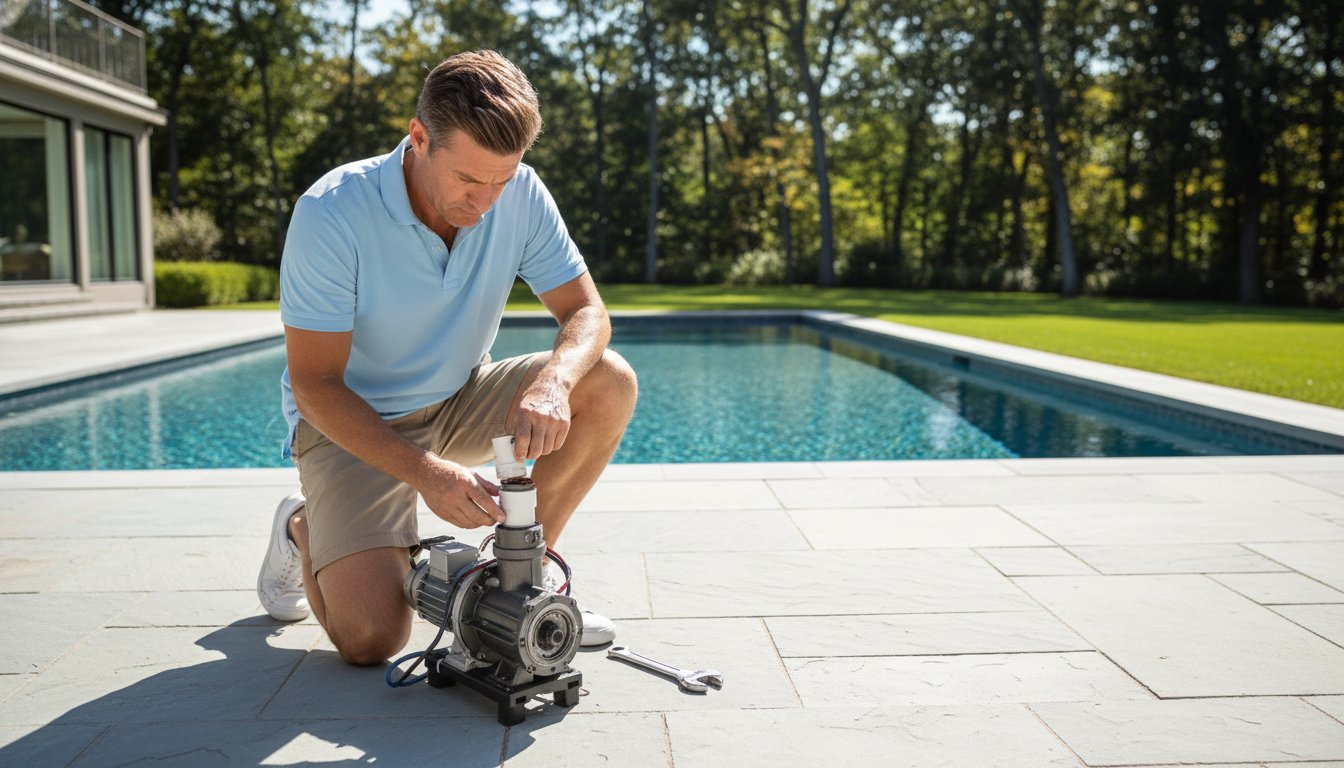
You can often silence a vibrating pump by simply tightening the unions, which are the plastic nut connectors where the plumbing meets the equipment. If the noise persists, turn the power off at the breaker and use a piece of bent wire to gently clear debris from the impeller through the pump basket housing. Lubricating the pump lid O-ring is another "can-do" task that restores the airtight seal necessary for quiet operation. These minor adjustments act as a poetic restoration of peace, ensuring your equipment runs with the silent efficiency it was designed for.
When DIY Risks Damage
While clearing a basket is simple, disassembling a motor without a precision bearing press is a recipe for disaster. Attempting to "hack" a repair on modern high-efficiency motors often voids the manufacturer's warranty on premium brands like Pentair or Hayward. Beyond the risk of physical injury, electrical troubleshooting involves high-voltage components that require the expertise of swimming pool construction services professionals. If your diagnosis moves beyond simple blockages into the realm of electrical testing or internal motor work, it's time to secure your investment. For precision-led results, trust our team for professional pool repairs to ensure your system remains safe and efficient.
Professional Equipment Repair & Upgrades in Alpine
When a noisy pool pump diagnosis Alpine confirms that the internal mechanical components have reached a point of critical failure, the path forward requires technical precision. A screaming motor isn't just a mechanical annoyance; it's a sign that your system is no longer operating safely or efficiently. At Right Pool Care, we view equipment restoration as a way to return the symphony of silence to your backyard estates. Our approach to Equipment Repair and Replacement focuses on identifying the most cost-effective, long-term solution for your specific Bergen County property.
Precision Repair vs. Full Replacement
We provide a no-nonsense assessment of your motor's health. If the pump housing and windings are in excellent condition, a precision motor bearing replacement can often extend the life of your unit for several seasons. However, if the motor shaft is pitted or the internal electrical windings show signs of heat damage, we prioritize your safety by recommending a full replacement. We value long-term results over quick, temporary fixes that leave you with the same grinding noises a month later. Every repair we perform aims to restore the structural integrity of your filtration system, ensuring your water remains crystal clear and your equipment pad stays dry.
The Future of Quiet Pools: Variable Speed Technology
Modern variable-speed (VS) technology has transformed the industry by offering near-silent operation that complies with the Borough of Alpine's strict noise ordinances. While traditional single-speed pumps run at a constant, loud decibel level, VS pumps allow for adjustable flow rates. Upgrading to a high-efficiency model can reduce your pool's energy consumption by up to 90 percent compared to older units. This transition is not just about noise reduction; it's a strategic financial move. New Jersey utilities frequently offer rebates for these installations, typically ranging from $200 to $400, helping to offset the initial investment in your home's infrastructure.
For homeowners planning a more extensive swimming pool renovation Bergen County, we recommend a comprehensive system audit. This ensures your new tile, coping, or plaster is supported by hardware that is properly sized for your pool's specific hydraulic needs. Proper sizing is the best defense against future cavitation and premature bearing wear. If your pump is currently disrupting your peace, contact us to schedule a professional noisy pool pump diagnosis Alpine. We'll help you navigate the repair or replacement process with the authority and dependability your Alpine property deserves.
Return to a Silent Sanctuary in Alpine
A screaming pool pump is more than a mechanical failure; it's a disruption to the tranquil lifestyle you've cultivated in Northern Bergen County. By performing a systematic noisy pool pump diagnosis Alpine, you can determine if a simple basket clearing will suffice or if your motor requires precision intervention. We've explored how local environmental factors like pine needles and shifting water tables stress your equipment; making early detection vital to prevent total system failure. Whether you're dealing with failed bearings or considering a near-silent variable speed upgrade, professional expertise ensures your investment remains secure.
Right Pool Care brings over 20 years of Bergen County expertise to every equipment pad. As authorized local service specialists for Hayward and Pentair systems, we provide the technical precision required for Alpine and Closter estates. Our no-nonsense approach prioritizes your safety and long-term results over temporary fixes. Restore your backyard peace with a professional pump diagnosis from Right Pool Care. Let us transform your mechanical stress into the quiet, crystal-clear experience your home deserves.
Frequently Asked Questions
Is it safe to run a noisy pool pump overnight in Alpine?
It's generally unsafe and potentially illegal to run a noisy pump overnight in Alpine. The Borough of Alpine noise ordinance limits residential sound levels to 50 decibels between 8:00 p.m. and 8:00 a.m. A pump in mechanical distress often exceeds this limit, risking local fines. Furthermore, the friction causing the noise can lead to overheating, posing a fire risk while your household is asleep.
How much does it typically cost to replace pool pump bearings in Bergen County?
Replacing motor bearings is a technical repair that varies in cost depending on the motor's horsepower and frame size. The total investment also depends on whether the mechanical seal requires replacement to prevent future moisture intrusion. A professional noisy pool pump diagnosis Alpine is the most reliable way to determine if a rebuild is a sound decision or if an upgrade to a modern, high-efficiency motor is more cost-effective.
Why does my pool pump sound like it has rocks in it after a storm?
This sound is a classic sign of cavitation or debris trapped in the impeller. Following a heavy Bergen County storm, organic matter often overwhelms the filtration baskets and enters the pump housing. These particles create turbulent flow that sounds like "rocks in a blender." If the noise persists after you clear the baskets, the impeller may be physically obstructed, requiring a more detailed mechanical inspection.
Can a low water level cause my pump to scream?
Yes, a low water level is a primary cause of high-pitched "screaming" sounds. When the water level drops below the skimmer mouth, the pump draws in air, creating a vacuum leak that leads to intense cavitation. This imbalance causes the motor to strain and vibrate at a higher frequency. Maintaining your water at the midpoint of the skimmer face is essential for protecting the mechanical integrity of your system.
How often should I lubricate my pump's O-rings to prevent noise?
You should lubricate your pump's O-rings every time you open the lid or at least once a month during the peak swimming season. Using a silicone-based lubricant prevents the rubber from drying out and cracking, which is a common source of air leaks and equipment noise. This simple maintenance task acts as a poetic restoration of your backyard peace, ensuring the system remains airtight and efficient.
Will a noisy pump eventually stop working altogether?
Yes, a noisy pump will eventually stop working altogether if the underlying cause is mechanical. Noise is an early warning sign of friction or pressure stress that progressively degrades internal components. What starts as a minor bearing whine will inevitably lead to a seized shaft or an electrical short. Addressing these sounds early is the only way to avoid the high cost of a total system failure.
What is the quietest pool pump available for Alpine residents in 2026?
Variable-speed (VS) pumps are the quietest equipment options for Alpine residents in 2026. These units comply with the 2021 U.S. Department of Energy efficiency standards and the New Jersey Appliance Standards Law. Because they can run at lower speeds for longer durations, they emit significantly fewer decibels than traditional single-speed models, ensuring your pool remains a peaceful sanctuary while complying with all local noise regulations.
Can pine needles from my Alpine backyard actually damage my pump motor?
Pine needles from your Alpine backyard can cause severe internal damage. These fine needles often bypass the skimmer basket and lodge in the impeller, creating an imbalance that leads to excessive vibration and heat. This stress eventually compromises the motor bearings and mechanical seal. Regular noisy pool pump diagnosis Alpine is required for wooded estates to ensure these small organic clogs don't lead to a total motor meltdown.