Imagine pulling back your safety cover on a warm Bergen County afternoon only to find a stagnant green swamp instead of a shimmering, blue oasis. For many local homeowners, this frustrating sight is the direct result of common DIY pool opening mistakes to avoid that can quickly escalate into a costly repair bill. You've invested significantly in your outdoor living space. The last thing you want is the sound of a grinding pump motor or the sight of a damaged vinyl liner ruining the first weekend of the season.
It's natural to feel a sense of anxiety when you're facing the technical complexity of New Jersey's spring startup. You want a crystal-clear swim season without the stress of emergency service calls in May. This guide identifies the critical mechanical and chemical errors that compromise your equipment and water clarity. You'll learn the precise sequence required to protect your concrete or vinyl surfaces, ensuring your water is blue, balanced, and ready for your family on day one.
Key Takeaways
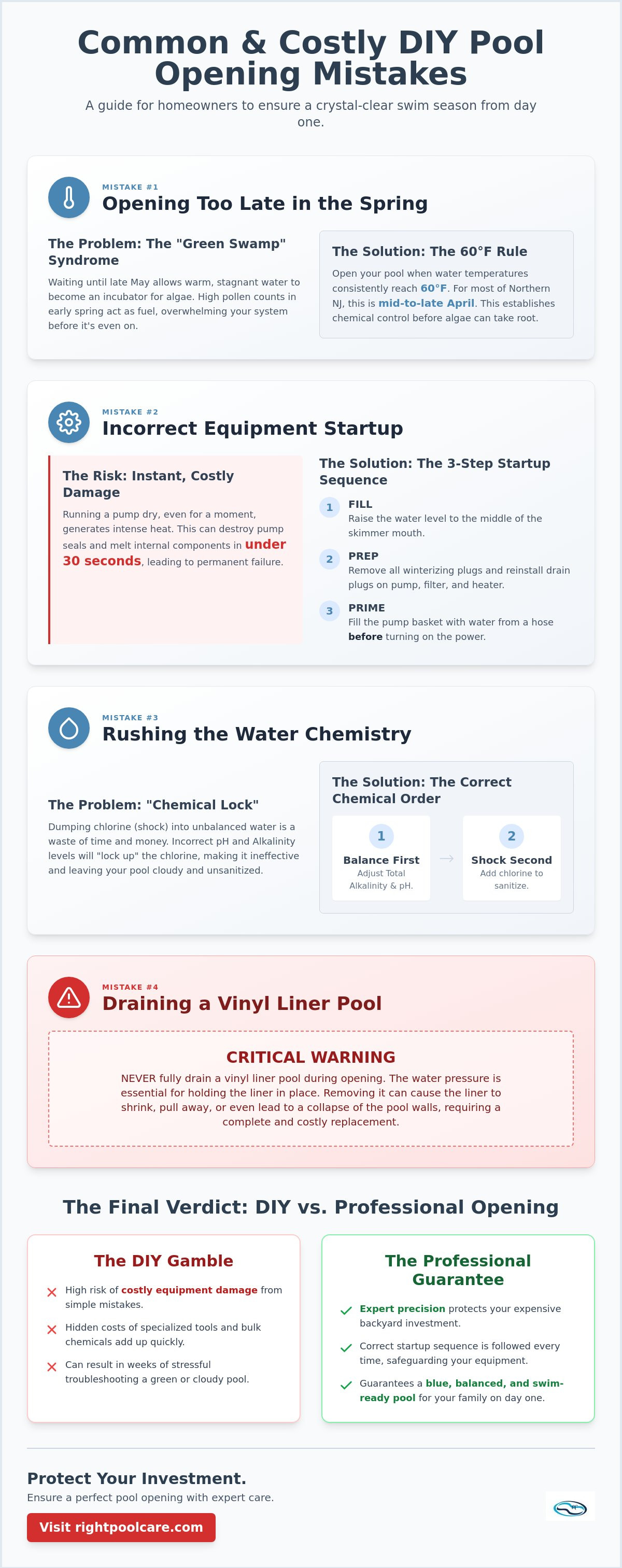
- Open your pool when spring temperatures consistently reach 60°F to avoid the "green swamp" syndrome caused by waiting until late May.
- Protect your equipment by following a precise startup sequence, as common DIY pool opening mistakes to avoid can ruin pump seals in under 30 seconds.
- Balance your Total Alkalinity and pH before adding shock to prevent "chemical lock" and ensure your water remains crystal clear.
- Never fully drain a vinyl liner pool during opening, as this can lead to structural damage or a complete liner failure.
- Evaluate the true cost of specialized tools and chemicals against the expert precision of a professional opening to safeguard your backyard investment.
The Timing Trap: Opening Too Late in the NJ Spring
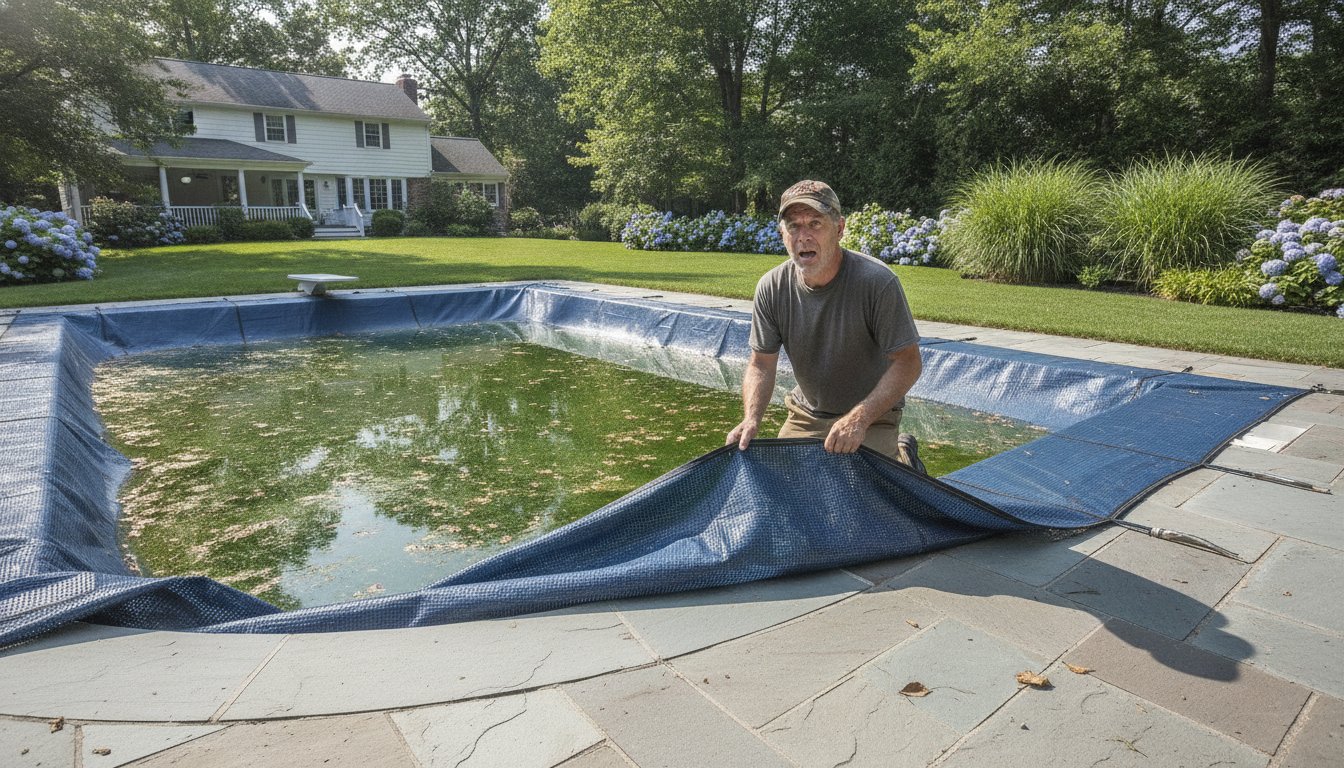
Many Bergen County homeowners view Memorial Day as the official start of the pool season. This is a common misconception. By late May, New Jersey temperatures often exceed 70 degrees, creating a literal incubator for organic growth. Waiting this long is one of the most frequent DIY pool opening mistakes to avoid. Under a solid safety cover, stagnant water heats up rapidly, trapping heat and concentrated debris. This environment accelerates the transition from clear winter water to a thick, green swamp that requires weeks of intensive, expensive treatment to remediate.
Local environmental factors exacerbate this issue. High pollen counts in towns like Paramus and Ridgewood during early spring introduce a massive organic load into your water. This pollen acts as fuel for algae, overwhelming your filtration system before you even turn it on. Following international guidelines for pool safety and sanitation becomes significantly harder when you're fighting a biological bloom rather than simply balancing fresh water. You want to establish a sterile environment before nature takes over.
The 60-Degree Rule for Northern New Jersey
Biological activity in your pool isn't random; it's temperature-dependent. Algae spores remain dormant during the frozen winter but activate once water temperatures consistently hit 60 degrees. For residents in Closter and Alpine, the optimal opening window typically falls between mid-to-late April. Opening during this timeframe ensures you establish chemical control before the algae can take root. While you might worry about the cost of running the pump for an extra few weeks, it's far more economical than the hundreds of dollars spent on massive doses of shock and algaecide later in the season. Efficiency starts with timing.
Why Early Openings Protect Your Pool Surface
Cool water is your best defense against structural degradation. When water sits stagnant and warm, minerals and organic matter can settle and bond, leading to stubborn staining on your concrete or vinyl liner. An early opening circulates the water, preventing these deposits from permanently marking your pool floor. There's also a significant psychological advantage to looking out your window and seeing a sparkling, blue sanctuary rather than a dirty, debris-laden cover. Because professional pool opening services book up rapidly as May approaches, securing your spot in April protects both your schedule and your pool’s finish. Proactive care transforms a mere utility into a lasting, beautiful investment.
Mechanical Blunders: Avoiding Equipment Damage During Startup
Mechanical failure during startup is often instantaneous. While water chemistry issues take days to manifest, a mechanical error can destroy your equipment in seconds. One of the most catastrophic DIY pool opening mistakes to avoid is allowing your pump to run dry. Without water to act as a coolant, the friction within the pump seal generates intense heat. This can melt the internal components in as little as 30 seconds, leading to a permanent failure of the pump housing or motor. It's a costly error that's easily avoided with a few minutes of preparation.
Before you flip the breaker, perform a meticulous visual inspection. Look for hairline cracks in the filter tank or the pump basket lid. These often develop during the harsh New Jersey winters due to freeze expansion. Pay close attention to your heater and chlorinator. These units often have hidden drain plugs that were removed during winterization. Forgetting to re-install these small components results in immediate flooding of the equipment pad once the system is pressurized. Identifying these DIY pool opening mistakes to avoid early can save your motor and your budget.
The Correct Startup Sequence for Inground Pools
Efficiency depends on logic. You must ensure the system is physically ready to move water before introducing power. Follow these steps to ensure a safe transition:
- Step 1: Fill the water level to the middle of the skimmer mouth. Your pump cannot move air; it needs a steady supply of water to create a vacuum.
- Step 2: Remove all winterizing plugs from the return lines and skimmers. Re-install the drain plugs on the pump, filter, and heater.
- Step 3: Prime the pump housing by filling it with water from a garden hose before starting the motor.
Troubleshooting Your Hayward or Pentair Systems
Professional-grade systems like Hayward or Pentair require technical precision. If you notice water leaking from the waste line while the filter is in the "Filter" position, your multi-port valve's spider gasket is likely damaged or twisted. Similarly, seeing a steady stream of bubbles in the return lines indicates an air leak in the suction line. This usually stems from a loose pump lid or a worn-out O-ring. If you encounter persistent priming issues or strange grinding noises, it's time to seek professional pool repairs to prevent further damage. A quick expert mechanical inspection ensures your system operates at peak performance all summer long.
Water Chemistry Chaos: Why "Just Adding Chlorine" Fails
Opening your pool is a complex chemical equation, not a simple cleaning chore. Many homeowners believe that dumping a few buckets of shock into the water will instantly solve the "green swamp" problem. This is one of the most persistent DIY pool opening mistakes to avoid. Without proper sequencing, you risk "chemical lock," where your sanitizer becomes completely ineffective despite high testing levels. Precision in your chemical additions preserves your water's clarity and protects your family's health.
Total Alkalinity serves as the anchor for your entire system. If your alkalinity is out of range, your pH will fluctuate wildly, making it impossible to stabilize the water. You should also verify your Cyanuric Acid levels. Think of this stabilizer as sunscreen for your chlorine; without it, the intense May sun will burn off your sanitizer in a matter of hours. Always wait at least four to six hours between adding different chemicals to prevent dangerous reactions or cloudiness. Rushing this process is a shortcut to frustration.
The Balancing Act: pH and Alkalinity First
Chlorine is highly sensitive to its environment. If your pH rises above 8.0, your chlorine is only about 20% effective. You're essentially throwing money away. Always adjust your Total Alkalinity first, as this provides the buffer needed to move your pH into the ideal range. For a successful startup, your target pH should sit precisely between 7.2 and 7.4. This specific range ensures maximum sanitizer efficiency and prevents eye irritation for swimmers once the season begins.
Shocking Your Pool the Right Way
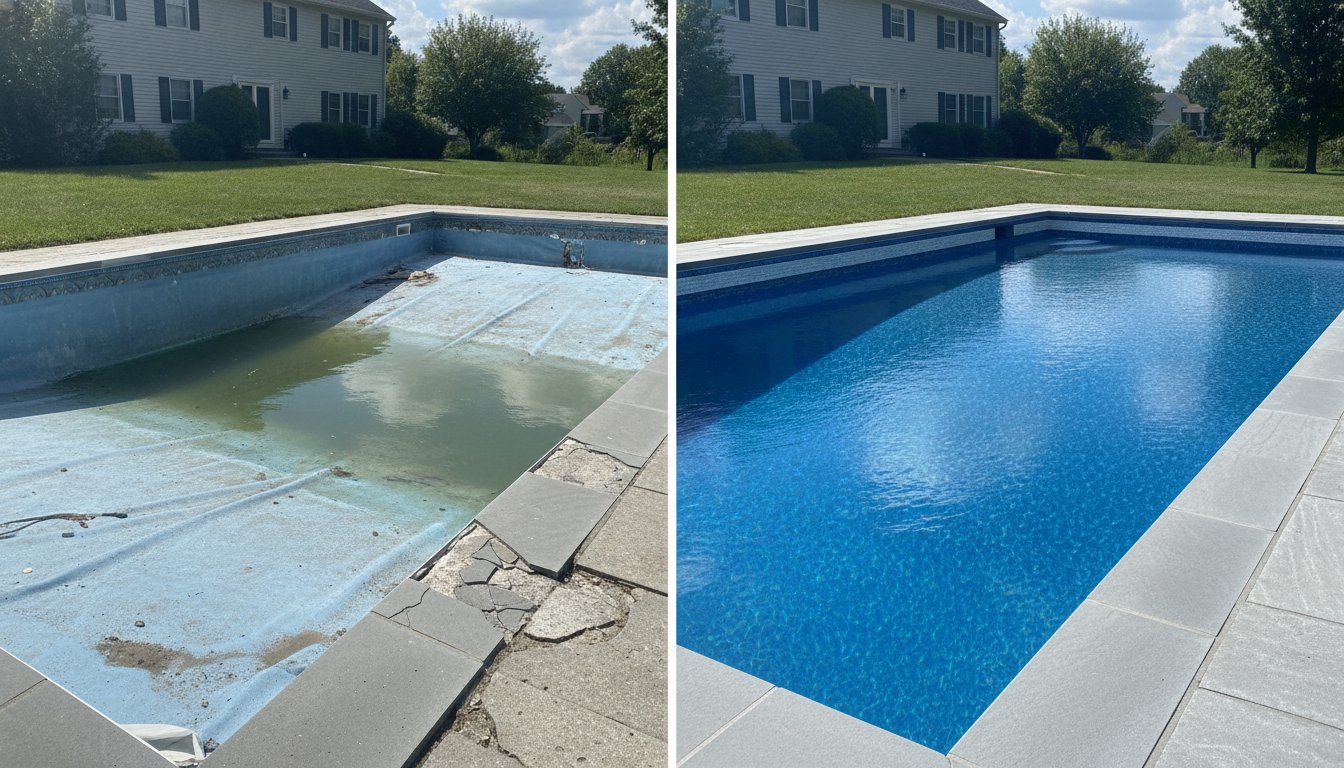
Methodology matters as much as the product. Never throw chlorine granules directly onto a vinyl liner; they'll settle on the floor and cause permanent bleaching or structural brittleness. Always pre-dissolve granules in a bucket of pool water or use liquid shock to protect your surfaces. It's best to shock at dusk. This prevents UV rays from degrading the chlorine before it has a chance to kill dormant algae spores overnight. If your pool surfaces have developed deep, stubborn winter stains that chemicals alone can't touch, professional acid washing can restore the original brilliance of your concrete finish. This restorative process removes years of oxidation, transforming a weathered surface into a pristine, life-enhancing architectural feature.
Structural Risks: Protecting Your Vinyl Liner and Tile
Structural integrity is the silent foundation of a successful swim season. While mechanical and chemical errors are common, structural blunders are often irreversible. The most catastrophic of all DIY pool opening mistakes to avoid is fully draining a vinyl liner pool. Without the weight of thousands of gallons of water to provide hydrostatic pressure, a vinyl liner will shrink, shift, and lose its elasticity within hours. Once a liner has pulled away from the walls or floor, it is nearly impossible to reset without permanent wrinkles or terminal tearing. You're effectively trading a cleaning chore for an expensive replacement project.
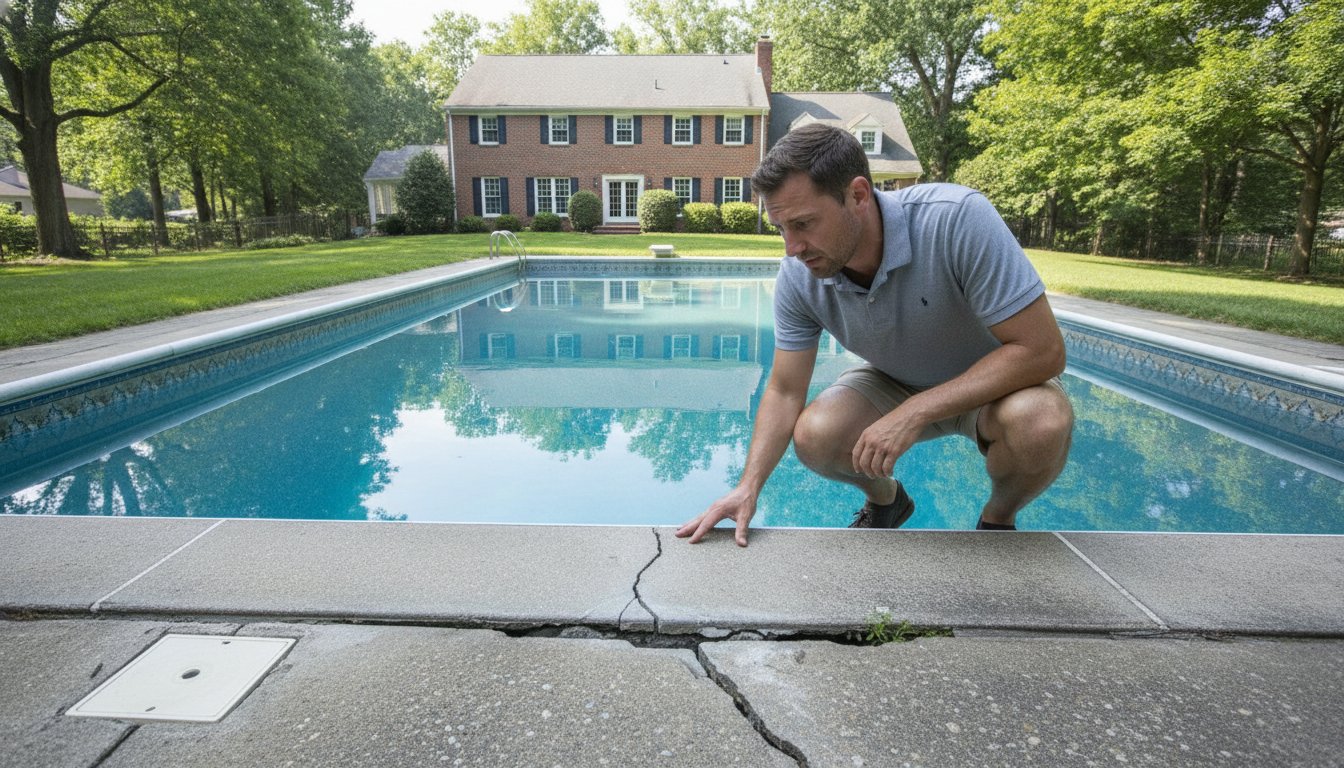
Winter freeze-thaw cycles in Bergen County also take a heavy toll on masonry. Water penetrates the grout lines between your tiles and behind the coping stones. When this water freezes, it expands, loosening the bond between the material and the pool beam. During your opening, you must inspect the perimeter for "popped" tiles or coping stones that feel hollow when tapped. Ignoring these minor shifts allows water to seep into the pool's structural shell, leading to major leaks or even concrete failure by mid-summer.
Your safety cover removal technique also impacts your pool's structural health. Rushing this process often results in dumping months of concentrated, decaying organic matter and silt directly into your water. This debris doesn't just ruin your water chemistry; it settles into the pores of your concrete or the seams of your liner, causing permanent staining and abrasive wear. Patience during cover removal protects the aesthetic and physical longevity of your investment.
Vinyl Liner Integrity and Water Pressure
Water pressure is the only thing keeping your liner flush against the walls. In Northern New Jersey, high spring water tables are a significant concern after heavy rains. If the water level inside the pool is too low, the external groundwater pressure can push the liner upward, creating "floating" sections or large bubbles. Inspect your liner for "bead" pop-outs, where the top edge of the vinyl slips out of its track. If you notice significant fading, brittleness, or multiple small leaks, your vinyl liner needs replacement to ensure the safety of your pool structure.
Cleaning the Tile and Coping Properly
Surface maintenance requires the right tools. Never use household dish soap or abrasive cleaners on your tile line; these introduce phosphates and nitrates that trigger massive algae blooms. Learn to distinguish between simple dirt and "calcium scale," which appears as a white, crusty deposit. Scale requires specialized descalers to remove without damaging the grout. Finally, walk the perimeter and check for loose coping stones. These aren't just aesthetic issues; a loose stone is a serious trip hazard for children and guests. If you identify structural shifts or loose masonry, schedule a professional structural assessment before the swimming season begins to ensure your backyard remains a safe, beautiful sanctuary.
The Final Verdict: DIY vs. Professional Pool Opening
Deciding between a weekend of manual labor and a professional service often comes down to the value you place on your time and the longevity of your equipment. While the initial cost of a DIY approach seems lower, the true expense includes more than just a bucket of chlorine and a few hours of work. You must account for specialized tools, high-grade chemicals, and the significant risk of the DIY pool opening mistakes to avoid that we've detailed throughout this guide. A single error in valve sequencing or a missed equipment plug can result in a repair bill that far exceeds the price of a professional opening. When you choose an expert startup, you're investing in an insurance policy for your backyard oasis.
A professional opening is not merely a cleaning service; it's a comprehensive technical audit of your pool’s health. We move beyond the surface to ensure every mechanical component and structural element is prepared for the rigors of a New Jersey summer. This proactive approach transforms your pool area from a maintenance burden into a pristine, life-enhancing sanctuary where safety and beauty coexist. By addressing minor issues before they escalate, we protect the physical and aesthetic value of your property, ensuring your investment remains a source of pride rather than stress.
The Professional Advantage
Choosing Right Pool Care means benefiting from a rigorous multi-point safety and equipment inspection that most DIYers simply can't replicate. Our technicians don't just pull the cover; they inspect safety anchors for trip hazards, check railings for stability, and verify that every pump, filter, and heater is operating at peak efficiency. We handle the grueling physical labor of removing, cleaning, and properly storing heavy safety covers, which prevents the accidental introduction of debris that ruins water clarity. This level of detail provides the peace of mind that comes with a "Clear Water Guarantee," ensuring your pool is blue and balanced from the moment we leave your equipment pad.
Preparing for the 2026 Season in Closter and Alpine
Local expertise is vital when navigating the specific water conditions and environmental challenges of Northern Bergen County. Right Pool Care brings years of established leadership to every project, understanding the unique needs of property owners in Closter and Alpine. The 2026 season is approaching quickly, and our schedule fills rapidly as the weather warms. Don't wait until the Memorial Day rush to discover a mechanical failure or a "green swamp" scenario. Take a "Safety First" approach to your summer and ensure your pool is ready for family and guests without the typical spring anxiety. Schedule your professional pool opening with Right Pool Care today!
Secure Your Crystal-Clear Swim Season Today
Opening your pool is a complex technical process where timing, chemical sequencing, and mechanical precision must align perfectly. By understanding the DIY pool opening mistakes to avoid, you protect your equipment from terminal damage and ensure your water is blue on day one. Rushing the startup or neglecting structural pressure can turn a simple spring task into a permanent repair project. Your outdoor living space should be a source of relaxation, not a series of technical hurdles and emergency service calls.
Right Pool Care brings over 20 years of expertise to Northern Bergen County. As a local, family-owned business serving Alpine, Closter, and Tenafly, we are specialists in vinyl liner protection and precision equipment repair. We handle the heavy lifting and technical calibration so you don't have to. Ensure a stress-free spring with Right Pool Care’s professional opening services. We look forward to making your 2026 swim season your most beautiful and transformative experience yet.
Frequently Asked Questions
Can I open my pool myself if I have a vinyl liner?
You can open a vinyl liner pool yourself, but you must exercise extreme caution regarding water pressure. Water weight is the only force holding the vinyl flush against the pool walls. If you lower the water level too far during your cleaning process, the liner can shrink, wrinkle, or pull out of the track. This mistake often results in a permanent structural failure that requires a professional vinyl liner replacement.
How long should I run my filter after opening the pool?
You should run your filter system 24 hours a day immediately after opening. Continuous circulation is vital for distributing startup chemicals and filtering out the fine organic debris stirred up during the cover removal. Don't switch to a standard 8 to 12 hour cycle until the water is chemically balanced and crystal clear. Rushing this step is a common error that leads to cloudy water for weeks.
Why is my pool water still cloudy after shocking it?
Cloudy water after shocking often indicates a pH imbalance or high calcium hardness. If your pH is above 8.0, the chlorine you added is largely ineffective and cannot kill dormant algae spores. Another cause could be a "chemical lock" from excessive stabilizer levels. To fix this, test your alkalinity and pH first, adjust them to the ideal range, and ensure your filtration system is running continuously at peak performance.
Is it okay to use a pressure washer to clean my pool deck?
You can use a pressure washer for the deck, but keep the nozzle away from the pool tile and coping. High-pressure water can easily blast out grout or loosen the bond between the coping stones and the pool beam. This damage allows water to seep behind the structure, leading to expensive masonry repairs. Use a lower pressure setting and avoid direct contact with any delicate pool surfaces or tile lines.
What happens if I forget to remove a winter plug before starting the pump?
Forgetting a winter plug can cause a catastrophic mechanical failure. This creates a "deadhead" scenario where the pump builds up extreme pressure with nowhere for the water to go. In as little as a minute, this pressure can melt the pump seal, crack the filter housing, or even burst underground plumbing lines. Double-checking every return line and skimmer for plugs is a critical step in your startup sequence.
How much water should I add to the pool before starting the filter?
You must add enough water to reach the midpoint of the skimmer mouth before engaging the pump. Your filtration system is designed to move water, not air. If the level is too low, the system will suck air, lose prime, and run dry. As we've discussed, running a pump dry for even 30 seconds can cause the internal components to melt, leading to a permanent and expensive equipment failure.
When is the best time to open a pool in Bergen County, NJ?
The ideal window for Bergen County is between late March and early May. Once the water temperature reaches 60 degrees, algae spores become active and begin to bloom. Opening early helps you establish chemical control before the "green swamp" syndrome takes hold. This is one of the most important DIY pool opening mistakes to avoid if you want a clear pool for the first warm weekend of the year.
Should I hire a professional for my pool opening?
Hiring a professional is the most reliable way to protect your backyard investment. A professional opening includes a multi-point safety and mechanical inspection that identifies hidden issues like loose coping or hairline filter cracks. Expert service prevents the common DIY pool opening mistakes to avoid that turn a simple cleaning task into a multi-thousand dollar repair bill. You gain peace of mind and a blue pool on day one.