What if those rough patches on your pool floor are doing more than just scraping your feet? It's frustrating when a backyard oasis begins to feel like a hazard. You've likely noticed "pool toe" from abrasive surfaces, stubborn staining, or water levels that drop faster than they should. You want a pool that reflects the prestige of your home, not one that requires constant apologies to guests. Professional concrete pool plastering Tenafly homeowners trust requires a balance of technical precision and aesthetic vision to turn a weathered basin into a shimmering sanctuary.
This guide provides the essential details on the resurfacing standards you need for the 2026 season. You'll learn how the professional process works and why the industry is shifting toward Portland Limestone Cement for better durability. We'll also cover the specific material options that withstand North Jersey's freeze-thaw cycles. We'll preview the local permit process, safety regulations, and the latest trends in aggregate finishes to help you achieve a smooth, beautiful surface that protects your property value for decades.
Key Takeaways
- Understand how a professional plaster layer serves as the critical waterproof seal that protects your pool's underlying concrete structure from long-term deterioration.
- Learn why expert concrete pool plastering Tenafly projects must include precise hydrostatic pressure relief and "chip-out" techniques to prevent structural failure.
- Discover why the resurfacing phase is the most efficient time to address tile and coping repairs, ensuring a seamless and high-value restoration of your pool’s perimeter.
- Identify the optimal seasonal timing for plastering in Bergen County to ensure proper material curing and to manage local challenges like high groundwater tables.
- Gain insight into how a holistic renovation approach improves both the safety and aesthetic brilliance of your backyard oasis for years to come.
Understanding Concrete Pool Plastering and Resurfacing
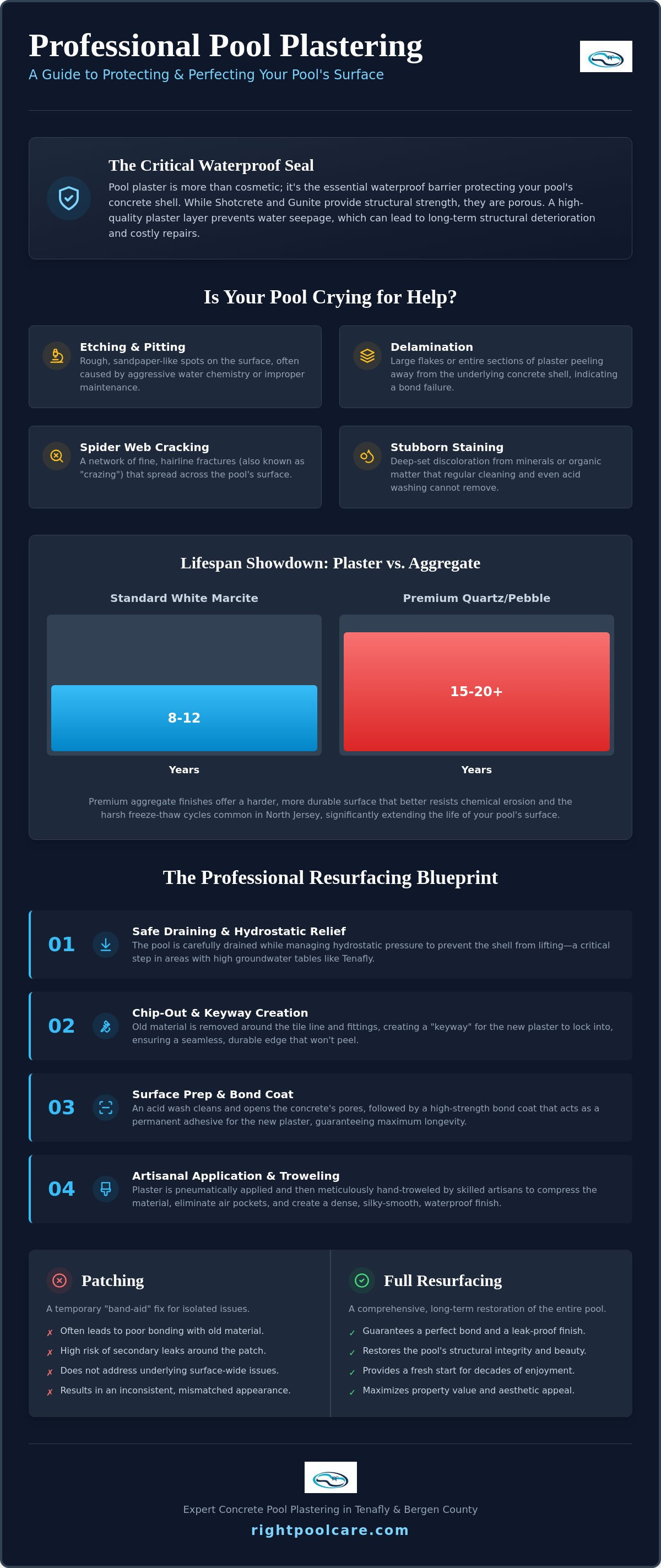
Pool plaster is more than just a cosmetic finish. It acts as the final waterproof seal for your pool's interior. While the structural strength comes from the underlying Shotcrete and gunite, these materials are naturally porous. Without a high-quality plaster layer, water would slowly seep through the shell, eventually compromising the entire structure. Professional concrete pool plastering Tenafly homeowners invest in ensures this barrier remains impenetrable while providing a smooth, inviting surface for swimmers. The plaster is the canvas upon which your summer memories are painted, and its integrity is non-negotiable.
Tenafly’s local water chemistry often presents unique challenges. Hard water and fluctuating chemical levels in Bergen County can accelerate the degradation of even the best surfaces. Over time, you might notice specific signs of failure that indicate it's time for a renovation. These symptoms are often cumulative. If left unaddressed, they can lead to costly structural repairs. Look for these warning signs:
- Etching and Pitting: Rough spots that feel like sandpaper, often caused by aggressive water chemistry.
- Delamination: Large flakes or sections of plaster peeling away from the concrete shell.
- Spider Web Cracking: Fine, hairline fractures also known as crazing that appear across the surface.
- Staining: Deep-set mineral deposits or organic discolorations that acid washing cannot remove.
The Lifespan of Standard vs. Premium Finishes
Standard white marcite has been the industry staple for decades. In the New Jersey climate, you can expect it to last between 8 and 12 years if maintained perfectly. However, many residents are upgrading to quartz or pebble aggregates. These premium finishes offer a much harder surface that resists chemical erosion and physical wear. An aggregate finish can extend the life of your pool surface to 15 or even 20 years. Proper winterization is also vital. Protecting the plaster from the harsh freeze-thaw cycles of a Tenafly winter prevents the expansion and contraction that leads to early cracking.
Resurfacing vs. Patching: Making the Right Choice
Spot repairs might seem like a cost-effective fix for a single crack or a small area of delamination. While patching can serve as a temporary band-aid, it rarely provides a long-term solution. The biggest risk involves "layering" new plaster directly over old, failing material. This often leads to poor bonding and secondary leaks. Choosing professional concrete pool plastering Tenafly services ensures a comprehensive restoration rather than a series of failing patches. A full resurfacing is the only way to guarantee a leak-proof finish. It allows for a fresh start, ensuring the new material bonds perfectly to the original shell for maximum durability.
The Technical Process of Professional Pool Replastering
Draining a pool isn't as simple as opening a valve. In Tenafly, high groundwater tables make hydrostatic pressure a genuine threat to your investment. If a contractor doesn't open the hydrostatic relief valves immediately, the entire shell can "pop" or lift out of the ground like a boat. Once the pool is safely secured, the "chip-out" begins. We remove old material around the tile line and all fittings. This creates a "keyway" for the new plaster to tuck into, ensuring a flush finish that won't peel at the edges.
Surface preparation determines the longevity of the project. We perform a thorough acid wash to strip away remaining impurities and open the pores of the concrete. Next, we apply a high-strength bond coat. This textured layer acts like a permanent adhesive between the old concrete and the new surface. Following industry standards for Portland cement-based plaster ensures the mixture reaches its maximum density and structural strength. If you're concerned about the current state of your shell, our team provides expert concrete pool resurfacing to restore your backyard oasis.
The application itself is a feat of coordination. We use pneumatic pumps to spray the material onto the walls in a thick, even layer. Skilled artisans then hand-trowel every inch of the surface. This compression is what makes the surface waterproof and silky smooth. Professional concrete pool plastering Tenafly projects require this level of manual expertise to eliminate air pockets and ensure a dense, durable finish that resists chemical erosion.
Preparation: The Most Critical Phase
Skipping the chip-out is a shortcut that leads to premature delamination. New plaster needs a rough, clean substrate to adhere to properly. We spend significant time ensuring the concrete shell is structurally sound. If we find hollow spots or "honeycombing" in the gunite, we repair those areas before the first drop of plaster hits the wall. We also take extreme care to protect your existing tile and coping with heavy-duty masking to avoid any cleanup issues later.
Application and the "Hot Start" Filling Process
The race against the clock starts the moment the last trowel stroke is finished. We must begin the filling process immediately to prevent the new plaster from drying too quickly or cracking under the sun. This "Hot Start" involves carefully balancing the water chemistry as the pool fills to protect the fresh surface. For the first 30 days, you'll need to brush the surface twice daily. This removes "plaster dust" and helps the finish cure to its intended brilliance and smoothness.
Maximizing ROI: Integrating Tile and Coping Repairs
Combining plastering with tile and coping work isn't just about aesthetics; it's a matter of structural logic. When you undertake concrete pool plastering Tenafly projects, the pool is already drained and the perimeter is fully accessible. This is the ultimate window for tile and coping repair. In Tenafly, many properties feature beautiful natural stone coping like bluestone. Over time, the harsh Bergen County winters cause mortar joints to crack and stones to loosen. If you ignore these issues during resurfacing, you risk water seeping behind the pool wall. This moisture can freeze and expand, leading to catastrophic shell damage or "popped" tiles by next spring.
Upgrading to frost-proof waterline tile is a non-negotiable for the 2026 season. These specialized materials are designed to withstand the expansion of ice without shattering. New coping also serves as a critical barrier. It directs splash-out away from the pool shell and protects the bond beam. Maintaining these surfaces isn't just about beauty. It's about ensuring your backyard environment meets the highest standards for stability. While we focus on the structure, we always encourage homeowners to review Federal safety guidelines to ensure their entire pool area remains a secure sanctuary for family and guests.
Aesthetic Synergy: Matching Plaster Colors with Stone
The coping is the frame of your aquatic masterpiece. Choosing plaster tints that complement natural NJ bluestone or granite creates a sophisticated, high-end look. For instance, a light gray plaster creates a "lake-like" teal water color that pairs perfectly with darker stone. Quartz aggregates add a shimmering depth that changes throughout the day. If you want to modernize a traditional concrete pool, consider adding glass tile accents along the steps or sun shelf. These small details catch the light and transform a simple renovation into a luxury experience.
Structural Benefits of Simultaneous Repair
Executing all repairs at once ensures a seamless, watertight transition between the tile and the new plaster. We replace old, brittle expansion joints to allow for the natural seasonal ground movement common in North Jersey. By addressing every failure point in a single phase, you significantly reduce the need for future pool repairs. This holistic approach protects the bond beam and ensures that your new plaster remains undisturbed by external water intrusion. It's a strategic investment that preserves the structural integrity of your home’s most valuable outdoor asset.
Tenafly Local Considerations: Climate, Timing, and Codes
Timing is everything when you schedule your concrete pool plastering Tenafly project. We refer to the "Tenafly Window" as the period between mid-April and early June, or September through October. During these months, ambient temperatures remain moderate. This is essential for the slow, even curing of the plaster. If you plaster in the heat of July, the material can lose moisture too quickly, leading to structural weakness and surface cracking. Conversely, freezing winter temperatures can damage the water-to-cement ratio within the fresh mix, causing immediate surface failure before you even open for the season.
Tenafly's geography includes areas with high groundwater tables that require expert management. This geological reality makes the draining phase a high-stakes operation. We use specialized equipment to monitor and manage the water pressure beneath your pool shell, preventing the "popping" risks mentioned earlier. Beyond the physical work, you must navigate the local administrative landscape. A zoning permit is required before any work begins, carrying a $25.00 application fee. Once approved, you'll need a construction permit, which carries a minimum fee of $75 for residential properties. If you're ready to begin this process, schedule your concrete pool resurfacing with a team that understands these local requirements.
Safety is the foundation of every renovation we perform. New Jersey state law and Tenafly local codes require specific barrier protections that we integrate into our project planning. Your pool fence must be at least 48 inches high with a ground clearance of no more than 2 inches. All gates must be self-closing and self-latching to remain compliant. Additionally, the electrical system must be updated to include GFCI protection and equipotential bonding for all metal components. These regulations aren't just red tape. Properly installed barriers are proven to reduce drowning risks for young children by an estimated 83%.
Freeze-Thaw Resilience in North Jersey
Bergen County's climate puts immense stress on pool finishes. The constant expansion and contraction of frozen soil can cause standard plaster to fail if the mix isn't applied with precision. We utilize advanced materials designed to resist these forces. For the 2026 season, we prioritize mixes that handle heavy snow loads and the chemical stress of winterizing agents. Maintaining a perfect chemical balance during the off-season is vital to prevent etching while the pool is dormant.
Local Water Quality and Plaster Curing
The mineral content of Tenafly's municipal water varies by neighborhood. High calcium levels can lead to scaling on a fresh surface, while trace metals can cause permanent staining during the initial refill. We analyze your local water source before we start the filling process. We use sequestering agents to lock up these minerals, ensuring they don't settle into the pores of your new concrete pool plastering Tenafly finish. Local expertise is the only way to balance a new pool correctly in our specific environment.
Why Right Pool Care is Tenafly’s Trusted Plastering Specialist
Choosing a contractor for a structural renovation requires more than just a search for the lowest bid. It requires a partner who understands the unique geological and climatic demands of our corner of New Jersey. Right Pool Care brings over 20 years of experience to every project, specializing in high-end swimming pool construction and renovation throughout Bergen County. We don't just apply a new surface; we restore the structural integrity of your home’s most significant outdoor asset. Our deep roots in the community mean we treat every concrete pool plastering Tenafly project as a testament to our local reputation.
Our expertise isn't limited to a single material. We maintain deep technical proficiency in both vinyl and concrete systems. This dual mastery provides us with a holistic view of pool health that many specialized plasterers lack. We understand how a failing concrete shell impacts your filtration system and how groundwater pressure affects different pool types. This no-nonsense approach ensures that we identify potential issues before they become expensive mid-project "surprises." We view your pool as a complex machine where every component must work in harmony to create a safe, beautiful environment.
Project management at Right Pool Care is a hands-on, dedicated process. We oversee every critical milestone, from the initial acid wash and bond coat application to the final, precise chemical balance during the refill. You won't deal with disappearing crews or unreturned calls. We stay on-site to ensure the density of the trowel work meets our exacting standards. Transforming your backyard into a shimmering sanctuary of crystal-clear water is our mission, and we achieve it through disciplined execution and technical authority.
Our Commitment to Professional Excellence
Transparency is a core pillar of our business. We provide detailed, comprehensive estimates that outline every phase of the project. We utilize premium, industry-leading materials specifically formulated for the harsh New Jersey climate. While others might use generic mixes, we prioritize Portland Limestone Cement and high-grade aggregates for maximum longevity. Safety and structural integrity remain our primary focus. We ensure your pool isn't just beautiful but is also fully compliant with all local safety codes and structural requirements.
Start Your Transformation Today
The 2026 renovation season is already filling up. Early booking is essential to secure your preferred window during the optimal spring or fall curing periods. Our local presence in nearby Closter ensures that we provide rapid response times and ongoing support long after the plaster has cured. Your pool deserves the care of an established leader who values quality over speed. Schedule your Tenafly pool plastering consultation with Right Pool Care today and take the first step toward a flawlessly restored backyard oasis.
Secure Your Pool’s Structural Future Today
Resurfacing is more than a cosmetic upgrade; it's a critical investment in your home's longevity. By choosing the right materials and timing your project within the local seasonal windows, you protect your pool from the harsh North Jersey elements. Integrating tile and coping repairs during this phase ensures a seamless, watertight finish that maximizes your property value. Expert concrete pool plastering Tenafly homeowners trust is built on a foundation of technical precision and deep local knowledge. We take pride in turning technical construction into a transformative experience for your backyard.
Right Pool Care brings 20+ years of Bergen County expertise to every job site. As a local, Closter-based family business, we are specialists in structural concrete renovation who understand the specific soil and water challenges of our community. Don't wait for rough surfaces or structural leaks to compromise your summer. Request Your Free Tenafly Pool Resurfacing Estimate and let us restore your worn basin into a brilliant, life-enhancing space. Your dream backyard is just one professional renovation away.
Frequently Asked Questions
How much does it cost to replaster a concrete pool in Tenafly?
Costs depend on the total surface area of your pool, the material you select, and any necessary structural repairs. Basic white plaster is the most economical choice. Premium pebble or quartz finishes require a larger initial investment but offer significantly greater longevity. We provide custom estimates that factor in your specific tile and coping needs to ensure a high-value result.
How long does the concrete pool plastering process take from start to finish?
The physical resurfacing process typically takes 7 to 10 days, assuming the weather remains favorable. This timeline covers the initial draining, the chip-out of old material, and the application of the bond coat. Once the artisans finish hand-troweling the new surface, the pool must be filled immediately to begin the critical curing phase.
What is the best time of year in New Jersey to resurface a pool?
Spring and Fall are the optimal seasons for concrete pool plastering Tenafly projects because moderate temperatures ensure even curing. Scheduling your project in April, May, or September avoids the rapid moisture loss caused by summer heat. It also prevents the structural damage that can occur if fresh plaster is exposed to freezing winter temperatures before it fully sets.
Can I change my pool from a standard white finish to a pebble or quartz finish?
Yes, you can upgrade your finish during any resurfacing project to enhance both durability and aesthetics. Pebble and quartz aggregates are much harder than standard white marcite and often last 15 to 20 years. These premium options provide a wide array of textures and colors that can completely transform the visual depth of your pool water.
Do I need a permit for pool resurfacing in Tenafly, NJ?
Yes, Tenafly requires a zoning permit and a building permit for major resurfacing work. The current zoning application fee is $25.00, and the minimum construction permit fee for residential properties is $75.00. Our team manages the technical details of the application process to ensure your renovation meets all local municipal codes and safety requirements.
How long should I wait to swim after my pool has been replastered?
You should wait approximately 7 to 10 days until the water chemistry has reached a stable equilibrium. While the plaster continues to cure underwater for about 30 days, the first week is vital for balancing pH and alkalinity. Swimming too early can introduce organic contaminants that might stain the fresh, sensitive surface before it has fully hardened.
Will replastering fix a leaking concrete pool?
Replastering restores the waterproof seal of the interior surface, but it only addresses leaks caused by surface porosity. If your pool has deep structural cracks in the gunite or issues with the plumbing lines, those require specific repairs before the plaster is applied. We perform a thorough inspection during the draining phase to identify and resolve any underlying structural failures.
What is the difference between pool painting and professional plastering?
Professional concrete pool plastering Tenafly services provide a thick, structural barrier, whereas painting is merely a thin, temporary coating. Pool paint typically lasts only 2 to 4 years and is prone to chipping or chalking over time. Plaster bonds directly to the concrete shell, providing a durable solution that withstands North Jersey’s freeze-thaw cycles for a decade or more.