What if the most expensive mistake you make this year happens while you're fast asleep during the first hard frost in Closter? For New Jersey homeowners, the transition from autumn to winter isn't just a change in seasons. It's a high-stakes battle against the brutal freeze-thaw cycle that can turn a single gallon of trapped water into a pipe-shattering force of nature. Learning how to winterize pool equipment correctly is the only way to safeguard your investment from the inevitable expansion of ice.
We understand the anxiety that comes with the first drop in temperature. You want the certainty that your PVC pipes, high-end pumps, and heaters are fully protected against the elements. This guide provides the technical mastery you need to navigate the winter months with total confidence. You'll learn the precise sequence for a professional-grade blow out, the critical difference between pool and automotive anti-freeze, and the exact steps to ensure zero cracked equipment when spring arrives. We're moving beyond basic maintenance to provide a clear, no-nonsense roadmap for total mechanical security.
Key Takeaways
- Understand why Northern New Jersey's unique freeze-thaw cycle requires a specialized approach to prevent catastrophic hydrostatic pressure damage to your plumbing.
- Discover how to winterize pool equipment correctly by mastering the high-volume 'blow out' method to clear all lines of standing water.
- Learn the precise drainage and lubrication steps for pumps, filters, and heaters to ensure your mechanical systems remain intact until spring.
- Master the chemical balancing and safety cover protocols needed to protect your vinyl liner and maintain crystal-clear water during the winter months.
- Gain the professional insight required to secure a zero-freeze result for your residential pool in communities like Closter or Alpine.
The Stakes of Winterization: Why NJ Pools Require a Specialized Approach
Winterizing is the technical process of rendering your swimming pool plumbing and machinery immune to ice expansion damage. In Northern New Jersey, this isn't a luxury; it's a structural necessity. Homeowners often ask how to winterize pool equipment correctly, but the answer depends heavily on our local geography. The Bergen County factor involves a volatile "thaw-freeze" cycle where temperatures swing rapidly across the freezing point. This creates unique hydrostatic pressure that can compromise even the most robust installations. Proper closing turns a complex technical challenge into a season of quiet security.
Hydrostatic Pressure and Your Pool Shell
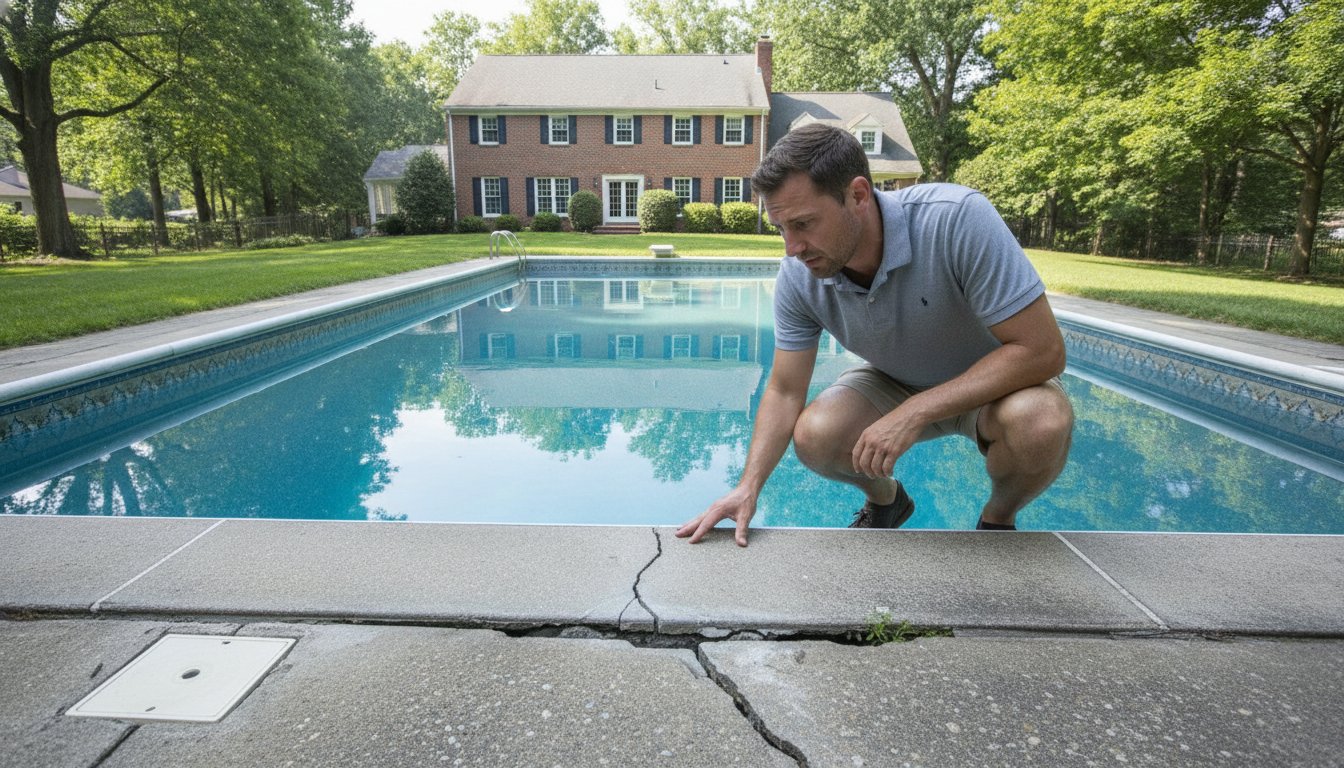
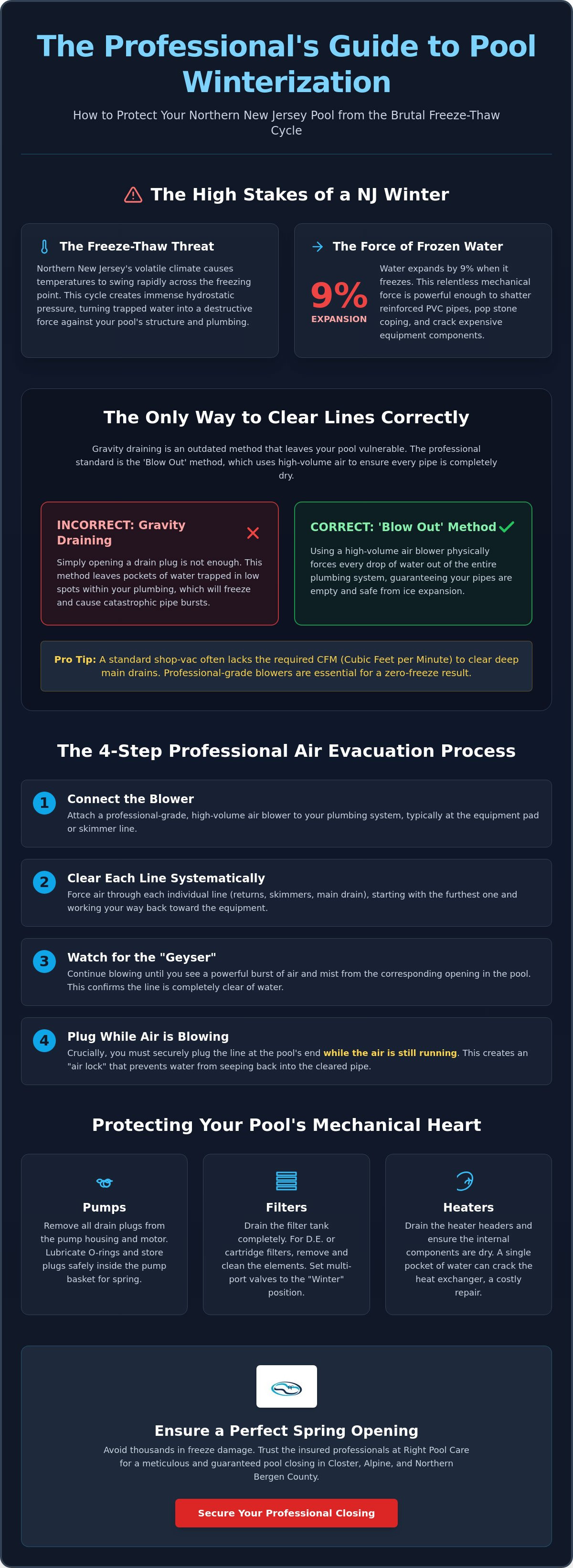
Ice expansion is the primary enemy of tile and coping in Closter backyards. When water trapped behind a tile line freezes, it exerts massive outward force. Water expands by 9% when freezing, creating a relentless mechanical force that can shatter reinforced PVC and pop stone coping loose from its mortar bed. Maintaining proper water levels is vital for structural integrity. If the level is too high, ice can grab the tile and pull it away. If it's too low, the lack of internal pressure may allow saturated soil to push against the walls. It's a delicate balance that requires professional precision to master.
Protecting the Mechanical Heart of Your Backyard
Your mechanical system is a complex network of plastic housings and precision valves. Components like Hayward pumps and Pentair filters are engineered for durability, but they remain vulnerable to the physics of freezing. A single pocket of water left in a heater header or a multi-port valve can lead to a burst that costs thousands to fix. In 2026, the cost of replacement parts and labor has reached new heights, making the stakes for a correct closing higher than ever. Simply opening a drain plug is no longer enough in our volatile climate.
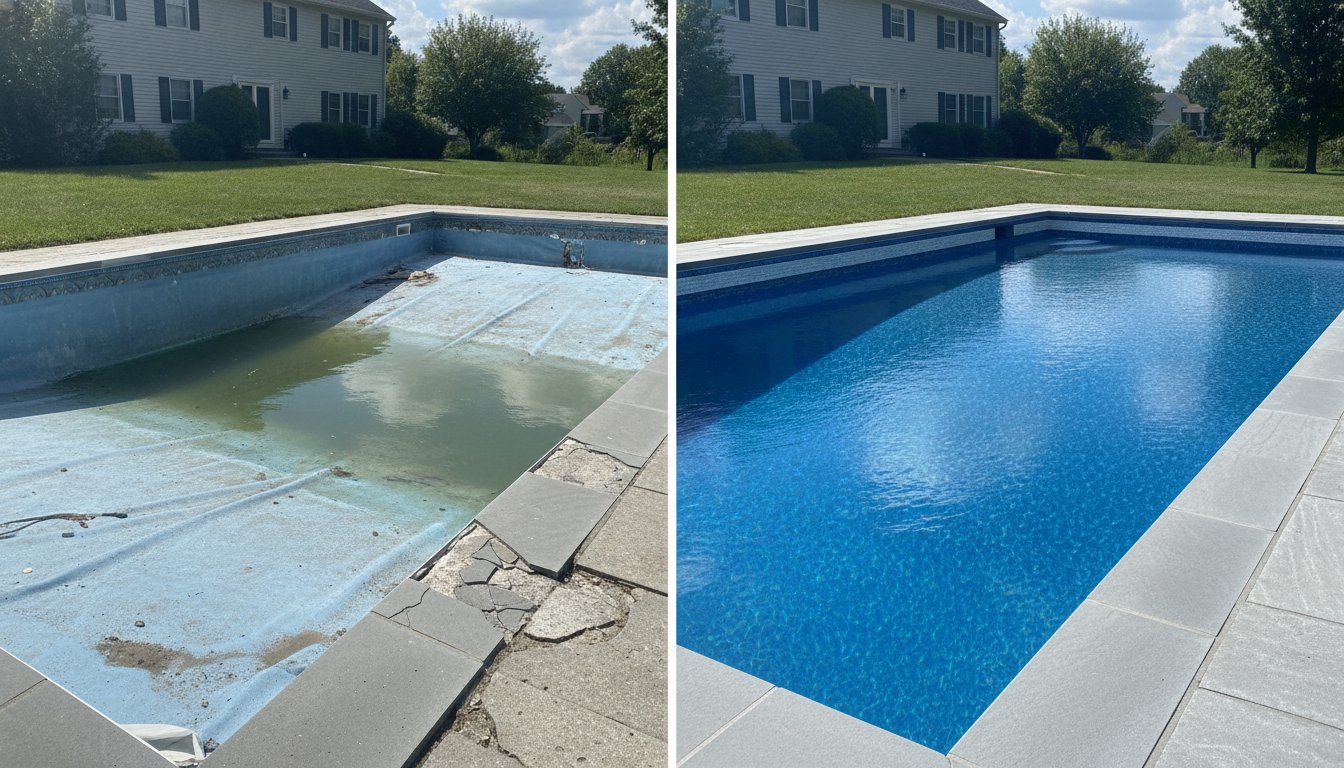
Proper closing extends the life of your equipment and transforms your backyard into a worry-free sanctuary. If you already suspect your system has suffered from a previous winter or find cracks during your inspection, you can explore Professional Pool Repairs to stabilize your system before the next hard frost. We focus on these safety-related details to ensure your investment remains a source of pride rather than a source of stress. High-value equipment deserves high-level protection.
Deep-Diving into the 'Blow Out' Method: The Only Way to Clear Lines Correctly
Gravity draining is a relic of the past that has no place in a modern maintenance strategy. If you want to know how to winterize pool equipment correctly, you must embrace the blow out method. This technique uses high-volume air to physically force every drop of water out of your underground pipes. Unlike gravity, which leaves low spots filled with water, air evacuation ensures the entire line is dry. This is especially critical for Bergen County homes with complex plumbing or long runs to the equipment pad. A single pocket of trapped water is all it takes to ruin a season of summer fun.
The equipment you choose determines your success. Many DIY guides suggest using a standard shop-vac, but these machines often lack the necessary cubic feet per minute (CFM) to clear deep main drains or long plumbing runs. Professional-grade blowers are the standard for a reason. They're designed to overcome the weight of the water column and provide the sustained pressure required to move water through the entire system without stalling. Relying on underpowered tools is the most common cause of cracked pipes in the spring.
The Step-by-Step Air Evacuation Process
The process begins at the equipment pad or the skimmer. You connect the blower and systematically clear each line. We recommend starting with the furthest return line and working your way back toward the pump. You'll know the line is clear when the water at the pool's edge "burps" like a geyser. This is the moment of truth. You must plug the line while the air is still blowing to maintain the air-lock seal. This prevents water from migrating back into the pipe once the blower is turned off. For a comprehensive overview of the pool winterization process, safety organizations emphasize that skipping these steps often leads to catastrophic structural failure.
Anti-Freeze: When and Where to Use It
Once the lines are blown out, anti-freeze adds a final layer of security. Never use automotive coolant in your pool; it's highly toxic to both swimmers and the environment. Instead, use non-toxic propylene glycol, specifically labeled as pool anti-freeze. A standard residential line typically requires one gallon of anti-freeze to ensure any residual moisture cannot expand. This creates a safety buffer during the most extreme January freezes.
Protecting the skimmer throat is equally vital. We use "Gizzmos" or similar expansion compensators to absorb the pressure of freezing water inside the skimmer housing. This simple device prevents the plastic from cracking under the strain of a hard freeze. If this technical sequence feels overwhelming, scheduling professional Pool Closings ensures every valve and line is sealed by an expert who understands the nuances of the Northern New Jersey climate.
Winterizing Specific Equipment: Pumps, Filters, and Heaters
Once the plumbing lines are secured, your focus must shift to the mechanical heart of your backyard. Mastering how to winterize pool equipment correctly requires a deep understanding of each component's unique vulnerabilities. You aren't just turning things off; you're performing a technical preservation process. Every pump, filter, and heater on your pad represents a significant investment that deserves professional-grade protection against the New Jersey frost.
Pumps require more than a simple power cut. You must remove the drain plugs from the housing to prevent stagnant water from expanding and cracking the plastic. This is also the ideal time to inspect and lubricate your O-rings with a silicone-based lubricant. This small step prevents the rubber from becoming brittle and failing during the 2026 spring opening. Taking these precautions ensures your Hayward or Pentair pump remains a reliable workhorse for years to come.
Filter maintenance depends entirely on the medium you use. Sand filters are the most straightforward, requiring a thorough backwash followed by draining the tank via the bottom plug. DE and Cartridge filters demand a more hands-on approach. You should remove the grids or cartridges, clean them with a specialized solution to remove oils and minerals, and store them in a dry, protected area. Leaving dirty, wet filters to freeze is a recipe for structural failure and poor water quality next season.
Sensitive electronics, such as salt cells and automatic chlorinators, are particularly susceptible to extreme temperature swings. In affluent communities like Alpine and Tenafly, where high-end automation is common, we recommend disconnecting these units and storing them indoors. Cold weather can degrade the sensors and plates, leading to costly replacements that are entirely avoidable with ten minutes of labor.
The Heater Winterization Checklist
Heaters are often the most expensive and delicate items on the equipment pad. Follow this safety-first sequence to protect the internal heat exchanger:
- Shut off the main gas supply valve and flip the dedicated circuit breaker to the 'off' position.
- Remove the drain plugs from both the inlet and outlet headers to allow all internal water to escape.
- Use a high-volume blower to force air through the heat exchanger, ensuring no hidden pockets of water remain.
- Place mothballs or specialized repellent inside the cabinet to discourage rodents from nesting in the burner tray or chewing through the wiring.
Pump and Filter Maintenance
Before the final shut-down, perform one last backwash to clear the filter bed of debris. Inspect the pump basket and seal plate for any signs of wear, hairline cracks, or thinning. Set the multi-port valve to the 'winter' or 'closed' position to lift the handle and protect the internal spider gasket from compression damage. This simple adjustment prevents the gasket from deforming over the long winter months, ensuring a leak-free start in April. By following these technical steps, you transform a potentially stressful chore into a masterclass in equipment longevity.
Beyond the Pipes: Chemical Balancing and Safety Covers
Clearing the lines is a vital technical hurdle, but true winterization extends to the water itself and the structural barrier protecting it. Understanding how to winterize pool equipment correctly includes stabilizing the water chemistry to protect your pool's surfaces from corrosion and staining. In New Jersey, where pools remain dormant for six months or more, the chemical environment must remain balanced to preserve the life of your vinyl liner. Neglecting this stage can lead to costly liner replacements that are entirely avoidable with the right chemical strategy.
pH and Alkalinity are the twin pillars of winter preservation. If these levels drift too far, the water becomes aggressive, potentially causing the vinyl liner to become brittle or develop permanent wrinkles. We utilize long-term algaecides and slow-release enzymes to maintain clarity through the winter months. These specialized chemicals prevent the "green spring" phenomenon, ensuring that your filtration system isn't overwhelmed the moment you pull back the cover. A balanced pool is a protected pool.
The Chemistry of a Clean Opening
Preparation begins 24 hours before the final closing. You must shock the pool to eliminate any lingering organic contaminants. Once the water is sanitized, lower the level according to your cover type. For pools with mesh safety covers, the level should be 4 to 6 inches below the skimmer. For solid covers, 12 to 18 inches is the standard. Never drain a vinyl liner pool too low; the weight of the water is essential to hold the liner against the pool walls. This careful preparation sets the stage for a seamless transition when you book your Pool Opening Service next April.
Safety Covers as a Structural Component
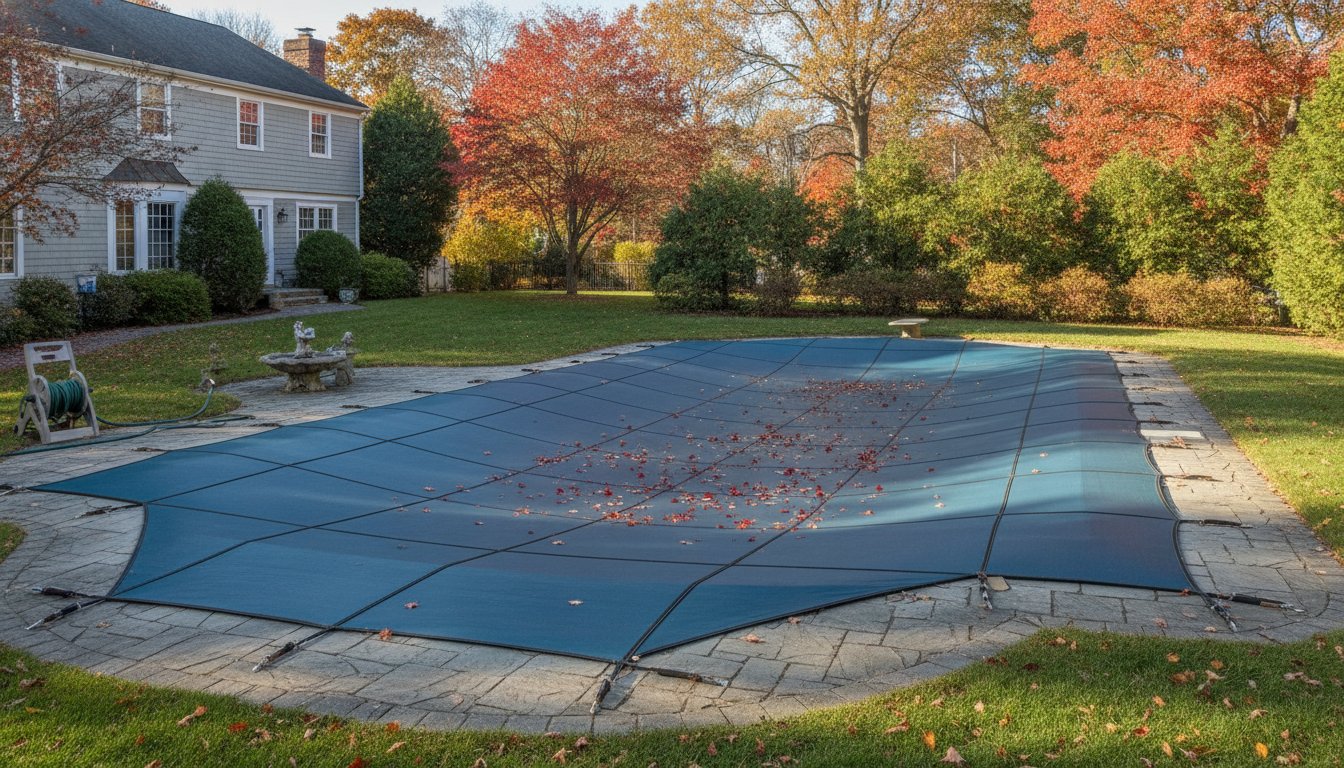
A safety cover is more than a debris shield. It is a structural component designed to withstand the significant Bergen County snow load. In towns like Closter and Alpine, heavy winter precipitation can exert thousands of pounds of pressure on your pool's perimeter. We recommend ASTM-compliant safety covers over generic tarps because they utilize high-tension springs to distribute weight evenly across the deck anchors. This prevents the cover from sagging and keeps your family and pets secure.
Mesh covers allow water to pass through while blocking large debris, whereas solid covers keep the water pristine but require a pump to manage accumulation. Custom-fitted covers are essential to prevent "perimeter lift," where wind or heavy snow pulls the cover away from the deck. At Right Pool Care, we focus on these technical details to ensure your backyard remains a secure, beautiful environment. If your current cover shows signs of fraying or loose springs, consider our Safety Cover Installation to guarantee your pool stays protected until the first thaw.
Professional Pool Closings: The Right Pool Care Advantage
While understanding the technical sequence of how to winterize pool equipment correctly is valuable, there is no substitute for the precision of a certified technician. Professional winterization is about more than just checking boxes. It is a comprehensive safety audit designed to eliminate the risk of ice expansion in your plumbing and mechanical systems. We provide a specialized process tailored specifically for the residential pools of Bergen County. From the expansive estates in Alpine to the family backyards of Closter and Demarest, we ensure every system is rendered immune to the New Jersey freeze.
The closing process is also the most strategic time to identify potential maintenance needs. Our technicians don't just blow out lines; they inspect the structural integrity of your equipment pad. We look for hairline cracks in pump housings, thinning gaskets, and signs of heater manifold wear. Addressing these issues now prevents the frustration of "spring delays" when you are eager to begin the swimming season. If we discover a component that won't survive another year, we can integrate necessary repairs into your winter schedule to ensure a flawless opening in April.
Why DIY Isn't Always the Best Value
Many homeowners consider the DIY route to save on service fees, but the hidden costs can be significant. A professional-grade, high-volume blower and a full set of specialized expansion plugs represent a substantial investment. Using underpowered equipment like a shop-vac often leaves moisture in low-lying pipes, leading to burst lines that cost thousands to excavate and repair. We've served the Closter community for over 20 years. We've seen firsthand how a small oversight in October becomes a major construction project in May. Our expertise and commercial-grade tools provide a level of security that consumer-grade equipment simply cannot match.
Ready for a Worry-Free Winter?
Professional winterization transforms your backyard from a source of seasonal anxiety into a secure, dormant oasis. You can rest easy during the first hard frost knowing that your pumps are drained, your lines are air-locked, and your safety cover is tensioned to handle the heaviest snow loads. We take pride in our "zero-freeze" approach, treating every pool as if it were our own. Protecting your investment requires a no-nonsense commitment to quality standards and technical accuracy.
Don't leave your pool's structural integrity to chance this winter. Secure your equipment and your peace of mind with the local leaders in Bergen County pool care. Schedule your professional pool closing with Right Pool Care today!
Secure Your Backyard Investment for the Seasons Ahead
Protecting your pool from the relentless New Jersey freeze is a technical challenge that requires precision and foresight. By mastering the high-volume blow out method and maintaining a perfect chemical balance, you effectively shield your vinyl liner and mechanical systems from structural harm. These steps aren't just maintenance; they're a commitment to the longevity and beauty of your outdoor sanctuary. Understanding how to winterize pool equipment correctly is the difference between a seamless spring opening and a season plagued by expensive repairs.
With over 20 years of dedicated experience in Bergen County, Right Pool Care provides the no-nonsense technical expertise your property deserves. We are specialists in custom safety cover installation, ensuring your pool remains a secure and tranquil space even under the heaviest snow loads. Don't leave your equipment's safety to chance when the first hard frost arrives in Closter or Alpine.
Secure your pool for the winter with Right Pool Care’s expert closing services. Your backyard oasis is a place of transformation and joy; let's keep it that way for years to come.
Frequently Asked Questions
Can I winterize my own pool equipment in New Jersey?
Yes, you can winterize your own pool, but it requires specialized high volume blowers and a strict technical sequence. Most homeowners lack the equipment to clear deep main drains effectively. A small error often leads to burst pipes that cost thousands to repair in the spring. For those learning how to winterize pool equipment correctly, the learning curve is steep and the stakes are high.
Do I really need to blow out the lines, or is draining enough?
Draining is never sufficient for New Jersey's volatile climate. Gravity leaves water in the low points of your plumbing where it will inevitably freeze and expand. You must use high volume air to evacuate all moisture and create a reliable air lock seal. This is the only way to ensure your underground PVC lines remain intact through the winter months.
What happens if I don't use pool anti-freeze?
Skipping non toxic pool anti-freeze leaves your plumbing vulnerable to residual moisture that air evacuation might miss. Anti-freeze acts as a critical insurance policy during extreme January temperature drops. It prevents any remaining water from expanding and shattering your pipes. Never use automotive anti-freeze, as its toxic chemical makeup will damage your pool's ecosystem and vinyl liner.
How low should I drain the water for a vinyl liner pool?
For a vinyl liner pool, you should drain the water 4 to 6 inches below the skimmer for mesh covers or 12 to 18 inches for solid covers. Never drain the pool completely. The weight of the water is the only thing holding the liner in its proper position. Draining too low causes the liner to shrink, wrinkle, or pull out of the track.
Should I keep the pool pump running during the first frost?
Running the pump during a light frost provides temporary protection because moving water is harder to freeze. However, this is not a substitute for a full winterization. Once the temperature stays below freezing consistently, your pump and filter are at immediate risk of cracking. You should complete your professional closing before the first sustained hard freeze hits Northern New Jersey.
What is the best time to close my pool in Bergen County?
The ideal window for closing your pool in Bergen County is when the water temperature consistently stays below 65 degrees Fahrenheit. This usually occurs between late September and mid October. Closing too early can lead to algae growth in the warm water, while waiting too long risks equipment damage from an unexpected early frost.
How do I protect my pool heater from mice in the winter?
Mice often view pool heaters as perfect winter nesting sites. To discourage them, remove all drain plugs and place mothballs or specialized rodent repellents inside the heater cabinet. These pests can chew through expensive wiring and damage the burner tray. Keeping the area clean and sealed is essential for protecting your heater's internal components during the off season.
Does a safety cover prevent the pool from freezing?
A safety cover does not prevent the water from freezing. Its primary purpose is to act as a structural barrier that prevents children, pets, and debris from entering the pool. While it manages the heavy Bergen County snow load, the water beneath it will still freeze and expand. This is why learning how to winterize pool equipment correctly is vital regardless of your cover type.