You walk out to your backyard after a week of heavy New Jersey spring rain and find your pool liner floating off the floor, or you notice a sudden spike in your water bill that points directly to a failing seam. It's a stressful realization for any property owner, especially when you've invested so much in your outdoor living space. You deserve a sanctuary that remains as reliable as it is beautiful, and a professional inground vinyl liner replacement NJ is the first step toward reclaiming that peace of mind.
Securing a precision-fit liner is about more than just a quick fix; it's a critical structural defense against our state's punishing freeze-thaw cycles. This guide will show you how to restore your pool with an engineered finish that offers both sophisticated aesthetics and long-term security. We'll explore the 2026 trends in midnight blue and slate gray textures, while also explaining the vital NJ A5526 licensing laws that ensure your project is handled by a qualified, permitted professional. From achieving a perfectly smooth surface to modernizing your backyard's visual appeal, you're about to discover the path to a worry-free swimming season.
Key Takeaways
- Identify the critical signs of aging, such as brittleness and bead pops, that signal your liner has reached the end of its 10-15 year lifespan.
- Select the optimal material thickness and high-grade virgin vinyl to ensure your inground vinyl liner replacement NJ survives the state's aggressive climate.
- Discover how professional groundwater management and controlled drainage protect your pool’s structural integrity during the installation process.
- Learn how precision repairs to vermiculite or sand-bottom floors create the perfectly smooth, wrinkle-free surface required for a high-end finish.
- Align your renovation with industry-leading safety standards to achieve a transformative result that balances modern aesthetics with long-term durability.
When to Schedule Inground Vinyl Liner Replacement in NJ
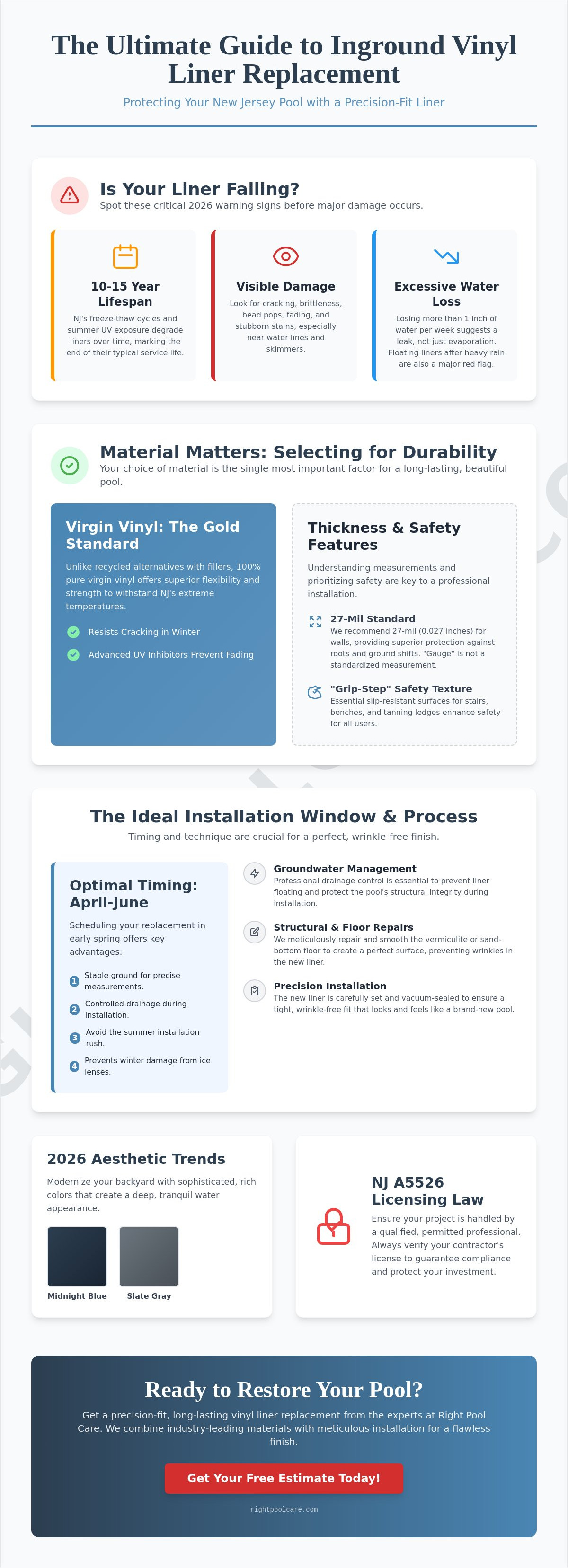
Owning a pool in Northern New Jersey requires a clear understanding of how our local climate impacts various types of in-ground pools. While a high-quality vinyl liner is designed for durability, it typically has a critical lifespan of 10 to 15 years in our region. The aggressive freeze-thaw cycles of our winters followed by the humid, high-heat months of July and August create a demanding environment for synthetic materials. Planning your inground vinyl liner replacement NJ before a total failure occurs is the most effective way to protect your backyard investment and avoid costly structural repairs.
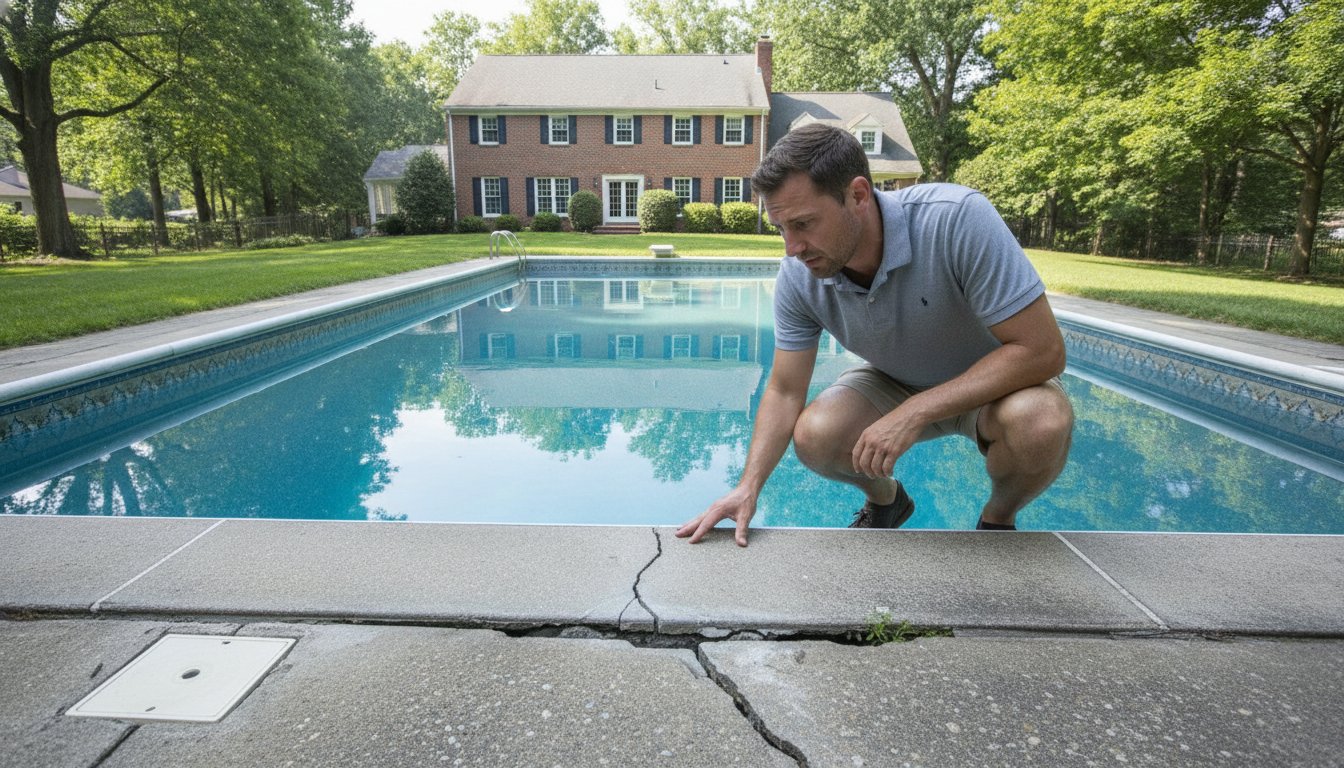
Visual cues often reveal the need for a replacement long before the pool becomes unusable. You might notice "bead pop," where the liner physically slips out of the track at the top of the pool wall. This often happens because the vinyl has lost its elasticity and can no longer stretch to accommodate the weight of the water. Brittleness at the tile line is another major red flag. When the vinyl feels crunchy or stiff to the touch, it's no longer waterproof and will likely crack under the slightest pressure.
Environmental stress plays a massive role in Northern NJ. Heavy spring rains can lead to "floating" liners, a phenomenon where groundwater builds up behind an aging, porous liner and pushes it away from the floor. This creates unsightly wrinkles and compromises the pool's foundation. Additionally, the intense UV exposure during peak summer months accelerates the degradation of the chemical bonds within the vinyl, making an inground vinyl liner replacement NJ a necessity for maintaining a safe and attractive swimming environment.
The 2026 Warning Signs Checklist
- Cracking and Pitting: Look closely at the areas around skimmer faceplates and return lines for small spider-web cracks.
- Excessive Water Loss: If you're losing more than 1 inch of water per week, you're likely dealing with more than just evaporation.
- Fading and Staining: Permanent patterns that have bleached out or developed stubborn stains often indicate a breakdown in the material's protective coating.
Why Timing Matters: The April-June Window
The optimal window for liner work in Bergen County is early spring. During April and May, the ground is generally more stable, allowing for controlled drainage and precise measurements. Scheduling early helps you avoid the frantic summer rush that hits installers in Closter and Alpine during late June. Leaking liners are particularly vulnerable during NJ winters, as moisture trapped behind the vinyl freezes into ice lenses that exert immense pressure on the pool’s structure.
Choosing the Right Liner: Mil Thickness and Material Quality
Selecting the right material is the most critical decision in the inground vinyl liner replacement NJ process. For 2026, the industry has shifted decisively toward "Virgin Vinyl." Unlike recycled alternatives that often contain fillers like calcium carbonate, virgin vinyl is 100% pure PVC. This purity is mandatory for resisting the extreme temperature swings found in Northern New Jersey. It allows the liner to remain pliable during a deep January freeze while maintaining its structural integrity under the scorching July sun. Modern manufacturing has also introduced advanced UV inhibitors. These chemical stabilizers act as a high-grade sunscreen for your pool, preventing the premature bleaching and brittleness that once plagued older systems.
Safety remains a core pillar of any successful installation. For families in Alpine and Tenafly, we recommend textured "Grip-Step" vinyl for high-traffic areas like stairs, benches, and tanning ledges. This specialized material provides essential traction without sacrificing the smooth feel of the pool floor. By prioritizing these slip-resistant surfaces, you ensure your backyard adheres to modern pool safety guidelines while enhancing the overall user experience. If you're unsure which material grade suits your specific sun exposure, consulting with an expert can help you verify the best fit for your property.
Mil vs. Gauge: Clearing the Confusion
In the pool industry, a "mil" is a precise unit of measurement representing 1/1000th of an inch. Many homeowners confuse this with "gauge," which is a non-standardized term that varies by manufacturer. We typically utilize 27-mil walls for our projects because they provide superior protection against root penetration and shifting soil. While thicker liners offer significantly higher puncture resistance, they are slightly less flexible during the initial vacuum-sealing phase of installation. Standard 20-mil liners remain a viable, cost-effective option for the floor, but "heavy-duty" 27-mil floors are the gold standard for longevity in the inground vinyl liner replacement NJ market.
Pattern Selection for Modern NJ Backyards
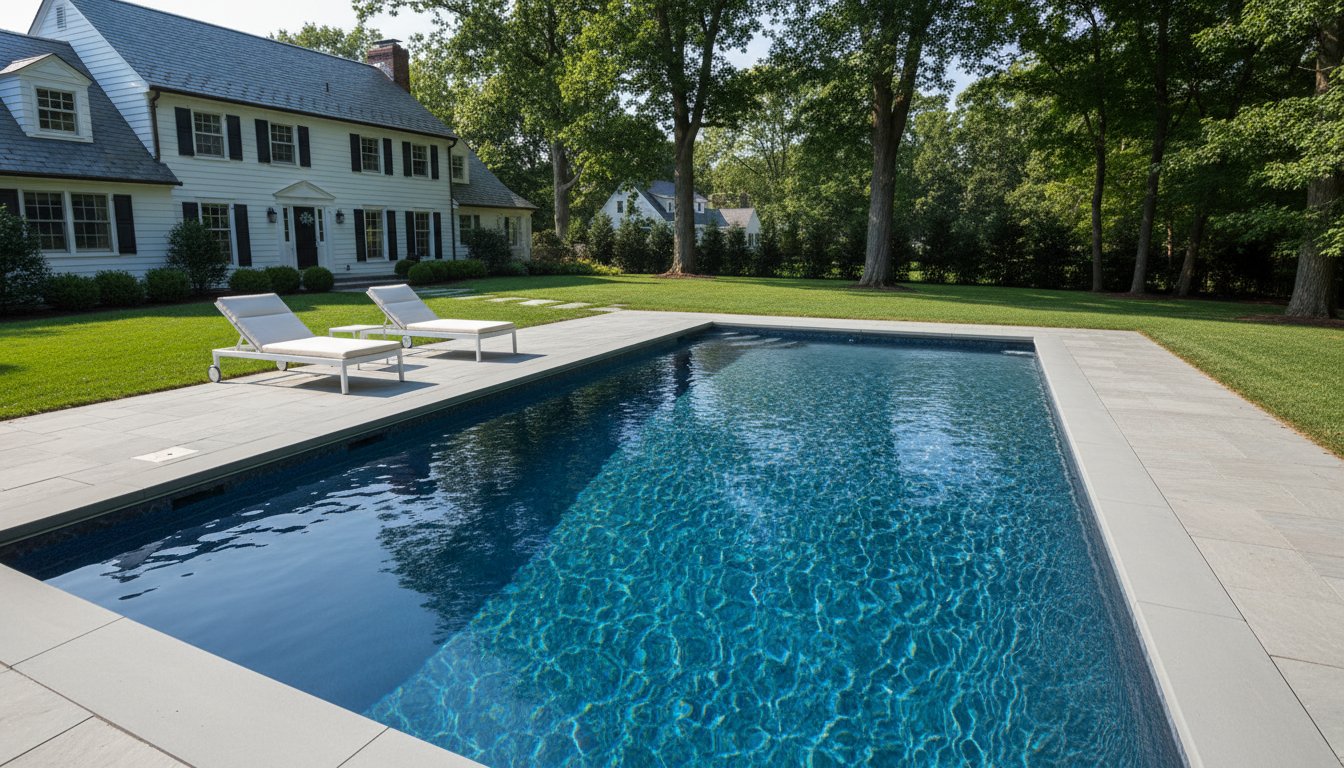
Aesthetics have evolved rapidly. Darker bottom patterns, such as midnight blue or slate gray, are currently trending because they naturally absorb solar energy to increase water temperature by several degrees. For a contemporary look, many homeowners are opting for "no-border" patterns. These eliminate the traditional tile-print at the top, creating a seamless, high-end appearance that mimics a custom concrete finish. This approach perfectly complements broader swimming pool renovation in Bergen County trends, allowing your liner to act as a transformative design element rather than just a utility.
The Professional Inground Liner Installation Process
Executing a flawless inground vinyl liner replacement NJ requires a sequence of precision maneuvers that go far beyond simply swapping out a sheet of plastic. It is a technical restoration of your pool's primary defensive layer. We begin with controlled drainage and professional groundwater management. This step is vital in Northern New Jersey, where high water tables can cause a pool shell to shift or "pop" if the hydrostatic pressure isn't balanced correctly. Once the water is safely removed, we transition to the old liner removal and eco-friendly disposal, ensuring your property remains clean and organized throughout the project.
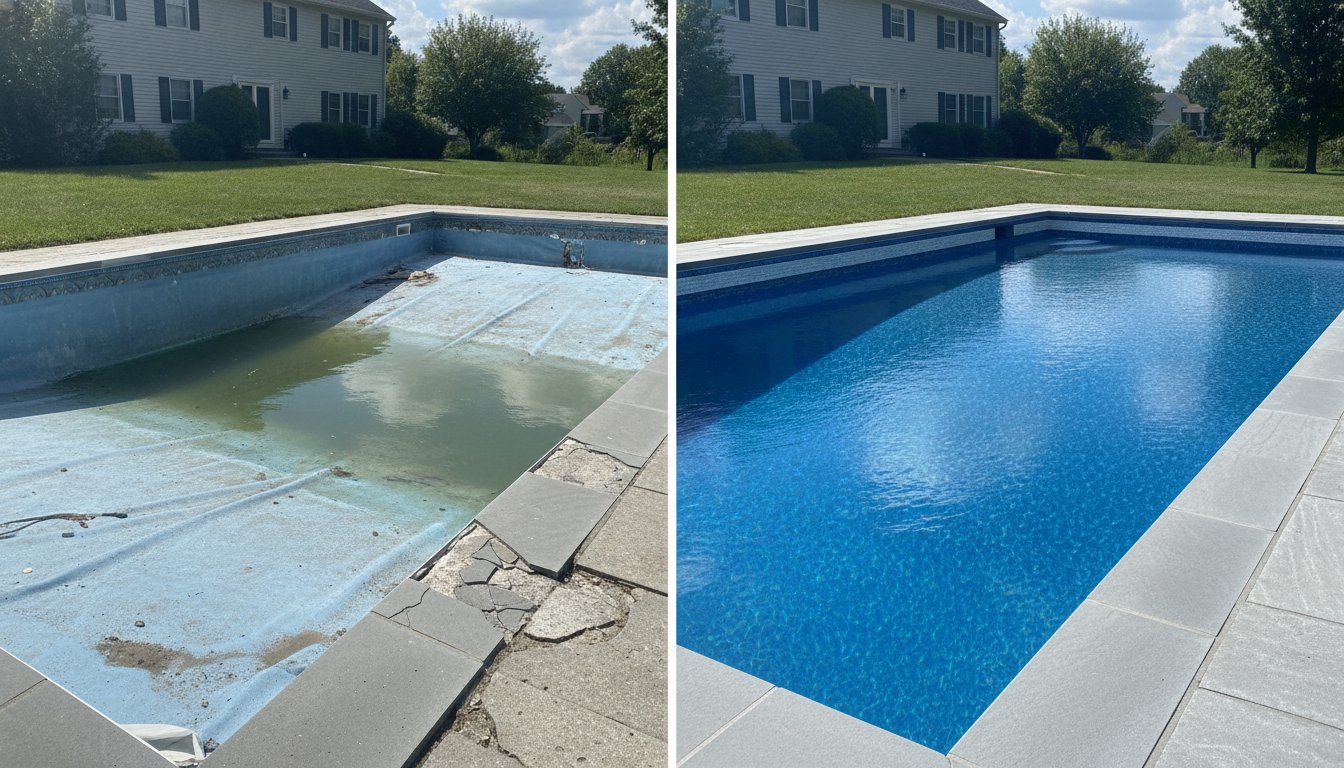
The preparation phase is where the true transformation begins. We meticulously scrape the pool walls to remove oxidation and apply specialized treatments to prevent future rust. Simultaneously, our team patches and resurfaces the vermiculite or sand-bottom floor to eliminate divots and imperfections. Before the new vinyl is even unfolded, we perform a comprehensive gasket and faceplate replacement. Every skimmer, return, and main drain receives a fresh seal to guarantee a leak-proof finish. Finally, we move to vacuum-sealing the new vinyl. This process utilizes high-volume industrial vacuums to pull the liner tight against the structure, ensuring a perfectly smooth, wrinkle-free finish that defines a professional inground vinyl liner replacement NJ.
The Critical Vacuum-Fit Phase
High-volume vacuums are the secret to an elite installation. These machines remove air pockets from behind the vinyl during the initial fill, forcing the material into every corner and contour of the pool shell. DIY attempts or cut-rate services often skip this step or use inadequate equipment, which results in permanent floor wrinkles and "dead spots" where the liner doesn't meet the wall. In towns like Demarest, where water pressure can fluctuate, we carefully monitor the fill rate to ensure the liner stays seated perfectly as the vacuums are gradually phased out.
Gasket and Hardware Replacement
Reusing old gaskets is an unacceptable risk that leads to underground leaks and structural erosion. We never reuse skimmer or return gaskets; every project includes a complete hardware refresh. Our technicians also inspect the "bead track" for structural integrity. If the track is bowed or brittle, the liner won't stay secure. For 2026, we've upgraded our standard installations to include stainless steel faceplates, which offer superior durability against the salt-chlorine generators and aggressive chemicals common in modern pool systems.
Addressing Structural Issues During Liner Replacement
When you strip away an old vinyl liner, you finally see the true condition of your pool's skeleton. This is a rare and vital window of opportunity. It's the only time we can inspect the structural foundation for issues that are otherwise hidden by thousands of gallons of water. In the low-lying areas of Bergen County, identifying these problems early is the difference between a successful inground vinyl liner replacement NJ and a project that fails within a few seasons. We don't just cover up flaws; we restore the integrity of the entire system.
Northern New Jersey features dense clay soil that notoriously retains moisture. This trapped water exerts immense hydrostatic pressure against your pool walls. When the pool is emptied, that internal counter-pressure vanishes, creating a risk for structural shifting. If our technicians detect significant movement or wall bowing, professional pool repairs must be completed before the new liner is seated. Addressing these "hidden" threats ensures your backyard remains a safe, beautiful sanctuary for years to come.
Groundwater and Pressure Relief
To manage high water tables during installation, we often utilize "well points." These are temporary drainage systems designed to pump groundwater away from the pool shell while the liner is being replaced. Without this professional oversight, you face the catastrophic risk of "pool popping," where the entire structure floats out of the ground. This is especially critical in certain low-lying areas of Bergen County, where the water table often sits much higher than in other communities. Our technical team monitors these levels constantly to maintain the perfect balance of pressure.
Wall and Floor Restoration
Steel wall oxidation is a silent enemy that we address with aggressive treatment. Rust acts like sandpaper against the back of your vinyl, eventually causing "burn-through" that ruins the material. We scrape, prime, and often apply a layer of protective wall foam. This foam provides a smooth, cushioned surface and adds a layer of insulation to help retain water heat. We also meticulously patch floor divots in the vermiculite or sand base. Even a small hollow spot can lead to "heel marks" or sharp points that compromise the new vinyl. By perfecting the pool "cove"-the angled transition where the wall meets the floor-we ensure the liner sits naturally without unnecessary stretching.
If you suspect your pool has underlying structural issues or drainage concerns, request a technical structural assessment from our Bergen County specialists today.
Transform Your Property with Right Pool Care
A swimming pool is often the reflective heart of a home, a place where memories are forged and the summer heat is conquered. At Right Pool Care, we understand that an inground vinyl liner replacement NJ is a significant investment in your property's future. We bring a no-nonsense, professional attitude to every job site, backed by over 20 years of experience serving neighbors in Norwood and Old Tappan. Our reputation is built on dependable results and a commitment to safety that never wavers. We don't just swap materials; we restore the structural integrity of your sanctuary.
Every project we undertake adheres to the rigorous expert pool liner replacement in Closter NJ standards. This means we treat every pool as if it were our own, prioritizing precision measurements and high-grade materials. Your 2026 renovation begins with a comprehensive on-site structural evaluation. We look past the surface to ensure your pool walls and floor are ready to support a new decade of use. Trust is earned through this level of detail, and we take pride in delivering a finished product that is as secure as it is stunning.
The Total Pool Rejuvenation Experience
A liner replacement is the perfect time to evaluate your entire system. Many Alpine homeowners choose to coordinate their inground vinyl liner replacement NJ with equipment upgrades, such as high-efficiency heat pumps or advanced filtration units. Modernizing these components alongside a new, dark-bottom liner can significantly increase property value in high-end neighborhoods. If your vision extends beyond the liner, we can link these updates to our broader swimming pool construction services. This holistic approach ensures your backyard isn't just repaired, but completely transformed into a modern masterpiece.
Ready for a Refresh?
Timing is everything when it comes to the short New Jersey swimming season. Booking your 2026 slot by March is essential to ensure your pool is ready for the first heatwave of June. This early window also allows for better ground stability and flexible scheduling. Before our crew arrives, ensure your backyard is clear of furniture and the water level is maintained as instructed during your evaluation. We handle the heavy lifting, the technical drainage, and the precision fitting. All you need to do is prepare for a summer of perfectly clear water. Contact Right Pool Care for a professional inground liner estimate and take the first step toward your pool's rebirth.
Secure Your Backyard Sanctuary for 2026
A successful pool renovation transforms your outdoor space from a source of stress into a reliable, beautiful retreat. You now understand that a high-quality liner is your pool's primary defense against the elements. By prioritizing virgin vinyl materials and addressing underlying structural concerns during the drainage phase, you ensure a finish that remains wrinkle-free for years. Protecting your investment requires a blend of technical precision and local environmental knowledge that only an established firm can provide.
Our team brings 20+ years of Northern NJ expertise to every project. We specialize in high-durability 27-mil vinyl and utilize precision vacuum-fit technology to guarantee a perfect seal against the pool shell. When you're ready to upgrade your property, a professional inground vinyl liner replacement NJ is the most effective way to modernize your backyard aesthetics while reinforcing long-term safety. Don't wait for the peak summer rush to address leaks or fading patterns.
Request Your Professional Inground Liner Quote Today. We're here to help you create a beautiful, life-enhancing space for your family to enjoy for many seasons to come.
Frequently Asked Questions
How much does inground vinyl liner replacement cost in NJ for 2026?
Total project costs depend on your pool's specific dimensions, the condition of the floor, and the complexity of your step configuration. Custom freeform shapes or pools with added features like tanning ledges require more precision labor than standard rectangles. We provide comprehensive, on-site evaluations to ensure your quote includes all necessary floor prep and hardware updates without hidden fees.
How long does it take to replace an inground pool liner?
The physical installation process usually spans two to three business days once your custom liner is delivered. We dedicate the first day to controlled drainage and removal of the failing material. Subsequent days focus on floor restoration and wall treatments before the final vacuum-sealing. The total time until you can swim depends on your local water pressure and the pool's total gallon capacity.
Can I change my inground pool's shape when replacing the liner?
A standard liner replacement cannot alter the structural footprint of your pool walls. The new vinyl is custom-measured to fit your existing shell with absolute precision. Significant shape changes would require a full structural reconstruction of the steel or polymer wall panels. You can, however, modernize the aesthetic with borderless patterns or upgraded vinyl-covered steps within the current framework.
Is a 27-mil liner better than a 20-mil liner for Bergen County winters?
A 27-mil liner provides a much stronger defense against the aggressive freeze-thaw cycles typical of Northern New Jersey. While 20-mil is a functional choice for some floors, the extra thickness of a 27-mil wall offers superior resistance to ice lenses and root penetration. Choosing a thicker material for your inground vinyl liner replacement NJ is a smart way to maximize the lifespan of your investment.
What happens if my inground pool liner floats after heavy rain?
Floating occurs when groundwater builds up behind the vinyl, a common issue during heavy NJ spring rains. This requires immediate professional attention to pump the trapped water and reset the liner using high-volume vacuums. If you ignore a floating liner, you risk permanent wrinkles or structural damage to the vermiculite floor base that sits beneath the vinyl.
Do I need to replace my pool water entirely after a liner installation?
You must refill the pool with fresh water following a liner replacement. We drain the pool completely to inspect the floor and walls, making it impossible to save the old water. Starting with a fresh fill allows you to reset your chemical balance and ensures the new liner is seated perfectly under the weight of clean, mineral-free water.
Will a new vinyl liner fix my pool's structural leaks?
A new liner will stop any leaks originating from holes or failing seams in the vinyl itself. However, it cannot resolve underground plumbing failures or major cracks in the pool's foundation. We perform a technical inspection during every inground vinyl liner replacement NJ to identify and address these issues before the new material is installed.
How do I know if my inground pool wall is rusted behind the liner?
Signs of wall oxidation include visible "rust bleed" stains on the liner or a crunchy, uneven texture when you press against the pool wall. Once we remove the old vinyl, we conduct a full inspection of the steel panels. We treat any detected rust with specialized primers and protective foam to prevent the oxidation from damaging your new liner.