For many Bergen County homeowners, a gallon of muriatic acid feels more like a liability than a maintenance tool. It’s completely normal to feel a bit of hesitation when handling corrosive chemicals, especially when conflicting advice from big-box stores leaves you guessing about the difference between pH and Total Alkalinity. You want a crystal-clear pool, but you don't want to risk your safety or damage your equipment. Since hard water scaling affects approximately 85% of North Jersey homes, understanding this powerful chemical is essential for every local property owner.
Right Pool Care is here to provide the reassuring, expert guidance you need to manage your water chemistry with confidence. We'll show you exactly how to master the safe use of muriatic acid to balance your water and protect your investment. You will learn essential safety protocols, precise dosing methods for our local water conditions, and how to identify when your plaster needs a professional acid wash from our trusted team. We believe every backyard deserves a safe, beautiful environment; we’re dedicated to helping you create your own miracles in the making through expert maintenance and care.
Key Takeaways
- Learn how to protect your pool equipment and prevent scale buildup by mastering the essential role of pH control.
- Discover why liquid muriatic acid is a more cost-effective and efficient solution than dry acid for maintaining large Bergen County pools.
- Master the "Golden Rule" of chemical safety and the specific gear needed to handle pool maintenance with professional-grade confidence.
- Understand how to manage the unique hard water profiles found in Tenafly and Demarest by balancing Total Alkalinity and pH.
- Learn to identify the specific conditions that require a professional acid wash instead of a routine DIY water treatment.
Understanding Muriatic Acid: The Essential Power Tool for Bergen County Pools
Every pristine pool in Northern New Jersey relies on a delicate chemical balance. Achieving that perfect, "Miracles in the making" look isn't a matter of luck; it's a result of precision chemistry. At Right Pool Care, we view muriatic acid as the most effective tool in a technician's arsenal for maintaining water clarity and protecting your investment. This powerful liquid compound allows us to manage pH levels with surgical accuracy, ensuring your water remains inviting and your equipment stays functional for years.
The role of acid goes far beyond simple water comfort. When pH levels climb too high, calcium begins to precipitate out of the water, forming a hard white crust known as scale. This scale attaches to your tile, clogs your PVC piping, and destroys the heat exchangers in expensive pool heaters. By utilizing muriatic acid to keep pH within the ideal 7.4 to 7.6 range, we prevent these structural issues before they start. It's a proactive approach to maintenance that saves Alpine and Closter homeowners thousands in avoidable repair costs.
Muriatic Acid vs. Hydrochloric Acid: What’s the Difference?
Muriatic acid is a liquid solution used to lower pH and alkalinity. While the names are often used interchangeably, there's a technical distinction in concentration and purity. Hydrochloric acid (muriatic acid) is the industrial term for the pure chemical. In the pool industry, we use the term "muriatic" to describe a slightly less pure, diluted version that's safer for residential handling.
Most professional-grade muriatic acid comes in two specific concentrations:
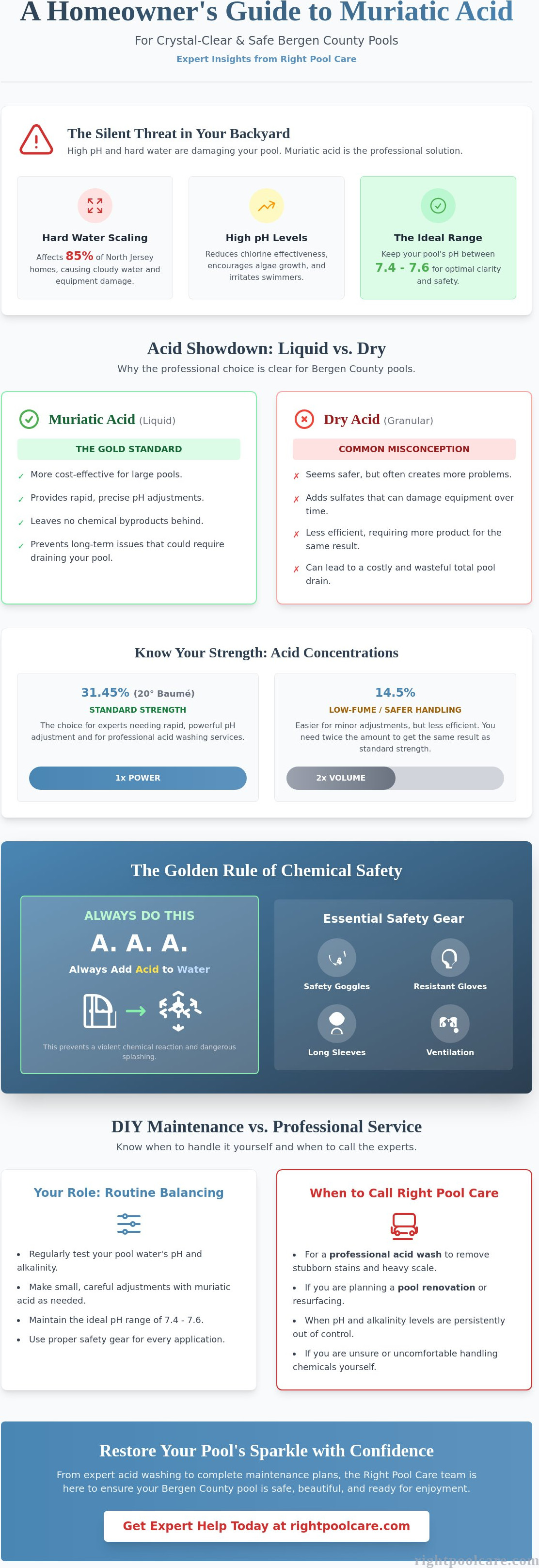
- 31.45% Concentration: Also known as 20-degree Baumé, this is the standard strength used by experts for rapid pH adjustment and acid washing.
- 14.5% Concentration: A "low-fume" variety that's easier to handle for minor adjustments but requires twice the volume to achieve the same results.
The pool industry sticks to the name "muriatic" because it distinguishes the product from high-purity laboratory chemicals while signaling its specific use for masonry and water treatment.
Why Your NJ Pool Specifically Needs It
Bergen County presents unique challenges for pool chemistry. Our local water sources and rapid seasonal temperature swings often cause pH levels to drift upward. In affluent areas like Alpine and Closter, many luxury pools feature extensive stonework and waterfalls. These features aerate the water, which naturally drives pH higher over time. Without regular intervention, this high-pH environment becomes the perfect breeding ground for algae and cloudy water.
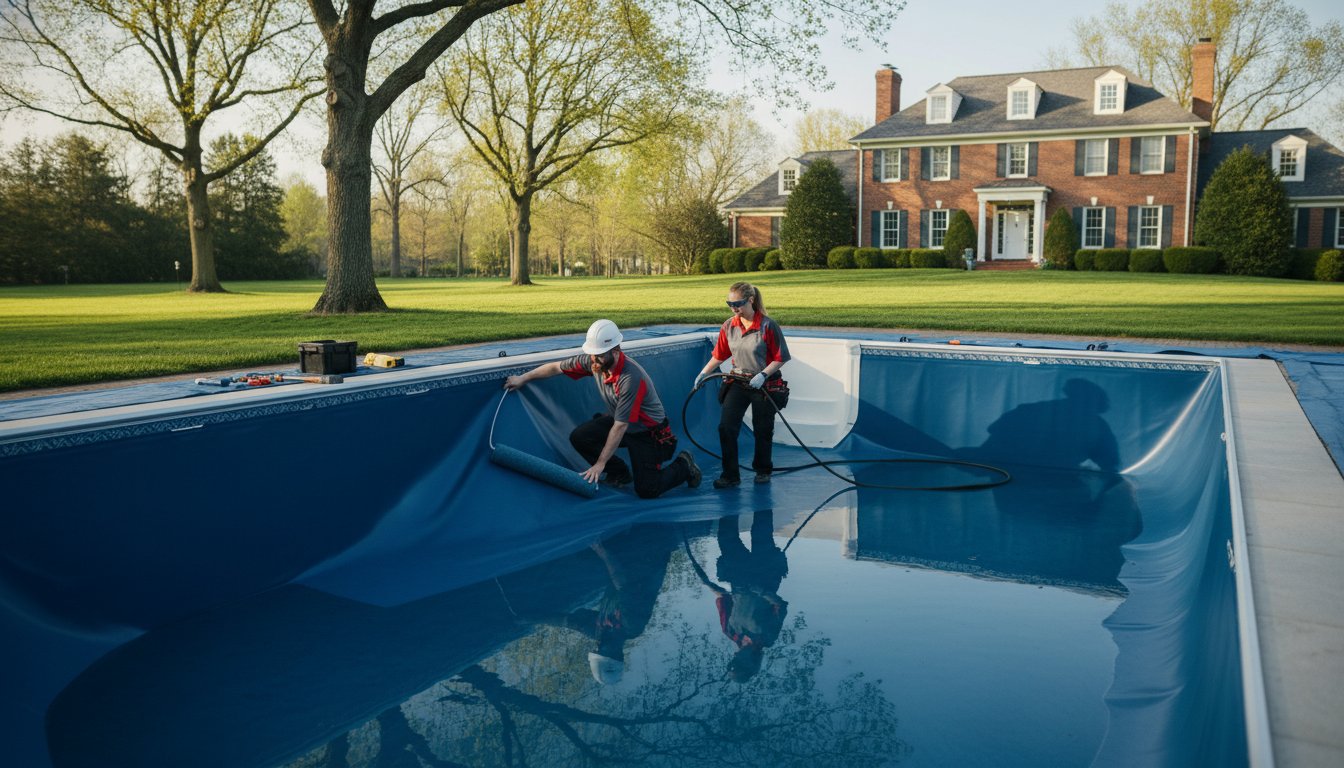
Proper acid balance is also the first step in preparing a vessel for swimming pool renovation services. If you're planning to resurface your pool or replace your tile and coping, the water must be chemically stable to ensure the new materials cure correctly. We often hear from homeowners who think the chemical is "too scary" to keep on-site. While it's true that it's a strong acid, it's safer than many people realize when handled with professional respect. It doesn't linger in the environment and neutralizes quickly once added to the large volume of pool water, making it a reliable expert choice for long-term water health.
Myth vs. Reality: Why Muriatic Acid Beats Dry Acid for pH Control
Many homeowners assume dry acid is the "safe" choice for residential pools. This is a common misconception. While granular sodium bisulfate seems easier to handle, it often creates more problems than it solves. Liquid muriatic acid remains the gold standard for maintaining water chemistry in Bergenfield. It offers superior efficiency and cost-effectiveness for large volume pools. It doesn't leave behind the chemical byproducts that eventually force a total water drain.
Handling any chemical requires respect and proper technique. A CDC report on pool chemical safety highlights that most injuries occur from improper handling or mixing. When used correctly, this liquid provides immediate results without the long-term chemical baggage of granular alternatives. It's the most reliable way to achieve a professional-grade balance in your water.
The Hidden Downsides of Dry Acid
Dry acid adds sulfates to your water every time you use it. Once sulfate levels exceed 300 ppm, the water becomes corrosive. This buildup specifically attacks the titanium coating on salt cells and degrades copper heat exchangers in your heater. In the chilly 50-degree NJ spring air, dry acid struggles to dissolve. It often sits on the floor and can etch your liner or plaster surfaces. Right Pool Care technicians prioritize liquid acid because it allows for total precision during the critical opening weeks. If you're concerned about your equipment's longevity, it might be time for a professional water chemistry assessment to check your current sulfate levels.
Performance Comparison: Liquid vs. Granular
- Reaction Time: Liquid acid lowers pH in under 15 minutes with proper circulation. Granular acid can take hours to fully integrate.
- Storage: NJ winters are harsh. While liquid acid has a freezing point well below zero, dry acid absorbs humidity. This creates rock-hard clumps that are impossible to measure accurately.
- Economy: For a standard 20,000-gallon pool, liquid acid typically costs 30% less per application than the equivalent dose of dry acid.
- Shelf Life: Liquid muriatic acid maintains its full potency for up to 5 years if sealed, whereas granular acid begins to degrade and clump within 12 to 18 months of exposure to air.
Choosing the right chemical isn't just about convenience. It's about protecting the investment you've made in your backyard. Liquid acid works faster, costs less over the season, and keeps your mechanical systems running without the risk of sulfate scale. We've seen hundreds of pools in Bergen County where switching to liquid acid extended the life of the heater by several years.
The Science of Bergen County Water: Managing pH and Scale with Precision
Pool water in Tenafly, Demarest, and Old Tappan isn't just a place to swim. It is a complex chemical environment influenced by a heavy mineral profile. Bergen County residents frequently deal with calcium hardness levels that exceed 400 parts per million. This creates a "hard water" challenge where pH levels refuse to stay down. Total Alkalinity (TA) acts as the chemical anchor for your pH. When TA is too high, your pH will constantly drift upward, leading to cloudy water and uncomfortable swimmers. We use muriatic acid to "burn off" this excess alkalinity, allowing the pH to settle into a safe, manageable range.
Managing this balance is about more than just clear water. It is about asset protection. High pH and runaway alkalinity cause calcium to drop out of suspension. This results in rough textures on your pool surface and clogged filters. By maintaining precise control over your water chemistry, you prevent the structural damage that leads to an early pool liner replacement Closter NJ. Expert maintenance now saves thousands of dollars in renovation costs later.
Bergen County’s Calcium Challenge
If you notice white flaky deposits on your tile or coping, you are seeing calcium scale in action. This is a common sight in Cresskill, especially for properties relying on well water. Well water often carries a different mineral load than city water, requiring more frequent testing. When pH stays above 7.8, minerals react with the water to create "metal staining" on vinyl liners. These stains are often permanent. Keeping a gallon of muriatic acid on hand allows for quick corrections before these minerals bond to your pool's finish. We recommend testing twice weekly during the peak of the summer heat.
The Langelier Saturation Index (LSI) for NJ Pools
A "balanced" pool isn't defined by one single number. We use the Langelier Saturation Index (LSI) to determine if your water is corrosive, scale-forming, or perfectly neutral. This index accounts for pH, alkalinity, calcium hardness, and water temperature. In 2026, Northern New Jersey has experienced erratic temperature swings. As the water gets warmer, the LSI rises, making scale more likely to form. By adding small, calculated doses of acid to achieve a slightly negative LSI, we can actually "clean" the pool by dissolving light, existing scale. This keeps your PVC piping clear and ensures your heater runs at peak efficiency all season long.
Safe Handling and Dosing: A Homeowner’s Guide to Using Muriatic Acid
Handling pool chemicals requires a disciplined approach. The most critical safety rule is to always add acid to water, never water to acid. Adding water to a concentrated container of acid can cause a violent exothermic reaction, resulting in dangerous splashing or a boil-over effect. This simple sequence keeps the chemical reaction controlled and predictable.
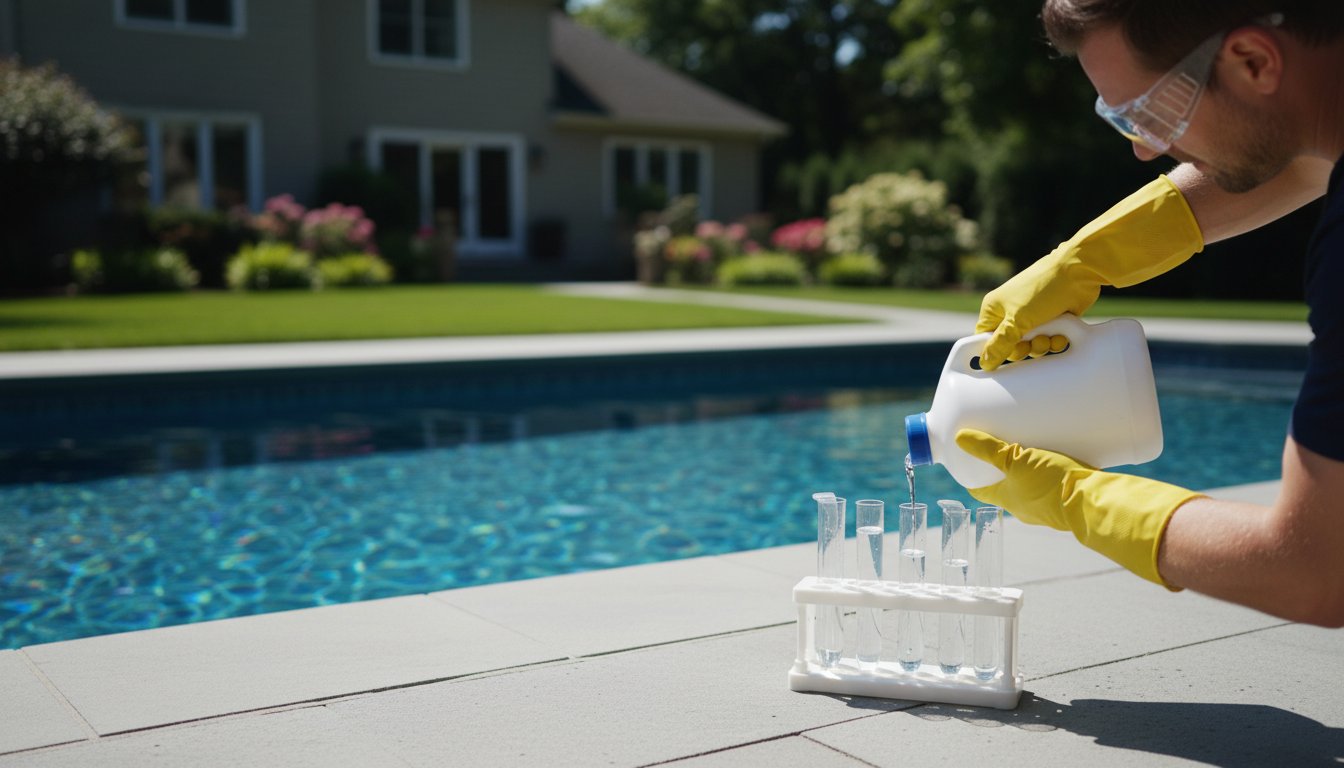
Safety starts with the right gear. Before you open a container of muriatic acid, verify your personal protective equipment (PPE) is intact. Residential pool owners in Bergen County should maintain a dedicated safety kit. This isn't just a suggestion; it's a requirement for handling corrosive liquids safely.
- Chemical-resistant nitrile or neoprene gloves.
- Safety goggles with side shields to prevent splash contact.
- Closed-toe shoes or rubber work boots.
- Long-sleeved shirts and full-length pants to protect skin.
When you're ready to pour, keep the container close to the water surface. This reduces the chance of splashing onto the pool coping or your skin. Always stand upwind. The fumes from muriatic acid are heavy and acrid; they'll irritate your lungs and throat instantly if inhaled. By positioning yourself correctly, the breeze carries these vapors away from your face.
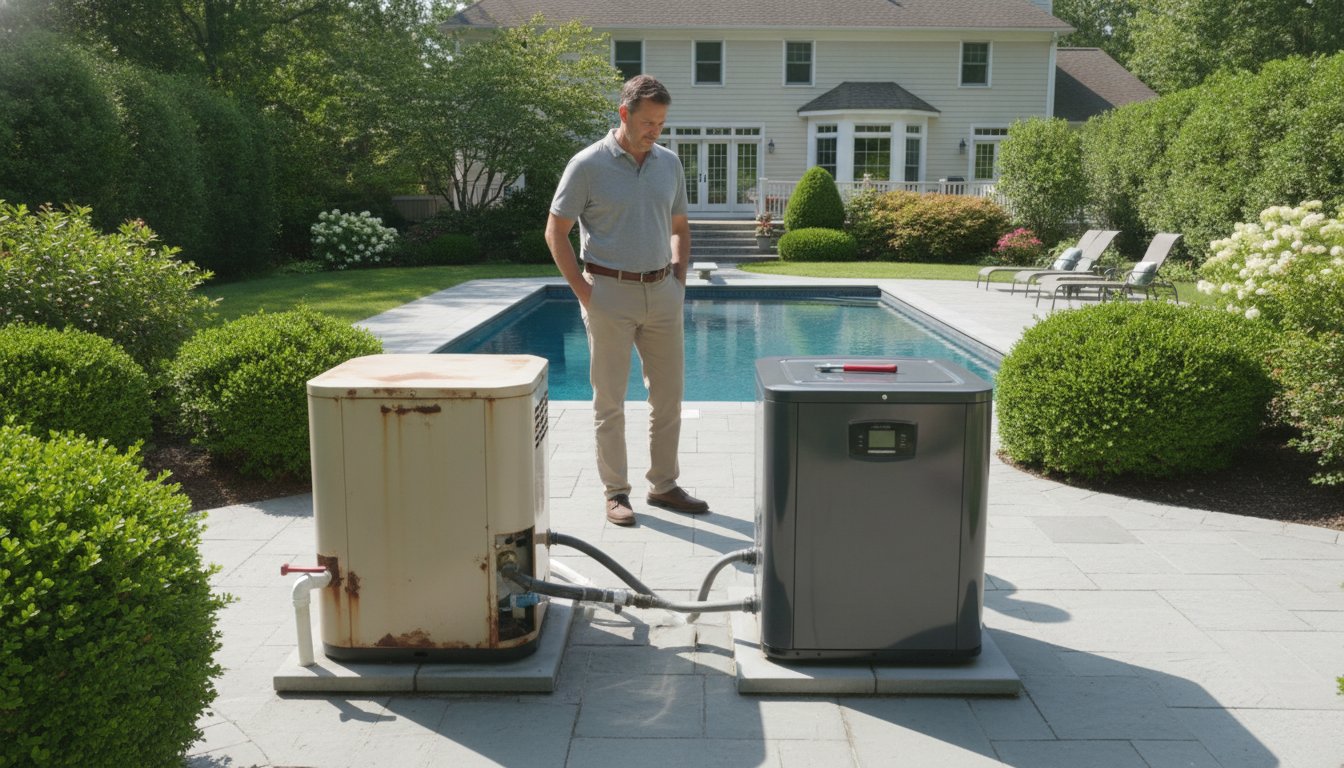
Storage is equally vital for Alpine and Norwood properties. Many local homes feature high-end pool sheds equipped with expensive heaters and automation systems. Store your acid on a low, stable shelf, preferably in a plastic secondary container. Keep it far away from pool heaters. The corrosive vapors can degrade metal heat exchangers and copper piping within 12 months if the area isn't properly managed.
The Step-by-Step Dosing Process
Never guess the amount of chemical your pool needs. Use a professional-grade test kit to confirm your pH is above 7.8 before you begin. To apply the dose, use the "walk-the-acid" method. Slowly pour the measured liquid around the perimeter of the deep end while the filtration pump is running on high. This ensures the chemical distributes quickly through the 20,000 to 40,000 gallons of water. You must wait 2 to 4 hours after application before it's safe to swim or retest the levels.
Storage and Spill Response in a Residential Setting
Cross-contamination creates immediate danger. Never store your acid near chlorine or metal tools, as mixing acid with chlorine creates lethal gas. If a spill occurs on your patio, use 99% pure baking soda to neutralize it. Pour the powder over the liquid until all bubbling and fizzing stops completely. Your pool shed or storage box must feature at least two points of cross-ventilation to prevent the accumulation of corrosive gas that destroys metal hardware and electronic components.
When DIY Isn't Enough: Professional Acid Washing and Renovation
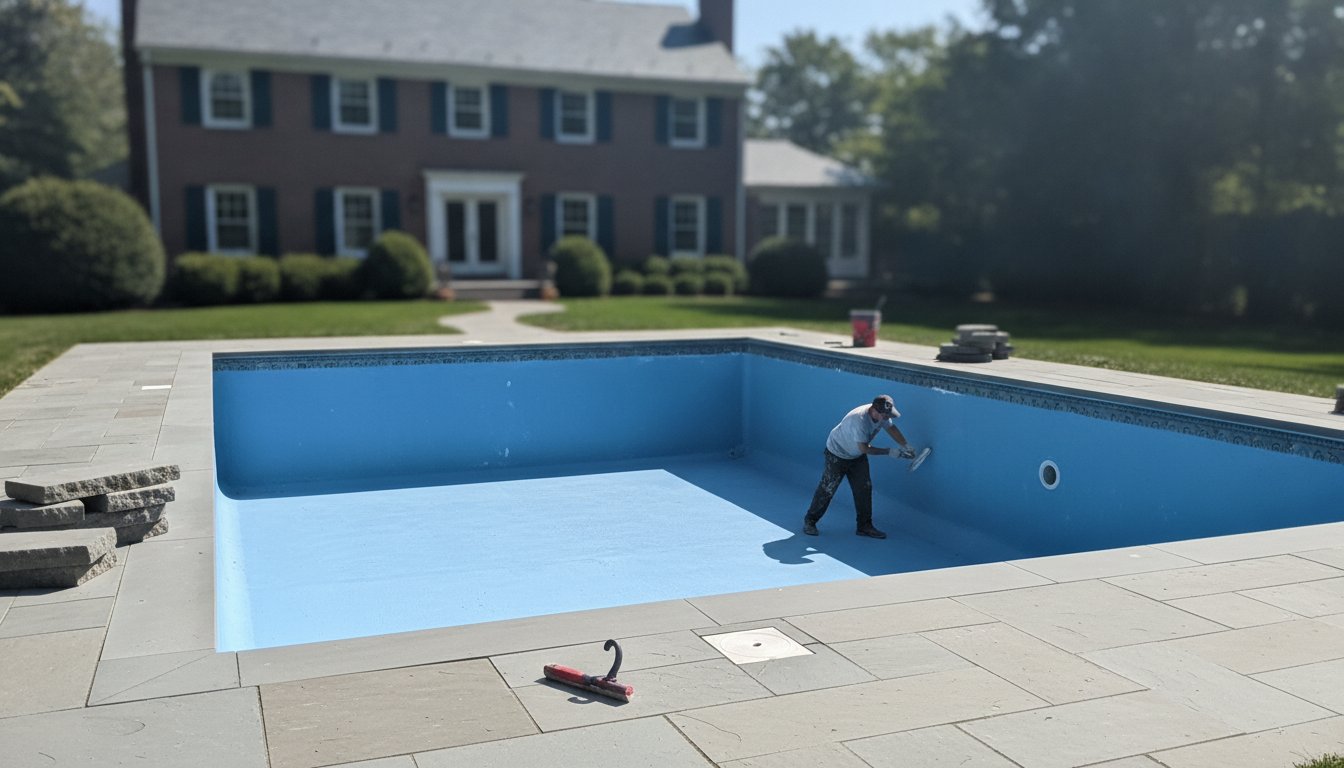
Most pool owners use muriatic acid to lower pH levels during weekly maintenance. However, balancing water chemistry is vastly different from a full "drain and restart" acid wash. A professional acid wash is a restorative procedure designed specifically for concrete and plaster pools. It involves removing a microscopic layer of the pool surface to reveal a fresh, clean finish underneath. This process is a critical part of concrete pool resurfacing. It ensures that new finishes bond correctly to the existing structure and provides a uniform look that chemical additives alone cannot achieve.
Knowing when to call in the experts saves time and prevents permanent surface damage. Look for these specific signs that your pool needs a professional touch:
- Deep Staining: Copper, iron, or organic tannins that won't budge with standard shock treatments or stain removers.
- Rough Textures: A pool floor that feels like sandpaper, which is often caused by heavy calcium scaling.
- Surface Discoloration: Gray or dingy plaster that makes even chemically balanced water look dull or dirty.
Right Pool Care serves as your local expert for Alpine, Closter, and Bergen County renovations. We handle the technical heavy lifting so you can enjoy a pristine backyard oasis without the stress of handling hazardous materials or managing complex drainage logistics.
The Professional Acid Wash Process
Our team starts by safely draining the pool. This task requires careful monitoring of local groundwater levels to prevent the pool shell from lifting out of the ground. Once the pool is empty, we apply a concentrated muriatic acid solution to the walls and floor. We scrub the surfaces to strip away years of neglect and mineral buildup. This is not a DIY project. Managing high-concentration runoff requires specialized neutralization chemicals to protect your landscaping and the local environment. At Right Pool Care, we call these transformations "Miracles in the Making." The results often look like a complete renovation for a fraction of the cost of a full replaster.
Integrating Acid Care into Your Yearly Maintenance
Annual maintenance is the best way to avoid major resurfacing costs down the road. Professional pool openings in Closter ensure your chemistry starts at zero each spring. We check for early signs of scaling and handle the heavy lifting of chemical balancing before you take your first swim. Partnering with Right Pool Care for seasonal service protects your equipment longevity and your family's safety. We provide the expert water assessment you need to keep your pool running efficiently all summer long. Our goal is to provide a worry-free experience that keeps your water crystal clear and your pool surface smooth.
Contact Right Pool Care for an expert water assessment or acid wash today!
Take Control of Your Bergen County Pool Chemistry
Maintaining a balanced pool in Northern New Jersey requires more than just guesswork. You've learned why muriatic acid remains the industry standard for lowering pH levels effectively without the byproduct buildup found in dry alternatives. Proper chemical handling keeps your family safe and protects your pool's surface from the high mineral content common in local Bergen County water sources. For over 20 years, Right Pool Care has helped homeowners navigate these technical challenges with precision and care.
Whether you're managing weekly dosing or need a full renovation to restore your pool's original luster, expert guidance makes the difference. Our team specializes in "Miracles in the Making" renovations, turning worn surfaces into pristine retreats through professional acid washing and structural repairs. Don't let chemistry stress ruin your summer. As safety cover and chemical handling experts, we're ready to handle the heavy lifting so you can get back to enjoying your backyard oasis. Schedule a Professional Water Analysis or Acid Wash with Right Pool Care to ensure your pool stays healthy all season long. Your perfect swim season starts with the right local expertise.
Frequently Asked Questions About Pool Maintenance
Can I swim right after adding muriatic acid to my pool?
You should wait at least 45 to 60 minutes before entering the water. This interval allows the filtration system to circulate the liquid and prevent concentrated pockets of acidity. Always test the pH levels to ensure they're between 7.2 and 7.6 before anyone dives in.
How much muriatic acid should I add to lower my pH by 0.2?
For a typical 20,000 gallon pool, adding 12 to 16 ounces of product usually achieves a 0.2 pH reduction. You must calculate your specific volume first to avoid chemical imbalances. Adding too little is better than overshooting, so measure carefully with a plastic graduated cylinder.
Is muriatic acid safe for vinyl liner pools in Bergen County?
Yes, it's safe for vinyl liners if you dilute it in a 5 gallon bucket of water first. Pouring it directly onto the floor can cause bleaching or brittleness in the material. Right Pool Care experts recommend adding the mixture near the return jets for rapid distribution throughout the deep end.
What happens if I accidentally add too much muriatic acid?
Your pH will likely drop below 7.0, which makes the water acidic enough to irritate eyes and corrode copper heat exchangers. You'll need to add 1 to 2 pounds of soda ash per 10,000 gallons to bring levels back to safety. Check the alkalinity immediately, as it likely dropped to a dangerous level as well.
Can muriatic acid remove stains from my pool stairs?
It's an excellent tool for removing stubborn calcium or rust stains from stairs and walls. Use a 1 part muriatic acid to 10 parts water solution for a localized scrub. This process restores the bright finish of your pool components quickly without the need for a full drain and refill.
How should I store muriatic acid during a New Jersey winter?
Store your containers in a dedicated plastic bin in a well-ventilated area like an unheated shed. The liquid remains stable until temperatures drop to -18 degrees Fahrenheit. Never store it near metal equipment or pool heaters because the fumes cause rapid oxidation and rust on expensive components.
Does muriatic acid lower alkalinity and pH at the same time?
Yes, it reduces both chemical levels simultaneously. For every 1.3 quarts added to a 10,000 gallon pool, you can expect a 10 ppm drop in total alkalinity. It's the most effective way to manage the high alkalinity often found in local NJ water sources during the peak summer months.
Is it better to use muriatic acid or pH Down (dry acid)?
Muriatic acid is the superior choice for most NJ homeowners because it's more powerful and leaves no residue. Dry acid contains sodium bisulfate, which builds up sulfates in the water over time. High sulfate levels can damage salt chlorine generators and pit concrete surfaces after 3 to 5 years of consistent use.