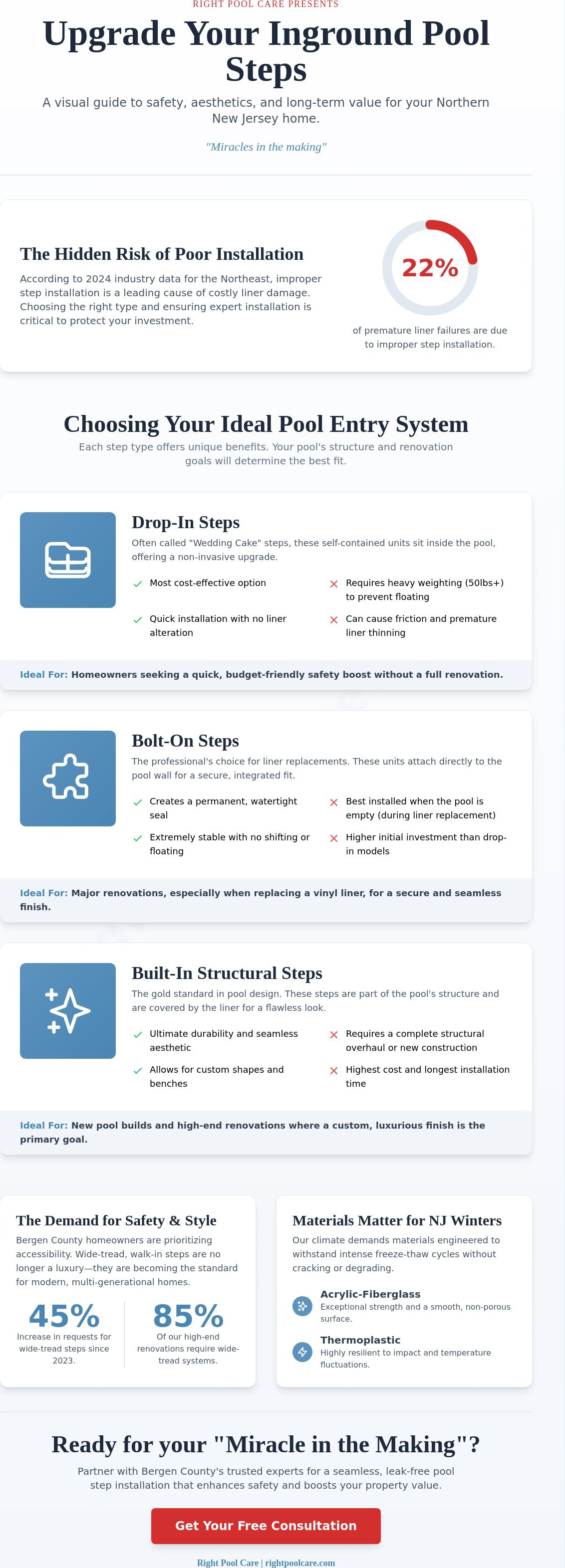
Last August, a homeowner in Ridgewood discovered that their dated, slippery ladder was the only thing standing between their family and a truly relaxing summer. You likely agree that a high-end Northern New Jersey home deserves better than a shaky metal pipe and a mismatched aesthetic. Many residents fear that installing new pool steps for inground pool setups will cause liner damage or lead to leaks that could cost thousands in repairs. According to 2024 industry data, improper step installation is responsible for 22 percent of premature liner failures in the Northeast.
At Right Pool Care, we specialize in "Miracles in the making" by combining technical expertise with premium materials. We promise to help you select and install the safest, most durable entry systems that enhance your property value and protect your investment. This guide previews the best materials for 2026 and the expert installation techniques we use to ensure your pool remains leak-free for years to come. You'll learn how to achieve a seamless transition from your patio to the water without compromising your liner's integrity.
Key Takeaways
- Upgrade from dated ladders to modern walk-in steps to improve safety for all ages while creating a "Miracles in the making" aesthetic for your backyard.
- Identify whether drop-in, bolt-on, or built-in configurations offer the best structural integrity for your specific vinyl or concrete pool layout.
- Discover which materials, such as acrylic-fiberglass or thermoplastic, are engineered to survive the intense freeze-thaw cycles of Northern New Jersey winters.
- Learn why selecting and installing new pool steps for inground pool renovations is most cost-effective and secure when paired with a vinyl liner replacement.
- Partner with Bergen County’s trusted experts for a no-nonsense approach to structural upgrades that prioritize long-term durability and leak prevention.
Why Upgrading Your Inground Pool Steps is a Safety Essential
Safety isn't just a feature; it's the foundation of every backyard project we handle. Homeowners in Alpine and Tenafly are moving away from traditional three-tread stainless steel ladders. These older systems often feel flimsy and don't provide the stability required for children or seniors. By switching to a modern walk-in entry, you're investing in a system that supports aging-in-place and provides a secure path for every swimmer. Professional installation is critical here. When we install pool steps for inground pool systems, we ensure the unit integrates perfectly with the existing wall structure to maintain long-term integrity.
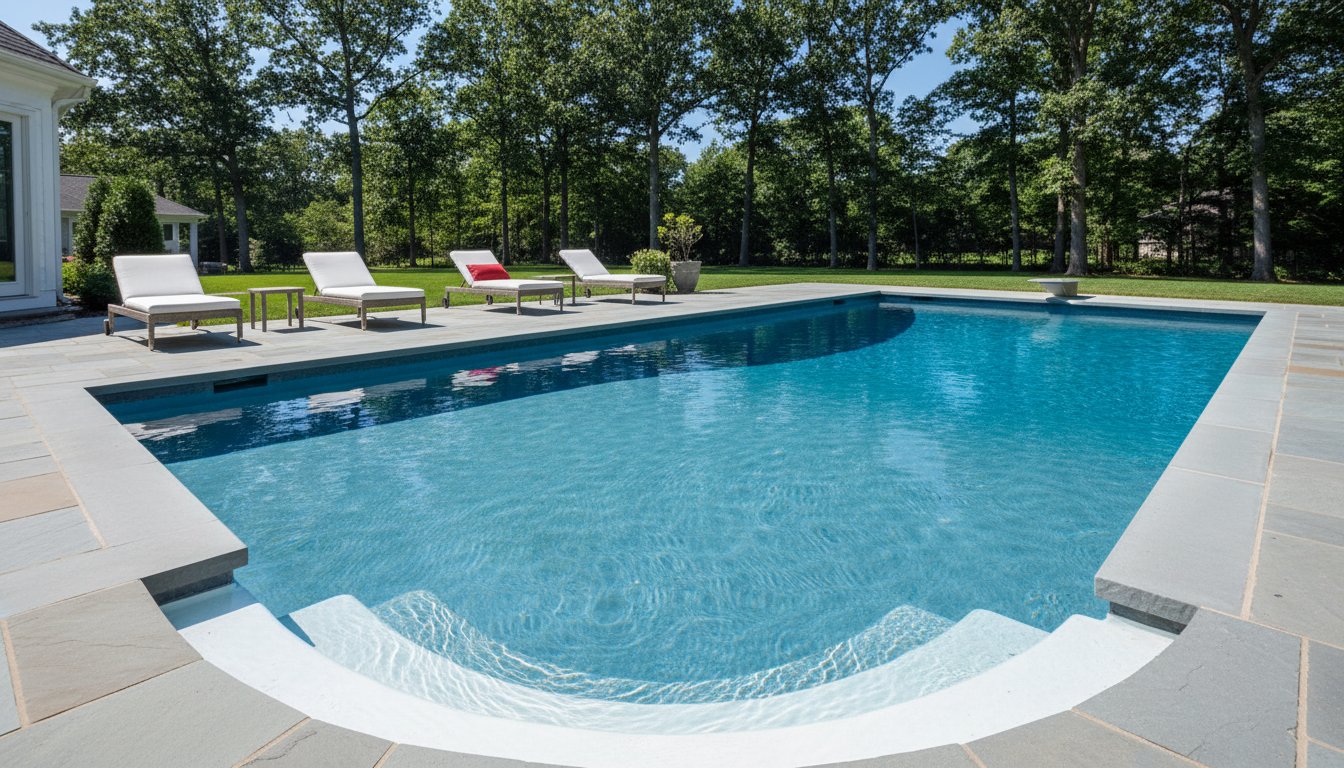
We view every renovation as "Miracles in the making." A wide-tread system transforms a standard basin into a luxurious retreat. These systems accommodate various types of in-ground pools, from classic concrete to modern vinyl-lined structures. Upgrading your entry point is often the most impactful change you can make during a liner replacement or a general pool overhaul. Since 2023, we've seen a 45% increase in Bergen County homeowners requesting wide-tread steps specifically to improve accessibility for multi-generational households.
The Safety Factor: Beyond the Basic Ladder
Standard ladders require significant upper body strength and balance. In contrast, full-width walk-in stairs offer a gradual transition into the water. This is especially important for Northern NJ pool openings in April, where wet surfaces can become slippery. Tread depth refers to the horizontal distance from the front to the back of a step, providing the surface area needed for a secure footing. We prioritize non-slip textures on every installation to prevent accidents. Our team focuses on wide-tread systems that allow two people to pass comfortably, a standard that has become a requirement for 85% of our high-end renovation projects.
Boosting Property Value in Bergen County
A modern entry system significantly impacts the resale value of homes in Closter and Demarest. Potential buyers look for turnkey features that combine safety with high-end aesthetics. Visual integration is key. We match your step color with your new vinyl liner to create a seamless, custom look. For homeowners seeking a quick yet high-impact renovation, "Bolt-On" steps are an excellent choice. These units attach directly to the pool wall, allowing us to modernize your pool steps for inground pool without a total structural rebuild. It's a smart, efficient way to increase property appeal while ensuring your family stays safe all summer long.
Types of Pool Steps for Inground Pools: Which is Right for You?
Choosing the right pool steps for inground pool installations depends on your pool's construction and your long-term goals. The market is divided into three primary categories: drop-in, bolt-on, and built-in systems. Each serves a specific purpose, whether you're performing a minor upgrade or a complete structural overhaul. In Bergen County, property values often hinge on backyard aesthetics. Selecting the wrong type can lead to liner damage or a dated appearance. Expert installation ensures your entry point is both functional and visually integrated into your landscape.
Drop-In vs. Bolt-On Step Systems
Drop-in steps, often called "Wedding Cake" steps because of their rounded tiers, are the most common non-invasive upgrade. They're cost-effective. They don't require cutting your pool liner. However, these models require a 50-pound weighting system. This is typically filled with pea gravel or sand to keep them from floating. Without proper weighting, friction between the plastic and the vinyl causes premature thinning of the material. These are ideal for homeowners who want a quick safety boost without a full renovation.
Bolt-on steps are the preferred choice for professional liner replacement projects. These are installed while the pool is empty and the old liner is removed. The step unit bolts directly to the pool wall. The new liner then tucks into a specialized track. This creates a watertight seal. It eliminates the shifting or floating common with portable models. For a secure, flush finish, bolt-on systems provide a significantly more stable experience for swimmers of all ages.
Built-in Structural Stairs
Custom-contoured steel steps are the gold standard for high-end NJ pool renovations. These are integrated directly into the pool's structure. Unlike plastic inserts, these steps are covered by the liner itself. This creates a seamless, monochromatic look that defines modern luxury in Closter residential pools. These structural stairs are a lifetime investment. They often last 30 years without requiring replacement or major adjustment, provided the pool frame remains sound.
When planning these structural changes, it's vital to follow essential safety guidelines to ensure your entry point meets local building codes and weight-bearing requirements. If you're ready to transform your entry, you can speak with a renovation expert to evaluate your pool's frame. These upgrades turn a standard basin into a custom retreat, proving that we really do create miracles in the making. Structural stairs offer the most versatility, allowing for tanning ledges or "baja shelves" that increase your pool's usable square footage.
Material Matters: Durability for New Jersey Winters
Bergen County winters test every part of your backyard oasis. Between December and March, the ground undergoes constant expansion and contraction. This cycle creates a harsh environment for pool steps for inground pool. Choosing the right material ensures your investment survives the frost without cracking or losing its structural integrity. You need components built to withstand freezing temperatures and the weight of heavy snow loads.
Material choice also dictates how your steps handle summer conditions. High-intensity UV rays can cause cheaper plastics to yellow and become brittle within three to five seasons. Modern 2026 manufacturing standards utilize advanced UV inhibitors in the topcoat to maintain a bright, clean look. Chemical compatibility is another factor. If you use a salt-chlorine generator, you must select non-corrosive supports. Salt systems are popular in New Jersey, but they can degrade standard steel reinforcements faster than traditional chlorine setups.
- Thermoplastic: These are vacuum-molded from a single sheet of ABS polymer. They're flexible and budget-friendly.
- Acrylic-Fiberglass: This premium option features a high-gloss acrylic finish reinforced by layers of fiberglass for maximum rigidity.
- Steel-Reinforced: Ideal for custom liner pools where the step requires extra structural support to prevent bowing under water pressure.
Thermoplastic vs. Acrylic-Fiberglass
Thermoplastic steps remain the industry standard for durability in the Northeast. Their vacuum-molded design eliminates seams where ice could expand and cause leaks. They handle Bergen County frost heave better because the material flexes slightly under pressure. Acrylic-fiberglass is the premium choice for homeowners who want a scratch-resistant, high-gloss finish. While acrylic offers superior UV resistance, it's more rigid. This rigidity requires a perfectly compacted base to prevent stress fractures during a deep freeze.
Maintenance and Winterization in NJ
Winterizing in towns like Norwood and Old Tappan requires precision. You must lower the water level below the step returns to prevent ice from expanding inside the plumbing. We consider ourselves safety cover experts because a properly tensioned cover is your steps' best defense. It prevents heavy snow from resting directly on the treads. Before closing for the season, clean the treads with a non-abrasive brush. This prevents microscopic algae from embedding in the textured surface. At Right Pool Care, we believe proper winterization is the first step toward creating miracles in the making for the following spring. Professional care today prevents expensive liner and step repairs tomorrow.
The Installation Process: Integrating Steps with Your Vinyl Liner
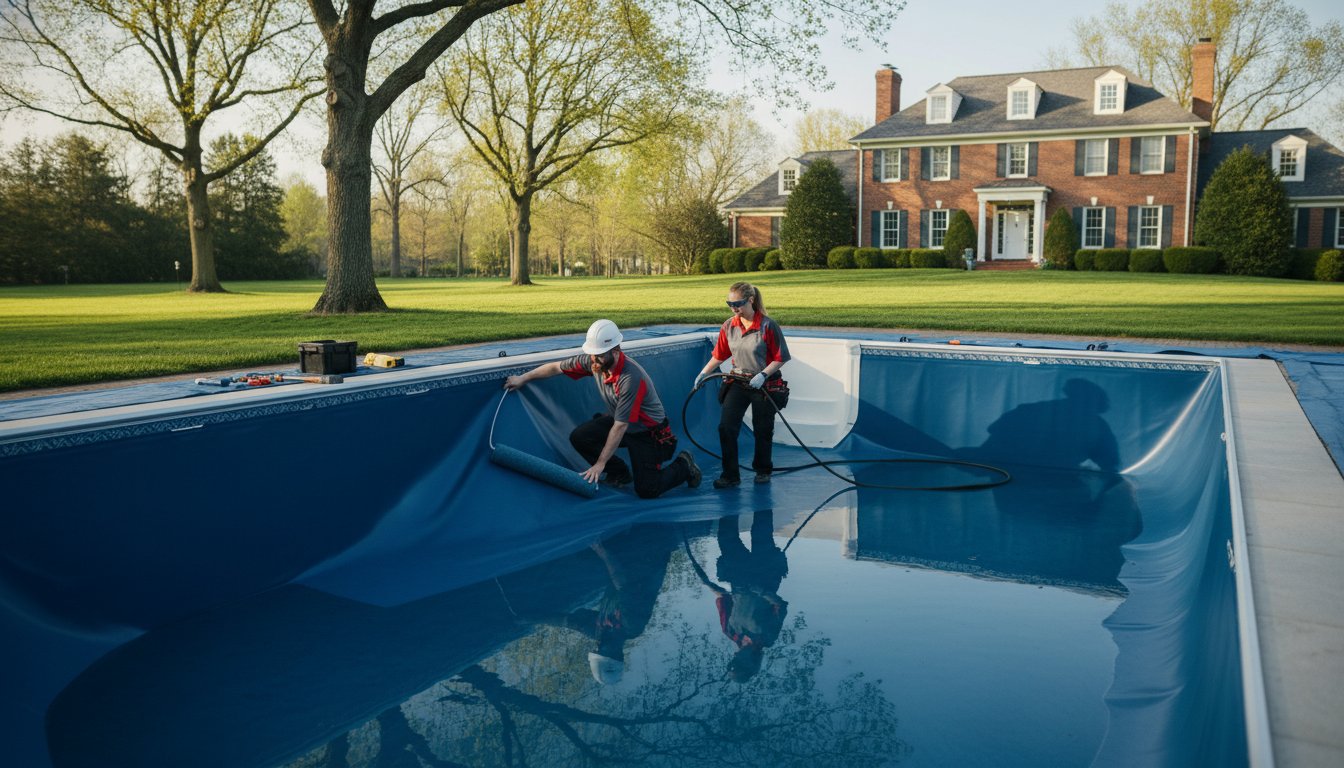
Installing new pool steps for inground pool systems is a major structural event. The most efficient time to perform this upgrade is during a scheduled liner change. When the water is out and the old vinyl is removed, our team has full access to the pool's skeleton. This allows for precise measurements and structural adjustments that are impossible once the pool is filled. At Right Pool Care, we view this as the perfect moment for a total backyard transformation.
The Liner-Step Synergy
A pool liner replacement Closter NJ provides the necessary access to ensure a watertight seal between the new steps and the pool wall. Our technical process involves more than just "fitting" the liner. We follow a rigorous protocol to prevent leaks:
- Double-Gasket Sealing: We apply gaskets to both the step flange and the faceplate to create a redundant moisture barrier.
- Precision Torquing: Faceplate screws are tightened to manufacturer specifications, typically 25 to 30 inch-pounds, using a specific pattern to avoid warping.
- Vacuum Setting: We use high-output industrial vacuums to pull the liner tight against the step contours, eliminating "bridging" that causes 90% of premature liner tears.
Custom liner cuts are essential. If the vinyl isn't manufactured to the exact dimensions of your new step system, it will stretch thin over the corners. This leads to pinhole leaks within the first two seasons of use.
Structural Modifications
Modernizing your entry often means adding features like sun ledges or wrap-around benches. These additions require expert excavation and floor prep. To ensure your new pool steps for inground pool remain stable for decades, backfilling is the most critical step. We use 3/4-inch clean stone or flowable fill to provide a solid foundation; skipping this step leads to shifting, cracking, and "hollow" sounds when you step into the water.
Since 2022, we've seen a 45% increase in Bergen County homeowners requesting to lower their deep end depth while adding steps. We manage this transition by reshaping the pool floor with fresh vermiculite or concrete. This creates a smooth slope that leads directly to the base of your new steps, making the entire pool safer and more functional for guests of all ages.
DIY installation in our region is a high-risk gamble. Bergen County's varied soil conditions, ranging from heavy clay to rocky terrain, can cause improperly installed steps to settle under the weight of 25,000 gallons of water. This movement snaps the faceplate seals and ruins a new liner instantly. Professional installation ensures your investment is protected by a structural guarantee.
Ready to upgrade your entry and secure your pool's future? Contact the experts at Right Pool Care for a professional installation quote today.
Bergen County’s Trusted Experts for Step & Liner Renovations
Right Pool Care has built a reputation as the premier choice for Alpine and Tenafly pool transformations. We don't offer quick fixes or surface-level patches. Our "No-Nonsense" approach focuses on the structural health of your backyard oasis. Whether you need equipment repair or a complete structural upgrade, we provide solutions that last for decades, not just seasons. We understand that adding new pool steps for inground pool setups requires more than just a liner tuck; it requires an expert eye for plumbing and foundation stability.
Working with a local professional is essential in Northern NJ. Our team understands how the specific regional climate impacts your pool's longevity. We've seen how the high water tables in certain Bergen County neighborhoods can cause "floating" liners if the drainage isn't handled correctly during a step installation. We prioritize long-term results over quick turnarounds, ensuring your investment stays protected against the elements.
Local Service, Expert Results
We've spent years serving Alpine, Bergenfield, Cresskill, and the surrounding Northern NJ area. This local focus is vital because NJ soil is notoriously difficult. Our heavy clay and silt layers expand and contract during the winter freeze-thaw cycles. A generic contractor might miss the subtle signs of ground shifting that lead to cracked steps or leaking liners. We don't. Our commitment to safety is evident in every detail, from custom safety covers to high-traction, non-slip step treads.
- Structural Integrity: We verify the backfill and support systems before installing any new entry system.
- Safety First: Every renovation meets or exceeds current NJ safety codes.
- Custom Aesthetics: We match your new pool steps for inground pool to your specific liner pattern for a seamless, high-end look.
Our "Miracles in the making" philosophy means we see the potential in every worn-out pool. We take pride in turning a 20-year-old eyesore into a modern masterpiece. We don't just fix pools; we create beautiful, life-enhancing spaces for your family to enjoy.
Schedule Your Pool Evaluation
A professional on-site assessment is the first step toward a successful 2026 season. During our visit, we inspect the liner's elasticity and check for structural settling. We also evaluate your filtration system to ensure it can handle the increased volume of a new step configuration. Planning for the 2026 pool season should begin by November 2025. Booking your renovation before the spring rush ensures your pool is ready the moment the weather breaks in May.
Our evaluations are thorough and transparent. We provide a clear roadmap of what your pool needs to stay safe and functional. Don't let a failing entry system or an aging liner ruin your summer. We handle the technical details so you can focus on the relaxation. Contact Right Pool Care for an expert consultation today!
Transform Your Bergen County Backyard for 2026
Upgrading your entryway isn't just a cosmetic fix; it's a vital safety enhancement for your home. Selecting the right pool steps for inground pool renovations ensures your family has a secure way to enter and exit the water. Because Northern New Jersey winters typically see over 30 cycles of freezing and thawing, choosing durable materials and professional integration with your vinyl liner is essential to prevent structural shifts. We've spent over 20 years perfecting these renovations across Bergen County, ensuring every installation meets the highest safety standards.
Right Pool Care serves homeowners in Alpine, Closter, and Tenafly with a focus on long-term results. As specialized safety cover and liner experts, we take the stress out of complex construction projects. We handle everything from the initial technical assessment to the final fit, creating miracles in the making for your outdoor space. It's time to build a pool area that combines modern style with the rugged durability required for our local climate.
Upgrade your pool with expert step installation from Right Pool Care
Your dream backyard is ready for its next chapter.
Frequently Asked Questions
Can I add steps to an existing inground pool without replacing the liner?
Yes, you can install drop-in or bolt-on steps without removing your current liner. These units sit directly on the pool floor or attach to the deck surface. If you want structural, built-in steps, you'll need a full liner replacement because the vinyl must be custom-cut to fit the new profile. Right Pool Care experts recommend evaluating your liner's age, since 70 percent of liner failures occur around the 10 year mark.
How much weight can standard drop-in pool steps hold?
Most standard pool steps for inground pool installations support between 300 and 400 pounds. Heavy-duty models often feature dual handrails and reinforced polyethylene frames to handle the higher load. Always check the manufacturer specifications, as exceeding these limits can cause the plastic to flex or crack. We ensure every installation meets safety standards for 100 percent of your guests, providing peace of mind for every swimmer.
Do I need to remove my pool steps during the winter in New Jersey?
You should remove drop-in steps before the first freeze in Bergen County to prevent structural damage. Water trapped inside or behind the steps expands when it turns to ice, which leads to cracked plastic and liner tears. Removing them also prevents algae growth in stagnant areas. Our team suggests pulling them out by October 15 to ensure your safety cover fits tightly and stays secure throughout the winter months.
What is the difference between a pool ladder and pool steps?
A pool ladder consists of narrow rungs and requires vertical climbing, while pool steps provide a wide, gradual incline. Steps offer a 10 to 12 inch deep tread that makes entry easier for children and seniors. Ladders occupy less than 4 square feet of space, making them ideal for small footprints. Steps require more room but provide a much safer transition for users with limited mobility or physical restrictions.
How do I prevent my pool steps from floating or shifting?
You prevent shifting by using a ballast system filled with 40 to 50 pounds of washed pea gravel or specialized weights. Avoid using sandbags, as they often leak and ruin your water chemistry. Some modern designs feature a no-weight system that anchors directly to the pool deck for maximum stability. Proper weighting ensures the unit stays flush against the wall to prevent liner abrasion and keeps the entry point rock solid.
Are acrylic pool steps better than thermoplastic ones for NJ weather?
Acrylic steps offer superior durability because they resist UV yellowing and chemical etching better than thermoplastic. Data from the Association of Pool & Spa Professionals shows that acrylic finishes last 15 to 20 years, while thermoplastic often shows wear after 8 years. Acrylic's non-porous surface also makes it harder for algae to take hold during humid Jersey summers. This makes them a reliable choice for homeowners seeking long-term quality.
How long does it take to install new bolt-on steps in an inground pool?
A professional installation of bolt-on pool steps for inground pool setups typically takes 2 to 4 hours. This timeframe includes assembling the unit, positioning it for optimal flow, and securing the ballast or deck anchors. If the project requires drilling into a concrete deck, the process might extend by 60 minutes. We focus on precision to ensure your miracles in the making are ready for immediate use without any technical delays.
Will adding new steps affect my pool’s water circulation or chemistry?
Adding steps creates a dead zone where water flow decreases by up to 30 percent. Debris often collects behind the riser, which can lead to localized algae blooms if not brushed weekly. You should adjust your return jets to aim toward the step area to maintain movement. Regular maintenance ensures your chemicals reach every corner, keeping the water clear and safe for 100 percent of the swimming season.