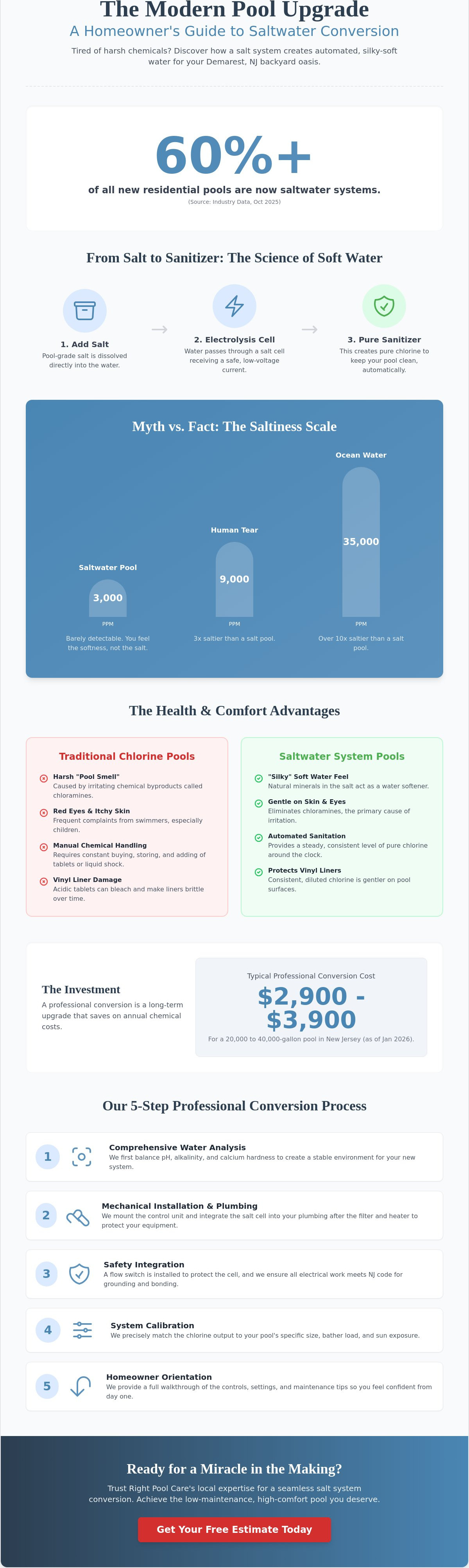
More than 60% of all new residential pools built in North America are now saltwater systems according to October 2025 industry data. It's a massive shift for a reason. If you're tired of the harsh chlorine smell, red eyes, and the high annual cost of tablets, you're likely ready for a change. A salt system conversion Demarest project replaces the constant struggle of chemical balancing with automated chlorine production and silkier, soft water. At Right Pool Care, we view every equipment upgrade as a chance to create miracles in the making for your backyard.
Converting your pool is a technical upgrade that requires precision to prevent equipment corrosion and ensure long-term reliability. For a typical 20,000 to 40,000-gallon pool in New Jersey, a professional conversion costs between $2,900 and $3,900 as of January 2026. This guide walks you through the entire process, including selecting the right Hayward or Pentair generator and navigating the Borough of Demarest permit requirements. You'll learn how to lower your long-term chemical expenses while finally achieving the low-maintenance oasis you deserve.
Key Takeaways
- Understand how electrolysis turns salt into pure chlorine for a soft water feel that's less salty than a human tear.
- Follow a proven 5-step salt system conversion Demarest process to integrate high-tech sanitation directly into your existing pool plumbing.
- Evaluate top-tier Hayward and Pentair models to find the right balance of durability, smart features, and local warranty support.
- Protect your investment with maintenance tips for NJ weather, from managing cyanuric acid to quarterly calcium scale inspections.
- Learn why local expertise is vital for balancing Bergen County water chemistry during a system transformation.
Why Salt System Conversion is the Top Choice for Demarest Homeowners
Homeowners in Demarest are increasingly moving away from the heavy lifting of manual chemical handling. A salt system conversion Demarest project utilizes a specialized generator to create a self-sustaining sanitation cycle. This technology relies on a process called electrolysis, where low-voltage electricity passes through salted water to produce pure chlorine. To understand the science deeper, you can explore how salt water chlorination works. This method replaces the need for liquid shock or chlorine tablets, which often cause spikes and dips in water quality. Instead, your pool receives a steady, automated dose of sanitizer that keeps the water crystal clear around the clock.
There is a common myth that saltwater pools feel like the ocean. This is simply not true. While the ocean has a salt concentration of about 35,000 parts per million (ppm), a residential saltwater pool typically maintains a level of only 3,000 ppm. For context, a human tear has a salt concentration of approximately 9,000 ppm. You won't taste the salt, but you will certainly feel the difference. Many Demarest properties feature mature trees and lush landscaping that drop high volumes of organic debris into the water. Automated sanitation ensures that your pool stays ahead of algae growth, even when the Bergen County pollen season is at its peak.
The Health and Comfort Advantages
The most immediate benefit of switching to salt is the elimination of chloramines. These are the chemical byproducts responsible for the "pool smell," red eyes, and itchy skin associated with traditional chlorine pools. Because a salt cell constantly destroys these spent chlorine molecules, the water remains gentle on the body. Families with children or swimmers with sensitive skin often report that the water feels "silky" or "soft." This is due to the natural minerals in the salt, which act as a built-in water softener for your backyard oasis.
Compatibility with Vinyl Liner Pools
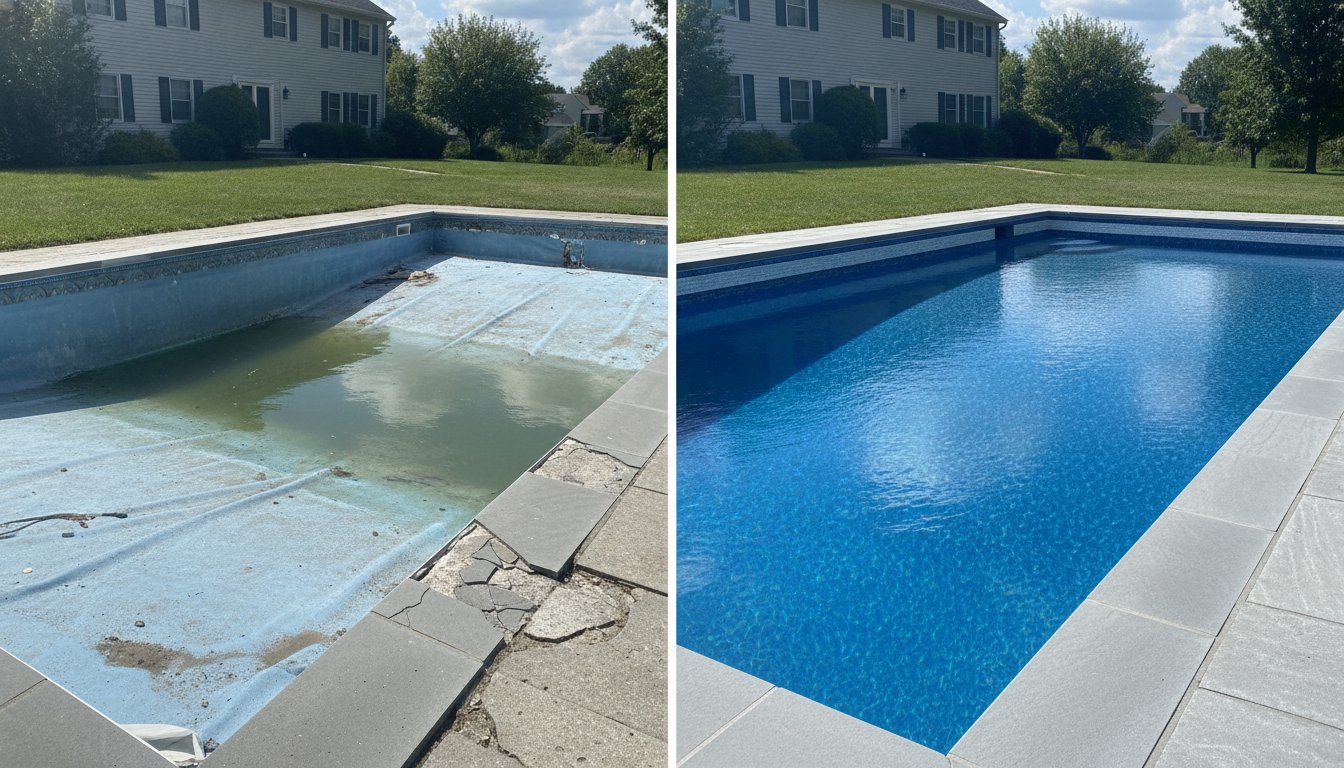
Many homeowners worry about how salt affects their pool structure, but salt systems are actually a perfect companion for a vinyl liner replacement. Traditional chlorine tablets are highly acidic and can settle on the floor, causing localized bleaching or making the vinyl brittle over time. A salt system provides a consistent, diluted flow of chlorine that protects the integrity of your liner. At Right Pool Care, we ensure your coping and track system are salt-ready during installation. We use high-quality PVC piping and expert plumbing techniques to ensure the system is durable and leak-proof. This transformation is one of the many "miracles in the making" we provide to help you enjoy a low-maintenance, high-comfort swimming season.
The 5-Step Professional Salt Water Conversion Process
A successful salt system conversion Demarest requires a methodical approach to ensure your equipment operates at peak efficiency. We don't just add salt and walk away. Our technicians follow a strict protocol that begins with a comprehensive water analysis. We balance the pH, total alkalinity, and calcium hardness to create a stable environment. Without this baseline, your new salt cell could suffer from premature scaling or reduced chlorine output. It's about setting the stage for long-term success and protecting your investment from day one. This level of detail is why homeowners trust us to handle their pool transformations.
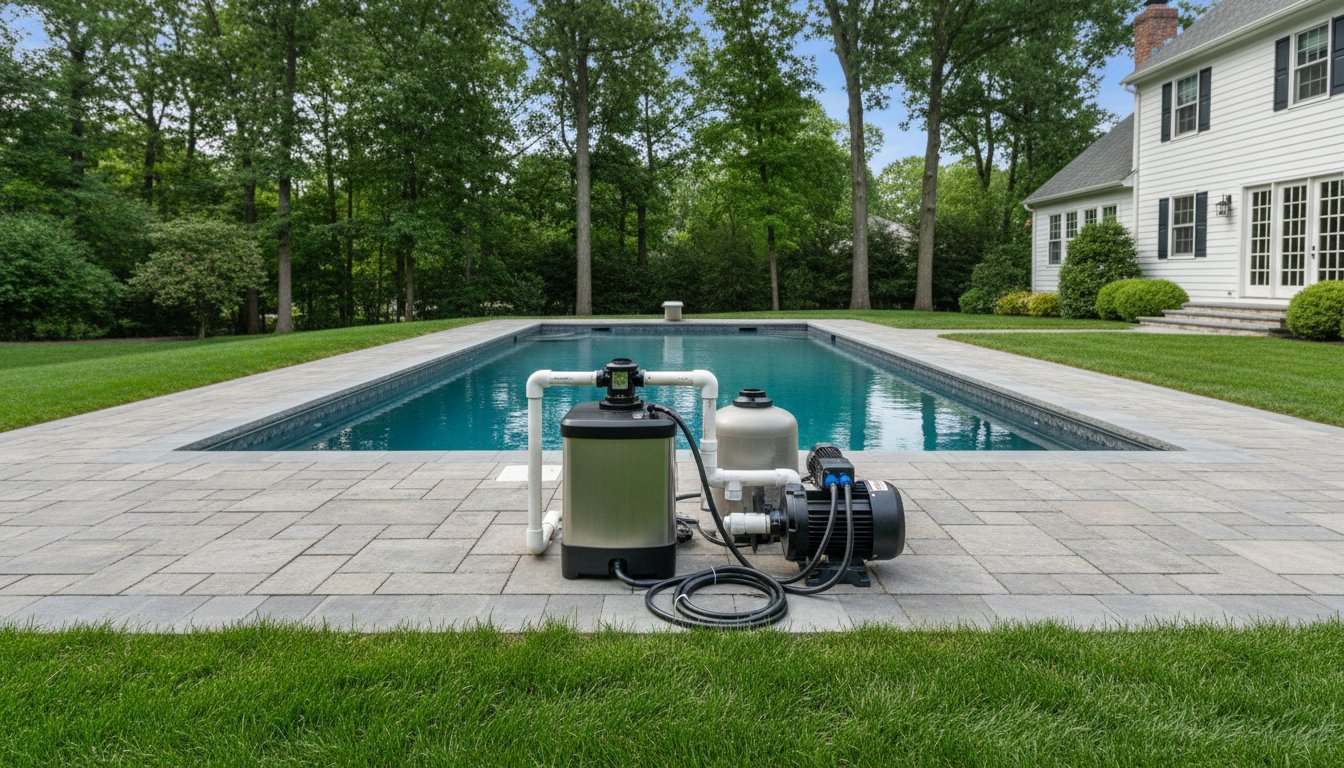
Once the water is balanced, we move through a structured installation. This includes mounting the digital control center and integrating the salt cell into your existing equipment pad. We also perform a system calibration to match the chlorine output to your pool's specific gallonage. Finally, we provide a full homeowner orientation. We want you to feel confident managing your new system, so we walk you through the controls and explain how to read the salt level displays. If you're ready to upgrade your backyard, our team provides the expert equipment repair and replacement services needed to get the job done right.
Mechanical Installation and Plumbing
The mechanical phase is where technical expertise matters most. We cut the PVC return line at a specific point after the heater and filter. This placement is crucial. It ensures that concentrated chlorine doesn't pass through your expensive heating elements. We install a flow switch as a primary safety mechanism. This device detects water movement and automatically shuts down the salt cell if the pump loses prime. Additionally, we strictly adhere to New Jersey electrical codes regarding grounding and bonding. Proper bonding prevents stray electrical currents from causing corrosion on metal components, ensuring your pool remains a safe environment for your family.
Initial Salt Saturation
Adding the salt is a delicate process that requires exact calculations. A typical residential pool in Demarest requires between 600 to 1,000 pounds of high-purity salt for the initial conversion. We don't just dump the bags in one spot. We use a "pour and brush" method, spreading the salt around the perimeter and brushing it until it's fully dissolved. This prevents salt crystals from sitting on the floor, which could lead to liner staining or rough patches. After the salt is added, we leave the generator cell off for at least 24 hours. This wait time allows the salt to distribute evenly throughout the water, preventing "low salt" error codes and ensuring the system starts up perfectly. It's another example of the miracles in the making we deliver for our clients.
Selecting the Best Salt Generator: Hayward vs. Pentair
Choosing the right hardware is the most critical decision in your salt system conversion Demarest. In Bergen County, two giants dominate the market: Hayward and Pentair. Both brands offer high-performance chlorinators, but they cater to different backyard configurations. We look at cell life, which typically averages 10,000 hours of operation, and the strength of the manufacturer warranty. A reliable salt system shouldn't just work; it should integrate seamlessly with your lifestyle. Our goal is to provide a setup that offers both durability and ease of use.
One expert secret we always share with our clients is the benefit of "sizing up." If you have a 25,000-gallon pool, don't just buy a 25,000-gallon rated cell. We recommend installing a 40,000-gallon cell instead. By choosing a higher capacity, the system doesn't have to work as hard to maintain your target chlorine levels. It runs at a lower power percentage, which significantly extends the life of the precious metal plates inside the cell. This strategy reduces your long-term replacement costs and ensures your water stays clear during the hottest July heatwaves when demand is highest.
Modern salt systems also act as the "brain" of your backyard. Whether you prefer the Hayward OmniLogic platform or the Pentair ScreenLogic interface, these systems allow you to monitor your pool from a smartphone. You can adjust chlorine output, check salt levels, and even turn on your heater while you're still at work. It's a level of control that turns routine maintenance into a hands-off experience.
Hayward AquaRite Systems
Hayward is the world's best-selling salt chlorination brand for a reason. Their AquaRite series is famous for its "T-Cell" design, which is incredibly straightforward to replace when the time comes. These units are ideal for homeowners who want a dedicated, independent control center that doesn't necessarily need to talk to other equipment. If you're dealing with an older system that's showing its age, our equipment repair services can help diagnose whether you need a simple cell replacement or a full control board upgrade. Hayward cells are built for reliability and consistent performance in the Northeast climate.
Pentair IntelliChlor Features
Pentair takes a different architectural approach with the IntelliChlor series. Instead of putting all the brains in a separate wall-mounted box, they build the controls and diagnostics directly onto the cell itself. You can check your salt levels, water temperature, and cell cleanliness just by looking at the LED lights on the unit. This system is the gold standard for integration with Pentair variable speed pumps. It also features a self-cleaning functionality that uses reverse polarity to minimize calcium buildup on the blades. It's a no-nonsense solution for the modern pool owner. We take pride in these installations, viewing every high-tech upgrade as one of our miracles in the making.
NJ Maintenance: Protecting Your System in Demarest
Owning a pool in Bergen County comes with unique seasonal challenges that impact your equipment. After completing a salt system conversion Demarest, your maintenance routine shifts from hauling heavy buckets to fine-tuning water chemistry. One of the most critical factors during high-sun NJ summers is your Cyanuric Acid (CYA) level. Think of CYA as sunscreen for your chlorine. Without a stabilizer level of 30 to 50 ppm, the intense July sun can destroy your chlorine in just two hours. This forces your salt cell to run at 100% capacity, shortening its lifespan and increasing your energy costs.
You also need to stay ahead of pH drift. Salt chlorine generation naturally produces sodium hydroxide, which causes your pH levels to rise over time. High pH leads to cloudy water and, more importantly, calcium scaling on your salt cell's precious metal plates. We recommend a physical inspection of the cell every 3 months. If you see white, flaky deposits, a mild acid wash is necessary to restore efficiency. Demarest water can be moderately hard, so monitoring your calcium hardness is vital to prevent these deposits from turning into permanent damage. If you're seeing persistent equipment issues, contact our team for expert equipment replacement to keep your backyard oasis running smoothly.
Winterizing Your Salt System
Northern NJ winters are unforgiving. You shouldn't leave your expensive salt cell exposed to freezing temperatures. When we perform a pool closing, we remove the cell and replace it with a "dummy pipe" or winter spacer. This allows you to blow out the lines and add antifreeze without risking damage to the cell's internal sensors. Store the cell in a climate-controlled area like a basement or heated garage. Additionally, ensure the control board is sealed against moisture and pests. Mice often find pool heaters and control boxes to be warm winter homes, and their nesting can cause catastrophic electrical shorts by spring.
Preventing Galvanic Corrosion
Saltwater is more conductive than fresh water, which creates a risk for galvanic corrosion. This process occurs when small electrical currents move through the water and attack the weakest metal components. Your pool ladder, light niches, and heater core are the primary targets. To prevent this, we install a sacrificial zinc anode. The current attacks the zinc instead of your expensive equipment. While the system is largely automated, a professional pool maintenance provider can check these anodes and your water balance to catch early signs of pitting. It's a small step that ensures the miracles in the making we build for you last for decades.
Why Right Pool Care is the Trusted Conversion Expert in Demarest
Choosing a partner for your salt system conversion Demarest project requires more than just technical skill. It requires a local perspective. With over 20 years of experience managing Bergen County pool chemistry, we understand how our local water profile impacts your equipment. We specialize in "miracles in the making," taking aging, high-maintenance chlorine pools and transforming them into modern, automated retreats. Our team doesn't believe in quick fixes. We use only high-grade, professional-series equipment that is built to last, ensuring your investment provides value for years to come.
We're deeply familiar with the specific municipal codes in the Borough of Demarest. For instance, any significant equipment modification requires a plot plan and specifications to be submitted to the Zoning Official. Zoning permit fees in our area typically range from $50 to $75 for non-habitable structures. We ensure your installation complies with the International Swimming Pool and Spa Code, which New Jersey updated in May 2025. This attention to detail prevents administrative headaches and ensures your backyard remains a safe, compliant environment for your family.
The Right Pool Care Difference
Our approach is defined by no-nonsense advice. We'll be honest if your current heater or plumbing isn't a good candidate for a salt conversion. We'd rather help you fix an underlying issue now than see your new system fail later. Once the installation is finished, we provide a detailed training session. We walk you through every button and setting so you feel like an expert. Because we're based nearby in Closter, we offer a fast local response for any pool repairs or technical questions that might arise during the season.
Schedule Your Demarest Consultation
Ready to finally enjoy the silky water of a saltwater system? We recommend scheduling your free consultation in the early spring. This timeline ensures we can secure your permits and complete the installation well before the Memorial Day rush. Our estimate process is transparent, thorough, and focused on your specific backyard needs. We take pride in our work and value the trust our neighbors place in us. Contact Right Pool Care today to start your transformation and experience the peace of mind that comes from working with the best in the business.
Ready for a Silkier Swimming Experience?
You've seen how salt chlorine generation eliminates the harsh smells and red eyes of traditional pools while protecting your vinyl liner. By choosing a high-capacity Hayward or Pentair system, you ensure years of reliable performance and automated water clarity. A salt system conversion Demarest is more than an equipment upgrade; it's a commitment to a better swimming experience. We handle the technical details so you don't have to worry about the logistics.
At Right Pool Care, we bring over 20 years of local experience to every project. As Hayward and Pentair authorized installers and Bergen County safety cover experts, we ensure your system is installed correctly and safely. We take pride in these miracles in the making, helping you spend less time on chemistry and more time enjoying the water. Our no-nonsense approach means you get the best equipment for your specific backyard needs and local water conditions.
Request Your Salt System Conversion Estimate in Demarest today to start your journey toward silkier, softer water. We look forward to making your pool the highlight of your summer.
Frequently Asked Questions
Is salt water better for vinyl liner pools in Demarest?
Yes, salt systems are an excellent choice for vinyl liner pools because they eliminate the concentrated acidity found in traditional chlorine tablets. Tablets can settle on the floor and cause localized bleaching or make the vinyl brittle over time. A salt system provides a consistent, diluted flow of chlorine that helps preserve the elasticity of your liner. This makes the conversion a perfect companion for a vinyl liner replacement project.
How much does it cost to convert a pool to salt water in 2026?
For a typical 20,000 to 40,000-gallon pool in New Jersey, a complete salt system conversion Demarest project costs between $2,900 and $3,900 as of January 2026. This total includes the professional-grade salt chlorine generator, expert labor, and the initial salt required for saturation. The generator unit itself typically ranges from $1,300 to $2,500 depending on the specific model and smart features you choose for your backyard.
Will a salt system make my pool water taste like the ocean?
No, your pool water will not taste like the ocean because the salt concentration is remarkably low. While the ocean has a salt level of approximately 35,000 parts per million (ppm), a saltwater pool stays around 3,000 ppm. For comparison, a human tear has a salt concentration of about 9,000 ppm. You won't taste the salt, but you will notice the silky, soft feel of the water on your skin and hair.
How often do I need to replace the salt cell?
A high-quality salt cell typically lasts between 3 to 7 years, or approximately 10,000 hours of operation. In New Jersey, the replacement cost for a cell currently ranges from $800 to $1,600 installed as of early 2026. You can extend the life of your cell by "sizing up" to a larger capacity unit and performing a physical inspection for calcium scale every 3 months to ensure peak efficiency.
Does a salt water pool still need other chemicals?
Yes, a salt system only automates chlorine production; it doesn't manage your entire water chemistry. You still need to test your water weekly for pH, total alkalinity, and cyanuric acid levels. Salt systems naturally cause pH levels to rise over time, so you'll need to add acid periodically to keep the water balanced. Keeping these levels in check prevents equipment damage and ensures the sanitizer works effectively.
Can I convert my existing pool to salt water during a liner replacement?
Converting to salt during a liner replacement is the most efficient time to upgrade your system. Since the pool is already being drained and refilled, we can start with a fresh baseline for your water chemistry. It's one of the many miracles in the making we perform for Demarest homeowners. This allows us to balance the new water perfectly for the salt generator from day one, protecting your new vinyl investment.
Will the salt damage my heater or pool pump?
Salt won't damage your equipment as long as the water chemistry is properly maintained and the system is installed correctly. We use a sacrificial zinc anode to prevent galvanic corrosion on metal components like heater cores and ladder rails. Proper bonding and grounding, which we handle during the salt system conversion Demarest process, are also vital requirements under the May 2025 New Jersey State Pool Code to ensure long-term safety.
How much salt do I actually need to add to my pool?
A typical residential pool requires between 600 to 1,000 pounds of salt for the initial conversion to reach the target 3,000 ppm level. Most homeowners will need about 15 to 25 bags of high-purity pool salt, which costs approximately $15 to $20 per 40-pound bag as of March 2026. Once the initial level is established, you only need to add salt when you lose water through splash-out, backwashing, or heavy rainfall.