Is your backyard oasis quietly draining your bank account through a leak you can't even see? You know that a pool should be a place for relaxation, not a source of frustration every time the water bill arrives. Bergen County winters are notoriously brutal on outdoor surfaces. They often leave a vinyl pool liner brittle or faded after just eight seasons of extreme freeze-thaw cycles. We understand the stress of wondering if your pool will survive another North Jersey winter without a major failure.
This guide provides the exact checklist you need to navigate the 2026 season with total confidence. You'll learn how to identify the three critical signs of structural fatigue and determine if a 20-mil or 27-mil thickness is the right investment for your specific property. We're covering everything from modern pattern selection to finding a trusted local expert who understands our local soil conditions. At Right Pool Care, we specialize in these miracles in the making. It's time to stop the guesswork and start enjoying a pool that looks and performs like new.
Key Takeaways
- Learn how to protect your investment by understanding the critical role UV inhibitors and antimicrobial treatments play in New Jersey’s harsh climate.
- Master the "Is It Time?" checklist to distinguish between minor cosmetic fading and a terminal vinyl pool liner failure that requires immediate action.
- Demystify material gauges and patterns to choose a combination that balances long-term durability with a stunning visual aesthetic.
- Discover why local factors like Bergen County groundwater levels and specific temperature windows are the keys to a flawless, wrinkle-free installation.
- Get the "no-nonsense" professional perspective on upgrading your pool’s technical equipment and PVC piping during your next renovation.
What is a Vinyl Pool Liner and Why is it Critical for NJ Pools?
A vinyl pool liner acts as the primary waterproof membrane for your inground pool. It's the flexible skin that holds thousands of gallons of water in place while protecting the underlying structure from the elements. In Bergen County, where temperatures swing from 95°F in July to sub-zero in January, your liner does much more than just look good. It's a high-tech barrier engineered with UV inhibitors to prevent sun bleaching and antimicrobial treatments to stop mold growth during our humid Northeast summers. Without these protections, the sun's rays would turn a standard liner brittle within just a few seasons.
Soil conditions in Northern New Jersey present unique challenges for pool owners. Bergen County soil often contains a mix of heavy clay and shale that shifts significantly during the winter freeze and spring thaw. A properly fitted vinyl pool liner provides a flexible seal that moves with the earth. Rigid pool structures often crack under this geological pressure, but a vinyl-lined pool stretches to maintain its integrity. This flexibility is what prevents minor ground movements from turning into catastrophic structural failures.
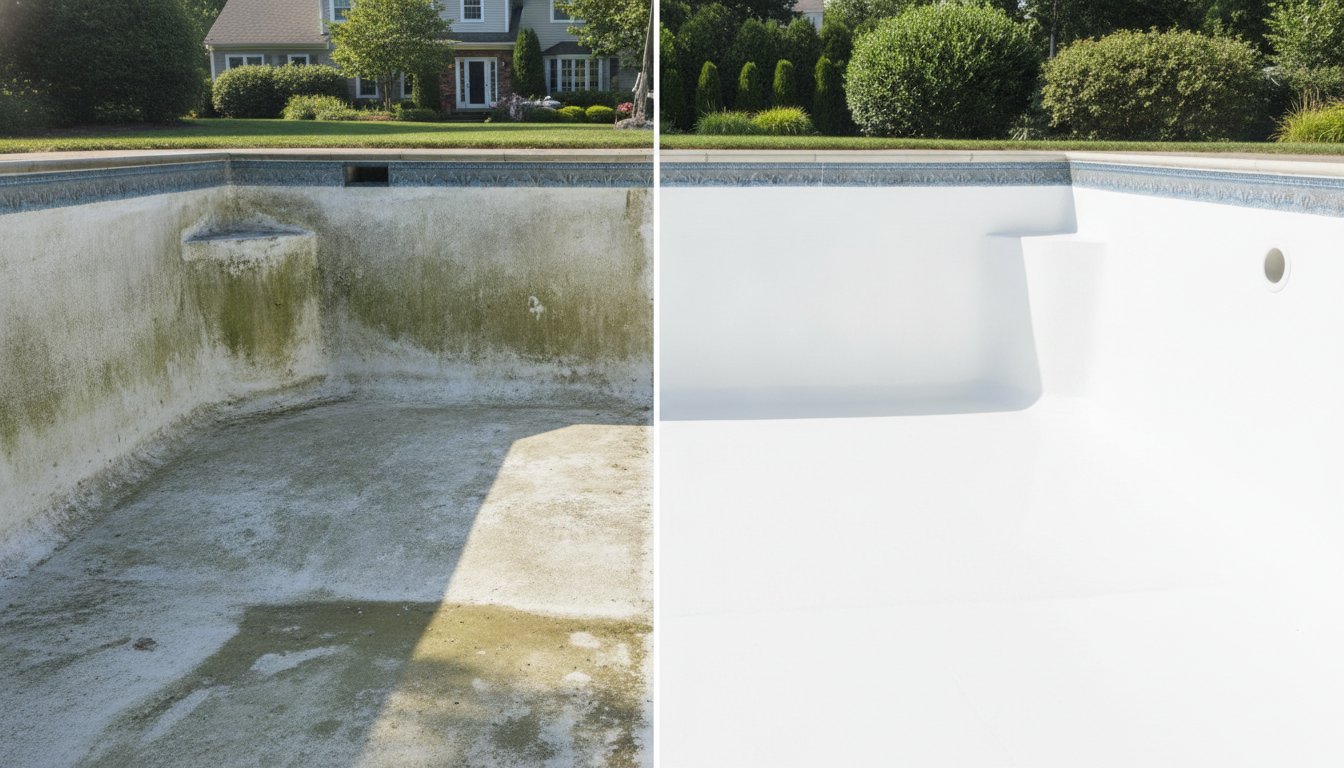
We see many homeowners struggle with "stock" liners that leave dead air spaces or unsightly wrinkles. Right Pool Care provides custom-measured professional liners instead. We measure every angle to the fraction of an inch to ensure a vacuum-sealed fit. This precision eliminates stress points that lead to premature tears. It is how we create backyard transformations that last for decades. We call these results miracles in the making.
The Anatomy of High-Performance Vinyl
Modern liners rely on advanced chemical engineering to survive the NJ climate. The composition of the material is the most important factor in its lifespan. We prioritize the thickness and the specific bead type to lock the liner into the track. Whether your pool uses a J-hook, Overlap, or Beaded attachment, the security of the connection determines if the liner will slip or stay put. Virgin vinyl is the industry standard for durability because it lacks the impurities found in recycled plastics. This purity ensures the material remains pliable for 15 to 20 years under normal conditions.
Vinyl vs. Concrete: The Bergen County Advantage
Homeowners in Alpine and Tenafly often choose vinyl for its resilience against the local environment. Concrete pools are rigid and unforgiving. In our freeze-thaw zones, concrete often develops hairline fractures that lead to expensive leaks. Vinyl is the right choice for these areas because it stays flexible even when the ground is frozen solid. You also benefit from lower lifetime maintenance costs. The non-porous surface of a vinyl pool liner resists algae better than rough gunite. This means you spend less on chemicals and more time enjoying your water.
The "Is It Time to Replace?" Checklist: Identifying Liner Damage
Your vinyl pool liner doesn't fail overnight. It provides subtle clues before a major failure occurs. In Bergen County, our harsh freeze-thaw cycles and intense July humidity accelerate wear on even the highest quality materials. To protect your investment, you must distinguish between a cosmetic blemish and a structural emergency. Professional standards from the Pool & Hot Tub Alliance suggest that most liners reach the end of their functional life between 10 and 15 years, though local conditions often shorten this window.
The Visual Inspection Checklist
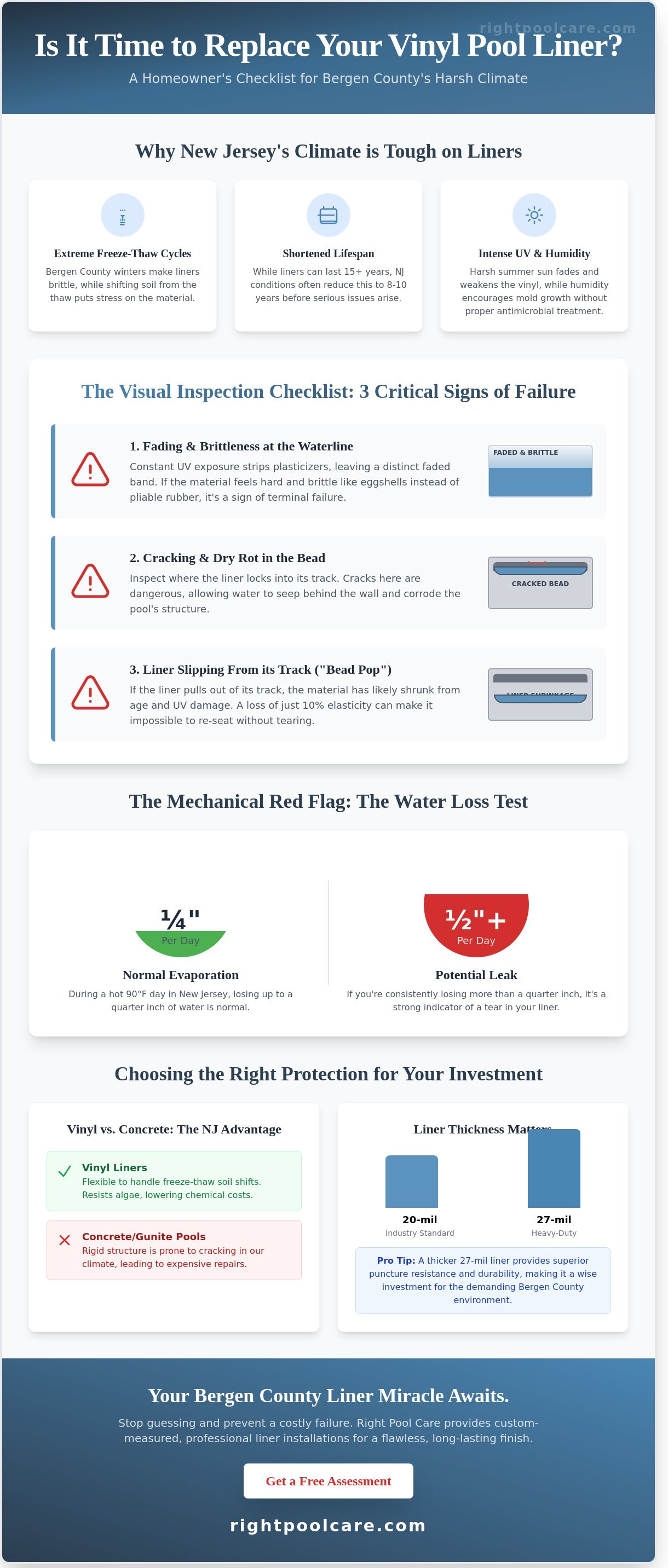
- Sun-bleaching at the waterline: Look for a distinct white or faded band where the liner meets the air. Constant UV exposure strips the plasticizers from the vinyl, making it brittle. If the material feels like eggshells rather than rubber, it's terminal.
- Dry-rot and cracking: Check the "bead" where the liner locks into the track. Cracks here are dangerous because they allow water to seep behind the wall, leading to corrosion of your pool's galvanized steel or polymer panels.
- Slipping or "bead pop": If your vinyl pool liner is pulling out of its track, it's often a sign that the material has shrunk. A 10 percent loss in elasticity is enough to make re-seating the liner impossible without causing a tear.
Structural and Mechanical Red Flags
Water loss is the most common reason homeowners call us. In New Jersey, normal evaporation during a 90 degree day is approximately 1/4 inch of water. If you lose half an inch or more in 24 hours, you have a leak. Use the "Ink Test" to confirm. Squirt a small amount of dark food coloring near a suspected tear while the pump is off. If the ink is sucked into the hole like a vacuum, you've found your culprit.
Physical shifts under the floor are equally concerning. "Soft spots" or divots indicate that water has washed away the sand or vermiculite base. This creates a void that can cause the liner to stretch and snap under the weight of the water. For a deeper dive into these symptoms, read our guide on 5 Warning Signs Your Pool Liner Needs Replacement.
When to Patch and When to Replace
Homeowners often ask if a $20 patch kit can save them from a full replacement. If your liner is less than 5 years old and the tear is a clean cut from a pole or toy, a patch is a smart, cost-effective fix. However, if the liner is over 8 years old and the tear is jagged or accompanied by "spider web" cracking, patching is a waste of money. The surrounding material is likely too weak to hold the adhesive. If you are unsure about the integrity of your pool, it's best to consult with a local expert to avoid a catastrophic mid-summer blowout. We focus on long-term safety and results, ensuring your backyard remains a place for "Miracles in the making" rather than constant repairs.
The Selection Checklist: Gauges, Patterns, and Textures
Choosing a vinyl pool liner is a technical decision that dictates the lifespan of your backyard oasis. It's about finding the balance between rugged durability and high-end aesthetics. In Bergen County, where winter temperatures frequently drop below freezing, your material choice must handle both physical wear and environmental stress. Right Pool Care experts focus on three core pillars: thickness, visual integration, and safety features.
The Durability Checklist: Gauges and Materials
Industry professionals measure liner thickness in "mils," where one mil equals 1/1000th of an inch. While a 20 mil thickness is a standard baseline for many pool floors, we recommend a 27 or 28 mil gauge for the walls and high-impact areas. Thicker liners offer 35% more resistance to UV degradation and physical punctures from pets or pool toys. This added weight is a smart investment for the 2026 season, especially for high-use family pools.
We also utilize UltraSeam technology to eliminate the visible floor seams that used to plague older installations. This creates a smooth, professional finish that looks like a custom gunite surface. For those maintaining smaller setups, choosing the right material for above ground pool liners is just as critical as it is for inground models. High-quality virgin vinyl ensures the material remains flexible during Northern New Jersey's freeze-thaw cycles, preventing the brittle cracking that leads to leaks.
The Style Checklist: Patterns and Aesthetics
Your pattern choice influences more than just looks; it affects the water's perceived temperature and cleanliness. Darker patterns, such as deep blues or slate greys, act as natural solar heaters by absorbing more sunlight. These shades also do a superior job of hiding small debris or organic sediment on the floor. Light patterns, conversely, make it easier to spot chemical scaling or metal staining before they become permanent problems.
- Landscaping Harmony: Choose tan or "sand" patterns to complement the natural stone coping and lush greenery common in Ridgewood and Alpine backyards.
- Water Color: Blue granite patterns create a crisp, Caribbean-blue water effect, while grey patterns result in a more contemporary, lagoon-like appearance.
- Visual Cohesion: The perfect pattern should complement your home’s exterior and existing patio materials to create a unified outdoor living space.
Safety is the final piece of the selection puzzle. Modern "vinyl-over" features allow us to cover concrete steps and benches with the same vinyl pool liner material used in the rest of the pool. This creates a seamless look without the "plastic" feel of traditional drop-in steps. We always specify textured, non-slip vinyl for these high-traffic entry points to ensure your family stays safe while entering and exiting the water.
Before you sign a contract, evaluate the warranty carefully. Most industry warranties are pro-rated, meaning the manufacturer's contribution toward a replacement shrinks every year. We prioritize liners that offer a strong "full coverage" period of at least 3 to 5 years. This ensures that if a manufacturer defect appears early, you aren't left paying for the bulk of the repair. At Right Pool Care, we believe in "Miracles in the making," but those miracles start with high-quality, warrantied materials.
The Local Installation Checklist: Preparing for Alpine and Closter Weather
Bergen County weather presents unique challenges for pool owners. In towns like Alpine and Closter, the spring thaw and heavy rainfall create high groundwater tables. This pressure can cause a vinyl pool liner to "float" or shift if the installation isn't handled by a local expert. We understand the specific soil conditions in Demarest and surrounding areas, ensuring your pool remains structural and secure.
Temperature is the most critical factor for a successful set. We schedule "Liner Day" when the forecast shows consistent 70-degree weather. Heat makes the vinyl pliable. This elasticity allows our team to stretch the material into every corner for a perfect fit. Without this warmth, the liner remains stiff, leading to premature wear or unsightly bunching.
Groundwater and Hydrostatic Pressure Management
Heavy NJ spring rains frequently cause hydrostatic pressure to build up beneath the pool floor. This pressure is the primary reason for "liner floating," where water gets trapped behind the vinyl. To prevent this, our professional installers manage the "well-point" during every replacement. We use specialized pumping equipment to keep the area dry until the weight of the new water secures the liner in place.
- Check your drainage: Ensure all backyard drains are clear and divert water at least 10 feet away from the pool deck.
- Gutter inspection: Confirm that house downspouts aren't dumping water directly into the pool area.
- Sump pump ready: If your property has a dedicated well-point pipe, make sure it is accessible for our team.
The Installation Timeline
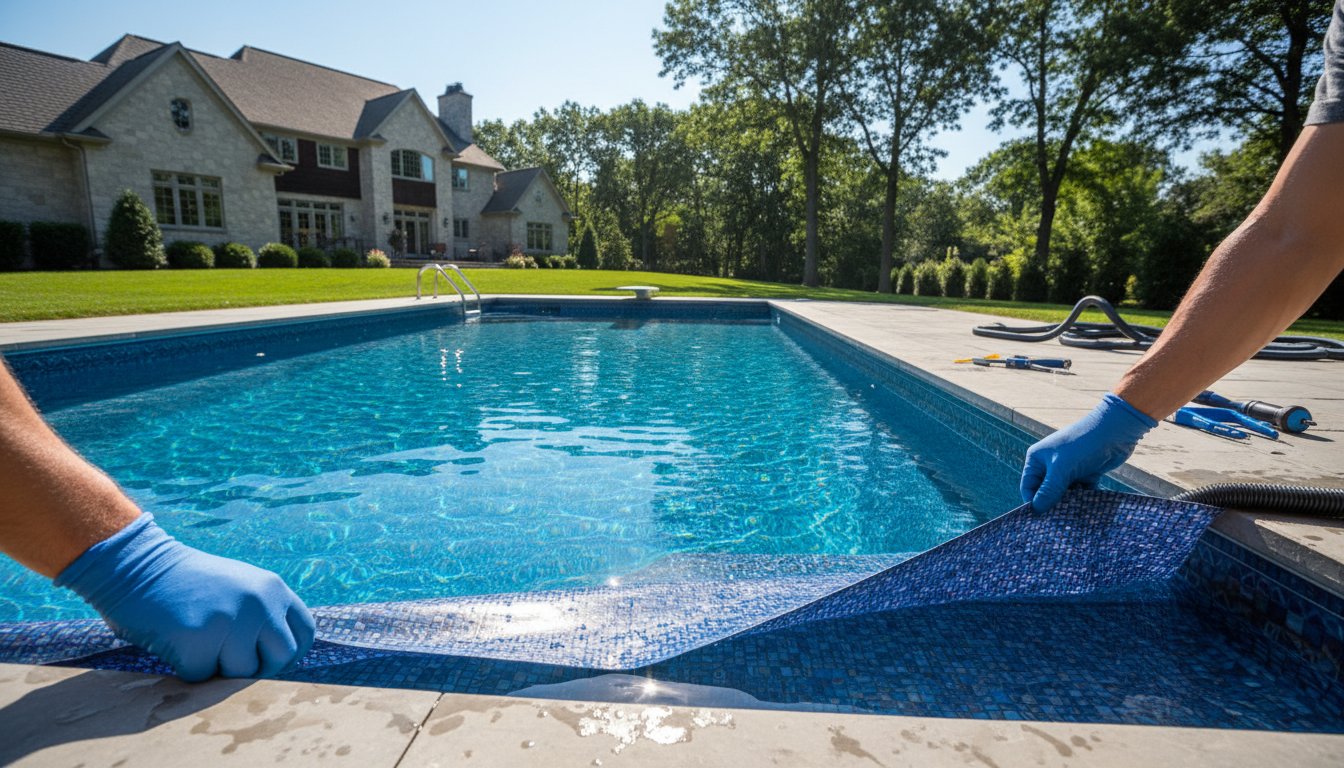
The transition from measurement to "Miracle" typically spans a 2 to 3 week window. This allows for precision manufacturing and site preparation. We take care of the heavy lifting, but homeowners play a vital role in the preparation phase. Clear access and reliable power are mandatory for our high-powered vacuums, which eliminate every wrinkle during the set.
Preparing the pool bottom is another critical step. In Northern NJ, we often see sand or vermiculite bases. We meticulously smooth these surfaces to remove stones or divots that could puncture the new material. Once the vinyl pool liner is set and the pool is filling, the first 48 hours are dedicated to chemical balancing to protect the new surface from mineral staining.
- Power Access: We require one dedicated GFI outlet for our industrial vacuum systems.
- Water Access: Ensure your exterior water spigot is functional and the hose reaches the pool.
- Fence Clearance: Clear a 5-foot path around the perimeter for our equipment and technicians.
- Pet Safety: Keep pets indoors during the 6 to 8 hours of active installation.
Ready to transform your backyard with a precision-fit liner? Contact the trusted experts at Right Pool Care for a professional quote.
Why Right Pool Care is the Trusted Choice for Bergen County Liner Miracles
For more than 20 years, Right Pool Care has been the premier specialist for homeowners in Alpine, Closter, and throughout Bergen County. We believe in "Miracles in the Making." This isn't just a catchphrase. It's our dedicated philosophy for turning an aging, cracked pool into a stunning backyard retreat. Replacing a vinyl pool liner is a significant investment. You need a team that understands the technical nuances of the job. Our no-nonsense approach means we prioritize the long-term health of your pool over quick, cosmetic fixes.
We don't just pull and replace. We evaluate the entire system. Our team brings decades of experience to every backyard, ensuring that the structural integrity of your pool matches its new, beautiful surface. We've seen every type of soil condition and drainage challenge Bergen County has to offer. This local expertise allows us to anticipate problems before they happen, saving you time and money during the renovation process.
Expertise Beyond the Surface
We dive deeper than the aesthetic layer. When the old vinyl pool liner is removed, it's the absolute best time to inspect the unseen infrastructure. Our technicians examine all PVC piping and fittings for signs of wear, hairline cracks, or pressure loss. We've found that approximately 18% of renovations reveal hidden plumbing issues that would have caused major damage if left unaddressed. By catching these early, we protect your investment for years to come.
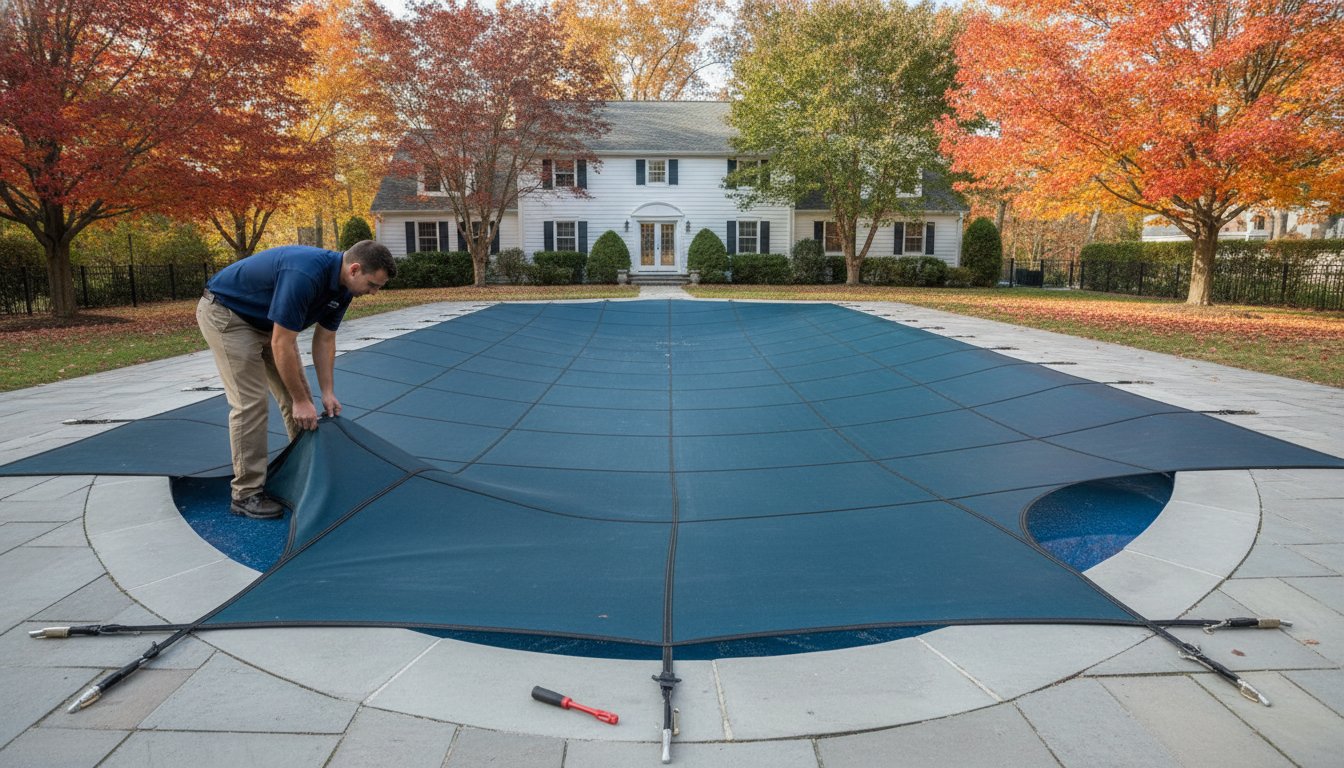
Quality materials are non-negotiable. We partner with industry leaders like Latham to ensure you receive the most durable, high-quality materials available. As a local, family-owned business, we have a deep understanding of specific Bergen County zoning codes and permit requirements. We handle the logistics so you can focus on enjoying your home. Our reputation as Safety Cover Experts means we also focus on protecting your family. We provide custom-fitted safety cover installations that meet or exceed rigorous industry standards, providing peace of mind during the off-season.
Start Your Transformation Today
The renovation process is the perfect time to streamline your yearly maintenance. We handle seasonal pool openings and closings in conjunction with your liner installation. This coordination keeps your project on track and ensures a seamless transition into the swimming season. We invite you to schedule a local on-site consultation with our senior technicians. We'll evaluate your equipment, discuss design options, and provide a clear, technical roadmap for your pool's revival.
Stop settling for an outdated, leaking pool and start planning your backyard miracle. Contact the Experts at Right Pool Care today to schedule your consultation and reclaim your outdoor living space.
Secure Your 2026 Pool Season with Expert Liner Installation
You now have the exact roadmap needed to navigate your vinyl pool liner replacement with confidence. We've covered how to spot critical damage before it leads to costly structural repairs and how to select high-performance textures that withstand the variable Bergen County climate. Whether you're in Alpine or Closter, understanding these technical requirements ensures your pool remains a safe, stunning focal point for your home. Proper preparation today prevents unexpected downtime when the warm weather finally arrives.
Right Pool Care has provided 20+ years of dedicated service to homeowners throughout northern New Jersey. As Certified Safety Cover and Liner Experts, we take pride in delivering "Miracles in the making" for every client we serve. Our deep local roots mean we understand exactly how our regional weather impacts your pool's longevity and structural integrity. We don't just swap out materials; we restore your peace of mind with professional precision and industry-leading standards that last for years to come.
Your backyard deserves the best care available. Get Your Free Vinyl Liner Replacement Quote from Right Pool Care and let's get your pool ready for a perfect season of memories.
Frequently Asked Questions
How long does a vinyl pool liner typically last in New Jersey?
A high-quality vinyl pool liner typically lasts between 10 and 15 years in the New Jersey climate. Harsh winters and the frequent freeze-thaw cycles found in Bergen County can stress the material, but proper chemical maintenance helps extend its life. If your liner is over 12 years old, it's likely time for a professional inspection to prevent leaks that could damage your pool's structure.
What is the best time of year to replace a pool liner in Bergen County?
The best time to replace your liner is during the spring months of April and May or the early fall in September. These windows offer stable temperatures between 60 and 80 degrees, which is ideal for the vinyl to stretch and fit without wrinkles. Scheduling during these off-peak periods ensures your pool is ready for the peak swimming season that begins in June.
Can I change the depth of my pool when I replace the liner?
You can change the depth of your pool during a liner replacement by reshaping the sand or grout floor. Many Alpine homeowners choose to raise a deep end from 8 feet to 5 feet to create a more functional "play pool" area. This process requires expert structural adjustments to the pool bottom before we install the new vinyl pool liner to ensure a perfect fit.
Is a 27 mil liner really better than a 20 mil liner?
A 27 mil liner provides 35 percent more thickness than a standard 20 mil liner, offering superior resistance to punctures and UV damage. While a 20 mil liner is sufficient for most standard pools, the 27 mil option is the expert choice for high-traffic family pools or homes with pets. This added thickness helps the material withstand the mechanical stress of automatic pool cleaners and heavy usage over many years.
How much does a typical vinyl liner replacement cost in Alpine or Closter?
The cost of a liner replacement in Alpine or Closter depends on the pool's square footage and any necessary floor repairs. According to HomeAdvisor's 2024 national data, inground liner replacements typically range from 2,500 to 7,500 dollars. For a precise quote tailored to your specific backyard dimensions and custom features, a professional on-site evaluation is required to assess the condition of the pool walls and PVC piping.
What happens if there is water behind my pool liner after a storm?
Water behind the liner, often called "floating," occurs when the groundwater table rises higher than the water level inside your pool after a heavy storm. You shouldn't drain the pool, as this can cause the liner to shrink or shift permanently. Instead, use a sump pump in the well point to lower the external water pressure and allow the liner to settle back into its original position against the walls.
Does a new liner come with a warranty against fading or chemicals?
Most manufacturer warranties cover seam separations and material defects but don't include protection against fading or chemical damage. Standard industry warranties often span 15 to 25 years on a pro-rated basis, focusing strictly on the integrity of the factory-welded seams. To prevent bleaching, maintain your pH levels between 7.2 and 7.6 and avoid throwing chlorine tablets directly onto the vinyl surface.
Can I replace my own pool liner, or do I need a professional?
You should hire a professional to replace your liner to ensure a wrinkle-free fit and protect your long-term investment. Installing a vinyl pool liner requires precise measurements within a fraction of an inch and specialized vacuum equipment to set the material properly. At Right Pool Care, we handle the technical complexities of gaskets, faceplates, and floor prep to create miracles in the making for your backyard.