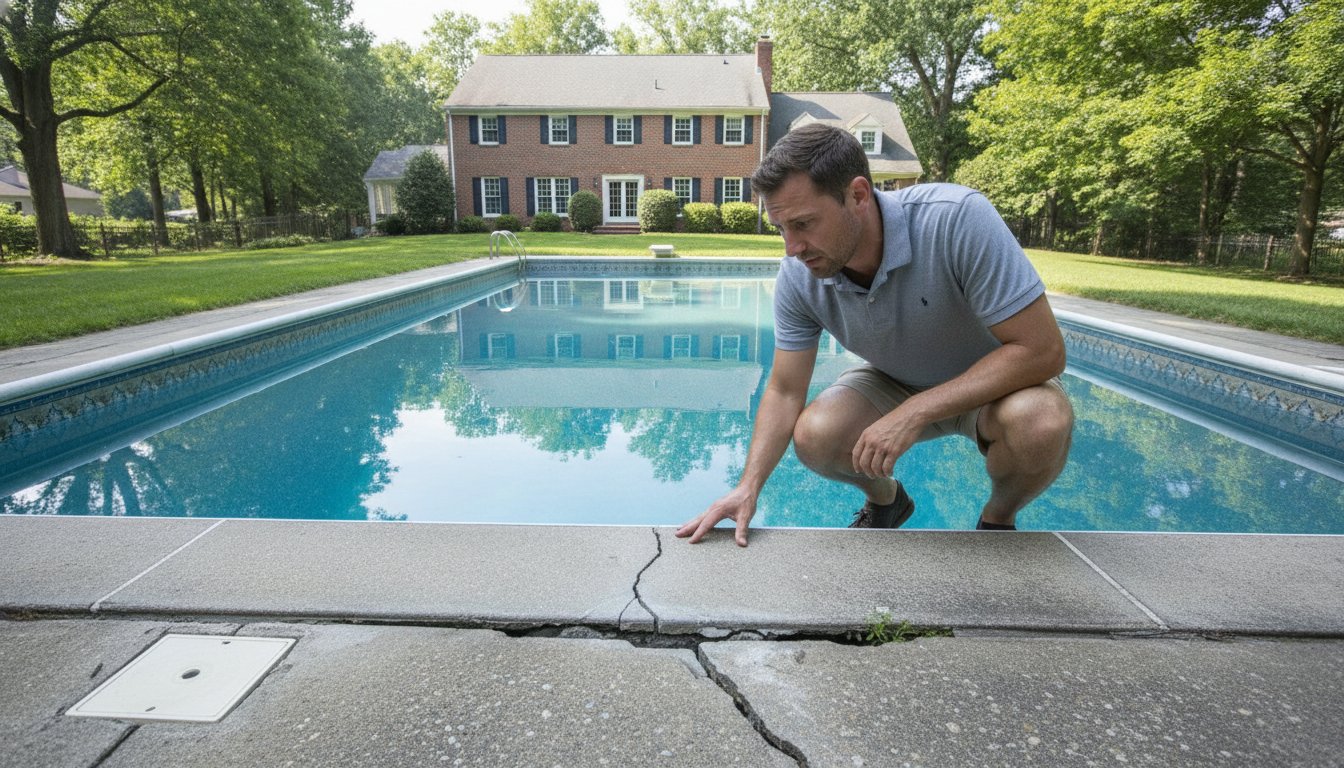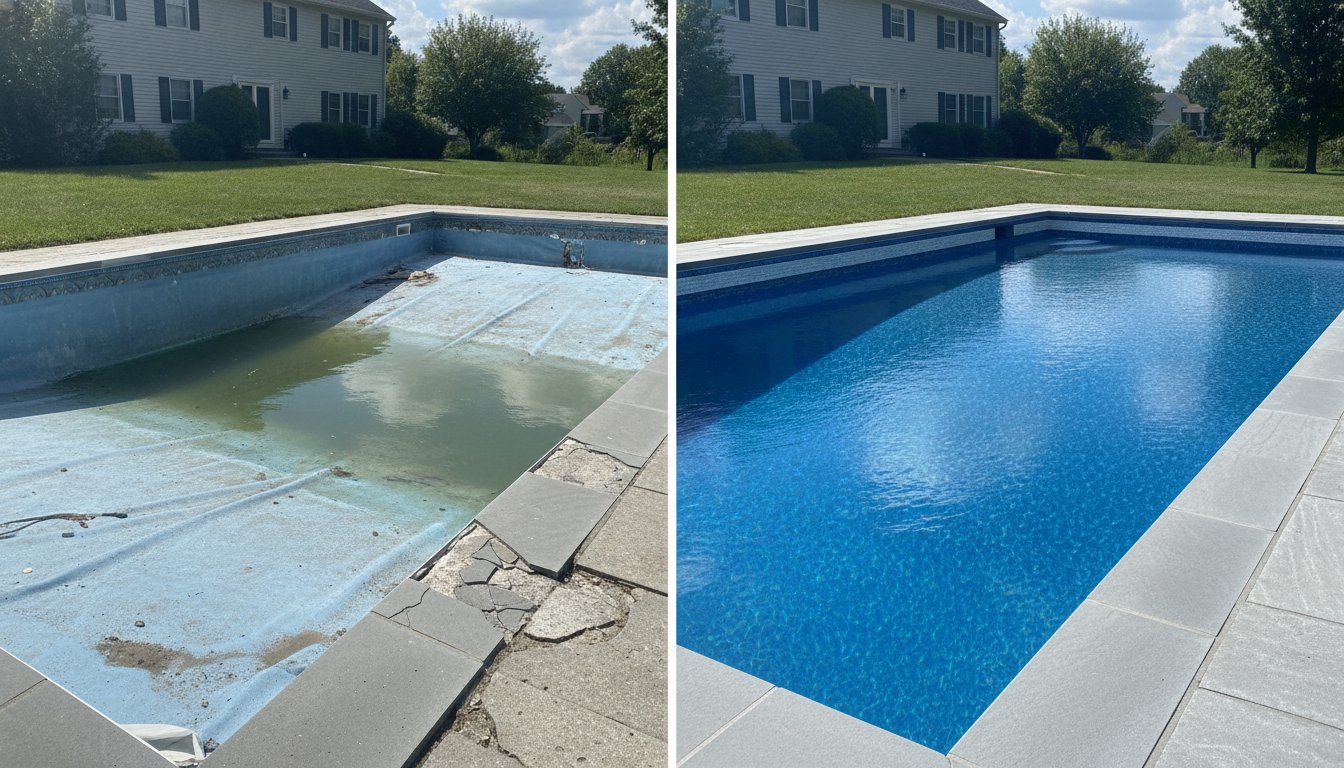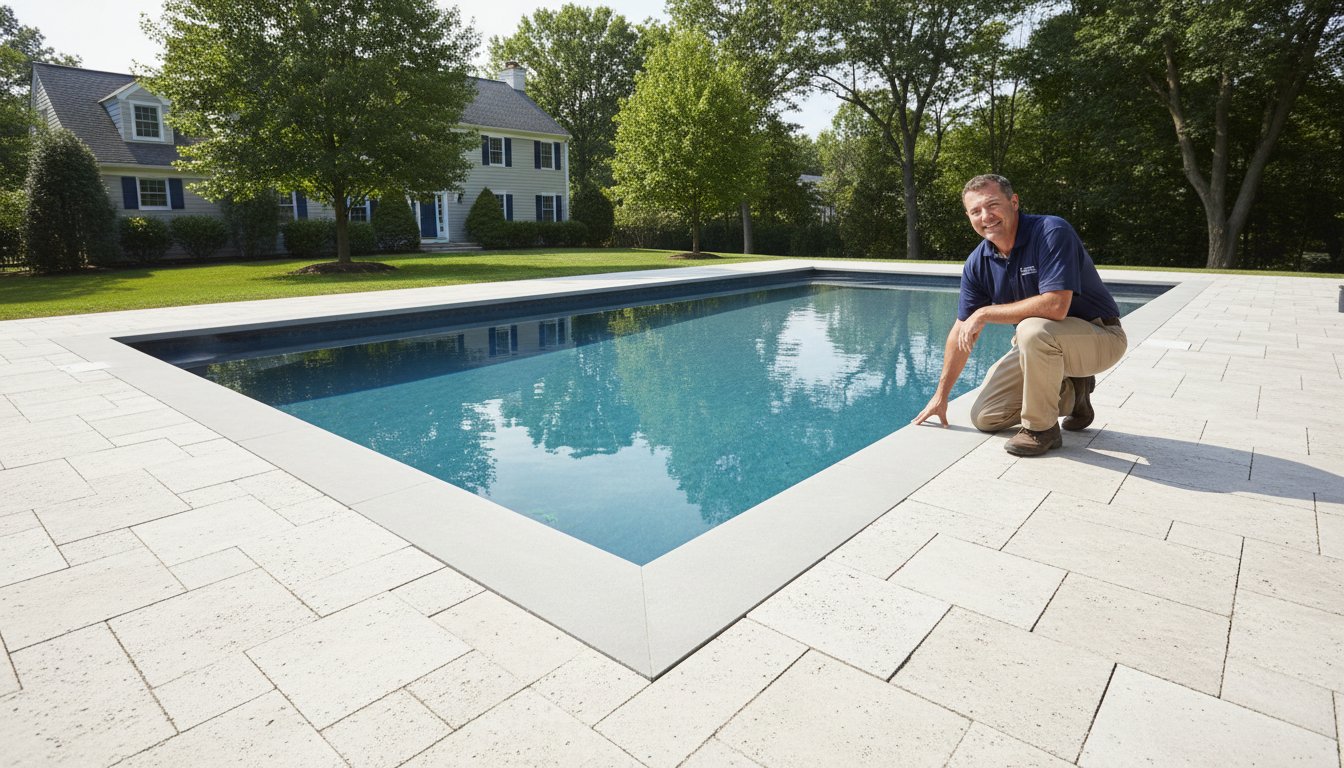
In Bergen County, the most expensive pool deck isn't the one with the highest upfront price tag; it's the one that cracks after its first New Jersey winter. Many homeowners invest thousands into their backyard only to see their investment split apart during the relentless freeze-thaw cycle. You deserve a retreat that stays beautiful and safe for your family, but finding reliable pool deck contractors who can coordinate a seamless transition between your pool liner and the surrounding stone is often the most stressful part of a renovation.
We understand that your pool is the heart of your home. This guide will show you how to choose the right professionals who meet the February 2026 licensing standards and which materials, like travertine or high-end pavers, offer the best slip resistance and longevity in our climate. You'll learn how to navigate current labor costs, which average between $15 and $35 per square foot, and discover the secrets to achieving an 89% return on your investment. From understanding the latest safety codes to picking the perfect coping, here is everything you need to create a durable oasis that looks like a miracle in the making.
Key Takeaways
- Learn why natural stone like travertine and bluestone outlasts stamped concrete during Northern New Jersey’s harsh freeze-thaw cycles.
- Discover how to vet professional pool deck contractors for specialized local expertise in Bergen County soil conditions and zoning regulations.
- Understand the importance of a six-to-eight-inch compacted gravel foundation to ensure your deck’s long-term structural integrity and prevent shifting.
- Master the bidding process by requesting line-item estimates that cover everything from site preparation and drainage to final material installation.
- See how timing your deck project with a pool liner replacement creates a seamless aesthetic while protecting your pool's interior from construction debris.
Selecting the Right Pool Deck Contractors in Bergen County
Choosing pool deck contractors in Bergen County requires more than a quick online search. Local expertise in towns like Alpine or Closter is vital because of strict municipal zoning laws and the specific clay-heavy soil found in Northern New Jersey. A general mason might build a beautiful patio, but a specialized pool deck contractor understands how a deck interacts with the pool's structural bond beam. Without this technical knowledge, the transition point between the coping and the deck becomes the first place to fail during our harsh freeze-thaw cycles. We've seen hundreds of decks in Tenafly and Saddle River fail because the installer didn't account for how the ground heaves when temperatures drop below freezing.
At Right Pool Care, we believe in "Miracles in the making." This means we don't just see a slab of stone; we see a life-enhancing space that must be both beautiful and structurally sound. You need a professional who prioritizes the total backyard vision while possessing a deep understanding of deck construction. This expertise prevents the common cracking that occurs when contractors ignore the 10 to 15 degree temperature swings that happen overnight in late autumn. If your contractor isn't talking about expansion joints and soil compaction, they aren't the right fit for a Jersey backyard.
Essential Vetting Questions for Local Pros
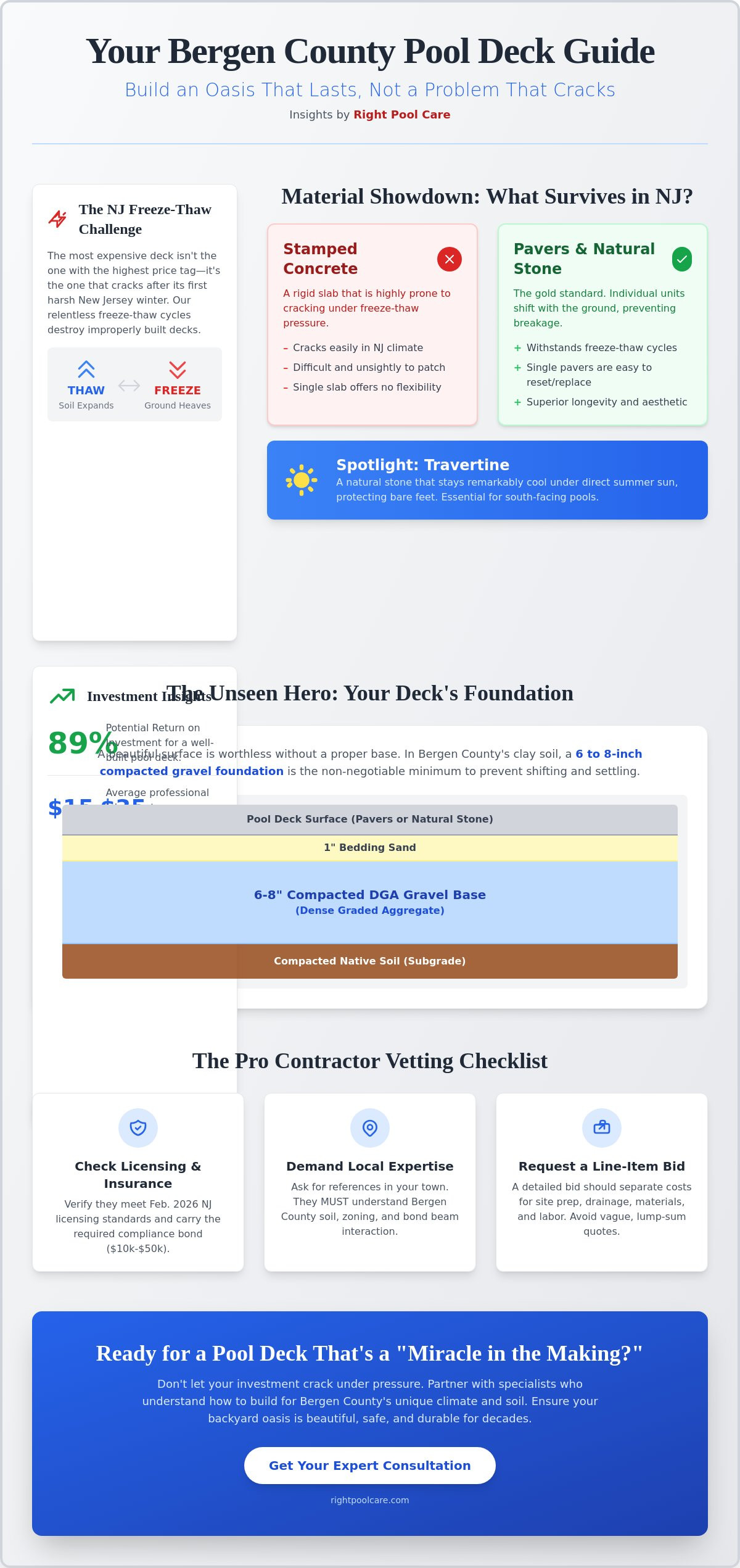
Don't settle for "standard" insurance. As of April 2025, New Jersey requires home improvement contractors to carry a compliance bond between $10,000 and $50,000. Ask if they meet the new February 2026 licensing standards, which require specific exams and supervised experience. Request references specifically from neighbors in Tenafly or Old Tappan to ensure they've handled local soil conditions. Inquire about their sub-base process; in our area, a six-to-eight-inch layer of compacted DGA (Dense Graded Aggregate) is the bare minimum to prevent shifting in clay soil. If they skip the compaction step, your expensive pavers will settle unevenly within two seasons.
The Role of Specialized Renovation Experts
The best results happen when pool renovation near me experts coordinate directly with your deck builders. This oversight ensures the new surround doesn't accidentally pin the pool's edge. If the deck is poured or laid incorrectly, it can make future vinyl liner replacements impossible without expensive demolition. A renovation professional ensures that construction dust doesn't ruin your filtration equipment and that the deck-to-pool transition remains watertight. This collaborative approach protects your investment and ensures your backyard transformation is seamless from the water's edge to the property line.
Comparing Pool Deck Materials for New Jersey’s Climate
Northern New Jersey’s weather is brutal on backyard masonry. In Bergen County, your choice of material determines whether your retreat remains an oasis or becomes a construction zone within three years. While many homeowners are drawn to the aesthetic flexibility of stamped concrete, experienced pool deck contractors often advise caution. Poured slabs are rigid. When the clay soil in Cresskill or Demarest expands during a January freeze, that rigidity leads to unsightly surface cracks that are nearly impossible to patch perfectly.
Professional installers now look to Pool & Hot Tub Alliance construction standards to mitigate these risks. These national guidelines emphasize the need for materials that can breathe and move with the earth. This is why pavers and natural stones like travertine or bluestone have become the gold standard for high-end Bergen County properties. Unlike a single slab, a paver system consists of individual units that shift slightly without breaking. If a single stone settles over time, you can lift and reset it without replacing the entire surround.
For south-facing pools in towns like Tenafly, heat absorption is a major safety concern. Darker materials can reach temperatures that blister bare feet by noon in July. Travertine is naturally heat-resistant and stays remarkably cool under the summer sun. If you already have a concrete deck that's too hot to touch, cool-deck coatings are an essential upgrade. These specialized acrylic finishes lower surface temperatures by up to 15 degrees, making the area safer for children and pets. For those with above-ground or semi-inground setups, composite decking offers a low-maintenance alternative that resists the moisture-rich environment near the water's edge.
Durability Rankings for the Freeze-Thaw Cycle
Pavers offer superior longevity because they handle soil movement far better than solid concrete. For those converting to saltwater systems, choosing salt-resistant materials like high-density porcelain or specific natural stones is non-negotiable. Porosity refers to the volume of open spaces within a material that allow water to enter and expand when frozen, potentially causing internal structural damage. Selecting low-porosity materials ensures your deck survives the 2026 winter without spalling or flaking.
Safety and Slip Resistance Standards
Safety is a core pillar of our "Miracles in the making" philosophy. We evaluate materials based on the Static Coefficient of Friction; a measurement of how much grip a surface provides when wet. For families, textured finishes like tumbled travertine or sand-set pavers provide the best traction. If you're unsure which material fits your layout, the experts at Right Pool Care can help you select a surface that balances beauty with uncompromising safety standards.
Beyond the Surface: Drainage, Soil, and Structural Integrity
A beautiful deck is only as strong as the ground beneath it. In Northern Bergen County, our soil profile is notoriously heavy in clay. This clay holds moisture, expands when it freezes, and exerts thousands of pounds of pressure against your pool's structure. Expert pool deck contractors know that skipping the "invisible" foundation is a recipe for disaster. We insist on a mandatory six to eight inches of compacted gravel sub-base. This layer acts as a buffer, allowing for proper drainage and preventing the soil from shifting your new pavers or stone out of alignment.
During a deck overhaul, it's common to discover that the pool's edge has suffered from years of ground movement. This is often the ideal time for tile and coping repair to ensure a seamless finish. If the coping is loose or the tile is cracked, laying a new deck against it will only hide a growing structural problem. We ensure the bridge between the water and the land is secure, preventing leaks that can wash away your new foundation and cause the deck to settle prematurely.
Solving Drainage and Runoff Issues
Runoff management is about more than just avoiding puddles on your patio. If water isn't directed away from the pool, it carries lawn chemicals, fertilizers, and organic debris directly into your water chemistry. Even worse, improper grading can cause hydrostatic pressure to build up behind a vinyl liner, leading to "floating" or bulging after heavy rain. We install high-capacity deck drains and specialized strip drains to channel water into your existing landscape plan. This proactive approach keeps your pool water clean and protects your liner from the damaging effects of trapped groundwater.
The Deck-to-Coping Connection
The expansion joint is the most critical inch of your entire backyard project. Without this gap, a heaving deck will act like a lever, snapping the pool's concrete bond beam and causing massive structural damage. We use professional-grade materials to create a flexible barrier that absorbs movement. A properly installed mastic joint creates a flexible, waterproof seal that prevents water from seeping behind the pool wall and causing winter ice damage. By prioritizing these technical details, we create "Miracles in the making" that stand up to the toughest New Jersey winters.
The Hiring Blueprint: Vetting Contractors and Estimating Costs
Hiring pool deck contractors in 2026 requires a more rigorous approach than in previous years due to updated New Jersey licensing and bonding mandates. You aren't just looking for someone to lay stone; you're looking for a partner who understands the structural relationship between your home and your water's edge. Start by defining your exact square footage and material preference. High-end natural stone like travertine often ranges from $90 to over $150 per square foot, while composite options typically fall between $60 and $100. Knowing these numbers upfront prevents "sticker shock" when the bids arrive.
Secure at least three detailed bids. Each estimate should include specific line items for site demolition, sub-base preparation, material costs, and labor. Professional labor in Northern New Jersey currently averages between $15 and $35 per square foot. If a bid is significantly lower, it usually means the contractor is cutting corners on the compacted gravel foundation discussed in the previous section. Review their portfolio specifically for pool surrounds. A contractor who builds beautiful driveways might not understand the intricate "slope to drain" requirements necessary to keep pool chemicals from ruining your lawn.
Finally, verify permit requirements for your specific Bergen County borough. Building permits for pool decks can cost between $450 and $2,400 depending on the project's scope. As of February 1, 2026, all new home improvement contractor license applicants in New Jersey must pass a licensing exam and meet strict experience requirements. Ensure your chosen pro carries the mandatory $500,000 general liability insurance and the new compliance bond, which ranges from $10,000 to $50,000 based on contract value.
Understanding Local Cost Drivers in 2026
Northern NJ pricing is heavily influenced by local labor rates and the logistical challenges of removing old, heavy concrete. Demolition is a "hidden" cost that can quickly add thousands to a project. However, investing in high-quality swimming pool renovation Bergen County services saves money long-term. By doing the work right the first time, you avoid the 20% to 30% premium homeowners pay for emergency repairs when a cheap deck begins to settle or crack after just two winters.
Contract Essentials and Warranties
Your contract is your primary protection. It must include a "slope to drain" guarantee to ensure water moves away from the pool at a rate of at least one-quarter inch per foot. Distinguish between workmanship warranties, which cover the installation, and material warranties provided by manufacturers like Trex or Cambridge. A clear timeline is also essential. Ensure your project is scheduled to finish well before the pool opening season to avoid construction delays during the peak of summer. If you're ready to start your project with a team that values precision, contact Right Pool Care for an expert consultation today.
Coordinating Your Deck Project with Professional Pool Renovations
A pool deck renovation shouldn't happen in a vacuum. The most efficient way to transform your backyard is to coordinate with your pool service provider from the start. In our experience, the absolute best time to hire pool deck contractors is during a pool liner replacement Closter NJ. When the old liner is out, we have a unique window to inspect the pool walls and ensure the new deck doesn't interfere with the liner track. This synchronization prevents the nightmare scenario where a beautiful new stone surround must be chiseled away later because it was installed too close to the pool's edge.
Construction is inherently messy. Masonry dust is fine, abrasive, and highly alkaline. If it enters your water, it can cause immediate scaling on your equipment and spike your pH levels to dangerous heights. Right Pool Care takes the lead in protecting your pool's interior during this process. We work directly with masons to ensure coping and liners are perfectly aligned, creating a seamless transition that looks like a miracle in the making. Once the heavy lifting is done, we perform a final inspection of your pump and filtration system to ensure no stone grit has entered the lines.
The Renovation Synergy
While your deck is torn up, you have a golden opportunity to handle essential pool repairs that are otherwise inaccessible. It's the perfect time to replace aging PVC piping buried under the concrete. We recommend upgrading your plumbing to high-schedule PVC before the final deck pour to avoid future leaks that would require cutting through your new pavers. This is also the moment to modernize your aesthetic. Matching your new tile and coping with your deck colors creates a unified, custom look that significantly boosts property value. Our team ensures the technical side of your pool is as modern and reliable as your new surround.
Post-Construction Pool Care
The work doesn't end when the last stone is set. Masonry residue often requires a professional cleaning or a specialized muriatic acid wash to restore the pool's surface to its original brilliance. We'll test your water chemistry immediately after the pool deck contractors depart. Concrete dust can cause pH spikes that lead to cloudy water and skin irritation. We'll balance your levels and ensure your filtration system is running at peak efficiency before your first swim. Ready to transform your backyard into a custom retreat? Contact Right Pool Care for a renovation consultation today.
Build Your Durable Bergen County Oasis
Designing a pool surround in Northern New Jersey requires more than a simple material choice. It's about ensuring your investment survives the 2026 freeze-thaw cycle and provides a safe, slip-resistant environment for your family. You now have the technical knowledge to vet pool deck contractors based on new licensing standards and structural requirements like the mandatory six-inch compacted gravel foundation. By choosing high-performance materials and prioritizing proper drainage, you're securing a high return on your home's value while avoiding the stress of premature cracking.
Right Pool Care brings over 20 years of experience to every backyard transformation in Bergen County. We are specialized Safety Cover Experts with deep expertise in complex vinyl liner and coping integration. We ensure your pool and deck work together as a single, seamless unit that lasts for decades. Don't settle for a contractor who skips the technical details. Get a Professional Pool Renovation Quote in Bergen County and let us handle the engineering while you enjoy the results. Your miracle in the making is just one phone call away.
Frequently Asked Questions
Do I need a permit for a pool deck in Bergen County?
Yes, you must obtain a permit for any pool deck where the water depth is 24 inches or more. In Bergen County, permit fees typically range from $450 to $2,400 depending on your borough’s specific regulations. Your project must comply with the 2021 International Swimming Pool and Spa Code. We handle the technical documentation to ensure your renovation meets all local safety and electrical bonding standards.
How much does it cost to build a pool deck in NJ in 2026?
The average cost for a pool deck in 2026 falls between $5,000 and $15,000, though custom installations often exceed $35,000. Labor rates in Northern New Jersey currently average $15 to $35 per square foot. Material choice is the biggest variable; while pressure-treated wood costs $30 to $60 per square foot, premium natural stone or PVC decking ranges from $90 to $150 per square foot.
What is the best pool deck material for New Jersey winters?
Natural stone pavers like travertine and bluestone are the superior choices for our climate. These materials consist of individual units that shift slightly during the freeze-thaw cycle without the surface cracking seen in solid concrete. Travertine is particularly popular in towns like Tenafly because it stays cool in the July sun and provides a high level of slip resistance for families and seniors.
Can I build a deck over my existing concrete pool surround?
You can install pavers or stone over an existing slab using a "thin-set" method, but only if the concrete is structurally sound. If your current deck has significant settling or drainage issues, covering it will only hide the problem temporarily. Professional pool deck contractors should inspect the base first to ensure it can support the weight of new materials without further sinking or shifting.
How do I stop my pool deck from cracking every winter?
Stopping winter cracks requires a six-to-eight-inch foundation of compacted gravel and properly installed expansion joints. In Bergen County’s clay-heavy soil, this gravel layer is mandatory to allow for drainage and ground movement. We also install a flexible mastic joint between the pool coping and the deck. This joint absorbs the pressure of shifting ground, protecting your pool's structural bond beam from snapping during a freeze.
Should I replace my pool liner before or after building a new deck?
It's most efficient to replace your pool liner during the deck construction process. This allows us to perfectly align the new coping and liner track while the area is already a work zone. Coordinating these tasks prevents construction debris from damaging a new liner later. It also ensures the deck doesn't accidentally pin the liner track, which would make future replacements much more expensive and difficult.
How long does a typical pool deck installation take?
A standard pool deck project takes between two and four weeks from the start of demolition to the final seal. This timeline varies based on your material choice and the complexity of the required drainage systems. You should also plan for the permitting process, which can add several weeks to the schedule. We prioritize organized workflows to ensure your backyard is ready well before the peak swimming season begins.
How do I find pool deck contractors who handle drainage issues?
Look for specialized pool deck contractors who focus on pool renovations rather than general masonry or landscaping. A specialist understands that the deck must slope away from the pool at a rate of at least one-quarter inch per foot. Ask for specific examples of how they've managed runoff in clay-heavy areas like Alpine or Closter to protect pool water chemistry and prevent liner floating issues.