What if the few hundred dollars you save by DIY-ing your pool closing ends up costing you $10,000 in cracked plumbing by February? In Bergen County, the brutal freeze-thaw cycles of 2026 don't just threaten your water chemistry; they target the structural integrity of your entire investment. It's natural to feel anxious about the hidden damage freezing temperatures can cause or the frustration of uncovering a green, algae-filled swamp next spring. You want a worry-free winter and a pool that's ready to enjoy the moment the weather breaks.
This guide clarifies exactly what's included in a professional pool closing to protect your vinyl liner or concrete surface from the harsh New Jersey elements. We'll move beyond basic covering to explore the technical safeguards that extend your pool's lifespan. You'll learn about the critical importance of professional line blowing, proper chemical balancing, and how to stay compliant with the latest NJDEP water discharge regulations. We'll provide a clear roadmap for a secure winter, ensuring your spring opening is as seamless as possible.
Key Takeaways
- Understand why professional winterization acts as a technical insurance policy against the volatile freeze-thaw cycles unique to Northern New Jersey.
- Discover exactly what's included in a professional pool closing, focusing on high-volume air compression and the precise sequence of air-locking underground plumbing.
- Learn the specific chemical protocols, such as winter shock and alkalinity balancing, required to prevent permanent surface staining and spring algae blooms.
- Identify the structural differences between basic tarps and professional safety covers to ensure maximum protection for your family and your pool.
- Gain the confidence to protect your vinyl liner or concrete investment, ensuring a clear, worry-free opening when the swimming season returns.
What is a Professional Pool Closing and Why is it Necessary in NJ?
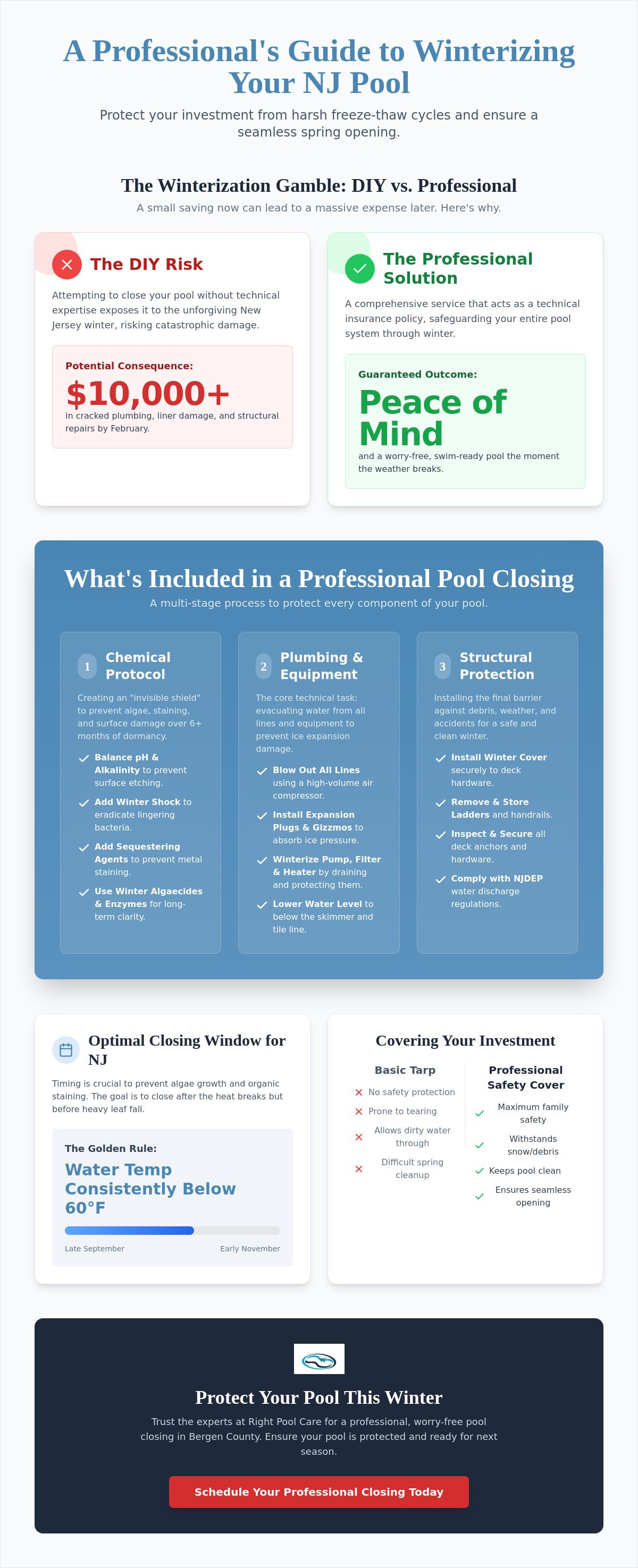
A professional pool closing is a comprehensive technical protocol designed to safeguard your backyard sanctuary. It involves the total winterization of plumbing, mechanical equipment, and water chemistry. Many homeowners mistake this for a simple cleaning service. In reality, it's a technical insurance policy against the brutal North Jersey climate. Understanding exactly what's included in a professional pool closing is the difference between a seamless spring opening and facing a $10,000 repair bill for burst underground lines come April.
Bergen County presents a unique challenge: the volatile freeze-thaw cycle. Temperatures in towns like Paramus or Ridgewood can swing 30 degrees in a single day during January. This constant expansion and contraction of the ground puts immense stress on your pool's structure. While an amateur might just throw on a cover and add some chlorine, a professional approach treats the process of winterization as a precise engineering task. We don't just "shut it down"; we transform the pool into a dormant, protected vessel.
The Science of Winterization: Preventing Ice Expansion
The physics of freezing water are unforgiving. When water freezes, it expands by approximately 9% in volume. Inside a rigid PVC pipe buried three feet underground, that expansion creates thousands of pounds of pressure. This force easily shatters plastic fittings and cracks concrete shells. In pools with vinyl liners, ice pressure can cause "liner pull," where the material is ripped from its track. Professionals use heavy-duty expansion plugs and specialized Gizzmos to absorb this pressure. These tools provide a level of security that DIY solutions simply cannot match.
When to Schedule Your 2026 Closing in North Jersey
Timing is everything for a clear spring. The "Golden Rule" is to wait until your pool water temperature consistently drops below 60 degrees. Closing too early, while the sun is still high, allows algae to bloom under the cover. In heavily wooded communities like Demarest and Norwood, you must also beat the heavy leaf fall to prevent organic staining on your pool floor. The optimal closing window for NJ pools is late September to early November.
The Professional Chemical Protocol: Water Chemistry and Protection
Chemistry is the invisible shield that protects your pool surface for six months of dormancy. When considering what's included in a professional pool closing, the chemical protocol is often the most misunderstood phase. It's not about dumping a bucket of chlorine and walking away. A technical closing requires a balanced environment where the water is neither corrosive nor scale-forming, even as temperatures plummet. We utilize a high-potency "Winter Shock" treatment to eradicate lingering bacteria and organic contaminants that could otherwise fester under the cover during the mild autumn weeks.
Precise management of pH and Alkalinity is essential to prevent permanent surface staining. If these levels drift during the winter, the water becomes aggressive. It can etch concrete or cause unsightly mineral deposits on tile lines. We also prioritize professional-grade sequestering agents. These specialized chemicals bind to dissolved metals like iron and copper, preventing them from oxidizing and staining your pool. This is particularly critical for homeowners who want to avoid vinyl pool liners discoloration or damage to a high-end pool safety cover through chemical off-gassing.
Balancing for the Long Haul
Calcium Hardness is the most overlooked metric in winterization. If calcium levels are too low, the water will "starve" and pull minerals from your pool's surfaces. In vinyl pools, this imbalance can lead to permanent wrinkling of the material as it loses its suppleness. We ensure all chemicals are fully circulated throughout the system before the pump is decommissioned. This ensures every gallon of water is treated. For those concerned about their pool's long-term health, scheduling a professional pool closing ensures these technical details are handled with precision.
Winterizing Algaecides and Enzymes
Standard summer algaecides break down quickly in sunlight and heat. Professional winter formulas are designed for longevity, remaining active in near-freezing temperatures. We often supplement these with specialized enzymes. These "good" bacteria consume the non-living organic matter, like body oils and pollen, that inevitably slips under the cover. It’s a delicate balance. Over-shocking a pool at closing can be destructive. Excessive chlorine levels often bleach liners and degrade the structural integrity of your winter cover over time. Our team applies the exact dosage your specific pool volume requires.
The Technical Core: Blowing Lines and Winterizing Equipment
The mechanical phase is the most critical part of the winterization sequence. It requires specialized equipment far beyond a standard shop vacuum. Homeowners often ask what's included in a professional pool closing when they see us arrive with industrial-grade air compressors. Unlike the low-pressure suction of a household vacuum, high-volume compressors provide the Cubic Feet per Minute (CFM) necessary to clear deep underground plumbing. Water is the enemy of winter plumbing; even a small pocket of trapped liquid can shatter a PVC fitting when the ground freezes solid in January.
We utilize a systematic "air-locking" method to ensure every inch of your plumbing is dry. This process involves pushing a massive volume of air through the system until every line is purged. We then seal the lines under pressure. This technical precision is what prevents the catastrophic pipe failures that often plague DIY attempts. To provide an extra layer of security for the coldest Bergen County nights, we add non-toxic, propylene glycol-based antifreeze to critical plumbing junctions where water might still collect.
Step-by-Step: The Professional Line-Blowing Process
The process begins at the skimmers. We clear the lines and install a Gizzmo, which acts as an expansion compensator to protect the skimmer plastic from cracking. Next, we move to the return lines. We blow air through these pipes until a steady stream of bubbles appears in the pool, then we immediately secure them with winter-grade rubber plugs. The most technical step is the "Air Lock" for the main drain. By blowing air until a massive surge appears at the bottom of the pool and then quickly closing the valve at the equipment pad, we trap a permanent air pocket in the pipe. This prevents water from re-entering the line without needing a diver.
Decommissioning the Filtration System
The equipment pad requires total deconstruction. We drain the pump, filter, and heater of all standing water. The heater is the most frequent victim of improper closings; if the heat exchanger isn't completely dry, the internal copper headers will crack. We also remove and clean DE grids or cartridges to prevent organic matter from hardening into the fabric over the winter. Finally, we decommission sensitive components like salt cells and chlorinators. These units are disconnected and drained to protect their internal plates and housings from the destructive force of ice expansion.
Structural Protection: Safety Covers and Deck Hardware
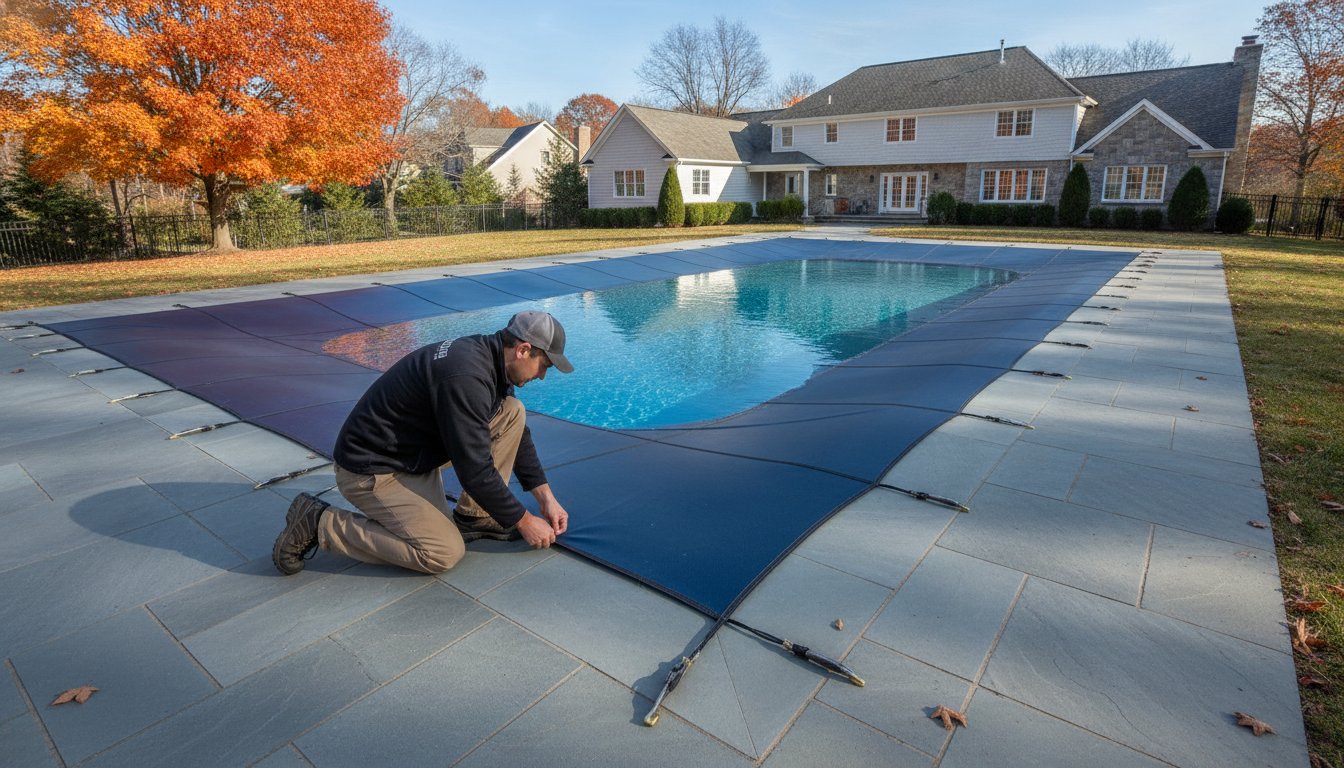
The final physical barrier between your pool and the elements is the most visible part of a winterization. A common question regarding what's included in a professional pool closing involves the choice of cover. Many homeowners are tempted by the low upfront cost of a "tarp and water bag" setup. These are essentially glorified plastic sheets. They offer zero safety for pets or children and frequently collapse under the weight of a single heavy Bergen County snowfall. In contrast, a professional safety cover is a structural component anchored directly into your pool deck. It acts as a trampoline-strong shield that can support thousands of pounds of weight.
Mechanical integrity extends to your deck hardware. We don't just pull the cover over the water; we meticulously inspect and lubricate every brass deck anchor. These anchors often seize up due to salt and grit, making them impossible to raise or lower without professional tools. Proper tensioning is the only way to prevent a heavy snow load from collapsing the cover into the pool. If the straps are too loose, the cover will sag, allowing debris and sunlight to enter. If they're too tight, you risk pulling the anchors out of the concrete. Our team ensures the tension is perfectly calibrated for the specific dimensions of your pool.
Security is a core brand pillar for us. We believe that safety cover installation is a vital service for any property owner. A properly installed cover doesn't just protect the water; it provides absolute peace of mind for your family throughout the dormant months.
Custom Safety Cover Inspection
We perform a detailed audit of your cover's condition. We look specifically for "rub points"—areas where the cover meets the coping—that can lead to fraying. We also check the integrity of every individual strap and spring. For specific pool shapes or above-ground models, we may utilize air pillows to provide center support and prevent water from pooling on top. A tight, professional fit is also your best defense against algae. By blocking 100% of sunlight, we stop the photosynthesis process that leads to a green opening in May.
Hardware and Perimeter Safety
Perimeter safety involves more than just the cover. We remove all ladders, handrails, and diving boards for off-season storage. This prevents the metal from pitting or rusting in the winter air. We also plug the railing sockets with specialized rubber caps. This simple step prevents water from entering the socket, freezing, and cracking the surrounding pool deck. This level of detail ensures your property meets the residential safety codes common in Closter and Alpine. If you want to ensure your investment is fully protected, book your professional pool closing today to secure your preferred date.
The Right Pool Care Difference: Expert Closings in Bergen County
Right Pool Care brings over two decades of hands-on experience to the unique soil and climate conditions of Northern NJ. We understand that a pool in Tenafly or Franklin Lakes faces different environmental pressures than one in a warmer climate. When you evaluate what's included in a professional pool closing with our team, you're getting specialized knowledge in protecting vinyl liners and high-end concrete surfaces. We provide every homeowner with a comprehensive post-service checklist. This document confirms every line is blown and every chemical is balanced. Existing maintenance and renovation clients also receive priority scheduling to ensure their pools are winterized before the first frost hits.
Our approach is rooted in technical authority. We don't just "shut it down"; we prepare the vessel for a six-month battle against the elements. We treat every property with the same precision we apply to major structural modifications. This commitment to quality standards ensures that your backyard remains a beautiful, life-enhancing space year after year. By choosing an established leader, you eliminate the guesswork and anxiety that often accompanies the end of the swimming season.
Beyond the Closing: Identifying Off-Season Repair Needs
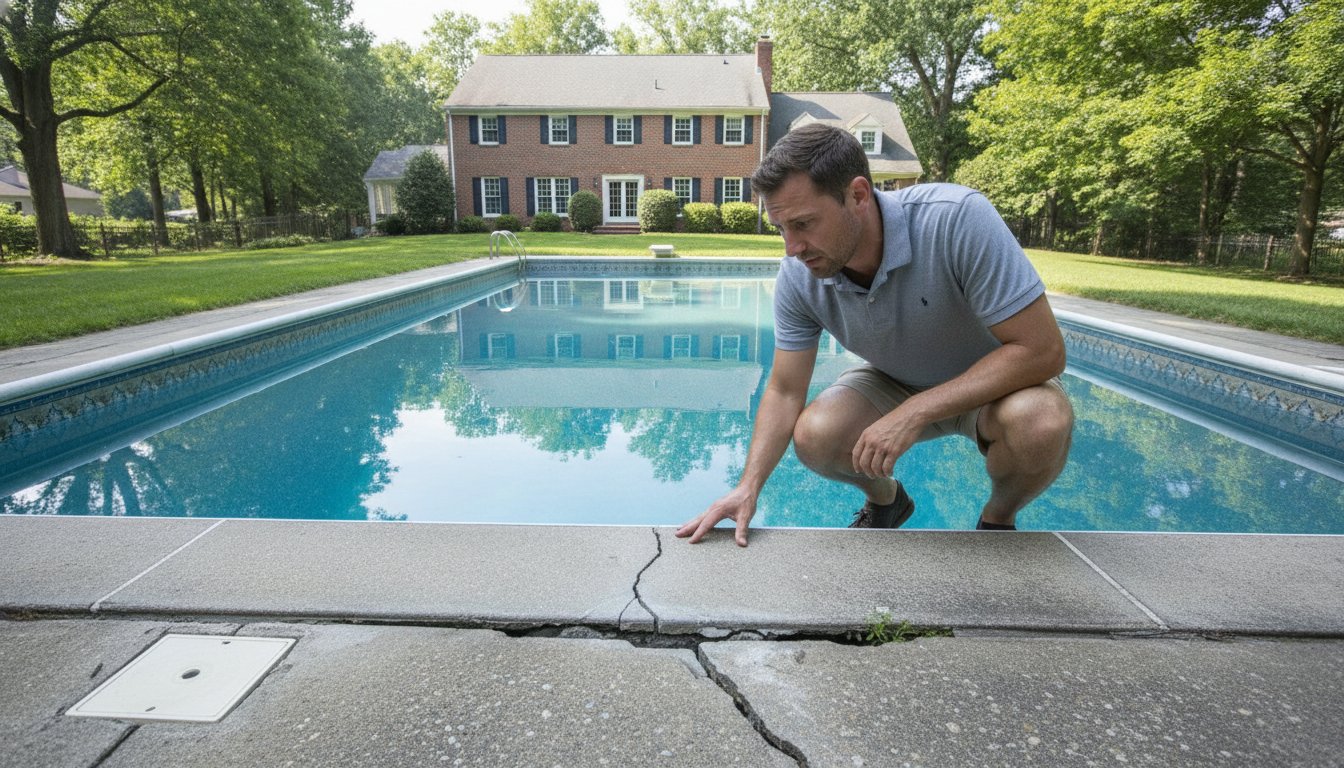
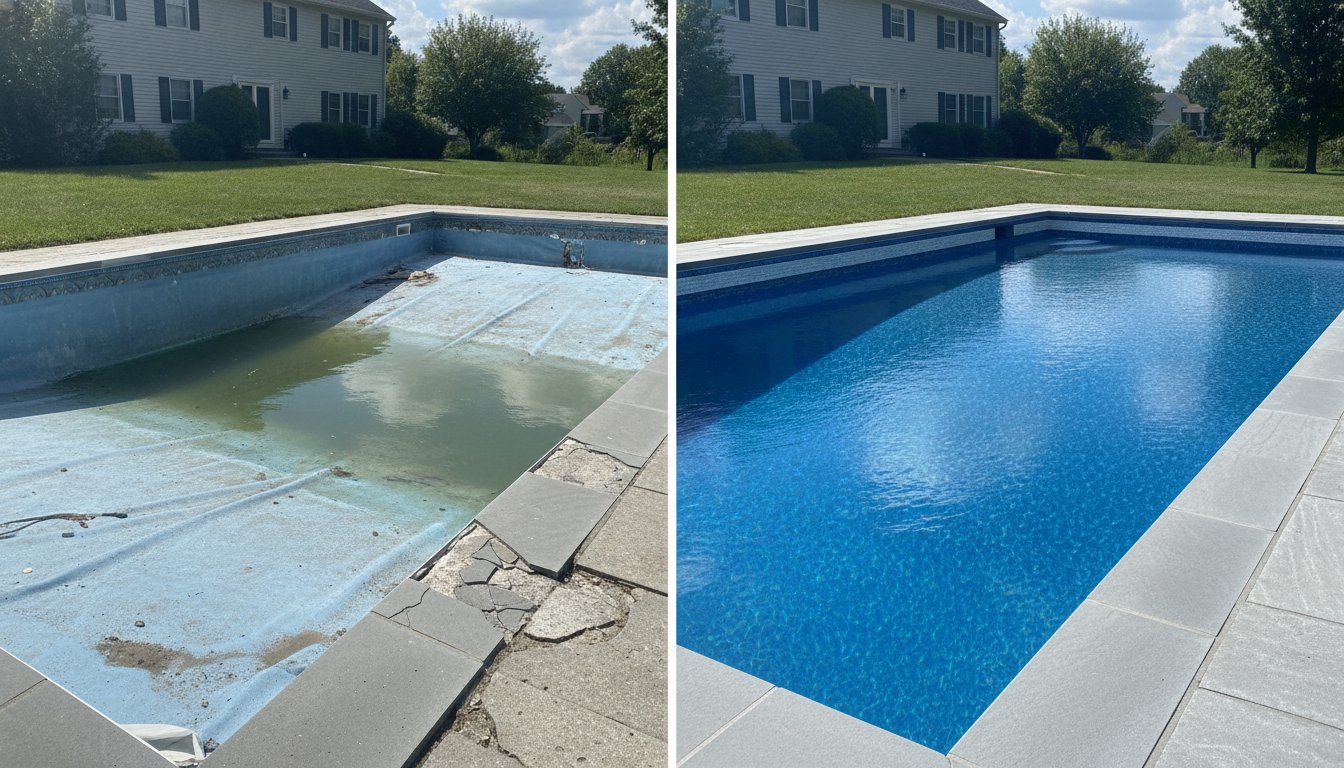
The closing process is the ideal time to perform a structural audit. Our technicians are trained to identify necessary tile and coping repairs while the water level is lowered. Catching a loose stone or a hairline crack now prevents ice from widening the gap during the winter. If your pool needs a spring vinyl liner replacement, winter is the best time to plan the project and secure your materials. We conclude every visit with a 'Health Report' for your equipment pad. This identifies aging pumps or leaking valves before they become emergency failures during the spring opening rush.
Ready for a Worry-Free Winter?
A professional closing provides the peace of mind that your backyard investment is secure. You won't spend the winter worrying about underground leaks or cracked heaters. Our 2026 seasonal service is designed to take the technical burden off your shoulders. We focus on security as a core brand pillar, ensuring your family and your property are protected. A professional pool closing is a strategic investment in your pool's longevity, not just a seasonal task.
Contact Right Pool Care today to book your 2026 winterization. Secure your preferred date and ensure your pool is ready for a clear, stress-free spring opening.
Protect Your Backyard Investment for the 2026 Winter
Winterizing your pool is more than a seasonal chore; it's a technical safeguard for your property. By prioritizing precise line blowing and exact chemical protocols, you eliminate the risk of catastrophic pipe failure. You also ensure your vinyl liner or concrete surface remains pristine under a properly tensioned safety cover. Understanding what's included in a professional pool closing allows you to rest easy while the snow falls, knowing your investment is secure.
Don't leave your pool's health to chance with amateur services or DIY shortcuts. Right Pool Care brings over 20 years of Bergen County experience and specialized expertise in vinyl liner and safety cover protection. As fully insured local professionals, we provide the technical insurance your backyard sanctuary requires. Secure Your 2026 Professional Pool Closing with Right Pool Care today. Your future self will thank you when you uncover a crystal-clear, ready-to-swim pool next spring.
Frequently Asked Questions
When is the best time to close my pool in New Jersey?
The optimal window for closing a pool in Northern New Jersey is between late September and early November. You should wait until the water temperature consistently drops below 60 degrees Fahrenheit to prevent late-season algae growth. Closing too early while the sun is still strong can deplete your winter chemicals before the first freeze arrives.
Do I really need to blow out my pool lines if I live in Alpine?
Yes, blowing out lines is non-negotiable for Alpine residents due to the intense freeze-thaw cycles of the local climate. Even a small amount of trapped water in underground PVC pipes will expand by approximately 9% when frozen, leading to shattered fittings. Professional line blowing ensures every drop is removed from the system, preventing catastrophic structural damage.
Can I use a regular shop vac for pool winterization?
A standard shop vacuum is insufficient for proper pool winterization because it lacks the necessary Cubic Feet per Minute (CFM) to clear deep main drains. Professionals use high-volume air compressors to create the force required to "air-lock" the plumbing. Attempting this with a household vacuum often leaves water in low points, resulting in expensive pipe repairs next spring.
How much should I lower the water level before closing?
You should typically lower the water level 4 to 6 inches below the skimmer mouth for a mesh safety cover. Maintaining the correct level is vital to prevent water from entering the skimmer and freezing, which can crack the plastic housing. Our team calibrates the water level based on your specific cover type to ensure maximum structural protection.
What happens if I don't use a professional for my pool closing?
Skipping a professional closing often leads to catastrophic structural damage and equipment failure. You risk burst underground pipes, cracked heater headers, and permanent staining on your pool surface. When you consider what's included in a professional pool closing, the technical expertise acts as an insurance policy against five-figure repair bills.
Is pool antifreeze necessary for inground pools?
Non-toxic pool antifreeze is a critical secondary safeguard for inground pools in cold climates like Bergen County. While the primary goal is to blow all water out of the lines, antifreeze provides protection for plumbing junctions where tiny amounts of moisture might settle. We use propylene glycol-based formulas that are safe for your pool's plumbing and the environment.
Should I keep my pool cover on until the water is warm in the spring?
You should actually remove your cover before the water gets too warm in the spring. Opening your pool when the water is still below 60 degrees prevents the "green swamp" scenario caused by rapid algae multiplication under the cover. Waiting until late May or June often results in a significantly more difficult and expensive opening process.
What is included in the Right Pool Care closing checklist?
The what's included in a professional pool closing checklist from Right Pool Care covers every technical detail of your system. It includes full water chemistry balancing, industrial line blowing, equipment decommissioning, and safety cover installation. We also perform a structural audit of your tile and coping to identify any off-season repair needs before they worsen during the winter.