A pool renovation is more than a cosmetic upgrade; it's a critical structural investment in your property's value and safety. If you've spent hours searching for how much to resurface a pool in Bergen County, you've likely encountered conflicting price data that ignores the unique geological and regulatory realities of Northern New Jersey. From the shifting clay soils of our region to the strict 2026 permit requirements, the true cost of a transformation involves more than just a new surface layer.
We understand the anxiety of facing potential hidden structural issues and the pressure of choosing between vinyl and concrete options. You deserve a clear, authoritative roadmap that replaces guesswork with professional certainty. This guide explores the real-world factors driving renovation budgets in 2026, including material longevity and climate-resilient upgrades. You'll gain the confidence to select the right finish for your lifestyle and find a local specialist who understands exactly how to turn a technical construction project into a beautiful, life-enhancing space that withstands the Jersey freeze-thaw cycle.
Key Takeaways
- Understand how the Northern NJ freeze-thaw cycle impacts surface longevity and why proactive resurfacing protects your pool's structural integrity.
- Get a clear breakdown of how much to resurface a pool in Bergen County by comparing the upfront value of vinyl liner replacements with the long-term durability of concrete finishes.
- Identify the "hidden" cost drivers, such as tile and coping repairs, that often emerge once the pool is drained for renovation.
- Discover why scheduling your project for late autumn may offer superior protection for your pool shell compared to the typical spring rush.
- Learn the essential questions to ask local specialists to ensure your renovation meets 2026 safety standards and Bergen County building codes.
Understanding Pool Resurfacing in the Bergen County Climate
Pool resurfacing is the comprehensive removal and replacement of your pool's top aesthetic and waterproof layer. It's not a superficial coat of paint. It's a technical overhaul that restores the integrity of the vessel. For homeowners evaluating how much to resurface a pool in Bergen County, the answer depends heavily on how well the existing structure has survived the local elements. This process is the only way to ensure your investment remains a beautiful, life-enhancing space rather than a liability.
In Bergen County, the local geology plays a massive role in pool longevity. Towns like Tenafly and Demarest are known for dense clay soil. This soil holds moisture and expands when it freezes, putting immense pressure on the pool shell. Unlike pools in stable, sandy climates, our local pools must withstand constant movement. This is why professional construction methods for private pools prioritize flexible or high-bond materials that can handle these Northern NJ challenges. A proper resurfacing project addresses these environmental stressors head-on.
Why Northern New Jersey Pools Age Differently
Our pools endure a specific type of stress. The winterizing process and prolonged exposure to sanitizing chemicals eventually strip the luster from any surface. Local temperature swings are particularly aggressive. One day it's freezing, and the next it's a humid 50 degrees. This cycle forces concrete and vinyl to expand and contract repeatedly. You might notice calcium deposits or "scaling" on plaster, or see a vinyl liner becoming brittle. These signs indicate that the surface no longer protects the structural shell from water penetration. Recognizing these local wear patterns is the first step toward a successful renovation.
Resurfacing vs. Patching: Setting Realistic Expectations
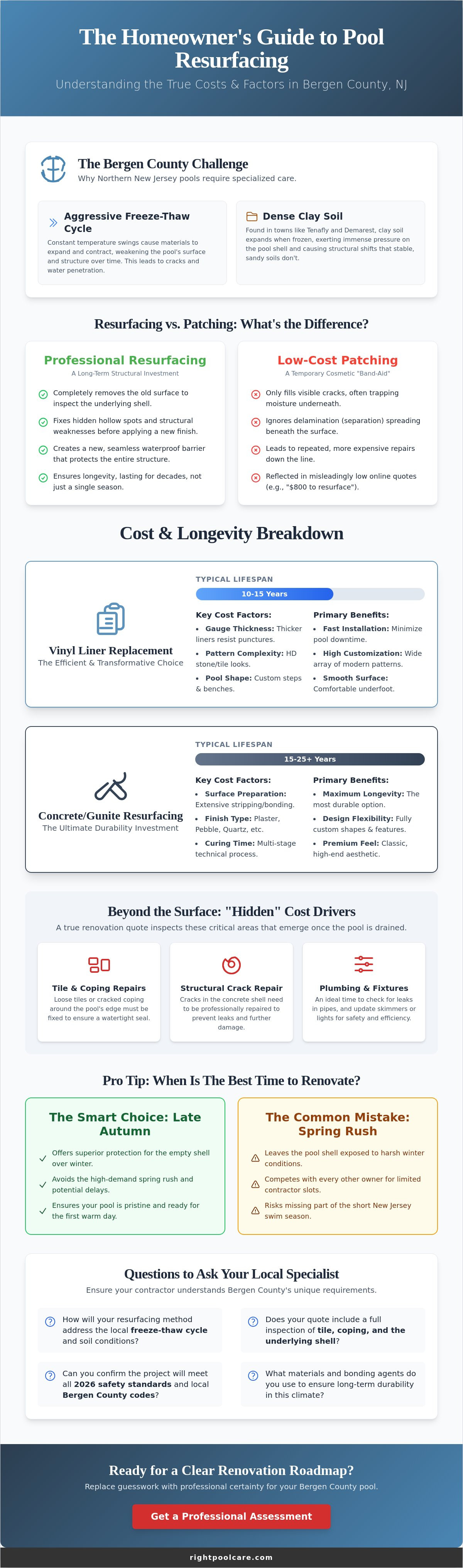
Don't be misled by low-cost online advertisements. Many generic price ranges for how much to resurface a pool in Bergen County are actually for "patching," which only fills visible cracks. Patching is a cosmetic band-aid. It doesn't stop the spread of delamination. A professional swimming pool renovation in Bergen County involves stripping the old material to inspect the bond. This ensures we find and fix hollow spots or structural weaknesses before applying the new finish. It's the difference between a quick aesthetic refresh and a secure, long-term structural investment. We focus on results that last for decades, not just a single season.
Cost Breakdown: Vinyl Liner Replacement vs. Concrete Resurfacing
When researching how much to resurface a pool in Bergen County, ignore the misleading $800 price tags found on generic contractor directories. Those quotes cover minor patches; they don't reflect a full-scale, professional renovation. A true resurfacing project is a structural commitment. It requires specialized equipment and high-grade materials to ensure your pool remains a safe, leak-free environment for your family. The final investment depends primarily on whether your pool utilizes a vinyl liner or a concrete shell.
Vinyl Liner Replacement: The Efficient Choice
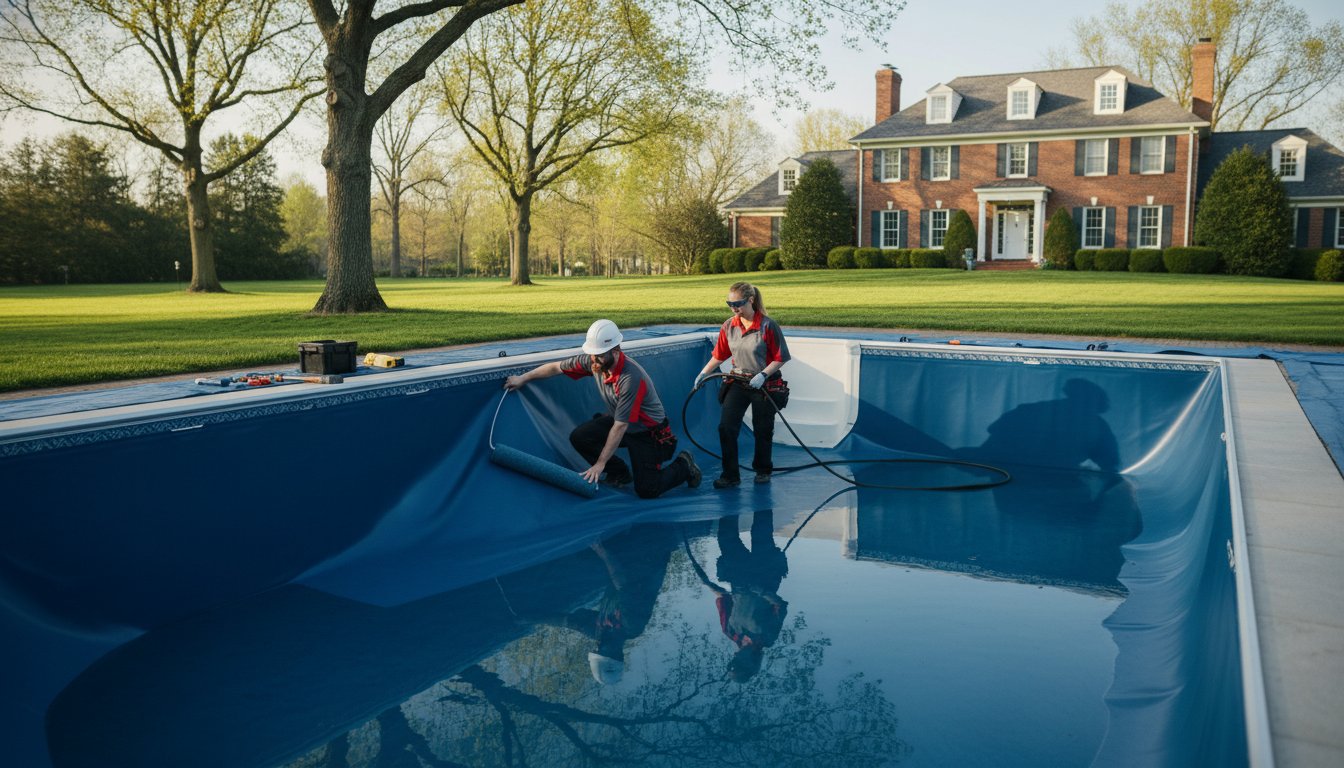
High-quality pool liner replacement in Closter NJ is the most popular renovation choice for a reason. It's efficient. It’s transformative. Modern vinyl patterns offer incredible customization, allowing you to achieve a high-end look without the month-long construction schedule of masonry. A new liner typically lasts 10 to 15 years, provided the installation is handled by a specialist who understands local soil pressure.
Several factors influence the cost of a liner project:
- Gauge Thickness: Heavier liners provide better resistance to punctures and UV damage.
- Pattern Complexity: High-definition patterns that mimic natural stone or intricate tile work require precise manufacturing.
- Pool Shape: Custom steps, benches, and complex deep-end transitions increase the labor hours required for a perfect fit.
The installation speed of vinyl is unmatched. Most projects are completed in a fraction of the time required for concrete work, making it the ideal choice for homeowners who want to minimize downtime during the short Jersey swim season.
Concrete and Gunite Resurfacing Costs
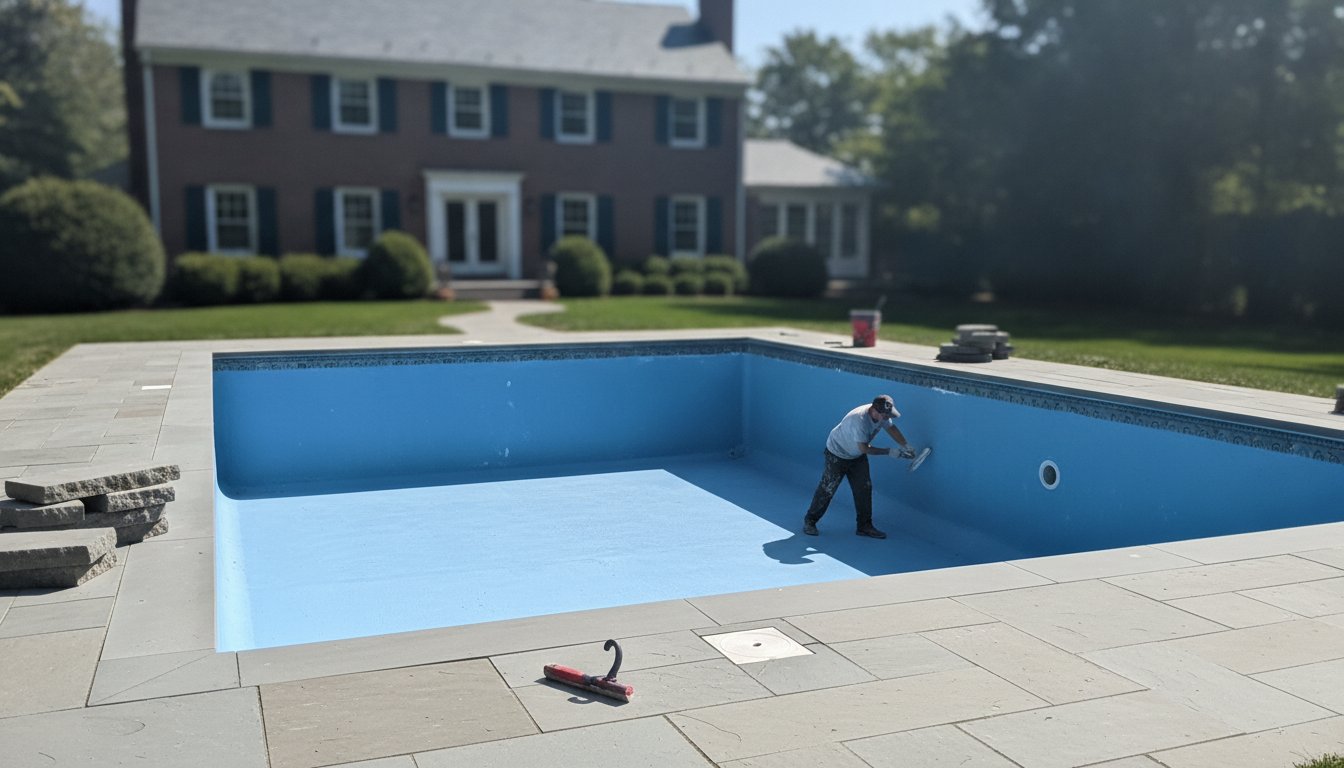
Concrete resurfacing is a multi-stage technical operation. It isn't just about the finish; it’s about the preparation. We must sandblast the existing shell or perform an aggressive acid wash to create a mechanical bond for the new material. Standard white plaster remains a popular choice for its clean look, yet it's more susceptible to chemical stains and NJ's temperature swings. This is why pebble and aggregate finishes have become the gold standard.
When calculating how much to resurface a pool in Bergen County using concrete, remember that labor hours for premium finishes are significantly higher. Pebble surfaces command a premium because they require hand-troweling and specialized washing to reveal the stone. Despite the higher upfront investment, standard plaster finishes generally have a shorter lifespan of 7 to 10 years in our harsh climate. If you're weighing these options, you can view our full range of resurfacing services to determine which material fits your property's long-term needs.
The "Hidden" Factors That Influence Your Final Quote
Calculating how much to resurface a pool in Bergen County requires a perspective that looks beyond the new surface layer. The final investment is often shaped by variables that aren't immediately visible while the pool is full of water. These factors determine the technical complexity of the project and the total labor hours required to restore your vessel to its peak condition. Understanding these variables prevents budget surprises and ensures a seamless transition from construction to your first swim of the season.
Pool size and depth are the most direct drivers of material volume. A deep end that exceeds eight feet requires significantly more plaster or vinyl than a shallow play pool. Beyond dimensions, we must account for the logistical challenges of our local geography. In densely populated neighborhoods like Ridgewood or Teaneck, site access can be a major cost factor. If a property has narrow driveways or restrictive fencing that prevents heavy machinery from reaching the pool deck, labor hours increase as materials must be moved manually. These logistical realities are unique to Northern NJ and are often overlooked in generic online estimates.
The process doesn't end once the new surface is applied. Refilling the pool involves more than just turning on a garden hose. Many homeowners opt for professional water delivery to ensure the pool is filled quickly, which prevents the new finish from drying unevenly or cracking under the sun. Once the pool is full, a precise chemical balancing act begins. This initial "startup" period is critical for the long-term health of the surface and requires specialized chemicals to stabilize the water chemistry in relation to the new materials.
Tile and Coping: The Essential Partners
It rarely makes sense to invest in a new surface without addressing tile and coping repair. The coping is the stone or concrete border that transitions the pool to the deck. If this border is loose or cracked, water can seep behind the new surface, leading to delamination and structural failure. Choosing between natural stone and pre-cast concrete coping affects both the aesthetic harmony of your backyard and the total project cost. We view these elements as a single structural unit that must be secured simultaneously to guarantee a lasting result.
Permits and Local Regulations
Bergen County is known for its rigorous building codes. High-end municipalities like Alpine or Norwood often require specific renovation permits for resurfacing projects, especially if structural modifications or plumbing upgrades are involved. These permits ensure that your pool meets the latest safety standards, but they do add to the administrative timeline. Additionally, Northern NJ has strict environmental regulations regarding how pool water is drained. Managing the safe, legal discharge of thousands of gallons of treated water is a technical requirement that professional specialists handle to protect both the local ecosystem and your property's integrity.
When is the Best Time to Resurface Your Pool?
Timing your renovation is just as critical as choosing your materials. Most Bergen County homeowners wait until the first warm day in May to consider their pool's condition. This creates a "Spring Rush" that can lead to longer wait times and higher demand for specialized labor. Planning your project for late autumn is often the superior strategic choice. By resurfacing in September or October, you ensure the pool shell is protected against the aggressive freeze-thaw cycles of a Jersey winter. A fresh surface applied before the first frost acts as a shield. It prevents moisture from entering the substrate and causing structural damage during the cold months. This proactive approach turns a technical necessity into a long-term safeguard for your home.
Contractor availability fluctuates significantly throughout the year. During the off-season, specialists can often provide more flexible scheduling and a more dedicated focus on complex structural modifications. If you're concerned about how much to resurface a pool in Bergen County, remember that planning ahead prevents the emergency surcharges associated with last-minute repairs. Waiting until you see significant water loss or deep structural cracks is a high-stakes gamble. If your pool is losing inches of water a week, the underlying damage to the soil and foundation can escalate costs far beyond a standard resurfacing project. We prioritize safety and long-term results over quick fixes that fail after one season.
Signs Your Pool Surface is Failing
Don't ignore the subtle indicators of degradation. If you notice "chalking" or a fine white dust in the water, your plaster is breaking down. For vinyl owners, look for tearing or bead-slippage where the liner meets the track. Rough textures are another clear sign. If the surface is causing skin abrasions or snagging bathing suits, the protective finish has eroded. These symptoms suggest that the waterproofing layer is compromised and requires immediate professional attention.
Maximizing ROI: Resurfacing for Resale Value
A fresh surface is a powerful asset for high-end Bergen County estates. In markets like Saddle River or Franklin Lakes, a pristine pool is a baseline expectation for luxury buyers. The psychological impact of a "new" pool can't be overstated. It suggests the entire property has been meticulously maintained. We recommend choosing neutral patterns and classic finishes for long-term appeal. This ensures your renovation remains timeless and attractive to the widest range of potential buyers. If you're ready to secure your property's value, you can schedule a professional assessment to determine the ideal timing for your transformation.
Choosing a Specialist for Your Bergen County Pool Renovation
Selecting the right partner for your renovation is the final, most critical step in protecting your property. A swimming pool is a complex system of hydraulics and structural engineering. It isn't a project for a general handyman. While homeowners often focus solely on how much to resurface a pool in Bergen County, the cheapest estimate rarely provides the best long-term value. You need a team that understands professional pool repairs and the unique environmental pressures of Northern New Jersey. This expertise ensures your investment is protected by local knowledge and industry-standard warranties.
Before signing any contract, demand total transparency. Ask your specialist about their specific experience with either vinyl liner replacement or concrete resurfacing. A professional firm will provide local references from towns like Alpine or Closter. They should offer clear warranties and carry comprehensive insurance that protects your home during the construction phase. A high-quality quote must be comprehensive. It should include every stage of the process, from the initial draining and surface preparation to the final chemical startup and site cleanup. This level of detail eliminates the stress of hidden costs.
The Right Pool Care Difference
Right Pool Care operates with a no-nonsense philosophy. We don't use high-pressure sales tactics or vague estimates. Our focus remains on high-quality vinyl and concrete restoration that stands the test of time. We prioritize structural integrity and safety-related niches, ensuring your pool meets 2026 standards for drain compliance and anti-entrapment. Because we're based in Closter, we offer a level of accountability that regional franchises can't match. We're your neighbors. We understand the specific soil conditions and climate challenges that affect your pool's longevity. Our local presence ensures a rapid response and a commitment to excellence on every property.
Your Next Steps: From Quote to First Swim
Your journey toward a transformed backyard begins with a detailed site evaluation. During our initial consultation, we'll perform a physical inspection of your pool's current condition. We look for the subtle signs of wear discussed earlier, such as hollow spots in plaster or brittle vinyl tracks. We provide a line-item estimate that accounts for material volume, labor hours, and any necessary tile and coping repairs. This transparency allows you to budget with confidence and avoid the stress of mid-project surprises. You deserve a beautiful, life-enhancing space that is built to last. Get a detailed resurfacing estimate from Right Pool Care today and secure your pool’s future.
Secure Your Investment with Expert Renovation
A pool renovation is more than just a seasonal update; it's a structural transformation that protects your property for years to come. By understanding how the Northern NJ freeze-thaw cycle impacts your pool's surface, you can move beyond guesswork and make informed decisions about your backyard. Whether you choose the efficiency of a high-quality vinyl liner or the long-term durability of a concrete finish, the key is prioritizing structural integrity over superficial fixes. Addressing hidden variables like tile and coping early prevents costly repairs later and ensures a seamless transition to your first swim.
Determining exactly how much to resurface a pool in Bergen County depends on your specific site logistics and material choices. At Right Pool Care, we provide owner-operated excellence backed by 20+ years of local experience. As specialists in both vinyl and concrete renovation, we focus on delivering high-value results that withstand the local climate. We don't believe in shortcuts; we believe in safety and long-term quality standards. Take the first step toward a beautiful, life-enhancing space today.
Request Your Professional Pool Resurfacing Quote and experience the difference that local expertise makes for your home.
Frequently Asked Questions
How long does it take to resurface a pool in Bergen County?
Vinyl liner replacement is the most efficient option, typically requiring only 2 to 3 days for a complete installation. Concrete resurfacing is a more intensive multi-stage process that generally spans 7 to 14 days. These timelines depend heavily on Northern New Jersey weather, as cement-based finishes require specific temperature windows to cure without cracking.
Will resurfacing my pool stop it from leaking?
Resurfacing effectively seals leaks caused by surface porosity, delamination, or hairline cracks in the pool shell. It creates a fresh, waterproof barrier that protects the underlying structure. It won't address leaks located in the underground plumbing or filtration system. We recommend a professional pressure test before beginning any renovation to ensure all issues are identified.
Can I change my pool from concrete to a vinyl liner during resurfacing?
Yes, converting a concrete pool to a vinyl liner is a common structural modification. This process involves installing a specialized track system and custom-fitting a liner over the existing shell. It's a practical way to give an aging concrete pool a smoother, more flexible surface that handles ground movement well.
What is the most durable pool surface for the New Jersey climate?
Pebble and aggregate finishes are the most resilient options for concrete pools in our region. These materials are specifically designed to withstand the aggressive freeze-thaw cycles that often damage traditional white plaster. For vinyl pools, a high-gauge, UV-resistant liner provides the best long-term defense against winter stress and chemical degradation.
Does pool resurfacing include new tiles and coping?
Standard quotes focus on the interior surface, so tile and coping are usually listed as separate line items. When calculating how much to resurface a pool in Bergen County, most homeowners choose to address these elements simultaneously. This ensures the entire pool remains waterproof and maintains a cohesive, high-end aesthetic.
Is it worth resurfacing an old pool or should I replace it entirely?
Resurfacing is almost always the better investment and can extend your pool's life by another 10 to 20 years. Total replacement involves massive excavation and much higher costs, which is rarely necessary unless the structural shell has suffered catastrophic failure. A professional evaluation can confirm if your shell is stable enough for a successful renovation.
How much does it cost to drain and refill a pool for resurfacing?
Draining labor is typically included in your professional renovation quote to ensure the shell isn't damaged by hydrostatic pressure. Refilling costs vary based on local municipal water rates or the price of professional water delivery. Many specialists recommend trucked-in water to ensure a fast fill, which prevents the new finish from drying too quickly under the sun.
Can I resurface my pool myself to save on labor costs?
Pool resurfacing is a complex technical project that requires specialized masonry tools and chemical expertise. DIY attempts frequently result in delamination, rough textures, or plumbing blockages that are expensive to correct. Hiring a specialist ensures the project meets 2026 safety standards and provides a durable result that protects your property value.