Is that crumbling white grout between your pool tiles just an eyesore, or is it a warning sign of a looming structural failure? Many homeowners ignore those unsightly brown stains or receding grout lines until water begins seeping behind the pool shell. If you're worried about the integrity of your waterline, you aren't alone. Securing a professional pool tile regrouting service Norwood experts provide is the most effective way to prevent costly leaks and protect your masonry from the brutal New Jersey winter freeze-thaw cycles.
It's understandable to feel confused by the difference between a DIY weekend project and the technical requirements of underwater bond strength. We understand your desire for a leak-proof perimeter and aesthetically pleasing tile lines that last for decades. This article will show you how professional-grade polymer-modified and epoxy grouts, which can last over 20 years, provide a permanent barrier that standard materials simply can't match. We will preview the essential steps to restore your pool's original beauty while ensuring your backyard oasis remains fully compliant with Norwood's specific health and safety codes for the 2026 season.
Key Takeaways
- Identify the early warning signs of grout erosion and mineral staining before they lead to structural leaks or tile loss.
- Discover why a professional pool tile regrouting service Norwood experts provide is essential for applying the advanced polymer-modified grouts needed to withstand chlorinated water.
- Understand the technical precision required in grout removal and depth preparation to guarantee a permanent, waterproof bond.
- Learn how balancing your pool's water chemistry and calcium hardness prevents grout leaching and significantly extends the life of your restoration.
- Secure your pool perimeter against the destructive New Jersey freeze-thaw cycle with restoration methods designed for long-term structural integrity.
Recognizing the Warning Signs: When Norwood Pools Need Tile Regrouting
Your pool's waterline is more than a decorative accent; it is a vital structural seal. When this seal begins to fail, the transformation from a backyard sanctuary to a liability can be surprisingly swift. Homeowners often mistake receding grout for a simple cosmetic nuisance, yet this is the first stage of a mechanical breakdown. Ignoring these subtle shifts allows water to penetrate the pool beam, leading to delamination and expensive masonry repairs. Engaging a professional pool tile regrouting service Norwood experts provide is the most effective way to catch these issues before they escalate into a total tile failure.
The geography of Norwood presents unique challenges. Properties in the Northern Valley often deal with clay-heavy soils that expand and contract with seasonal moisture. This ground movement puts immense pressure on the pool shell. If your grout is already brittle, it cannot absorb these micro-shifts, causing it to crack and crumble. At its core, Grout is designed to fill these gaps and maintain a waterproof barrier, but standard cementitious products often fail under the chemical and physical stress of a New Jersey winter.
Visible Grout Erosion and Discoloration
Healthy grout should be flush with the tile surface and feel rock-solid to the touch. If you notice a "pitting" effect where the joints look sandy or hollow, the binder is leaching out. This erosion often accompanies yellow or brown staining. These aren't just surface stains; they are frequently caused by organic matter and minerals getting trapped within the porous, failing material. When you can see the edges of your tiles clearly because the grout has recessed, the protective barrier is gone. It's no longer a matter of if water will get behind the tiles, but when.
Loose or Falling Tiles: The Structural Risk
Once grout disappears, tiles lose their lateral support. You can perform a simple "hollow sound" test by gently tapping your waterline tiles with the back of a screwdriver. A sharp "click" indicates a solid bond, while a dull "thud" means the tile has detached from the setting bed. This is a critical warning. During a Norwood winter, any water trapped in those hollow spaces will freeze and expand. This hydraulic pressure "pops" the tiles off the wall, often taking chunks of the pool beam with them. Addressing this now with a professional pool tile regrouting service Norwood specialists offer is significantly more affordable than rebuilding the entire tile line after a catastrophic freeze.
- Early Erosion: Grout feels sandy or looks recessed between the tiles.
- Organic Staining: Persistent brown or yellow lines that resist standard cleaning.
- Hollow Tiles: A clear sign that water has already compromised the bond behind the tile.
- Winter Popping: Visible cracks that widen after the first frost of the season.
The Science of Submerged Surfaces: Why Pool-Specific Grout is Non-Negotiable
Standard hardware store grout is designed for kitchen backsplashes and bathroom floors, not the punishing environment of a submerged swimming pool. Using the wrong material is a recipe for rapid degradation. Pool water is a complex chemical soup that requires specialized binders to stay intact. When you choose a professional pool tile regrouting service Norwood experts provide, you are investing in high-performance materials engineered to survive constant immersion and aggressive sanitation levels.
Standard cementitious grout is inherently porous. In a submerged environment, this porosity allows chlorinated water to penetrate the material's core. Once inside, the chemicals begin to oxidize the binders that hold the mixture together. This process turns once-solid joints into a sandy, brittle mess. High-quality pool grout utilizes advanced polymers and waterproof additives to create a dense, low-porosity barrier. This density is your first line of defense against calcium leaching and structural decay.
Chemical Resistance and Waterproofing Requirements
Pool chemicals constantly fluctuate, often reaching acidic levels that dissolve standard masonry. Guidelines like those found in the CDC's Model Aquatic Health Code emphasize the importance of using materials that facilitate easy cleaning and maintain structural integrity. Specialized grout prevents algae from taking root in the joints by eliminating the microscopic pockets where spores hide. This low-porosity surface also ensures the bond strength remains high on vertical tile lines, preventing gravity and water movement from pulling tiles away from the wall. If your waterline is looking dull, a professional tile and coping repair assessment can determine if a high-performance regrouting is the right solution for your pool.
Combating the New Jersey Freeze-Thaw Cycle
Norwood's climate is particularly brutal on pool masonry. During a typical New Jersey winter, any water that manages to seep behind your tiles will eventually freeze. As water turns to ice, it expands by approximately 9%. This expansion creates immense hydraulic pressure behind the tile. This "heaving" process is what causes tiles to pop and coping stones to shift. Flexible, polymer-modified grouts act as a shock absorber. They are designed to expand and contract slightly with the pool shell, maintaining a waterproof seal even as temperatures drop. Right Pool Care selects these specific materials to ensure your pool survives the winter without losing its structural or aesthetic value. We prioritize materials that offer superior adhesion and flexibility to handle the specific soil movements found in Bergen County properties.
The Professional Regrouting Process: Precision Restoration by Right Pool Care
Precision is our standard. A professional pool tile regrouting service Norwood homeowners trust is defined by more than just the final aesthetic; it's defined by the invisible work performed before a single ounce of new grout is applied. We treat every waterline restoration as a structural reinforcement project. Our technicians don't believe in "top-coating" or "skimming" over old material. That approach is a shortcut that inevitably leads to premature delamination. Instead, we focus on a deep, mechanical bond that transforms weathered masonry into a seamless shield of protection.
The integrity of your pool depends on the depth of the repair. By strictly adhering to a "no-shortcut" philosophy, Right Pool Care ensures that your investment is protected against the chemical and thermal stresses discussed in previous sections. We combine technical mastery with specialized equipment to deliver results that standard general contractors simply cannot replicate. Our goal is to provide a restoration that looks like a masterpiece and performs like a fortress.
Preparation: Removing Old Failing Grout Safely
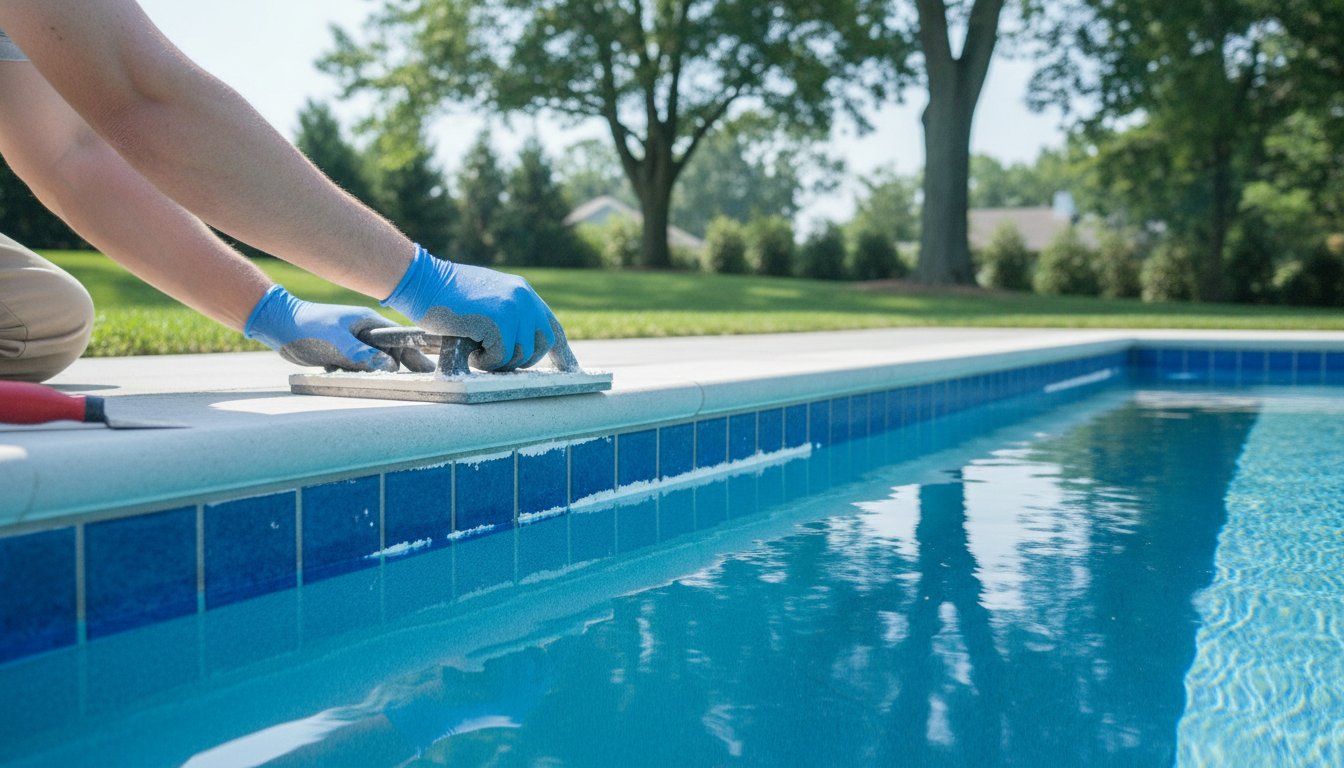
Success begins with a clean slate. Our pool tile regrouting service Norwood specialists use specialized manual scrapers and low-impact oscillating tools to remove at least 50% to 75% of the old grout depth. This creates a "keyway" for the new material to bite into. We take extreme care to protect the delicate glaze of your ceramic or glass mosaic tiles, ensuring no scarring occurs during the removal phase. Once the joints are cleared, we meticulously clean the tile edges to remove any residual biofilm or calcium deposits. To protect your pool's interior, we implement strict safety protocols, including debris catchments that prevent old grout from contaminating the pool floor or clogging your filtration system.
Application and Curing: Ensuring a Seamless Bond
Mixing is where science meets craftsmanship. We blend our high-performance, polymer-modified grouts to a specific consistency that ensures maximum density and color uniformity. Our technicians use a "packing" technique, forcing the material deep into the joints to eliminate microscopic air pockets. This density is what prevents water from finding a path behind the tile during the winter. After the joints are struck and the tiles are polished, the curing window becomes our primary focus. We provide clear instructions on the necessary downtime before you can refill the pool or rebalance the water chemistry. This patience ensures the grout reaches its full compressive strength, creating a permanent, waterproof seal that honors the beauty of your outdoor space.

Maximizing Your Investment: Longevity and Maintenance Post-Regrouting
Professional regrouting is a transformative investment for your property. To ensure the results last for the next decade or more, you must manage the environment surrounding your waterline. Aggressive water chemistry is the primary culprit behind premature grout erosion. When you schedule a pool tile regrouting service Norwood specialists provide, we deliver a durable, waterproof barrier. However, maintaining that barrier requires a commitment to balanced water chemistry. We recommend integrating these checks into your broader swimming pool renovation Bergen County strategy to maximize the lifespan of every component in your outdoor space.
Low pH is the enemy of cement-based materials. When your pool water becomes acidic, it looks for minerals to neutralize itself. It finds these minerals in your grout. This leaching process makes the grout brittle and porous, eventually leading back to the same erosion issues you just repaired. Think of your water as a living environment that needs constant calibration to remain non-corrosive. By keeping your chemistry in check, you prevent the "hungry" water from feeding on your masonry.
Balancing Water Chemistry to Protect New Grout
Chemistry balance isn't just about clear water; it's about material preservation. We focus on the Langelier Saturation Index (LSI). In simple terms, the LSI tells us if your water is "corrosive" or "scale-forming." If the index is too low, the water is corrosive and will eat away at your new tile joints. To keep your grout in peak condition, aim for these ideal ranges:
- pH: 7.4 to 7.6
- Total Alkalinity: 80 to 120 ppm
- Calcium Hardness: 200 to 400 ppm
Seasonal Inspections: Preventing Future Failures
Your spring pool opening service near me is the perfect time for a close-up inspection of your waterline. Look for hairline cracks or areas where the grout appears to be receding. A tiny crack is often the "canary in the coal mine" for larger structural shifts or soil movement. By utilizing a pool tile regrouting service Norwood experts trust, you've already taken the biggest step toward a leak-proof pool. We suggest an annual professional health check to evaluate the bond between your tile, grout, and coping. This proactive approach saves you from the stress of emergency repairs mid-summer. If you notice any changes in your tile lines, contact Right Pool Care for a professional evaluation today.
Why Right Pool Care is Norwood’s Trusted Choice for Tile Restoration
Trust is built through decades of consistency. Right Pool Care stands as an established leader in Northern New Jersey, bringing over 20 years of specialized experience to every backyard we enter. We understand that your pool is more than a vessel of water; it's a sanctuary for your family and a significant asset to your property. Our pool tile regrouting service Norwood homeowners depend on is rooted in a "no-nonsense" professional philosophy. We prioritize safety, durability, and a level of craftsmanship that general contractors simply cannot match. We treat your masonry with the respect it deserves, turning technical construction into a transformative experience for your outdoor living space.
Our reputation is grounded in physical results. We've encountered every conceivable industry challenge, from shifting soil in the Northern Valley to the aggressive chemical demands of modern sanitation systems. This deep expertise allows us to approach complex pool repairs with total confidence. We don't guess; we diagnose and execute with precision. This authoritative approach alleviates the stress of pool ownership, giving you the security of knowing your repair will survive the seasons. We take pride in creating beautiful, life-enhancing spaces that stand as a testament to our technical authority.
Local Expertise with Bergen County Residential Pools
Norwood, Alpine, and Closter neighborhoods have unique environmental profiles. We are intimately familiar with the local water chemistry and how the mineral content in Bergen County water sources can affect your tile lines over time. Our team ensures that all work complies with the specific health and safety standards of the Norwood Borough Board of Health. We are a local team that understands Norwood property values. We know that a pristine waterline is essential for maintaining the prestige of your estate. By choosing a local specialist, you ensure that your team is available for the life of your pool, not just the duration of the project.
Comprehensive Renovation Solutions Beyond Regrouting
Right Pool Care acts as a "one-stop-shop" for the discerning property owner. While regrouting restores the structural seal of your waterline, it often serves as the perfect complement to larger maintenance cycles. We frequently pair our pool tile regrouting service Norwood with vinyl liner replacement or concrete pool resurfacing to provide a complete aesthetic refresh. This integrated approach ensures that every component of your pool is functioning in harmony. If you are considering a more extensive upgrade to your backyard oasis, we invite you to explore our comprehensive swimming pool construction services. Whether it's a simple repair or a full-scale renovation, we bring the same commitment to quality and long-term structural integrity.
Secure Your Waterline for the 2026 Season
Restoring your pool's tile lines is a strategic investment in the longevity of your home. By addressing early signs of erosion and selecting high-performance, polymer-modified materials, you prevent water from compromising your pool's structural beam. We've seen how the right chemistry and a precision-focused application process can extend the life of your masonry by decades. Ensuring your pool receives the expert pool tile regrouting service Norwood properties require is the most reliable way to defend against the destructive New Jersey freeze-thaw cycle.
Right Pool Care brings over 20 years of local industry experience to every project. We are specialists in Bergen County freeze-thaw protection, offering a no-nonsense, professional service guarantee that prioritizes your safety and satisfaction. Don't wait for a small crack to become an expensive renovation. Take the first step toward a leak-proof, beautiful perimeter today. Request Your Norwood Pool Tile Inspection Today and rediscover the pride of a perfectly restored backyard oasis.
Frequently Asked Questions
How long does a pool tile regrouting service take in Norwood?
A typical pool tile regrouting service Norwood project requires between one and three days to complete. The exact timeline depends on the linear footage of your waterline and the current condition of the existing grout. Meticulous removal of the old material takes the most time, followed by the precision application of new waterproof grout. We prioritize a thorough preparation phase to ensure the new bond lasts for years.
Can I regrout my pool tile without draining the water?
You cannot regrout pool tiles while they are submerged. We must lower the pool's water level approximately six inches below the tile line to ensure the work area is completely dry. This dry environment is essential for the new grout to bond correctly to the tile edges and the pool beam. Attempting to work in a wet environment will cause the material to fail and wash away prematurely.
What is the difference between pool grout and bathroom grout?
Pool grout is engineered with advanced polymers or epoxy resins to withstand constant submersion and aggressive chemical exposure. Standard bathroom grout is too porous and will quickly dissolve when exposed to high levels of chlorine or salt. Using specialized pool materials ensures the joints remain waterproof and resistant to algae growth. This technical distinction is what prevents the grout from leaching or crumbling over the long term.
How much does it cost to regrout pool tiles in New Jersey?
The cost of regrouting in New Jersey varies based on the total linear footage of your pool and the type of grout materials selected. Factors such as the current state of your tiles and whether any structural repairs to the pool beam are needed will influence the final investment. We provide detailed on-site assessments to ensure you receive an accurate scope of work tailored to the specific needs of your property.
How long should I wait to swim after the tiles are regrouted?
You should typically wait 24 to 48 hours after the application before refilling the pool and resuming swimming. This window allows the grout to reach its initial cure strength and resist water pressure. Refilling too early can wash away the chemical binders, while waiting the full recommended time ensures a permanent, waterproof seal that survives the harsh New Jersey winters. We will provide a specific timeline once the project is finished.
Will regrouting fix a leak in my pool?
Regrouting effectively stops water from infiltrating behind the tile line and damaging the pool beam, but it is not a fix for structural shell leaks. If your pool is losing water through the plumbing or a crack in the concrete shell, regrouting will only address the cosmetic and secondary structural issues. We recommend a professional leak detection test if you suspect a deeper structural problem with the pool shell. Our pool tile regrouting service Norwood specialists can help identify these issues during the initial inspection.
Can I choose a different color for my pool grout during the service?
You can absolutely choose a new color to modernize the look of your waterline during the restoration. While white and gray are traditional choices, we offer a range of contemporary tones that can complement your existing tile or create a striking new contrast. Changing the grout color is a simple way to achieve a high-end, resort-style transformation without the expense of replacing the tiles themselves. This small change often has a massive impact on the pool's aesthetic.
Is it better to regrout or replace the pool tiles entirely?
It is better to regrout if your tiles are physically intact but the surrounding joints are crumbling or stained. This is a highly cost-effective way to protect your pool's structural integrity. However, if a significant portion of your tiles are cracked, missing, or sound hollow when tapped, a full tile replacement is often the more secure long-term investment. We evaluate the bond strength of your tiles to help you make the most informed decision for your Bergen County home.