That piercing screech coming from your backyard is more than a noise complaint; it's a warning that your pool equipment is likely falling behind New Jersey's strict 2026 energy efficiency mandates. Understanding the pool pump repair cost NJ homeowners face is no longer just about fixing a simple leak. It's about navigating high local labor demands and state-enforced standards that prioritize long-term performance over temporary patches.
We know the frustration of opening a utility bill only to find it's doubled because of an outdated, struggling motor. You want a backyard that feels like a sanctuary, not a source of technical stress or financial drain. It's natural to feel uncertain about whether to repair an aging unit or invest in a modern replacement. This guide delivers a definitive breakdown of current pricing expectations for Northern New Jersey, ensuring you make an authoritative decision for your property. We'll examine the mandatory shift to variable-speed technology, compare common component expenses, and provide a clear path to restoring your pool's vital circulation system with total confidence.
Key Takeaways
- Understand the current market for pool pump repair cost NJ to distinguish between minor seal fixes and major motor overhauls.
- Apply the "50% Rule" to determine if repairing your equipment is a sound investment or if a high-efficiency replacement is the smarter financial move.
- Learn why 2026 New Jersey energy regulations make variable-speed pumps the mandatory standard for most residential pool upgrades.
- Identify how Northern New Jersey labor rates and seasonal demand in towns like Alpine and Tenafly influence your final service estimate.
- Get a professional breakdown of common mechanical failures, from leaking O-rings to failing motor bearings, to avoid unnecessary equipment downtime.
Pool Pump Repair Cost in NJ: 2026 Market Overview
Think of your pool pump as the heart of your entire outdoor oasis. It is the vital engine that drives the pool's main filter and pump system, ensuring that chemicals circulate and debris is cleared. When this component falters, the sanctuary you've built quickly becomes a stagnant liability. Ignoring a minor mechanical sound today often leads to a complete filtration failure tomorrow; a situation that is far more expensive to remediate than a proactive repair.
The landscape for pool pump repair cost NJ homeowners encounter has shifted significantly as we move through 2026. Regional labor rates in Bergen County remain some of the highest in the nation, reflecting the specialized expertise required to maintain high-end residential systems. While national averages provide a baseline, local market data from towns like Bergenfield suggests that North Jersey residents should expect to pay a premium for skilled trade labor. This pricing reality is driven by a combination of updated supply chain costs and the logistical pressures of the "Spring Rush" that hits Closter and Demarest every season. Understanding whether you're facing a minor seal fix or a major motor overhaul is the first step in protecting your investment.
Identifying the Warning Signs of Pump Failure
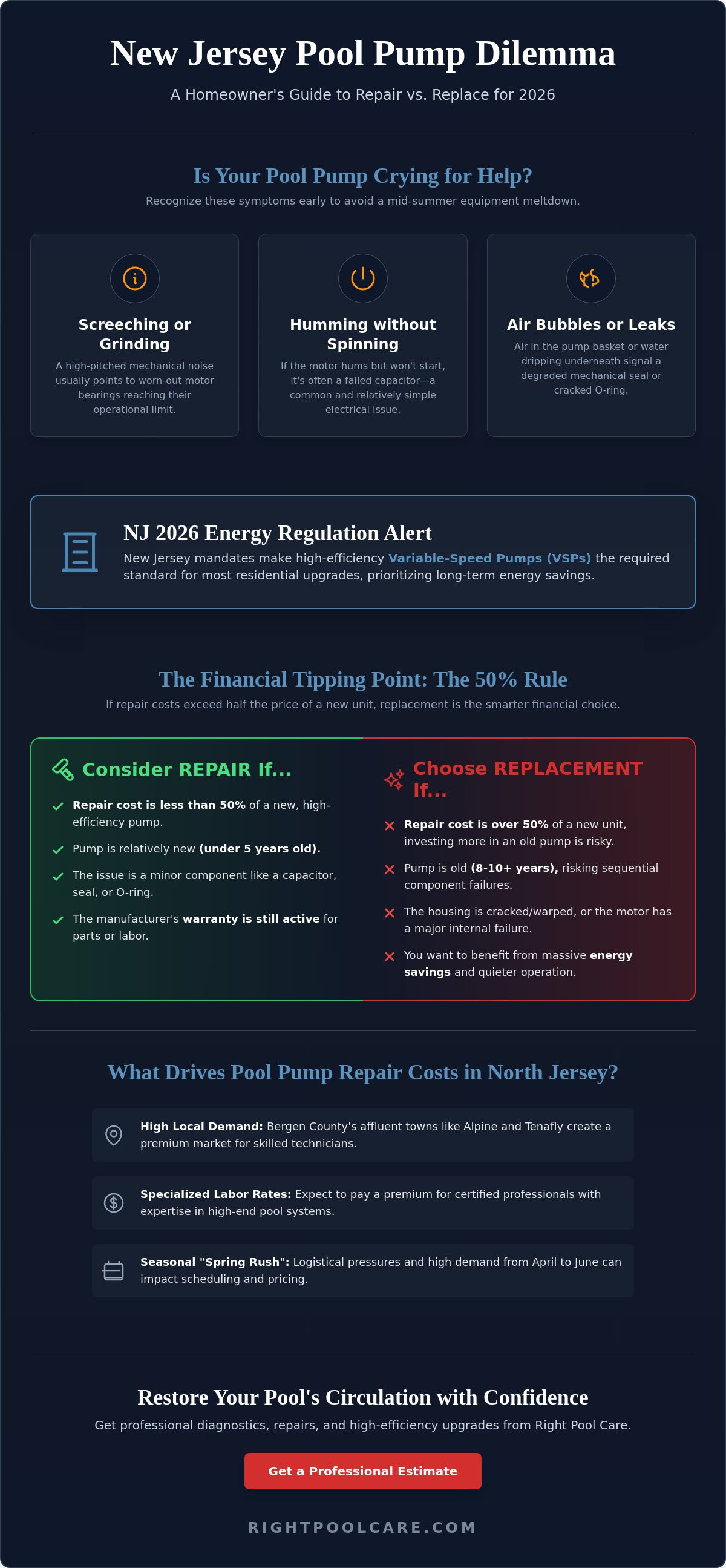
A failing pump rarely goes silent without a fight. Recognizing these symptoms early can save you from a mid-summer equipment meltdown that leaves your water cloudy and unusable. Listen for a loud screeching or grinding noise; this usually points to worn motor bearings that are reaching their limit. A distinct humming sound without the motor actually turning often indicates a failed capacitor, which is a common electrical issue. If you notice air bubbles in the pump basket or a persistent loss of prime, your system likely has a degraded mechanical seal or a cracked O-ring. These small components are the primary line of defense against water damage to the motor.
The 2026 NJ Price Range for Standard Repairs
Diagnostic service calls in Northern New Jersey typically involve a base fee to cover the technician’s time and professional evaluation of your equipment. For standard component fixes like capacitor replacements or seal kit installations, homeowners should prepare for costs that reflect the current premium on high-quality parts and local labor. While minor part replacements are a manageable part of pool ownership, major motor work is becoming more complex due to 2026's strict efficiency mandates. Regional market trends indicate that repair estimates in New Jersey typically sit at the higher end of the national spectrum, specifically because of the high demand for certified technicians in affluent areas like Alpine and Tenafly. Most industry professionals in the Bergen County area report that repair costs for aging units often approach the halfway point of a full replacement, making the decision to fix or upgrade a critical financial crossroad.
Repair vs. Replace: The 2026 Decision Framework
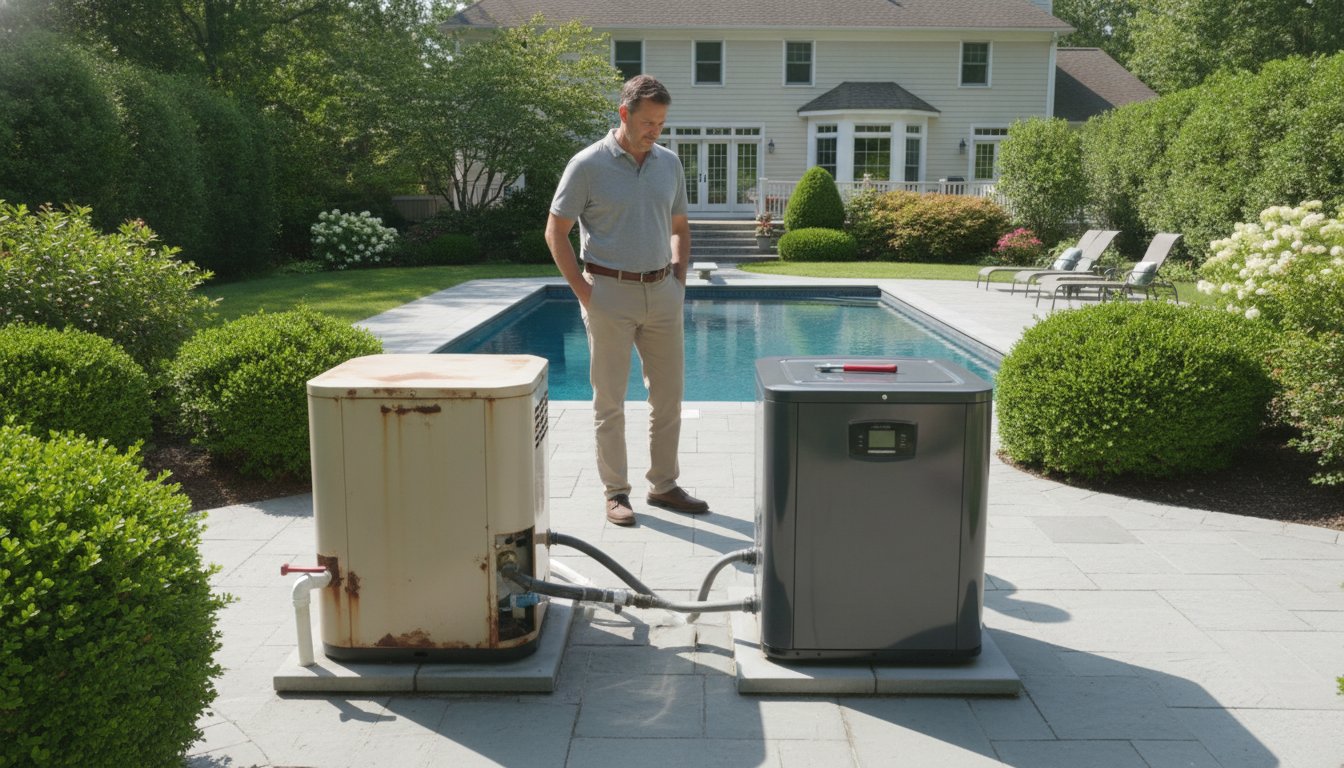
Deciding whether to salvage an old motor or invest in a new system is a pivot point for your property's value. We recommend the "50% Rule" as a reliable benchmark. If your estimated pool pump repair cost NJ is more than half the price of a brand-new unit, replacement is the logically superior choice. This rule protects you from throwing good money after bad, especially when dealing with equipment that has already served its primary life cycle. A pool is a reflection of your home's soul; its pump is the steady breath that keeps that reflection clear and inviting.
Age is the ultimate truth-teller in pool mechanics. Most traditional motors have a lifespan of five to seven years, while the entire unit typically reaches a tipping point between eight and ten years. Beyond this decade mark, internal components often suffer from cumulative heat fatigue. Even if you fix a single bearing today, the winding or the internal seals may fail shortly after. Structural integrity also dictates the outcome. If the plastic housing is warped or cracked, the unit is no longer a candidate for repair. at that stage, a temporary fix is merely a stay of execution for a machine that can no longer guarantee safety or performance.
When to Fix: Best Candidates for Repair
Newer units, particularly those under five years old, are excellent candidates for targeted intervention. Minor electrical issues often stem from a failed capacitor or a loose connection rather than a total motor collapse. Replacing simple components like impellers or O-rings is a cost-effective way to extend the life of a high-quality system. Before committing to a full swap, it's vital to verify if your manufacturer’s warranty still covers parts and labor. A simple diagnostic can often reveal that professional cleaning of the internal components is all that's required to restore peak flow.
When to Replace: Why New Tech Wins in NJ
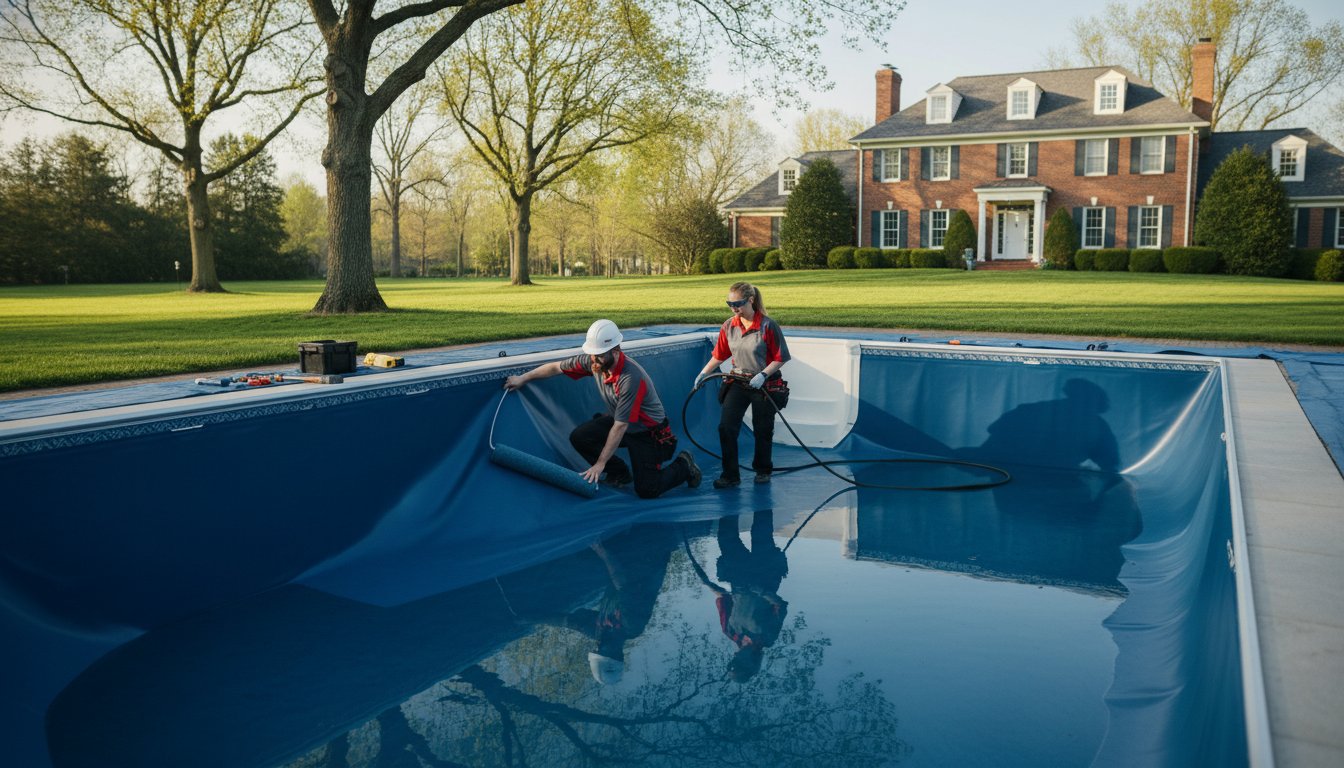
The transition to variable-speed technology is no longer optional for discerning homeowners. In 2026, Federal energy conservation standards mandate higher efficiency ratings for new and replacement in-ground installations. Old single-speed pumps are notorious for draining electricity, often costing New Jersey residents hundreds of dollars in excess utility fees every season. By upgrading, you can reduce pump energy consumption by up to 90%. This is also the ideal time to synchronize equipment upgrades with other major renovations, such as a Vinyl Liner Replacement, ensuring your entire pool ecosystem is optimized for the next decade. If you're unsure about the state of your current setup, a professional equipment assessment provides the clarity needed to choose the most sustainable path forward.
Local Factors Influencing Bergen County Service Rates
Geography is often the invisible hand that shapes your final invoice. While national averages provide a broad baseline, the pool pump repair cost NJ homeowners experience is deeply influenced by the unique economic landscape of Northern New Jersey. In affluent corridors like Alpine and Tenafly, service rates reflect a higher cost of living and the specialized expertise required to manage sophisticated, high-capacity systems. The quiet hum of a well-tuned pump is the background music of a Bergen County summer; maintaining that harmony requires technicians who understand the specific mechanical demands of our region's climate and property standards.
Timing also plays a critical role in pricing. The "Spring Rush" in Closter and Demarest creates a massive surge in demand as hundreds of homeowners attempt to open their pools simultaneously. During these peak weeks, labor availability tightens, which can lead to higher service fees compared to late-season maintenance. Beyond labor, local utility rebates often provide a financial silver lining. Many New Jersey energy providers offer incentives for switching to high-efficiency equipment, which can significantly offset the initial investment of a mandated upgrade. These local factors transform a simple repair into a strategic decision about your home's long-term operational efficiency.
Bergen County Labor Standards
In Northern New Jersey, you aren't just paying for a part; you're paying for the security of a licensed and insured professional. Technicians serving Norwood and Old Tappan often include travel fees or diagnostic minimums that reflect the logistical realities of our area. While "cheap" labor might seem tempting, it frequently results in expensive re-repairs or even safety hazards. A professional diagnostic ensures that every seal, gasket, and electrical connection meets rigorous local standards. We view every service call as an opportunity to reinforce the safety and longevity of your backyard sanctuary, prioritizing technical precision over quick fixes.
New Jersey Energy Efficiency Mandates
The regulatory environment in New Jersey has shifted toward a greener future. Modern federal energy efficiency standards have redefined what equipment is permissible for installation. As of 2026, New Jersey state law mandates the use of variable-speed pool pumps for almost all new and replacement in-ground pool pump installations to ensure maximum energy conservation. Single-speed motors are rapidly becoming a thing of the past because they cannot meet these strict performance benchmarks. This legal requirement means that if your old motor fails, a simple "like-for-like" replacement with an inefficient model is likely no longer an option. Embracing this change doesn't just keep you compliant; it protects your wallet from the rising electricity rates that define the NJ energy market.
Common Pump Issues and Typical Repair Estimates
Most equipment failures follow a predictable pattern. While the pool pump repair cost NJ residents pay includes a mix of specialized parts and expert labor, addressing these issues early prevents a cascading system failure. We prioritize diagnostics that look beyond the immediate symptom to ensure long-term reliability. A small leak or a strange sound is often the first signal that your backyard sanctuary needs professional attention. Ignoring these warning signs doesn't just lead to louder noises; it can eventually compromise your entire filtration system.
Precision is everything when dealing with high-pressure pool systems. A technician's ability to distinguish between a simple blockage and a mechanical failure saves you time and unnecessary equipment downtime. We focus on restoring your pump to its peak operating condition using high-value components that meet the latest industry standards. Whether it's a minor seal adjustment or a complex electrical fix, every repair is an investment in the safety and clarity of your water. Keeping your pump running efficiently is the most effective way to manage the ongoing operational costs of your pool.
Mechanical and Seal Failures
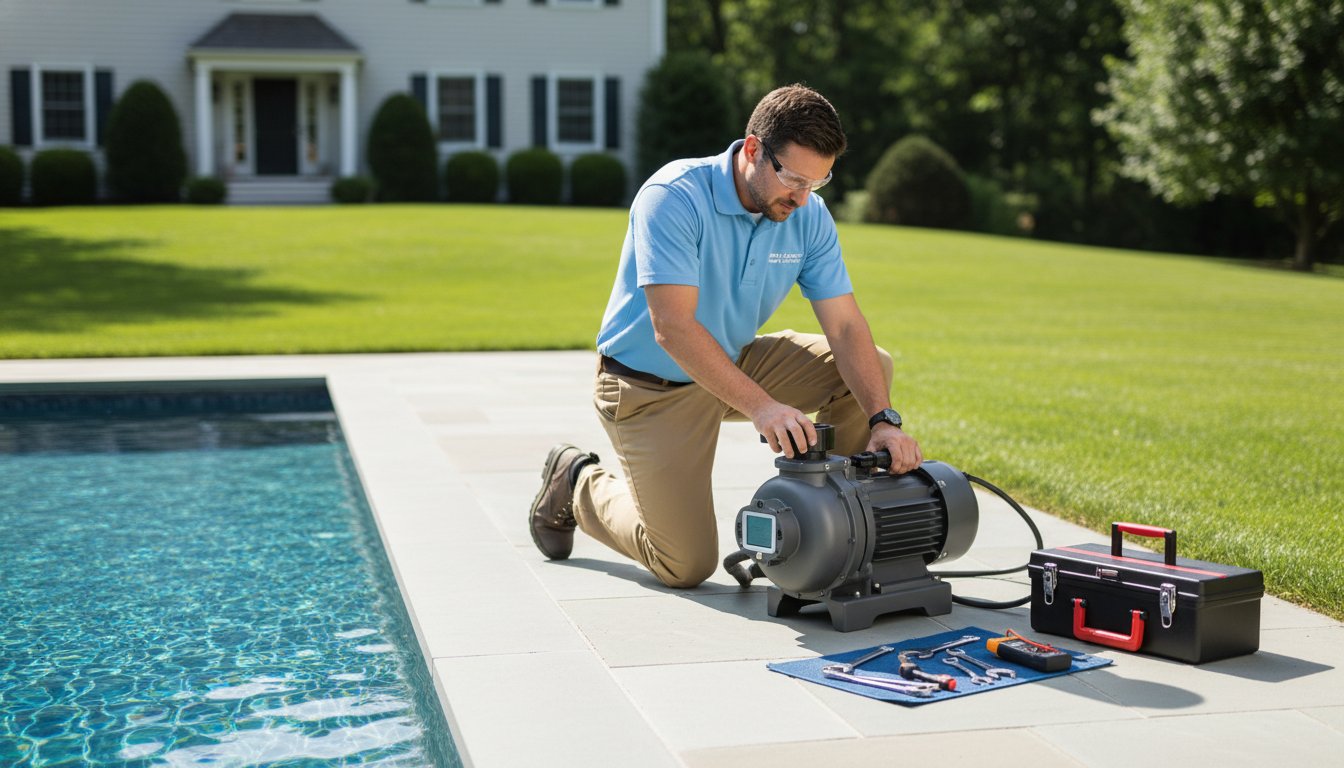
A mechanical seal is a small but critical component that prevents water from entering the motor housing. It's a classic example of proactive maintenance. A basic seal kit is a minor part that prevents a total motor collapse, which is a far more significant expense. If you see water dripping between the pump and the motor, that seal has failed and needs immediate replacement. Typical labor for a professional seal kit installation generally requires one to two hours to ensure the housing is perfectly seated and pressure-tested.
Signs of a clogged or damaged impeller include low water pressure at the jets or a pump that strains to prime. Debris often bypasses the basket, causing the impeller to become unbalanced or obstructed. Cleaning an impeller is a routine task, but if the plastic vanes are chipped or warped, a full replacement is necessary to restore optimal flow. Maintaining these mechanical parts ensures your pump doesn't have to work overtime, which directly extends the life of the motor bearings and internal windings.
Electrical and Motor Issues
Diagnosing a "dead" pump requires a logical approach to electrical troubleshooting. Often, a tripped breaker or a loose wire at the timer is the culprit rather than a total mechanical failure. However, if the pump hums but won't start, the start capacitor has likely failed. Capacitor replacements remain one of the most common and cost-effective electrical repairs for modern pool systems. It's a task that should always be handled by a professional to ensure the electrical load is balanced correctly.
When a motor burns out completely, the decision to repair becomes a question of efficiency. Replacing internal bearings can temporarily silence a grinding unit, but it won't fix a compromised internal winding. For aging systems, a full motor burn-out is usually the signal that a variable-speed upgrade is the only viable path forward for safety and compliance. If your system is showing these critical signs, you should schedule a professional equipment diagnostic to protect your backyard investment and ensure your pool is ready for the season.
Professional Equipment Services from Right Pool Care
Right Pool Care takes a no-nonsense approach to every diagnostic. We don't guess; we measure. For residents in Alpine and Bergenfield, equipment failure isn't just an inconvenience. It's a disruption of the lifestyle you've worked hard to build. Our team specializes in high-end equipment repair and replacement, ensuring your system meets the specific demands of the Northern New Jersey climate. From the freezing cycles of winter to the intense demand of a July heatwave, your pump must be resilient. We provide the technical authority needed to keep your water crystal clear and your equipment running at peak efficiency.
Local expertise is vital. We understand how NJ's unique water chemistry and environmental factors impact internal pump components over time. Often, a pump failure is a symptom of a larger issue within the pool's circulation or plumbing. We seamlessly integrate equipment upgrades with our broader Professional Pool Repairs, providing a holistic solution that restores your backyard to its peak condition. This ensures that when we address your pool pump repair cost NJ, we're fixing the root cause, not just the symptom. Our goal is to transform a stressful mechanical failure into a long-term improvement for your property.
Why Bergen County Trusts Right Pool Care
With over 20 years of experience in Northern New Jersey pool systems, we've encountered every mechanical challenge imaginable. Our commitment is rooted in safety and long-term reliability. We don't believe in "quick fixes" that fail three weeks later. Every project follows a streamlined, professional process. It starts with a precision diagnostic, moves to a clear explanation of your options, and concludes with rigorous final testing. This organized rhythm provides the security you need to enjoy your pool without worry. We treat your property with the respect it deserves, ensuring every connection is secure and every seal is watertight.
Ready to Restore Your Pool’s Performance?
Restoring your pool’s vital circulation should be a stress-free experience. If you’re located in Closter, Tenafly, or the surrounding Bergen County area, scheduling a service call is straightforward and efficient. To help us provide the most accurate assessment, please have your pump model number, the approximate age of the unit, and a description of the current symptoms ready. Whether it’s a concerning noise or a total loss of power, we have the tools and the expertise to resolve it. Don't let a failing motor drain your peace of mind or your wallet. Schedule your pool pump diagnostic with Right Pool Care today! and let us handle the technical details while you enjoy your sanctuary.
Secure Your Pool’s Future Performance
Restoring your pool’s vital circulation is about more than just a quick fix; it's about ensuring your backyard sanctuary remains a place of peace and safety. Navigating the pool pump repair cost NJ residents encounter requires balancing immediate mechanical needs with the state's strict 2026 energy mandates. Whether you're applying the 50% rule to an aging motor or upgrading to a high-efficiency variable-speed system, making an informed decision today prevents costly filtration failures tomorrow. Reliable equipment is the foundation of a crystal-clear swimming season.
Right Pool Care brings over 20 years of local NJ experience to every diagnostic and installation. We are specialists in high-efficiency equipment upgrades, serving Alpine, Closter, and the surrounding Northern Bergen County communities with dependable, expert service. Our no-nonsense approach ensures your repairs are handled with technical precision and professional integrity. Get an Expert Pool Pump Diagnostic in Bergen County today to protect your investment. We look forward to helping you create a beautiful, worry-free environment for your family to enjoy all summer long.
Frequently Asked Questions
How much does it cost to replace a pool pump motor in NJ?
Replacing a motor involves both the component price and the specialized labor required for a watertight installation. In Northern New Jersey, these rates reflect the high demand for certified technicians and the complexity of modern equipment. While a motor swap is a common solution, many homeowners find that the total pool pump repair cost NJ professionals quote for an old unit makes a full high-efficiency upgrade the more logical financial path.
Is it worth repairing a 10-year-old pool pump?
Repairing a decade-old pump is rarely a sound investment for your property. Most residential pool motors have a functional life expectancy of five to seven years; by year ten, the internal windings and housing have likely suffered significant heat fatigue. Investing in a modern variable-speed unit at this stage provides better long-term reliability and ensures your system remains compliant with current energy standards and safety requirements.
What are the signs that my pool pump is failing?
Common indicators of failure include loud mechanical noises, persistent air bubbles in the basket, or a motor that hums without turning. You might also notice water leaking from the underside of the pump housing, which signals a failed shaft seal. If your pool water is consistently cloudy despite proper chemistry, a struggling pump likely isn't providing the necessary turnover rate to keep the water sanitary and clear.
Does NJ law require variable speed pool pumps in 2026?
Yes, New Jersey state law and federal Department of Energy regulations mandate variable-speed technology for most new and replacement in-ground pool pump motors in 2026. These standards are designed to reduce energy consumption and lower utility bills for homeowners across the state. Installing an outdated single-speed motor is no longer a compliant option for residential in-ground systems during a full equipment replacement.
Can I replace my own pool pump motor to save on labor costs?
Attempting a DIY motor replacement is risky due to the high-voltage electrical requirements and the precision needed to set mechanical seals. Improper installation can lead to immediate motor failure or dangerous electrical shorts that compromise your entire system. Hiring a professional ensures your equipment is installed safely and maintains any existing manufacturer warranties while providing the peace of mind that the job was done correctly.
How long does a typical pool pump repair take to complete?
Most standard repairs, such as replacing a seal kit or a start capacitor, are completed within one to three hours. If a full motor or pump replacement is required, the process is similarly efficient once the specific equipment is on-site. We prioritize a streamlined workflow to minimize your pool's downtime and restore filtration quickly, ensuring your backyard sanctuary is ready for use as soon as possible.
Why is my pool pump making a loud screeching noise?
A loud screeching or grinding noise is almost always a symptom of worn-out motor bearings. These bearings are sealed components that eventually dry out or corrode due to heat and moisture over several seasons. Once the screeching begins, the motor is on a short timeline before it seizes completely. This requires professional intervention to prevent a total system shutdown or damage to the pump housing.
Do I need to acid wash my pool if the pump has been off for a week?
A pump being off for a week does not automatically necessitate an acid wash. This specialized service is designed to remove deep-seated stains or heavy calcium scale from the pool surface. If your water has turned green or cloudy during the downtime, a professional water balancing and shock treatment is typically the first step to restoring clarity after your equipment is repaired and circulating properly.