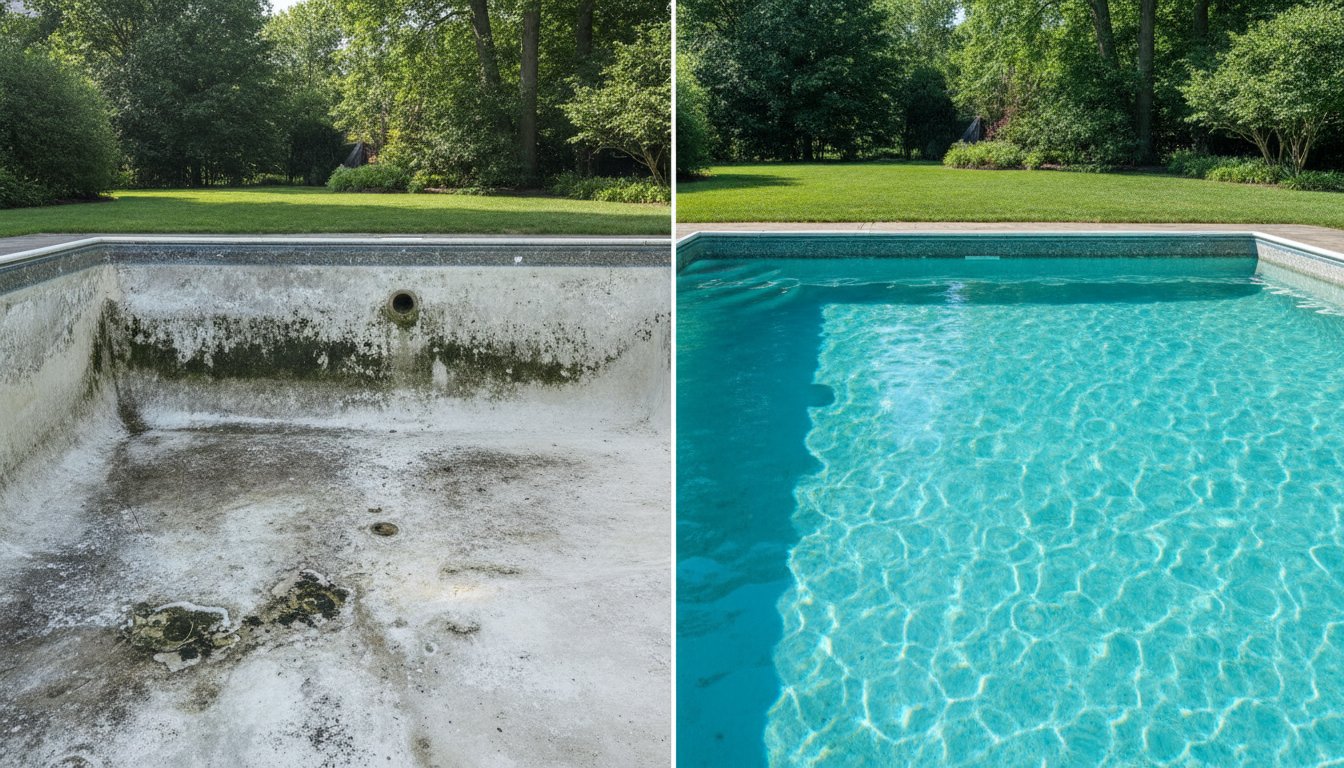
What if your pool isn't actually reaching the end of its life, but is simply hiding under a decade of stubborn mineral scale and organic staining? It's a common frustration for homeowners in our area. You've likely spent hours scrubbing at black algae that won't budge or noticed that the pool floor has become rough enough to scrape your feet. When the plaster turns a dull, greyish hue, it makes even perfectly balanced water look dirty and uninviting. You want your backyard centerpiece to feel like a luxury escape again, not a maintenance burden.
A professional pool acid wash service Bergen County acts as a surgical exfoliation for your plaster. This process carefully strips away years of buildup to reveal a bright, like-new surface underneath. In this guide, you'll discover how a precise acid wash can restore your pool's aesthetic without the massive expense of a full renovation. We'll also cover how an expert assessment of your plaster's integrity ensures a safe, transformative result that protects your investment for seasons to come.
Key Takeaways
- Learn to distinguish between simple surface dirt and deep-set mineral scaling to accurately diagnose your pool's restoration needs.
- Discover how a pool acid wash service Bergen County safely reveals a brilliant, white finish by dissolving aged plaster bonds without damaging the underlying structure.
- Compare the precision of chemical dissolution against the risks of high-PSI power washing to protect your plaster from unnecessary etching or pitting.
- Follow the professional 24-48 hour timeline for a safe restoration, including the technical management of hydrostatic valves and local drainage requirements.
- Access expert insights on surface viability to determine if your pool can be saved with a deep clean or if it requires more extensive resurfacing.
Restoring Your Pool’s Brilliance with Professional Acid Washing
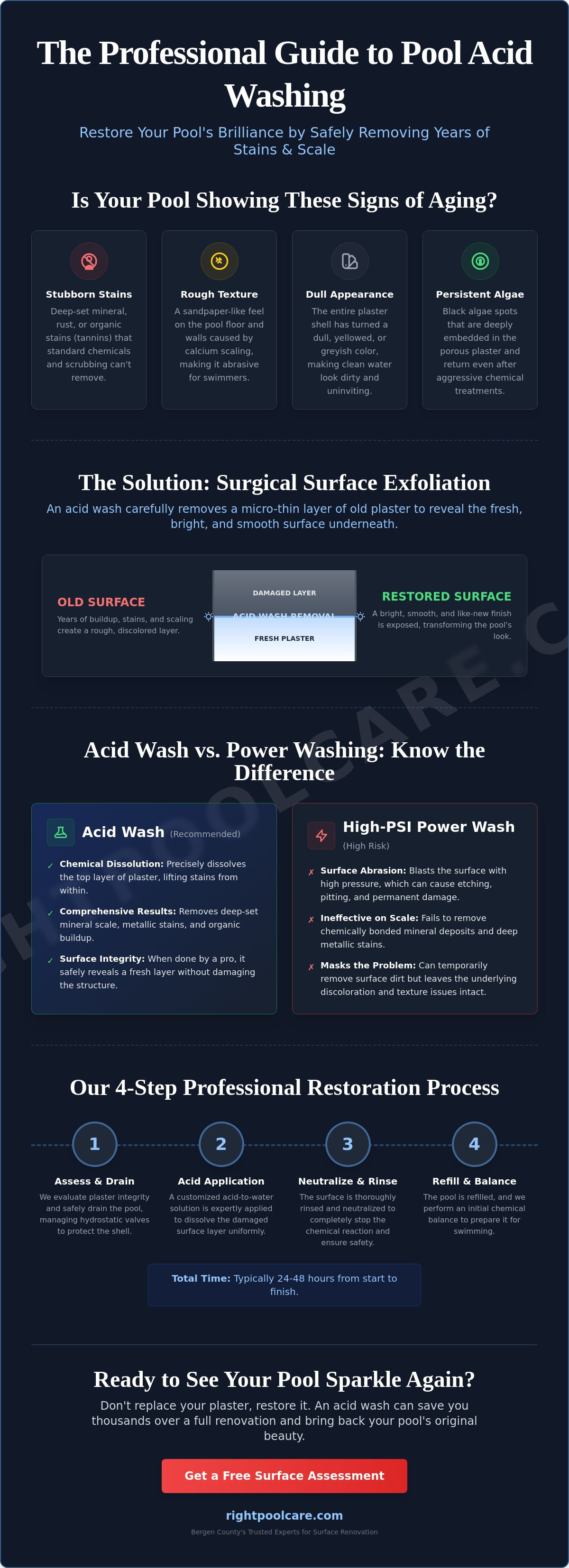
When your pool surface begins to look dull, stained, or aged, standard cleaning often fails to deliver the results you need. A professional pool acid wash service Bergen County provides is essentially a surgical exfoliation for your pool shell. This process involves the intentional removal of a micro-thin layer of plaster to expose the fresh, unblemished material underneath. It's the ultimate "reset button" for aging concrete pool shells that have lost their luster due to years of chemical exposure and environmental wear.
This restorative procedure is specifically designed for plaster, pebble, and marcite surfaces. While regular swimming pool sanitation keeps your water safe and clear, it cannot always prevent the deep-seated discoloration that bonds to the porous plaster over time. By utilizing a controlled application of muriatic acid, our technicians dissolve the outermost bonds of the surface. This chemical reaction physically lifts organic stains and inorganic mineral deposits that scrubbing simply cannot touch, transforming a grey, tired pool into a bright, inviting centerpiece.
The Science of Surface Exfoliation
Precision is the most critical element of a successful acid wash. We don't use a one-size-fits-all approach; instead, we customize the acid-to-water ratio based on the specific severity of your pool's staining. The muriatic acid reacts with the calcium in the plaster to "etch" away the damaged layer. Because this process removes actual surface material, it's strictly a restorative procedure rather than routine maintenance. Our goal is to achieve maximum brightness while preserving the structural integrity of your pool's finish.
Why Bergen County Pools Require Specialized Surface Care
Homeowners in Northern New Jersey face unique environmental challenges that contribute to rapid surface degradation. Many areas in Bergen County deal with local water supplies that have high iron or manganese content. These minerals can precipitate out of the water and create dark, unsightly metallic stains on your plaster. When these minerals combine with the high calcium levels common in our region, they form a stubborn scale that traps dirt and algae.
Seasonal factors also play a major role. During the long winter months in towns like Closter and Alpine, pools sit stagnant under covers. If any organic debris finds its way into the water, it can rot against the plaster for months, leaving deep "tannin" stains that are nearly impossible to remove with traditional chemicals. If your surface has reached a point where an acid wash is no longer viable due to excessive thinning or cracking, a comprehensive swimming pool renovation Bergen County experts recommend may be the necessary next step to protect your property's value.
Identifying the Signs: Does Your Pool Surface Need an Acid Wash?
Recognizing when your pool needs professional intervention is the first step toward a successful restoration. If you notice a sandpaper-like texture on the floor or greyish patches that won't scrub away, your plaster is likely signaling for a professional pool acid wash service Bergen County. This treatment acts as a deep-cleaning alternative that can postpone the need for a full resurfacing by several years. Before proceeding, we always recommend the "fingernail test." Scratch a small, inconspicuous area of the plaster; if the material flakes away easily or feels paper-thin, it may be too far gone for an acid wash. However, if the surface is solid but visually compromised, a chemical wash is the ideal solution.
Primary indicators for this service include:
- Stubborn rust or mineral stains that resist standard chemicals.
- A rough, abrasive texture that makes the floor uncomfortable for swimmers.
- A dull, yellowed, or greyish appearance across the entire shell.
- Persistent black algae spots that return even after chemical treatment.
Removing Stubborn Mineral Deposits and Scale
Calcium scaling is a byproduct of pH imbalance. This often manifests as a white, chalky film or a rough, sandpaper-like texture that scrapes swimmers' feet. In Bergen County, fluctuating water hardness levels can accelerate this buildup, especially during the hot summer months when evaporation is high. Unlike loose dirt, which can be vacuumed away, this scale is physically bonded to the plaster. Because the process involves hazardous chemicals, understanding the dangers of muriatic acid is essential. It's why we emphasize professional handling to ensure the scale is dissolved without compromising your safety or the pool’s structure.
Tackling Deep Organic Stains and Algae Discoloration
Wooded neighborhoods like Demarest often see heavy leaf tannins and acorn stains that sink to the bottom and "dye" the plaster. Even heavy chlorine shocking often fails to reach these embedded stains because the pigment has migrated into the porous surface of the marcite. Black algae is another primary indicator. Its roots, known as organelles, can dig deep into the plaster, making it impossible to remove with a brush alone. An acid wash effectively "sanitizes" the shell by stripping away the layer where these roots hide. If you aren't sure if your stains are organic or mineral, scheduling a professional assessment can help you decide the best path forward. Relying on a pool acid wash service Bergen County ensures these deep-set issues are handled with the proper technical precision.
Acid Wash vs. Power Washing: Choosing the Right Restoration Method
Choosing between a power wash and a professional pool acid wash service Bergen County depends entirely on the surface you're treating. While both methods aim to clean, their mechanisms are fundamentally different. Power washing relies on brute physical pressure to blast away loose debris. Acid washing uses chemical dissolution to melt away the microscopic top layer of material. For the interior of a plaster pool, this distinction is the difference between a successful restoration and permanent surface damage.
Power washing is an excellent tool for rejuvenating your pool deck or stone coping. However, applying high-PSI water directly to aged plaster is risky. It can cause etching or pitting, leaving behind permanent scars that trap even more dirt in the future. In our volatile New Jersey climate, where freeze-thaw cycles already stress concrete structures, avoiding unnecessary physical trauma to the pool shell is vital for long-term durability. Unlike pressure, acid removes the chemical bonds that hold mineral scale in place without the need for high-impact force.
The Limitations of Pressure Washing on Porous Surfaces
Water pressure alone cannot lift mineral bonds like calcium scale. These deposits are fused to the plaster at a molecular level. Attempting to blast them off often results in uneven cleaning or unsightly streak marks on delicate marcite surfaces. Pressure washing also leaves algae roots intact. While the surface looks clean temporarily, the organic material remains deep in the pores. This leads to rapid regrowth once the pool is refilled and the water temperature rises. Chemistry succeeds where physical force fails.
When an Acid Wash is the Superior Choice
Once manual scrubbing no longer yields results, an acid wash becomes the only viable path for restoration. It doesn't just clean; it smooths the surface by removing the rough, calcified layer that scrapes swimmers' feet. This chemical peel reveals fresh material that has been protected from the elements, providing a finish that stays bright for several seasons. If our technicians determine your plaster is too thin or brittle for this process, we may recommend specific pool repairs to stabilize the shell before any further work is performed. We prioritize the structural health of your pool over a quick cosmetic fix.
The Professional Acid Wash Process: Safety, Precision, and Results
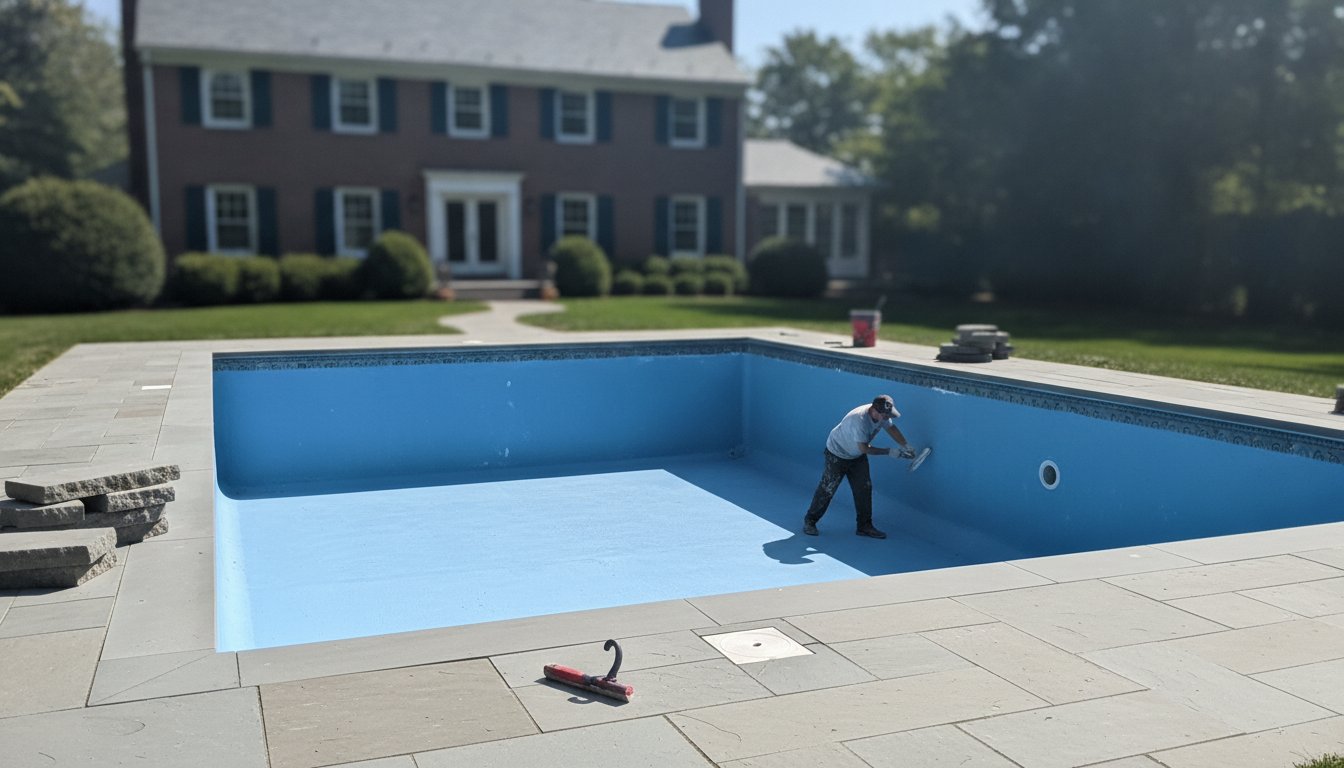
A professional pool acid wash service Bergen County residents rely on follows a rigid 24 to 48-hour timeline. This duration ensures every stage, from initial drainage to final chemical balancing, is performed with surgical precision. We utilize industrial-strength muriatic acid to strip away the calcified layers of your pool's shell. However, the true skill lies in managing the logistics of a dry pool and the hazardous nature of the chemicals involved. It is a high-stakes transformation that requires a no-nonsense approach to safety and technical execution.
The process isn't just about applying chemicals; it's about the physics of moving thousands of gallons of water safely. Once the shell is exposed, our technicians work in sections to ensure the acid doesn't dwell too long on any single area. This prevents over-etching while ensuring a uniform, brilliant finish across the entire floor and walls. Every step is designed to protect your investment while delivering a surface that looks and feels like it was just installed.
Preparation and Drainage Logistics
Draining a pool is the most high-risk phase of the project. If groundwater pressure is high, an empty pool can actually "pop" out of the ground like a boat. We manage this risk by monitoring hydrostatic relief valves and using high-capacity submersible pumps for efficient drainage. We also strictly adhere to local Bergen County discharge regulations. This includes ensuring chlorine levels are below 0.1 mg/L and the pH remains between 6.5 and 8.5 before the water ever leaves your property. This level of detail prevents environmental damage and avoids potential municipal fines for the homeowner.
Chemical Handling and Environmental Protection
Working with muriatic acid requires uncompromising safety standards. Our technicians utilize full personal protective equipment, including respirators, acid-resistant boots, and heavy-duty gloves. To protect your landscaping and the local ecosystem, we never discharge raw acidic wastewater. We use soda ash to neutralize the acid at the bottom of the pool until it reaches a neutral state. Once the wash is complete, we immediately begin the refill process. This final stabilization phase is critical; we monitor the water chemistry as the pool fills to ensure the fresh plaster cures correctly, preventing the surface from becoming rough again too quickly.
Experience a total backyard transformation by booking your professional acid wash today.
Right Pool Care: Bergen County’s Trusted Experts for Surface Renovation
Right Pool Care stands as an established leader in pool restoration, bringing over 20 years of hands-on expertise to premier properties across Tenafly, Closter, and Alpine. We don't believe in temporary fixes that fail after a single season. Instead, we take a no-nonsense approach to every pool acid wash service Bergen County homeowners request. This begins with a rigorous assessment of your plaster's viability. If a surface is too degraded to survive the chemical process, we'll tell you upfront and help you pivot to a more sustainable swimming pool construction services strategy.
Our commitment to quality extends to the complex logistical burdens of pool ownership. We handle all aspects of local municipal compliance for water drainage, ensuring your project meets strict New Jersey environmental standards. From the moment we arrive to the final chemical balancing of your refilled pool, our team manages every technical detail. This comprehensive oversight eliminates the stress of renovation, leaving you with nothing but a brilliant, inviting oasis that reflects the pride you take in your home.
Local Knowledge of Northern NJ Water Chemistry
Northern New Jersey water profiles are notoriously complex. High iron and manganese levels in our local supply require a specialized approach to chemical restoration. We don't use generic, pre-mixed solutions. Our technicians adjust our acid mixtures on-site to account for the specific mineral challenges of your neighborhood. This customized approach ensures we lift the deepest stains without unnecessarily thinning the plaster. We understand the specific pool builds common in Bergen County, allowing us to anticipate structural challenges before they become costly problems.
Comprehensive Care Beyond the Wash
An empty pool provides a rare opportunity for a total health check. While performing your acid wash, we conduct a detailed inspection of your tile and coping to identify any loose stones or failing grout that could lead to leaks. Once the wash is complete, our service continues with a professional water start-up. We carefully balance the new water to protect the freshly exposed plaster, preventing immediate scale formation. Ready to see your pool shine? Contact Right Pool Care for a professional assessment.
Rediscover the Brilliance of Your Backyard Oasis
Your pool is the heart of your outdoor living space. It shouldn't be defined by unsightly stains or a rough, abrasive floor. By choosing a professional pool acid wash service Bergen County homeowners can effectively hit the reset button on their plaster's appearance. We've explored how chemical precision outperforms physical pressure and why understanding local water chemistry is the key to a lasting finish. The surgical precision of a chemical peel meets the artistry of a total backyard transformation, revealing the bright, pristine surface that has been hidden for years.
Right Pool Care brings over 20 years of local experience and specialized knowledge in high-end plaster restoration to every project. As licensed and fully insured NJ specialists, we prioritize the structural integrity of your shell while delivering a transformative result. Don't settle for a dull, greyish surface that hides the true beauty of your water. It's time to reclaim the luxury you deserve.
Restore Your Pool with a Professional Acid Wash – Schedule Today
Let us help you turn your aging pool shell into a bright, white, and inviting sanctuary once again. Your dream backyard is just one professional treatment away.
Frequently Asked Questions
How often should I acid wash my pool?
You should generally only schedule an acid wash every 5 to 7 years. Since the process intentionally removes a thin layer of material, performing it too frequently will significantly shorten the overall lifespan of your plaster. It is a restorative measure designed for times when stubborn stains or mineral scale no longer respond to standard chemical treatments. We recommend this service only when a deep "reset" is necessary for your pool's aesthetic.
Can an acid wash damage my pool plaster?
Damage can occur if the acid is left on the surface too long or if the plaster is already dangerously thin. A professional pool acid wash service Bergen County provides includes a pre-wash assessment to ensure your shell can handle the treatment. This prevents accidental etching, pitting, or exposing the underlying gunite. Our technicians monitor the dwell time of the acid to ensure a bright finish without compromising structural integrity.
How long do I have to wait to swim after an acid wash?
You can swim as soon as the pool is refilled and the water chemistry is fully balanced. This process typically takes 48 to 72 hours after the wash is completed, depending on your water source and filtration system. Our team ensures the pH, alkalinity, and calcium hardness are stabilized before we clear the pool for use. This stabilization phase is critical to protect the newly exposed plaster surface.
Is an acid wash effective against black algae?
Yes, an acid wash is one of the most effective ways to eliminate black algae permanently. The acid dissolves the top layer of plaster where the algae's protective roots, or organelles, hide. This prevents the spores from remaining dormant and blooming again once the pool is refilled. It provides a level of sanitization that topical scrubbing and chlorine shocks simply cannot achieve on porous surfaces.
What is the difference between an acid wash and a chlorine wash?
An acid wash removes a micro-thin layer of plaster to lift mineral scale and deep-set stains. A chlorine wash is a topical sanitizing treatment that kills surface algae without stripping any material from the shell. Chlorine is ideal for organic cleanup after a minor bloom, while acid is the superior choice for total surface restoration and removing rough calcium deposits that have bonded to the plaster.
Can I acid wash my own pool to save money?
Attempting a DIY acid wash is extremely hazardous due to the toxic fumes and corrosive nature of muriatic acid. Without professional safety gear and technical experience, you risk severe chemical burns or permanent damage to your pool shell. Hiring a pool acid wash service Bergen County expert ensures the job is done safely and correctly. We manage the hazardous waste and neutralization process so you don't have to worry about environmental impact.
Will an acid wash remove rust stains from my pool floor?
An acid wash will remove most surface rust stains caused by metal objects like hairpins or tools falling into the water. However, if the rust is "bleeding" through from the structural rebar inside the concrete, the stain will eventually return. During our initial inspection, we help you identify if the stain is a simple topical blemish or a sign of a deeper structural issue that requires more intensive repair work.
Do I need to drain my pool completely for an acid wash?
Yes, your pool must be completely drained for this restorative process. The technicians need full access to the floor and walls to apply the customized acid mixture and scrub the surfaces manually. We manage the high-capacity drainage pumps and monitor the hydrostatic relief valves to prevent any structural issues like pool popping during this phase. This ensures the shell remains stable and secure while it is empty.