Is that high-pitched screeching from your backyard a simple bearing fix, or is it the sound of your monthly utility budget disappearing? Your pool pump is a precision engine. When it begins to fail, it doesn't just disrupt your peace; it risks your entire filtration system and the integrity of your vinyl liner. You likely already feel the stress of rising electricity costs and the frustration of persistent algae blooms that won't go away despite heavy chemical use. Identifying the clear signs you need a new pool pump is the first step toward reclaiming your summer sanctuary.
This guide provides a professional roadmap to evaluate your equipment against 2026 standards. You'll learn how to apply the 50% repair-versus-replace rule and why modern variable-speed technology is now the industry benchmark for Bergen County homeowners. We will preview the five critical warning signs of motor death, explain how new Department of Energy regulations impact your equipment choices, and show you how a quiet, reliable system can reduce energy consumption by up to 90% compared to outdated single-speed models.
Key Takeaways
- Master the "50% Rule" to confidently decide between a temporary repair and a long-term equipment investment.
- Recognize the critical signs you need a new pool pump, ranging from bearing "death rattles" to frequent electrical trips.
- Explore how 2026 variable-speed technology transforms your backyard with ultra-quiet performance and substantial energy savings.
- Protect your vinyl liner and water chemistry by maintaining a reliable filtration cycle throughout the New Jersey summer.
- Secure your manufacturer warranty and home safety through professional equipment grounding and bonding.
Understanding the Heart of Your Pool: Why Pump Health Matters
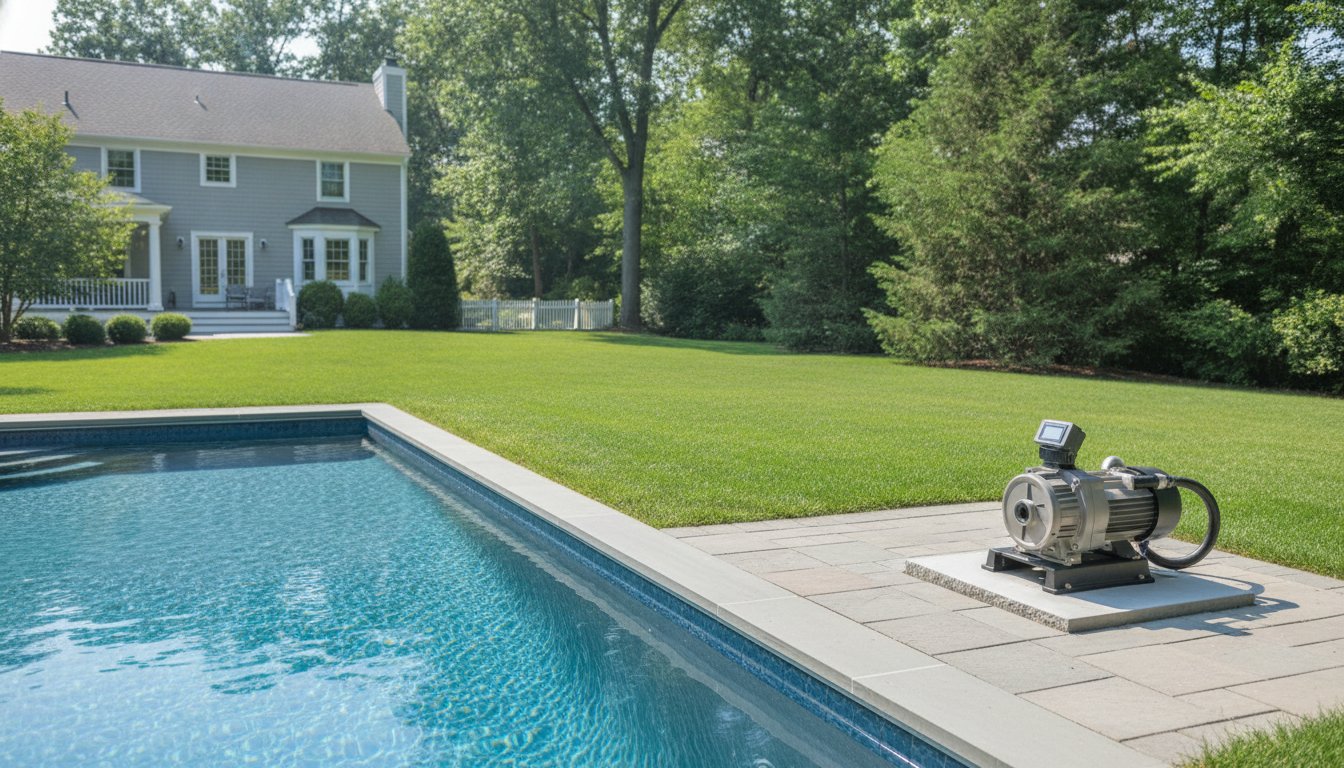
Your pool pump is the mechanical heart of your backyard oasis. It's the engine that drives every vital system, from filtration and chemical distribution to heating. Without it, your pool is just a basin of stagnant water. In the humid heat of a New Jersey July, a pump failure creates a crisis in hours. Stagnant water quickly leads to rapid algae growth and permanent liner staining. Beyond water quality, mechanical failure often starts with small issues that escalate into electrical hazards or localized flooding. 2026 marks a major turning point for homeowners because of strict new Department of Energy efficiency standards. These regulations mean that simply patching up an old, inefficient motor is no longer a viable long-term strategy.
To understand why this component is so critical, you have to look at how pool pumps work. Most systems use centrifugal force to move water through the filter and salt cell. When this process slows down, you'll start seeing the first signs you need a new pool pump. In Bergen County, where electricity rates averaged 18.42 cents per kWh in 2025, an aging pump is more than a nuisance; it's a financial drain. Efficiency isn't just a buzzword. It's the difference between a pool that stays crystal clear and one that requires constant, expensive chemical shocks.
The Role of Circulation in Water Chemistry
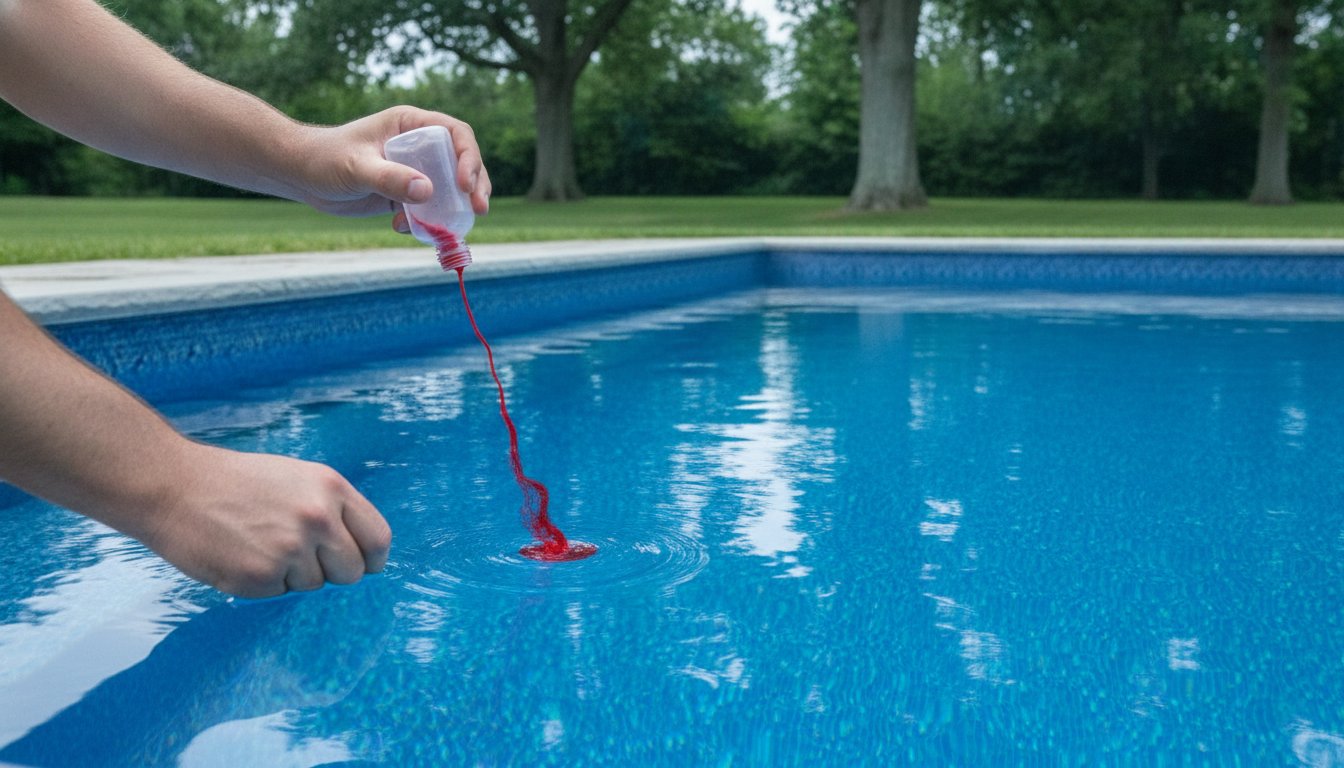
Effective sanitation relies on constant movement. Your pump prevents "dead spots" where bacteria and algae thrive despite high chlorine levels. If pump pressure drops, your sanitation system becomes ineffective. Poor flow means your expensive chemicals aren't being distributed, leaving your pool vulnerable to blooms. A healthy pump ensures every gallon of water passes through the filter properly, keeping the environment safe for your family. When the flow rate isn't sufficient, you're essentially wasting money on chemicals that can't do their job.
Bergen County Climate: The Seasonal Stress Factor
The harsh winters in Alpine and Closter put immense strain on pool equipment. Extreme temperature swings cause pump seals and bearings to contract and expand, often leading to leaks. Improper winterization can result in "freeze cracking" within the pump housing, a catastrophic failure that usually requires a full replacement. This is why the first 48 hours after a professional pool opening are so important. During this window, we can diagnose whether your system survived the freeze or if it's showing the early signs you need a new pool pump before the swimming season begins. Catching a hairline crack or a seized motor in May prevents a total system shutdown in July.
5 Red Flags: Signs You Need a New Pool Pump Immediately
Identifying the terminal signs you need a new pool pump early saves you from the stress of a mid-summer "green pool" emergency. While some issues require minor maintenance, five specific red flags signal that your motor is reaching the end of its functional life. Ignoring these warnings doesn't just lead to a dead motor. It can cause electrical shorts or water damage to your surrounding equipment pad. Catching these indicators now ensures your backyard remains a place of relaxation rather than a construction zone.
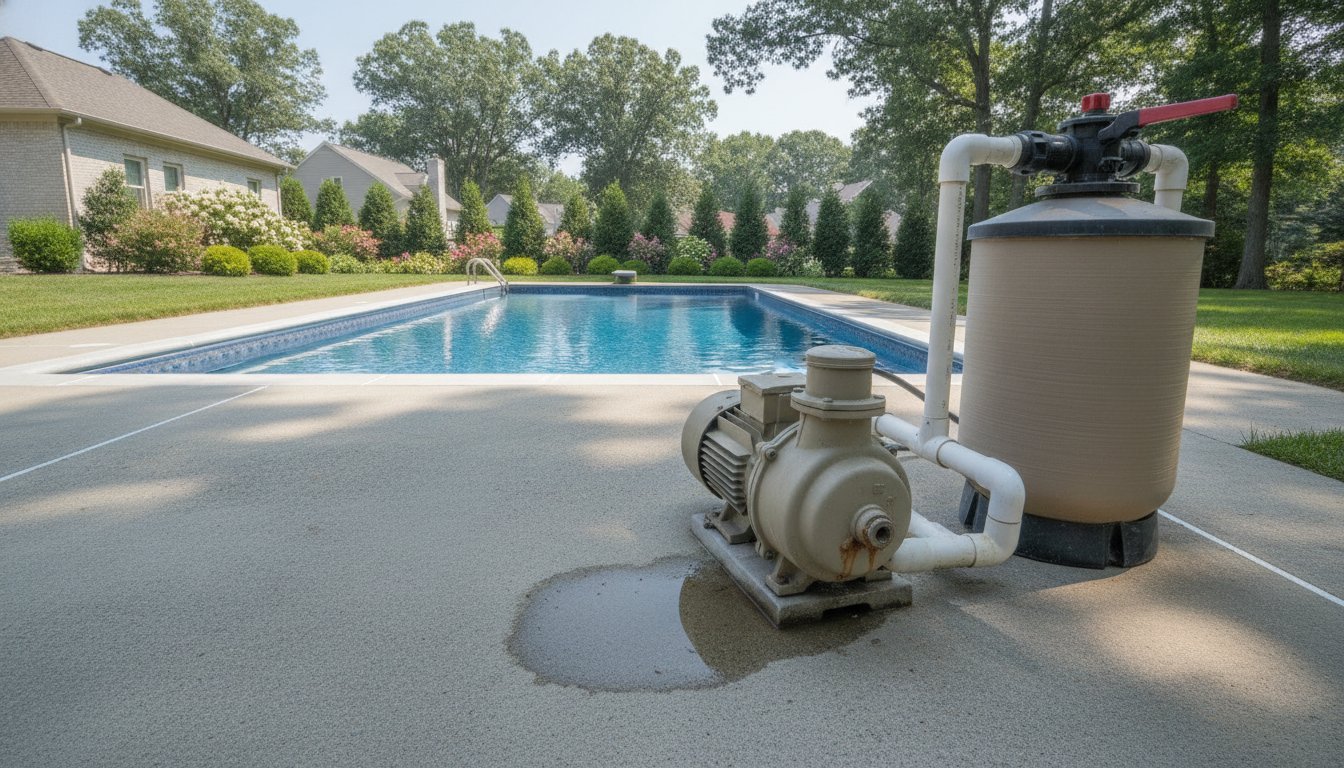
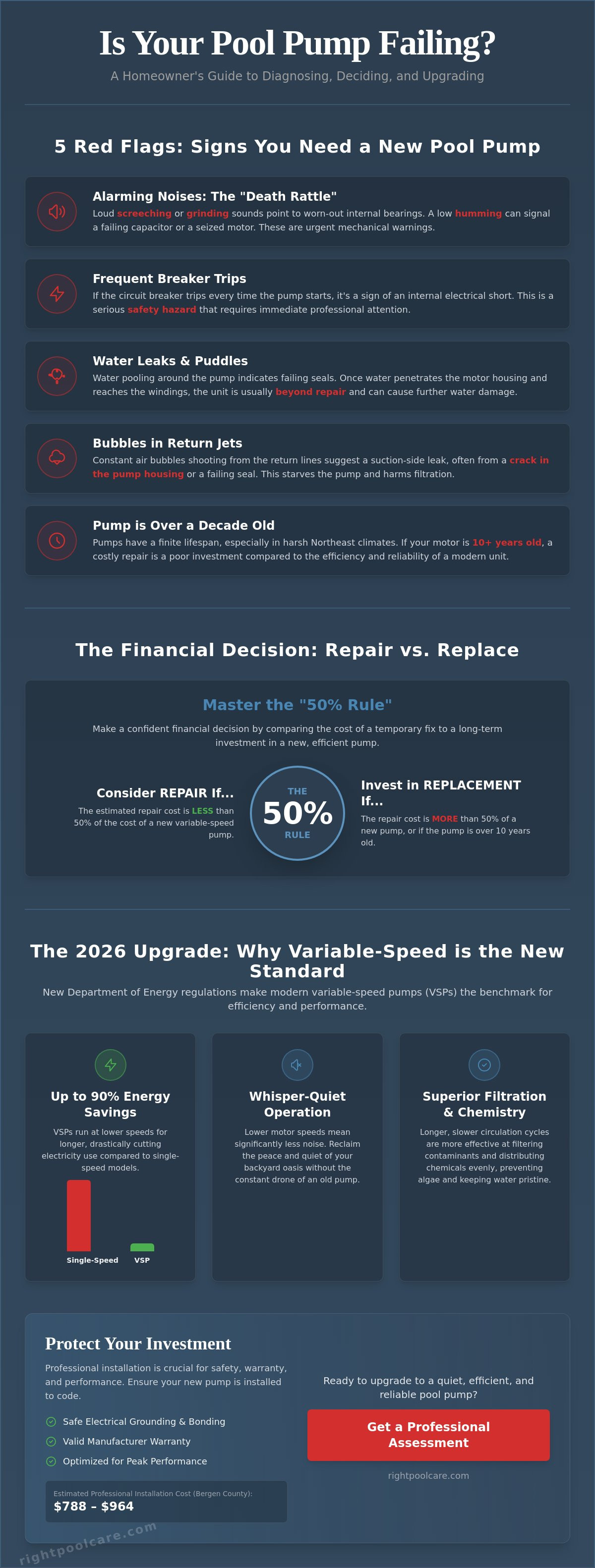
If your circuit breaker trips every time the pump kicks on, you likely have an internal electrical short. This is a safety hazard that demands immediate attention. Similarly, visible leaking around the shaft seal or pump housing indicates that water is bypassing the internal gaskets. Once water reaches the motor windings, the unit is usually beyond repair. In the demanding Northeast environment, equipment takes a beating from seasonal temperature swings. If your motor is over a decade old, a $350 to $700 motor repair is rarely a sound investment compared to a full replacement. For homeowners in the New York City metro area, including Bergen County, the estimated cost for professional installation typically ranges between $788 and $964.
Decoding the Noises: Screeching vs. Humming
A loud screeching sound usually points to worn internal bearings that have lost their lubrication. If you hear a low humming instead, it often suggests a failing capacitor or a seized motor shaft. A rattle might just be debris in the impeller or a loose motor mount, but it still requires a quick inspection to prevent further damage. A grinding sound is the most common indicator of total mechanical failure.
The 'Air in the System' Mystery
Air bubbles dancing in your return jets are a classic sign of a failing pump seal or a crack in the housing. This "suction side" leak forces the motor to work significantly harder, leading to overheating and premature burnout. Losing prime is often the final stage before a motor fails completely. If you're constantly fighting to get water moving after a filter cleaning, it's time for a professional equipment assessment.
Modern ENERGY STAR certified pool pumps address these common points of failure with superior build quality and advanced diagnostics. These units are designed to run cooler and quieter, avoiding the mechanical stress that plagues older, single-speed models. Upgrading ensures your filtration system remains the reliable heart of your backyard sanctuary rather than a source of constant repair bills.
The Financial Decision: Repair vs. Replacement Framework
Deciding between a quick fix and a total system upgrade requires a clear-eyed look at long-term value. The "50% Rule" is your primary guide. If a single repair exceeds half the value of a modern replacement, the investment is no longer sound. You are essentially paying for a temporary patch on an aging asset. While a small repair might get you through the weekend, it often masks the deeper signs you need a new pool pump that will inevitably resurface during the next heatwave. For motors exceeding ten years of service in the Northeast, the "sunk cost" fallacy often traps homeowners into a cycle of expensive, recurring service calls.
Energy efficiency is the most compelling financial argument for an upgrade. Modern variable-speed technology can reduce electricity consumption by up to 90% compared to outdated single-speed models. The U.S. Department of Energy estimates these savings can range between $300 and $600 annually. This means the equipment often pays for itself within two to three seasons. You must also consider the hidden cost of downtime. A failed pump during a Bergen County July leads to stagnant water and rapid algae blooms. The labor and chemical costs required to clear a "green pool" frequently exceed the price of proactive equipment replacement.
When a Repair Makes Sense
Not every mechanical hiccup requires a new unit. Minor issues on a relatively young pump are usually worth addressing. Consider a repair if you are dealing with:
- A failed capacitor that prevents the motor from starting.
- Worn O-rings or gaskets causing minor external drips.
- A clogged impeller that has restricted flow without damaging the motor.
In these cases, consulting our professional pool repairs team ensures an honest assessment of your system's remaining lifespan.
When Replacement is the Only Logical Choice
Certain failures are terminal. If your pump housing is cracked, it cannot be safely sealed under pressure. Motors that have been submerged during heavy flooding or suffered significant internal water damage are safety risks. Furthermore, if you are still running an obsolete single-speed model, you are likely missing 2026 efficiency standards. Upgrading is the only way to secure a quiet, reliable backyard and lower your monthly utility bills. Spotting the signs you need a new pool pump early allows you to schedule an upgrade on your terms rather than reacting to a mid-season total failure.
The 2026 Upgrade: Why Variable Speed Pumps are the Standard
The transition from identifying the signs you need a new pool pump to selecting a replacement is a pivotal moment for your property. In 2026, the industry has moved decisively away from single-speed motors. Federal regulations now mandate higher efficiency standards for most residential systems. Variable Speed Pumps (VSPs) represent a night and day difference in performance compared to the hardware of the last decade. While traditional pumps run at a constant, high-energy 3,450 RPM, VSPs allow you to dial in the exact speed needed for the task at hand.
This flexibility enables ultra-quiet operation. You can filter your water at lower speeds that are virtually silent. This preserves the tranquility of your Alpine or Closter backyard during evening gatherings. Smart pool integration is another standard feature of the 2026 landscape. Nearly 47% of new units now include Wi-Fi or cloud-based controls. This allows you to adjust your pump's schedule or check its health via a smartphone app from anywhere in the world.
Consistent, low-pressure flow is also far gentler on your vinyl pool liner. It prevents the high-velocity turbulence that can lead to premature wear or "floating" in certain liner types. If your current motor is struggling, schedule an equipment upgrade consultation to see how modern technology can transform your pool experience.
Slashing Your Bergen County Utility Bills
VSPs can reduce energy consumption by up to 80-90% compared to traditional single-speed pumps. In Bergen County, where residential electric rates averaged 18.42 cents per kWh in 2025, these savings are substantial. The return on investment is clear and predictable. A VSP typically pays for itself in roughly 24 months of New Jersey use. For local homeowners, this represents a significant reduction in the total cost of pool ownership while minimizing the environmental footprint of their luxury spaces.
Better Filtration, Clearer Water
Running a pump longer at a lower speed is the secret to crystal-clear water. It allows the filter to capture smaller particles that high-speed flow would simply push through the media. This slower movement also reduces wear and tear on your filter internals and salt cell. Consistent flow prevents the chemical spikes and drops that often occur when a single-speed pump cycles on and off. You get a more stable, sanitized environment that is always ready for a swim.
Professional Pump Installation in Alpine and Bergen County
Once you recognize the signs you need a new pool pump, the next step is ensuring the replacement is handled with technical precision. Professional installation isn't just about connecting pipes. It's about preserving your investment. Most major manufacturers require a licensed professional to perform the installation to maintain the equipment's protection. If you attempt a DIY setup, you often void the multi-year warranty that covers your new hardware. A professional installation ensures your backyard remains a beautiful, life-enhancing space rather than a liability.
Electrical safety is paramount. Proper grounding and bonding are critical to prevent stray currents in the water. This isn't an area for shortcuts. Our team treats security as a core pillar of every project. We ensure your system meets all local Bergen County codes, providing a deep sense of security for your family. We verify that every connection is watertight and that the electrical load matches your home's panel capacity. This specialized focus on safety-related niches positions us as a leader in local equipment replacement. We value long-term results over quick, unreliable fixes.
Precision Sizing for Your Pool's Needs
Many homeowners believe a bigger pump is better. This is a common myth that leads to wasted energy and damaged filter internals. An oversized pump creates excessive pressure that can blow out gaskets or crush filter grids. We calculate the Total Dynamic Head (TDH) for your specific Alpine property. This technical calculation accounts for pipe diameter, distance, and elevation changes. We also ensure the flow rate perfectly matches your heater and salt system requirements. This precision prevents equipment conflict and maximizes the lifespan of your entire system. A properly sized pump works in harmony with your existing plumbing, ensuring smooth water flow and quiet operation.
The Right Pool Care Advantage
Right Pool Care brings over 20 years of experience to every equipment pad in Closter, Tenafly, and Old Tappan. We've encountered every plumbing challenge the Northeast can offer, from complex multi-level waterfalls to integrated spa systems. Our "no-nonsense" approach means we provide dependable results without unnecessary delays. We don't just swap parts; we transform your pool's efficiency. Scheduling a diagnostic visit before the summer rush ensures your system is primed and ready for the first heatwave. Don't wait until the water turns green to address the signs you need a new pool pump. Our team is committed to quality standards and committed to your summer peace of mind.
Contact Right Pool Care today for a professional equipment assessment and secure your backyard sanctuary for the season ahead.
Secure Your Summer Sanctuary Today
We've identified the critical mechanical red flags, the 50% financial framework, and the transformative benefits of 2026 variable-speed technology. A high-performance pump is the essential foundation for a pristine, life-enhancing backyard space. Identifying the signs you need a new pool pump now allows you to upgrade on your own timeline. This proactive approach eliminates the stress of emergency repairs and the heavy chemical costs associated with clearing stagnant water.
Right Pool Care offers over 20 years of Bergen County expertise. As a local, family-owned service you can trust, we are specialists in energy-efficient Variable Speed upgrades that lower utility bills and restore tranquility to your property. Our technicians ensure every installation meets the most rigorous safety standards for your total peace of mind. Don't let an aging motor disrupt your backyard peace.
Schedule Your Professional Pump Diagnostic with Right Pool Care today. Restore the quiet beauty of your pool and enjoy a worry-free season with the most reliable filtration system available.
Frequently Asked Questions
How many years should a pool pump typically last in New Jersey?
A residential pool pump typically lasts between 8 and 12 years in the New Jersey climate. The harsh freeze and thaw cycles of the Northeast put extra stress on internal seals and motor bearings compared to warmer regions. While some units may run longer, their mechanical efficiency drops significantly as they age, often leading to higher utility costs before total failure occurs.
Can I just replace the pool pump motor instead of the whole unit?
You can replace just the motor, but it is often a short-term fix for an aging system. If your pump housing is over a decade old or you are still using an outdated single-speed model, a full upgrade is usually the better investment. Modern 2026 efficiency standards make replacing the entire unit with a variable-speed pump the most cost-effective choice for long-term reliability.
Why is my pool pump making a loud screeching noise?
Loud screeching is usually the result of worn internal bearings that have lost their lubrication. This "death rattle" is one of the most definitive signs you need a new pool pump. Continuing to run the motor in this state will eventually lead to a total mechanical seizure and a potential electrical short, which can damage other components on your equipment pad.
How much money can a variable speed pump actually save me?
Switching to a variable-speed pump can reduce your energy consumption by up to 80 or 90 percent. According to Department of Energy estimates, this technology translates to annual savings of $300 to $600 on your electric bill. In Bergen County, where utility rates averaged 18.42 cents per kWh in 2025, the equipment often pays for itself in just two to three seasons.
Is it dangerous to run a pool pump that is leaking water?
Running a leaking pump is a significant safety risk that requires immediate attention. Water leaking from the shaft seal can eventually reach the motor windings, creating a dangerous electrical hazard for anyone near the pool equipment. It also risks localized flooding of your equipment pad, which can cause secondary damage to your heater, salt system, or control panel.
What happens if I don't replace a failing pump immediately?
Delaying a replacement leads to stagnant water, which triggers rapid algae blooms and permanent staining on your vinyl liner. You will likely spend more on professional chemical shocks and labor than you would on a proactive equipment upgrade. A total failure during the summer peak can also leave your pool unusable for weeks while waiting for parts or service availability.
Do I need a permit to replace my pool pump in Bergen County?
Most municipalities in Bergen County require a permit for pool equipment replacement involving electrical bonding and grounding. Towns like Alpine and Closter have specific codes to ensure the safety of your home's electrical system and prevent stray currents. Working with a professional ensures all work is compliant with local safety standards and protects your manufacturer warranty.
Can a bad pump cause my pool water to turn green even with chemicals?
A failing pump is the most common reason for green water, even if your chemical levels are perfectly balanced. Without proper circulation, "dead spots" form where bacteria and algae thrive undisturbed by sanitizers. Effective filtration is just as important as chemical treatment for maintaining a crystal-clear swimming environment and preventing the signs you need a new pool pump from ruining your summer.