In Northern New Jersey, your pool tile and coping are far more than just decorative accents. They act as the primary structural shield against the relentless freeze-thaw cycles that define our winters. When you start researching the cost to replace pool tile and coping NJ, you aren't just paying for a cosmetic facelift. You're investing in the long-term survival of your pool's bond beam. It's the difference between a perimeter that cracks under the first frost and one that remains a pristine, safe anchor for your backyard oasis.
We understand the frustration of navigating Bergen County's high labor rates and receiving conflicting quotes that leave you second-guessing your project. You want a fair price for premium craftsmanship that actually lasts. This guide provides the clarity you need to make an informed decision for the 2026 season. We'll break down the current market rates and material options that withstand local climate extremes. You will discover exactly how to protect your investment from hidden structural damage while achieving a professional, high-end finish that elevates your property value for years to come.
Key Takeaways
- Understand how New Jersey's freeze-thaw cycles impact your pool's bond beam and why tile acts as a critical structural shield.
- Budget accurately for your 2026 renovation by exploring the typical cost to replace pool tile and coping NJ, including detailed price-per-foot estimates.
- Identify the "domino effect" of tile failure to decide between a temporary patch and a necessary full-scale replacement.
- Discover the surgical masonry techniques used by professionals to remove old materials without compromising the underlying pool shell.
- Learn why hiring a specialist with local Bergen County experience is vital for navigating municipal codes and specific soil challenges.
Why NJ Pools Require Specialized Tile and Coping Care
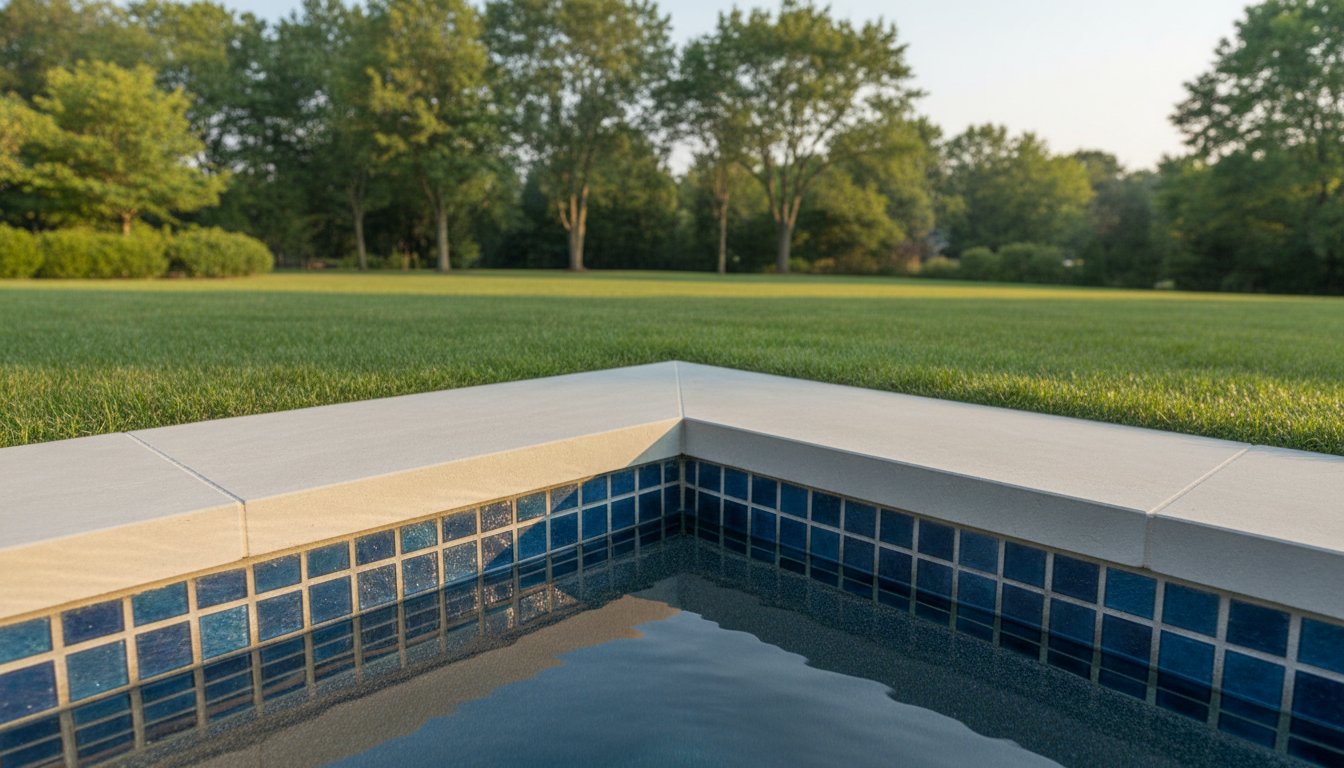
Waterline tile and coping are far more than aesthetic choices. They represent the structural perimeter that protects the concrete shell of your pool. Think of these elements as the first line of defense for your investment. In the context of swimming pool construction, the tile and coping seal the transition between the water and the surrounding deck. Without a perfectly watertight seal, moisture penetrates the bond beam. This leads to rapid structural degradation that is far more expensive to fix than a simple masonry update.
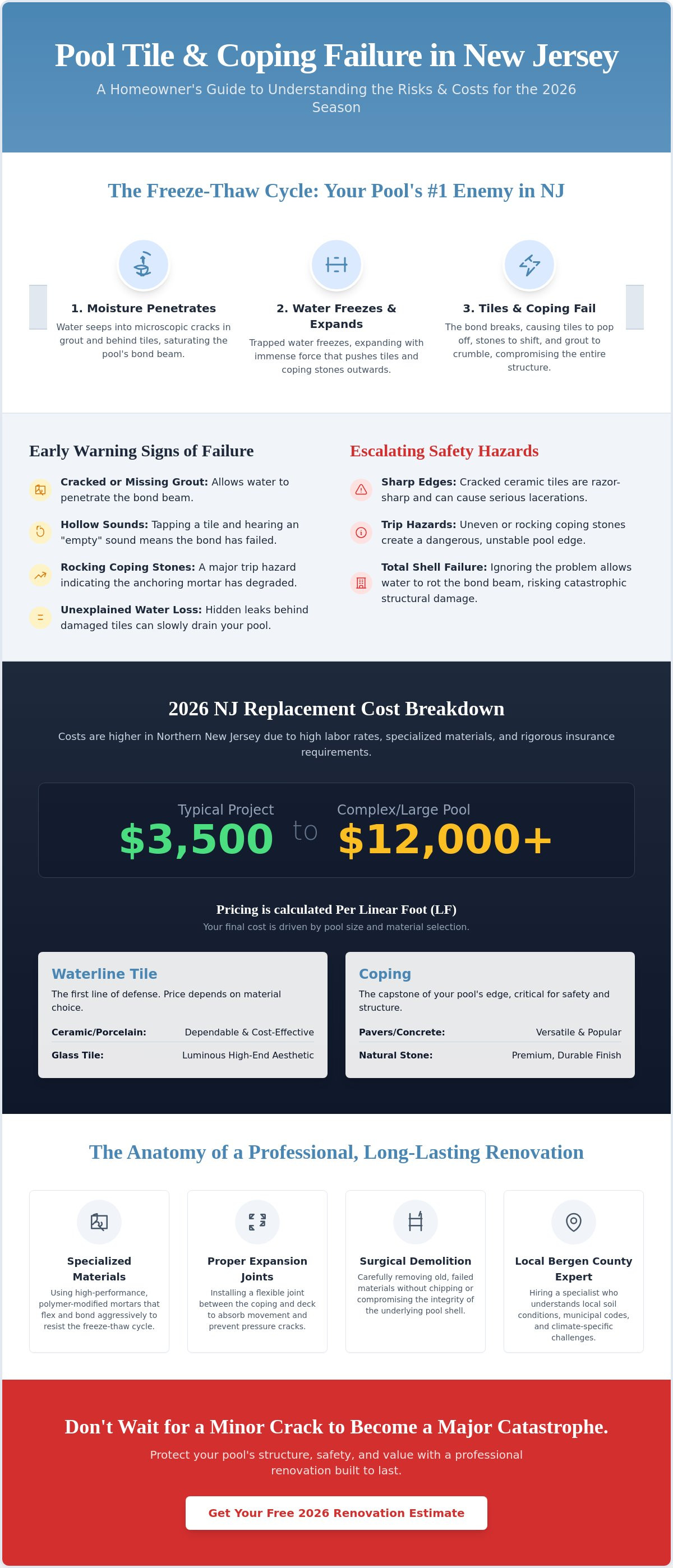
New Jersey's climate is notoriously harsh on masonry. During our long winters, water seeps into microscopic gaps behind the tiles or under the coping stones. When temperatures drop, this trapped water freezes and expands with immense force. This hydraulic pressure physically pops tiles off the wall and shifts heavy stones out of alignment. If you're currently researching the cost to replace pool tile and coping NJ, it's likely because this seasonal cycle has already compromised your pool's integrity.
The expansion joint is the unsung hero of this system. This flexible gap sits between the pool coping and the concrete deck. Its primary job is to absorb the movement caused by shifting soil and temperature fluctuations. When this joint fails or hardens over time, the deck begins to push directly against the pool coping. This pressure cracks the grout lines and dislodges stones. Maintaining this flexible barrier is essential for any renovation intended to last a decade or more.
Identifying the early signs of failure can save thousands in structural repairs. You should watch for these specific red flags:
- Cracked or missing grout: This allows water to reach the underlying concrete.
- Hollow sounds: Tapping on a tile that sounds "empty" indicates the bond has failed.
- Rocking stones: Coping that moves when stepped on is a major safety hazard.
- Unexplained water loss: Damaged tiles often hide leaks that drain your pool slowly.
The Bergen County Freeze-Thaw Factor
Standard mortar often fails in towns like Closter and Alpine because the soil composition and extreme temperature swings require specialized additives. Without high-performance polymers, the bond between the masonry and the shell remains brittle. Ice pressure in mid-winter can shift even the heaviest natural stones if they aren't anchored with the right technical materials. A hollow sound when you tap a tile is the definitive warning of bond failure. It means the tile is no longer fused to the wall.
Safety Risks of Damaged Pool Perimeters
Neglecting repairs creates immediate physical hazards for your family. Cracked ceramic tiles are razor-sharp and can cause deep lacerations for swimmers. Uneven coping stones create dangerous trip hazards right at the pool's edge. Beyond the physical risks, ignoring these signs allows water to rot the bond beam. Addressing the cost to replace pool tile and coping NJ now prevents these safety liabilities from escalating into a total shell failure that could render your pool unusable.
2026 Cost Breakdown: Replacing Pool Tile and Coping in NJ
National online calculators often provide a skewed perspective for homeowners in the Northeast. While some generic guides suggest a standard project might cost a few thousand dollars, the realistic cost to replace pool tile and coping NJ in 2026 generally ranges from $3,500 to over $12,000. This variance reflects the unique economic environment of Northern New Jersey. High labor rates, specialized disposal fees for masonry, and rigorous insurance requirements create an "NJ Premium" that homeowners must factor into their planning.
Most reputable contractors price these renovations by the linear foot (LF). For waterline tile, you should prepare for a range that reflects the complexity of the tile pattern and the prep work required. Coping follows a similar per-foot structure. When you bundle these two services, the efficiency of the crew helps manage the total investment, but your material selection remains the primary driver of the final budget. Adhering to industry standards for pool renovation ensures that these costs translate into a durable, safe perimeter rather than a temporary fix that fails within two seasons.
Material Cost Comparison for 2026
Your choice between ceramic and glass waterline tiles impacts both the budget and the visual depth of the pool. Ceramic is a dependable, traditional choice. Glass tiles offer a luminous, high-end aesthetic but require specialized labor and expensive thin-set mortars to bond correctly. For coping, pre-cast concrete and safety-grip brick are practical, functional options. However, many homeowners in Alpine and Tenafly prefer natural stone or bluestone for their timeless appeal and heat resistance. Right Pool Care recommends selecting frost-proof materials specifically rated for the Northeast climate. These materials resist the high water absorption that leads to internal cracking during a deep freeze.
Labor and Site Preparation Factors
The labor involved in a renovation is rarely just about laying new stone. It begins with the surgical removal of old masonry and the thorough stripping of degraded mortar from the bond beam. If your pool has a complex, curved shape, the labor hours will increase significantly compared to a standard rectangular design. Contractors must also account for the condition of the underlying shell. If the concrete underneath is "rotted" or crumbling from years of water infiltration, it must be repaired before any new tile can be bonded. This preparation is the most critical phase for ensuring your pool remains beautiful for the next decade.
If you've noticed loose stones or missing grout, it's time to act before structural damage worsens. You can request a professional assessment to determine the exact scope of your renovation needs and secure a detailed quote.
Repair vs. Full Replacement: Making the Right Choice
Deciding between a localized fix and a complete overhaul is a critical financial decision for any property owner. In the volatile climate of Northern New Jersey, a "patch job" is often just a temporary band-aid on a systemic structural issue. We follow the "NJ Rule" for masonry integrity. If more than 15% of your waterline tiles are loose, cracked, or missing, the bond beam has likely reached its service limit. At this point, the cost to replace pool tile and coping NJ is a far wiser investment than paying for repeated, small-scale repairs that will inevitably fail.
Tile failure is rarely an isolated event. Once five tiles pop off, fifty more are usually just weeks away from falling. This is the "domino effect" caused by water infiltration. Once moisture gets behind one tile, it travels laterally along the mortar bed, weakening the bond for the entire line. Addressing the whole perimeter during a swimming pool renovation in Bergen County ensures a uniform, high-strength bond that protects your pool shell for the next decade.
The Problem with Localized Patching
Aesthetics are a major hurdle with partial repairs. Matching 20-year-old tiles with new stock is nearly impossible due to dye-lot variations and decades of sun exposure. You'll likely end up with a mismatched "checkerboard" look that detracts from your home's value. Beyond looks, new mortar rarely forms a permanent bond with aged, weathered concrete. You risk spending hundreds on a fix that doesn't survive the next frost. It's often a case of throwing good money after bad.
Combining Tile Work with Vinyl Liner Replacement
Smart homeowners look for ways to maximize their renovation budget. Combining masonry work with a pool liner replacement Closter NJ is the most cost-effective strategy available. When we replace a liner, the coping stones are what physically secure the liner track in place. By replacing the coping and tile at the same time, we ensure the track is anchored to fresh, solid concrete. This simultaneous approach shares labor costs and prevents the need to drain and refill the pool twice. You achieve a seamless, "new pool" look without the massive price tag of a full construction project.
- Efficiency: One mobilization fee covers multiple high-impact repairs.
- Security: New coping provides a rock-solid anchor for your liner track.
- Value: A unified renovation offers a significantly higher ROI in luxury markets like Alpine and Tenafly.
The Right Pool Care Renovation Process
Executing a successful renovation requires more than just laying new stone. It demands a disciplined, multi-stage technical approach that addresses the structural health of your pool shell. When you invest in the cost to replace pool tile and coping NJ, you aren't just paying for surface-level materials. You're paying for a specialized sequence of events designed to secure your pool's structural integrity. This process transforms an aging, weathered perimeter into a resilient shield that stands as a testament to quality craftsmanship. We don't cut corners because we know how unforgiving the Bergen County climate can be to a poorly prepared bond beam.
- Step 1: Preparation and Protection. We begin by draining the pool water to a precise level below the tile line. Our team then installs protective barriers to shield the pool floor and surrounding landscape from falling masonry debris.
- Step 2: Surgical Removal. Our crews use high-precision tools to strip away old, failing masonry. We focus on removing degraded mortar through vibration-controlled methods. This surgical approach ensures we don't cause structural micro-cracks in the underlying concrete pool wall.
- Step 3: Bond Beam Restoration. We inspect the exposed concrete "spine" of your pool for signs of freeze-thaw rot. We apply structural repair mortars and advanced waterproofing membranes. This creates a pristine, watertight foundation that prevents future moisture infiltration.
- Step 4: Precision Installation. We hand-lay each tile and coping stone with meticulous attention to detail. This phase is where technical construction becomes a transformative experience, creating a seamless and beautiful anchor for your backyard oasis.
Our Precision Masonry Standards
Temperature-modified thin-set is our non-negotiable standard. These advanced adhesives remain flexible during New Jersey's extreme temperature swings, preventing tiles from popping. We also prioritize the pitch of your coping stones. A slight, calculated angle ensures water drains away from the pool and deck, preventing dangerous ice buildup. Our masonry experts maintain clean, consistent grout lines that provide a high-end finish and ultimate durability.
Timeline and Disruptions
Most renovations take between three and seven days to complete. This timeline depends on the weather and the specific complexity of your pool's geometry. You'll experience some noise and dust during the removal phase, but we manage this with wet-saw technology and daily site cleanup. Once the masonry is set, we require a brief curing period before the pool is refilled. This ensures the bond reaches its full structural strength.
Don't wait for a minor crack to become a major structural failure. Contact Right Pool Care for a professional renovation estimate today and secure your pool's future.
Selecting a Bergen County Specialist for Your Pool
Choosing the right team is the final, most critical step in managing the cost to replace pool tile and coping NJ. In high-end markets like Alpine and Tenafly, property owners need more than a general mason. You need a specialist who understands the unique hydrostatic pressure and clay-heavy soil conditions of Northern Bergen County. A "no-nonsense" professional prioritizes the structural integrity of the bond beam over quick cosmetic fixes. This technical focus ensures that professional pool repairs actually protect your property's long-term market value and safety.
Verifying credentials is essential before any demolition begins. Ensure your contractor holds the specific New Jersey licenses required for pool and spa contracting, which often go beyond standard home improvement registrations. Specialized pool insurance is equally vital. It protects you from the liabilities inherent in high-stakes masonry work near water and complex electrical systems. When you hire an established leader, you're buying peace of mind that the project meets rigorous safety standards and local building codes.
Questions to Ask Your NJ Pool Contractor
Before signing a contract, push for specific technical answers. A reputable specialist will have no trouble addressing these concerns directly:
- Do you provide a written warranty against tile popping? A confident contractor stands behind their mortar bond.
- Is the replacement of the expansion joint included in the base quote? Never skip this critical structural component.
- How do you address structural cracks discovered during demolition? You need a plan for bond beam restoration, not just a cover-up.
- Can you provide local references? Look for projects in Bergen County that have successfully survived at least five freeze-thaw cycles.
Why Right Pool Care is the Trusted Choice
With over 20 years of dedicated service in Northern Bergen County, we have mastered the art of climate-resilient pool renovation. We are specialists in safety-related niches and complex structural modifications. Our team doesn't offer vague promises or hidden fees. We provide direct, punchy communication and fix the problem right the first time. We treat every pool perimeter as a transformative experience that balances technical security with high-end aesthetics. We understand that your pool is a significant investment, and we are committed to ensuring it remains a beautiful, safe anchor for your home for years to come.
Secure Your Pool’s Perimeter for the Next Decade
Investing in a professional renovation is about more than aesthetics. It is a strategic move to defend your home's value against New Jersey's volatile climate. You now understand that the waterline tile and coping act as a critical structural shield for the bond beam. By following the "NJ Rule" and recognizing when a full replacement is necessary, you avoid the cycle of temporary fixes that fail after a single winter. Understanding the realistic cost to replace pool tile and coping NJ allows you to budget for craftsmanship that actually survives the elements.
Right Pool Care brings over 20 years of Bergen County expertise to every project. We are specialists in structural vinyl liner and masonry repair, providing local, owner-operated service for Closter, Alpine, and Tenafly. We believe in doing the job right the first time so you can focus on enjoying your backyard oasis. Don't let another season of freeze-thaw cycles compromise your pool's integrity. Get a Professional Quote for Your NJ Pool Renovation today and experience the peace of mind that comes with premium local craftsmanship. Your pool deserves a perimeter that is as safe as it is beautiful.
Frequently Asked Questions
How long does pool tile and coping typically last in New Jersey?
Pool tile and coping typically last between 10 and 15 years in the Northeast. This lifespan depends heavily on the quality of the initial installation and how well you maintain the expansion joint. New Jersey's extreme temperature swings cause masonry to expand and contract, eventually weakening the bond. Regular inspections help you identify minor grout cracks before they lead to systemic failure.
Can I change my pool coping without replacing the tile?
You can technically replace coping without the tile, but it is rarely a practical or recommended choice. Removing heavy coping stones usually vibrates and damages the waterline tile bonded just below it. Most professionals suggest a full replacement to ensure a unified, watertight seal. Attempting to save old tile often leads to a mismatched finish that compromises the final aesthetic of your renovation.
Does a salt water system affect the cost or material choice for coping?
Salt water systems require specific material choices to prevent premature erosion and structural damage. Salt can penetrate porous stones like limestone, causing them to flake or "spall" over time. We recommend dense materials like bluestone, granite, or high-quality travertine for salt pools. While the salt system itself doesn't change the labor cost to replace pool tile and coping NJ, the premium for salt-resistant materials may increase your total budget.
What is the best time of year in NJ to replace pool tile and coping?
Early spring and late autumn are the ideal times for masonry work in Northern New Jersey. You want stable temperatures between 40 and 80 degrees to ensure the mortar and thin-set cure correctly. Avoiding the peak summer heat prevents the materials from drying too quickly, which can lead to brittle bonds. Scheduling your project in the off-season also ensures your pool is ready for the first warm day of summer.
Why are my pool tiles falling off even though I fix them every year?
Tiles continue to fall off because the underlying bond beam has likely deteriorated or suffered from water infiltration. Simply gluing a tile back on doesn't address the moisture trapped behind the mortar bed. When that water freezes, it expands and pops the tile off again the following winter. A full restoration of the concrete beam is the only way to stop this cycle and protect your long-term investment.
Will replacing tile and coping fix a leaking pool?
Replacing tile and coping can fix leaks specifically located at the waterline or through a compromised bond beam. If water is escaping through cracked grout or a porous beam, a professional masonry renovation provides a new watertight seal. However, this will not address leaks in the pool plumbing, light niches, or structural cracks in the floor. A pressure test is often necessary to confirm the leak's exact source before starting work.
Is glass tile more expensive to install than ceramic in NJ?
Glass tile is significantly more expensive to install than standard ceramic options due to both material prices and labor requirements. It requires a specialized translucent thin-set and more labor-intensive cutting techniques to avoid jagged edges. In the local market, the cost to replace pool tile and coping NJ increases when selecting glass because only highly skilled masons can ensure a bubble-free, aesthetically perfect finish. Ceramic remains the more budget-friendly choice for most homeowners.