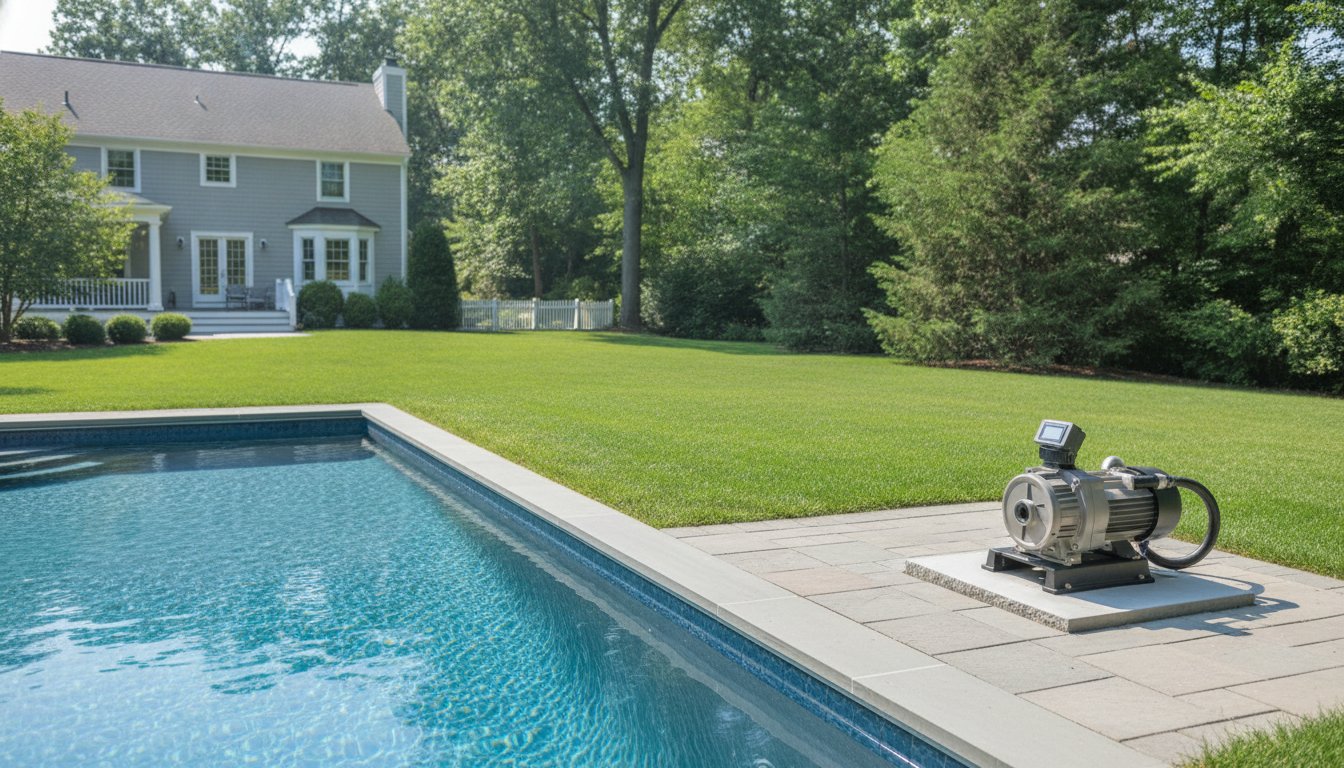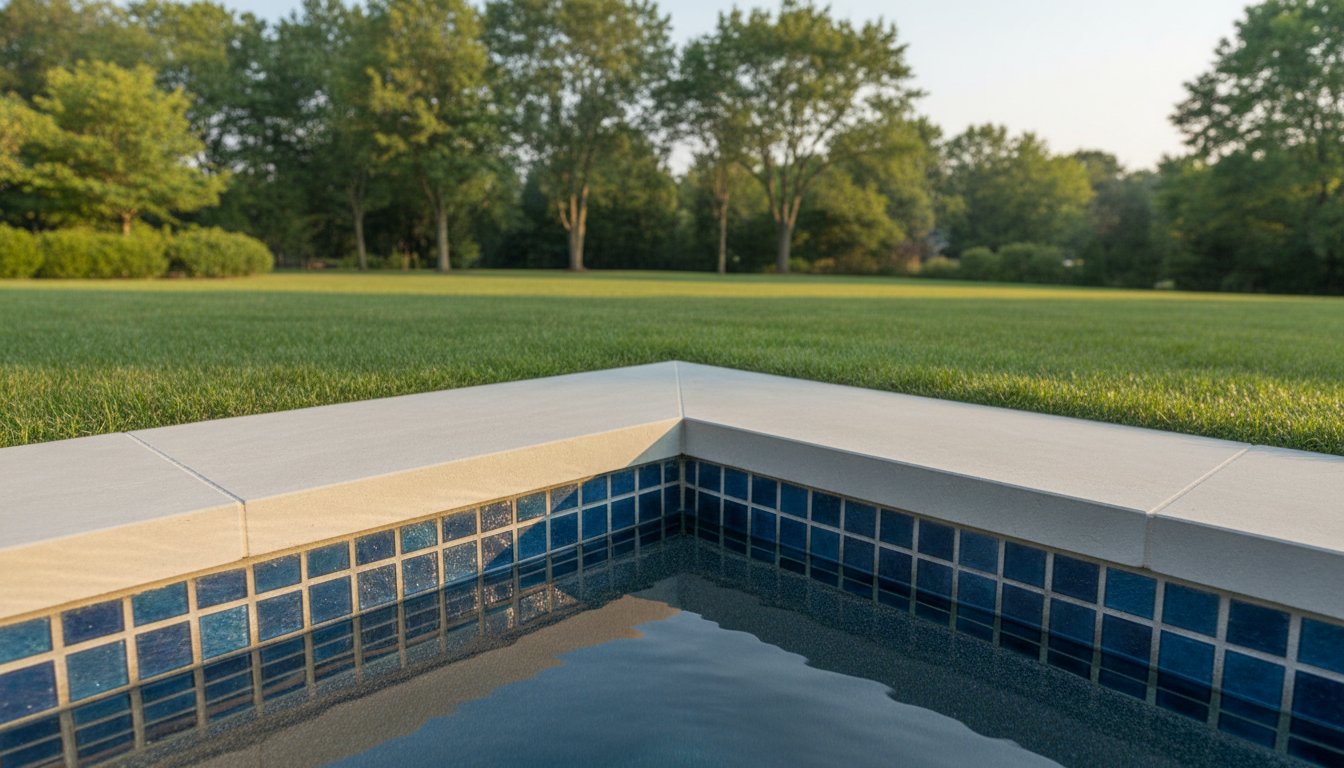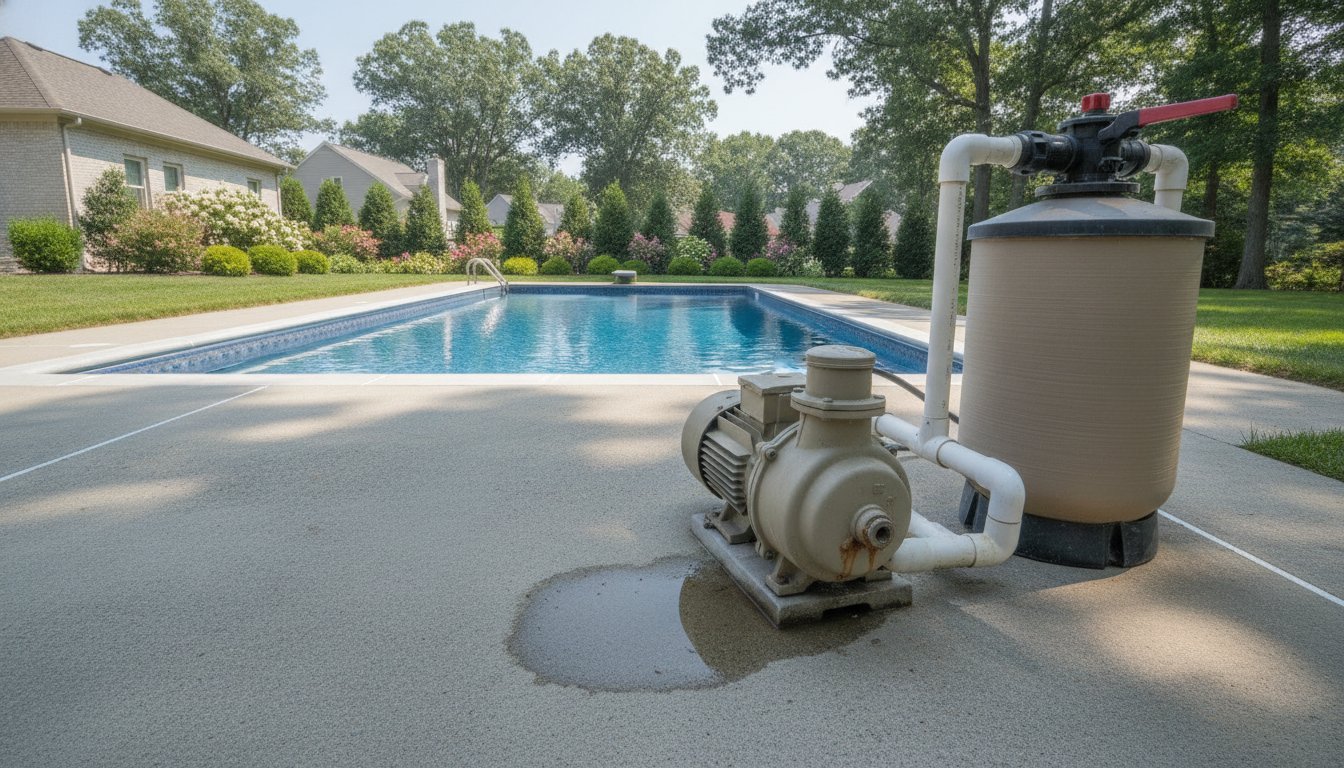
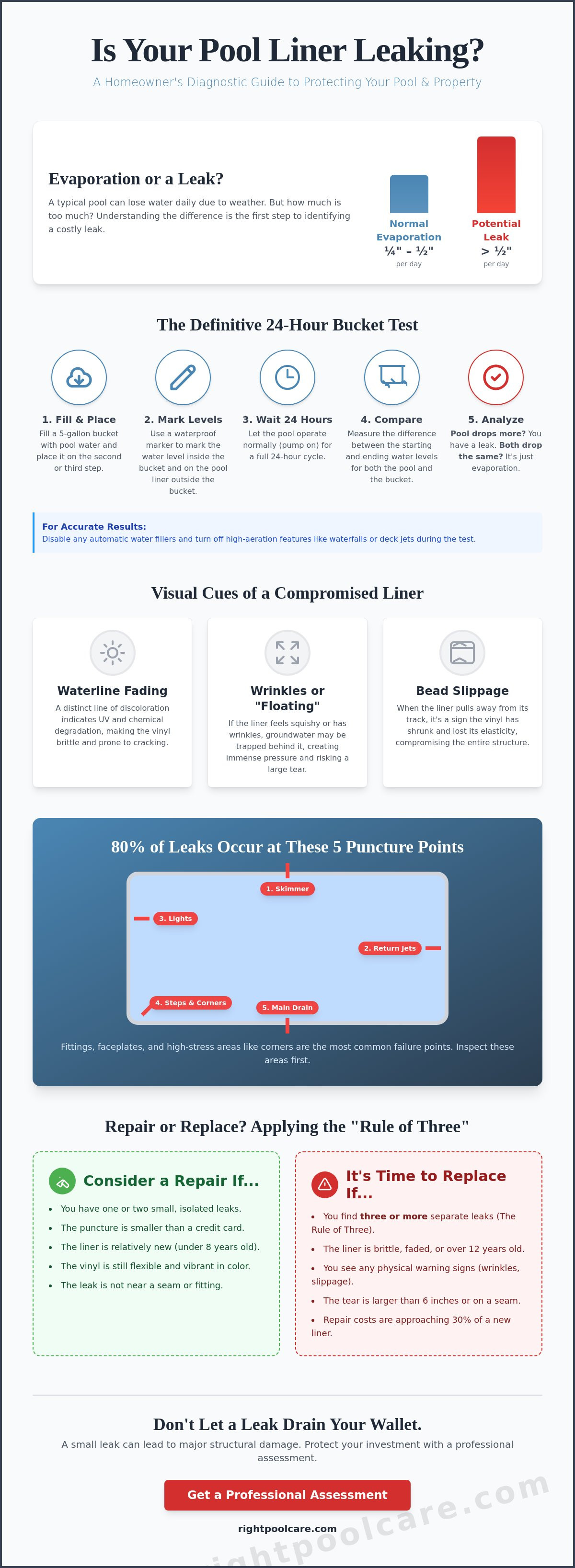
What if that receding waterline isn't just the New Jersey summer sun but a silent threat to your home's foundation? For many Bergen County homeowners, a dropping pool level triggers immediate anxiety about wasted chemicals and structural damage. It's natural to feel overwhelmed when your backyard sanctuary starts losing its luster and its water. Understanding how to tell if a pool liner is leaking is the first step in reclaiming your peace of mind and protecting your property's value. While a pool can naturally lose 1/4 to 1/2 inch of water per day due to evaporation, anything beyond that is a signal that your liner's 8 to 12 year lifespan might be reaching its limit.
This guide provides the technical clarity you need to address the problem head-on. We'll walk you through the definitive bucket test to confirm your suspicions and show you how to pinpoint the exact source of the breach. You'll learn to distinguish between minor wear and the structural red flags that demand a professional vinyl liner replacement. By the end of this article, you'll have a clear, actionable plan to transform a stressful leak into a restored, secure swimming environment. Our goal is to ensure your pool remains a beautiful, life-enhancing space rather than a source of financial drain.
Key Takeaways
- Master the 24-hour bucket test to confirm if your water loss is natural evaporation or a structural failure requiring immediate attention.
- Learn exactly how to tell if a pool liner is leaking by identifying the five most common puncture points where 80% of vinyl failures occur.
- Recognize the visual cues of a compromised liner, such as "floating" vinyl or waterline fading, which indicate deeper groundwater pressure or chemical degradation.
- Use a simple dye test to pinpoint the precise location of a tear, allowing you to assess if a DIY patch is viable or if professional intervention is required.
- Apply the "Rule of Three" to determine when multiple leaks signal the end of your liner’s lifespan and when a full vinyl liner replacement is the most cost-effective solution.
Is It Evaporation or a Leak? The 24-Hour Bucket Test
Homeowners often panic when they see the water level drop, but distinguishing between environmental water loss and structural failure requires a scientific approach. Many online resources suggest a generic "inch-per-week" rule. This is often misleading in the varied climate of New Jersey. On a humid July afternoon in Bergen County, evaporation might be negligible. Conversely, a dry, windy day can pull a surprising amount of moisture from vinyl-lined pools. Learning how to tell if a pool liner is leaking starts with isolating the pool from these external variables. You need a controlled environment to prove that your water loss is a mechanical issue rather than a weather pattern.
The physics of evaporation depend on the temperature difference between the water and the air. When the air is dry and the wind is high, your pool acts like a giant humidifier for your backyard. This is why the bucket test is so effective. By placing a container of water directly in the pool, you ensure the test water and the pool water stay at the exact same temperature. If both levels drop at the same rate, the sun is your culprit. If the pool level drops faster, you have definitive proof of a leak. Even a 1/4 inch difference over 24 hours is significant. That small gap translates to hundreds of gallons of treated water escaping into the ground every week, potentially destabilizing the soil around your foundation.
Step-by-Step Instructions for the Bucket Test
Follow these precise steps to ensure your data is accurate. Learning how to tell if a pool liner is leaking requires patience and a steady hand.
- Prepare the container: Fill a clean 5-gallon bucket with pool water and place it on the second or third pool step. It must be deep enough to stay upright but shallow enough to remain accessible.
- Mark the levels: Use a waterproof marker or a piece of electrical tape to indicate the water level on the inside of the bucket. Then, mark the pool's water level on the outside of the bucket or the liner itself.
- Run normal operations: Keep your pump and filtration system running as you usually would for a full 24-hour cycle.
- Compare the marks: After 24 hours, measure the distance from your marks to the new water levels.
The 24-hour bucket test is the industry gold standard for definitively confirming whether water loss is due to environmental evaporation or a structural leak.
When the Bucket Test Might Fail You
This diagnostic isn't foolproof. If you hosted a large graduation party or a busy weekend in Alpine or Closter, excessive splash-out will skew your results. Heavy use can easily displace an inch of water, mimicking a leak. You must also disable any automatic refilling systems before you begin the test. These convenient devices often hide massive structural failures for months by silently topping off the pool every time the level dips. Finally, turn off all water features like waterfalls, fountains, or deck jets. These high-energy features increase surface area and aeration, which drastically accelerates evaporation and can create a false positive for a leak.
Physical Warning Signs of a Compromised Vinyl Liner
Beyond the bucket test, your eyes and hands are the most reliable diagnostic tools. A visual inspection often reveals the structural integrity of your pool before you even measure water loss. One of the most common indicators is the "waterline fade." This distinct line of discoloration isn't just an aesthetic issue. It's a sign of UV and chemical degradation that has stripped the plasticizers from the vinyl, making it prone to microscopic cracks. If you notice the liner pulling away from the track, a condition known as bead slippage, it’s often a sign the material has shrunk and lost its ability to hold tension. Identifying these physical cues is essential when determining how to tell if a pool liner is leaking.
Groundwater pressure is another silent enemy for Bergen County properties. If you see wrinkles on the floor or the liner feels "squishy" or "floating" beneath your feet, water is likely trapped behind the vinyl. This displacement can lead to massive tears if not addressed. These visual markers often precede a catastrophic failure. If your liner shows these advanced signs of distress, it may be time to consider a professional vinyl liner replacement to prevent further structural damage to your pool's foundation.
Tactile Signs: Brittleness and Elasticity
Walk around the perimeter and feel the liner just above the waterline. In healthy pools, the vinyl should feel supple and rubbery. If it feels "crispy" or brittle to the touch, the material has reached the end of its life. New Jersey’s harsh freeze-thaw cycles accelerate this process significantly compared to warmer Southern states. The constant expansion and contraction of frozen ground put immense stress on aging vinyl. Try a gentle "tug test" near the bead; if there is zero give or you hear a faint cracking sound, the liner is no longer elastic enough to withstand the pressure of the water.
Visual Red Flags Around Pool Fixtures
The most vulnerable points are where the liner meets fixed objects. Inspect the gaskets around skimmers, return jets, and pool lights. Look closely for rust stains or dark discoloration on the liner surface. These marks often suggest that water has breached the vinyl and is actively corroding the galvanized steel walls behind it. Keep an eye out for "sand mounds" or uneven divots on the pool floor. These suggest a "wash-out" where leaking water has eroded the vermiculite or sand base, creating a hollow space that will eventually cause the liner to stretch and pop.
Common Leak Locations: Where to Look for Punctures
Finding a puncture doesn't require luck; it requires a systematic approach. While a tear can technically happen anywhere, roughly 80% of leaks occur at the same five critical failure points. When you're investigating how to tell if a pool liner is leaking, your search should begin where the vinyl is under the most physical stress. This includes areas around stairs, sharp corners, and any point where the liner was cut to accommodate a fixture. In Bergen County, the ground is prone to subtle shifts during the spring thaw. These movements can pull at tension points and create microscopic pinholes that are nearly invisible to the naked eye.
Physical damage from external sources is another common factor. Pets with sharp claws often cause tears in the shallow end while trying to exit the pool. Seemingly harmless objects, like a dropped pair of metal sunglasses or a heavy pool pole, can also create a snag. Manufacturing seams are the final usual suspect. While modern liners are incredibly durable, the heat-welded seams can occasionally fail as the liner ages. This leads to a long, straight split that drains water rapidly. Identifying these specific zones allows you to focus your energy on the areas most likely to compromise your pool’s security.
The Vulnerability of Stairs and Corners
Corners are often the weakest link in a vinyl-lined pool. Because the material must be stretched into a 90-degree angle during installation, it naturally becomes thinner and more vulnerable to punctures over time. Check the coving, which is the angled transition where the wall meets the floor. If this area feels soft, mushy, or uneven, water is likely eroding the base beneath the liner. Step-strips, the plastic components that secure the liner to your stairs, are another danger zone. If these strips become loose or misaligned, they can pinch and tear the vinyl with every step you take.
Gaskets, Lights, and Faceplates
The light niche is the single most common hidden leak source in inground pools. Water often escapes through the conduit that houses the electrical cord, bypassing the liner entirely. Beyond the lights, you must inspect the skimmer faceplate and return jets. Look for loose screws or cracked plastic faceplates that prevent a watertight seal against the liner. The main drain at the very bottom of the deep end is the most difficult to inspect. However, a failing gasket here can cause a massive, steady drop in water level that is hard to diagnose without professional diving equipment.
The Dye Test: How to Pinpoint a Leak Yourself
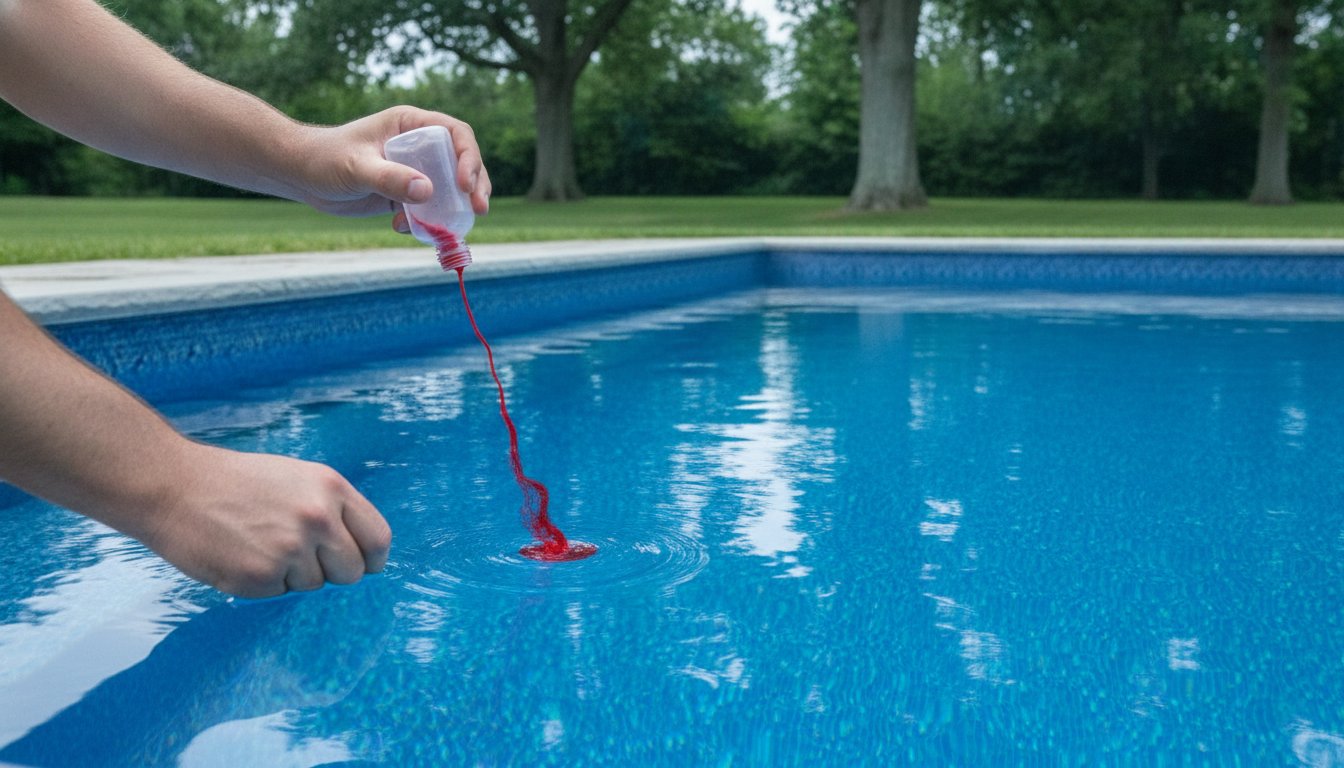
Once you've narrowed down the likely locations, the dye test provides the definitive proof you need. It's a simple yet effective method to confirm exactly how to tell if a pool liner is leaking. You can use a standard pH reagent from your test kit or a specialized, heavier leak-finder dye. The goal is to see the dye travel toward a tear rather than dissipating into the pool water. This test transforms a hunch into a confirmed repair plan. Watching the dye vanish into a tear is like seeing the lifeblood of your backyard oasis drain away; it’s a sobering moment that demands immediate action.
Accuracy depends entirely on still water. If the pump is running, the circulation will instantly scatter the dye. This makes it impossible to track. You must turn off the filtration system and wait for the pool to become perfectly still. Even a slight breeze can create surface currents that skew the results. Patience is your greatest tool during this phase of the investigation. A calm pool surface acts as a clear window into the hidden mechanics of your pool's structural health.
Executing the Dye Test Correcty
Start by turning off your pump and all filtration for at least 30 minutes. This allows the water to settle completely. Approach the suspected area slowly to avoid creating waves with your body. Squirt a small amount of dye within an inch of the suspected tear, gasket, or faceplate. If a leak exists, you'll witness the "vacuum effect." Instead of the dye clouding or swirling, it will be sucked out of the pool through the breach. It’s a clear, visual confirmation of structural failure. Move systematically from the skimmers to the returns, then to the corners and stairs to ensure you haven't missed secondary punctures.
Troubleshooting the Deep End
Testing the deep end presents unique challenges for the average homeowner. Without professional diving gear, it’s difficult to get close enough to the main drain or deep-end seams to apply the dye accurately. You also face the risk of "false positives" caused by temperature-driven water currents or thermal layering. These currents can pull dye in a specific direction even if no leak is present. If you’re determined to DIY, a snorkel and mask are mandatory for a closer look. However, if the water level continues to drop and you can't find the source in the shallow end, you're likely facing a complex issue that requires specialized equipment repair and replacement or professional leak detection services. Don't risk your safety or the integrity of your pool by diving into deep-end repairs without the proper training.
When to Repair vs. Replace Your Vinyl Liner in New Jersey
Deciding between a quick patch and a full overhaul is the final step in protecting your investment. While you've learned how to tell if a pool liner is leaking, the severity of your findings dictates the next move. We recommend the "Rule of Three." If you discover more than three distinct leaks during your inspection, the liner's structural integrity is likely compromised beyond repair. At this stage, patching becomes a game of "whack-a-mole" where new holes appear as fast as you can seal the old ones. This is especially true for liners older than 10 years, as the vinyl has lost the essential plasticizers that keep it supple and resilient.
Ignoring a persistent leak is a high-stakes gamble. Constant water escape doesn't just waste chemicals; it actively erodes the vermiculite floor and can lead to rusted or collapsed wall panels. The long-term cost of repairing a washed-out pool base far exceeds the price of a timely professional vinyl liner replacement. In Bergen County, where property values are significant, maintaining a secure and beautiful swimming environment is a necessity, not a luxury.
Repairing a Leak: Temporary vs. Permanent
Underwater patch kits work well for small, accidental punctures caused by a dropped tool or a stray branch. These are effective for isolated incidents on relatively new vinyl. However, these fixes are rarely permanent in the Northeast. New Jersey's brutal freeze-thaw cycles cause the pool structure and the surrounding soil to shift throughout the winter. This movement puts immense stress on the adhesive, often causing patches to peel or fail by the following spring. Multiple patches also create a cluttered, neglected appearance that ruins the aesthetic of a high-end pool.
The Benefits of Full Liner Replacement
A full replacement is a transformative experience for your backyard. It allows for a complete inspection and restoration of the pool's floor and walls, ensuring a solid foundation for the next decade. Modern liner patterns available in 2026 offer stunning textures and deep, vibrant colors that mimic natural stone or high-end tile. Professional measuring and installation guarantee a perfect, wrinkle-free fit that prevents future "floating" or bead slippage. If your liner is showing its age or you're tired of chasing leaks, contact Right Pool Care for a replacement quote and restore the security of your home's oasis.
Secure Your Backyard Investment Today
Mastering how to tell if a pool liner is leaking protects your property from costly structural erosion and wasted resources. By utilizing the 24-hour bucket test and performing a tactile inspection for brittle vinyl, you move from uncertainty to a clear plan of action. Identifying these breaches early prevents the soil wash-outs and wall corrosion that often follow ignored leaks. Your pool should be a source of relaxation, not a mounting list of technical anxieties.
Right Pool Care has been the trusted specialist in Vinyl Liner Replacement for over 20 years. We proudly serve the discerning communities of Closter, Alpine, and the broader Bergen County area with expert diagnostics that prevent long-term structural damage. Our team brings a no-nonsense approach to every inspection, ensuring your pool's security is never an afterthought. Don't let a failing liner compromise your summer sanctuary or your home's value. Schedule a Professional Liner Inspection with Right Pool Care today to restore your peace of mind. We're ready to help you transform your pool back into a beautiful, life-enhancing space for your family.
Frequently Asked Questions
How much water loss is normal for a pool in New Jersey?
A normal pool in New Jersey loses 1/4 to 1/2 inch of water daily due to evaporation and standard use. Factors like high winds, low humidity, and heavy sun exposure can push this toward the higher end of the range. If you see a drop exceeding this amount, you should investigate how to tell if a pool liner is leaking. Consistent water loss beyond these environmental norms indicates a structural breach that requires immediate attention.
Can a pool liner leak without showing a visible hole?
Yes, a pool liner can leak through microscopic pinholes or compromised seams that are invisible to the naked eye. UV rays and chemical imbalances often cause the vinyl to become porous over time. You might not see a jagged tear, but the material itself loses its ability to hold water. These silent leaks are often found near the corners or where the liner has been stretched thin during the original installation process.
Is it worth patching an old vinyl pool liner?
Patching an old liner is rarely a long-term solution if the vinyl is brittle or over 10 years old. While a patch kit might stop a single leak temporarily, the surrounding material is likely nearing its failure point. You'll often find that new leaks develop shortly after the repair. Investing in a full vinyl liner replacement is the most cost-effective way to restore the security and beauty of your backyard oasis.
What happens if I ignore a small leak in my pool?
Ignoring a small leak can lead to catastrophic structural failure, including washed-out pool floors and collapsed metal walls. Escaping water saturates the ground, which can destabilize the deck and even threaten your home's foundation. Beyond the structural risks, you'll waste hundreds of dollars on water and expensive chemicals. Addressing the issue early protects your property value and prevents a minor repair from turning into a total renovation project.
How do I know if the leak is in the liner or the pipes?
You can determine the source by observing the water loss while the pump is running versus when it's off. If the water level drops faster while the filtration system is active, the leak is likely in the underground plumbing. If the loss is consistent regardless of pump operation, the issue is almost certainly in the liner. This simple observation helps you decide whether to call for equipment repair or a liner specialist.
Can a leaking pool liner damage my house foundation?
A leaking pool liner can absolutely damage your house foundation if the pool is located in close proximity to the structure. Constant water seepage saturates the soil, causing it to expand or shift. This pressure can lead to basement wall cracks or settling issues. Protecting your home starts with maintaining a watertight pool. Ensuring your liner is intact is a critical component of your overall property security and safety.
How long does a professional leak detection service take?
A professional leak detection service typically takes between two and four hours to complete. This timeframe allows technicians to perform pressure tests on the plumbing and conduct a thorough electronic or dye-based scan of the liner. Larger custom pools or those with complex water features may require additional time. Getting a definitive answer quickly allows you to move forward with a clear plan for professional liner repair or replacement.
Can I use food coloring for a pool dye test?
You can use food coloring, but specialized leak-finder dye is a superior choice for accurate results. Professional dyes are formulated to be denser than pool water, so they stay concentrated and resist dispersing too quickly. This density makes it much easier to see the vacuum effect as the color is sucked into a puncture. Using the right tools ensures you don't miss small leaks that food coloring might easily overlook.