On a humid July afternoon in Paramus, the last thing you want to see is a "Low Flow" error code blinking on your heater while your monthly energy bill climbs 22 percent higher than last season. You understand that your hayward system is the heart of your backyard, yet maintaining that equipment through Northern New Jersey's volatile weather requires more than just basic skimming. It's about ensuring every PVC pipe and variable speed pump operates at peak efficiency so your family can enjoy miracles in the making without the stress of unexpected breakdowns.
We promise to help you master your pool’s care with expert troubleshooting tips and local maintenance secrets tailored for Bergen County homeowners. You'll learn how to resolve confusing heater codes, slash seasonal utility costs, and prepare your system to survive a 10-degree January freeze. We are diving into the specific steps you need to keep your water crystal clear and your equipment running for years to come.
Key Takeaways
- Learn expert maintenance routines to prevent equipment strain and keep your Northern New Jersey pool crystal clear all season.
- Discover step-by-step troubleshooting techniques to resolve common Hayward equipment issues, from loud pump noises to low water pressure.
- Master the critical winterization timeline to protect your system from ice expansion damage during the Demarest and Old Tappan freeze cycles.
- Apply the "50% Rule" to determine if it is time to repair your current components or upgrade to a high-efficiency variable speed pump.
- Access trusted advice on equipment durability and parts availability tailored specifically for homeowners in Alpine and Tenafly.
Understanding Your Hayward Pool System in Bergen County
Hayward remains the dominant force in Bergen County backyards. Homeowners in Alpine and Tenafly prioritize this brand because it delivers unmatched durability and a streamlined supply chain for replacement parts. When your equipment works in harmony, you save money on energy and chemical costs. A matched hayward system ensures that your pump, filter, and heater operate at peak hydraulic performance, reducing wear on every component. This synergy is the foundation of what we call miracles in the making, turning a standard backyard into a high-performance retreat.
Identifying your specific machinery is the first step toward proper maintenance. Most local systems rely on a combination of heavy-duty pumps and high-capacity filters designed to handle the heavy organic loads common in our wooded NJ suburbs. Understanding the swimming pool basics regarding water circulation helps you spot trouble before a small leak becomes a total system failure. Right Pool Care experts see these configurations daily, ensuring your hardware stays reliable throughout the hottest July weeks.
Why Hayward is the Standard for Northern NJ Pools
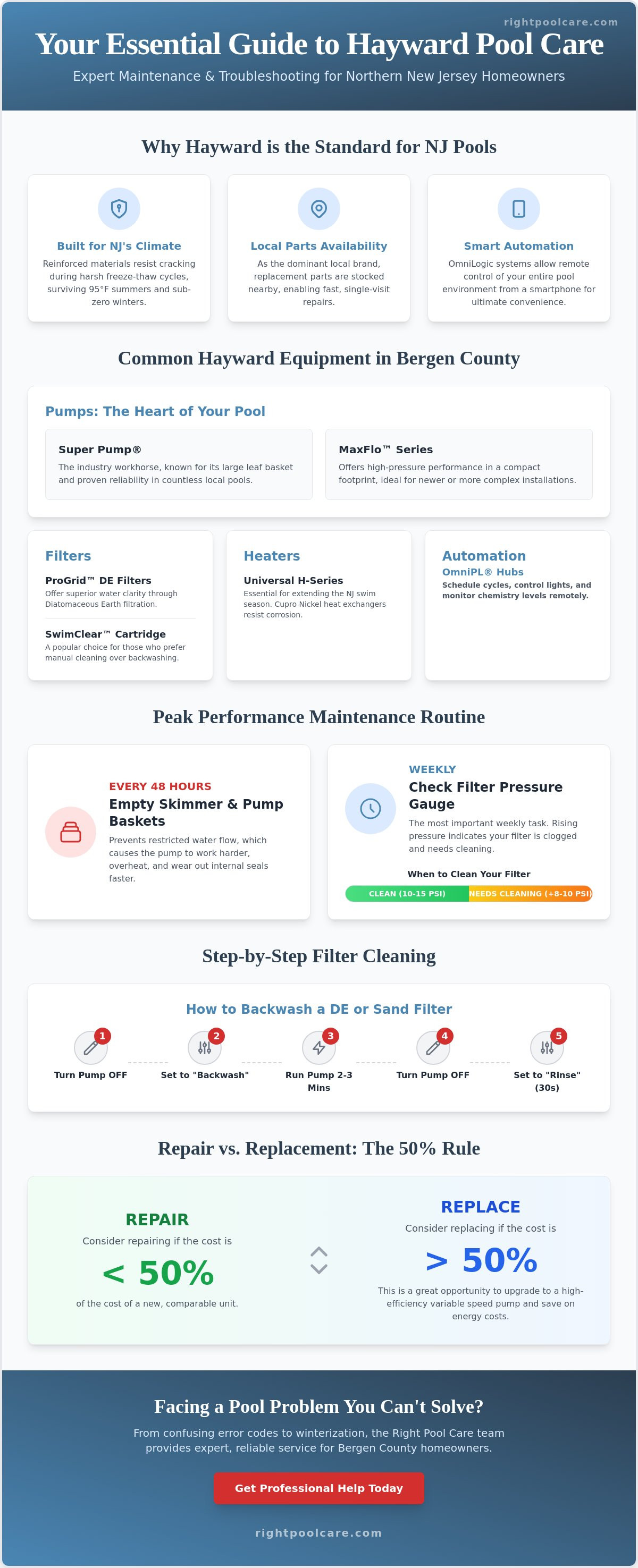
The North Jersey climate is notoriously hard on outdoor equipment. Our hardware must survive 95 degree summers and sub-zero winters. Hayward products are built with reinforced thermoplastic materials that resist cracking during the freeze-thaw cycles common in Bergenfield and Closter. This resilience makes them the trusted choice for local families who don't want to worry about equipment failure during the short swim season.
Availability is another major advantage for our region. Because this brand is so prevalent, replacement gaskets, impellers, and sensors are stocked locally. This means we can often complete repairs in a single visit without waiting for shipping. Modern Hayward systems also lead the way in salt-water conversions and OmniLogic automation. You can control your entire backyard environment from a smartphone, making pool ownership simpler and safer for everyone involved.
Common Hayward Equipment Found in Local Backyards
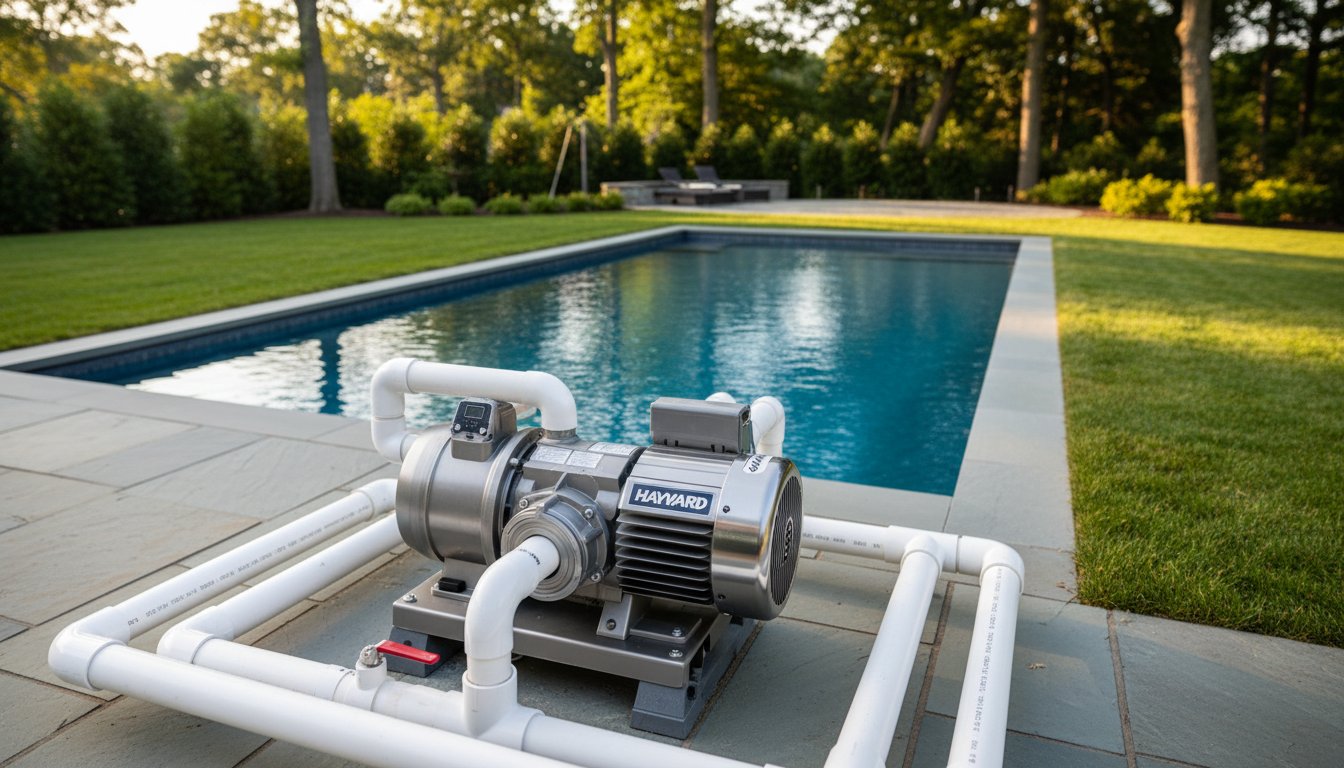
Walking into a typical equipment pad in Bergen County, you'll likely find one of two workhorse pumps. The Super Pump is the industry's most recognizable model, known for its large leaf basket and reliability. However, many newer installations in Tenafly utilize the MaxFlo series, which offers high-pressure performance for smaller footprints. Knowing which hayward pump you own is vital for selecting the correct replacement seals or motor upgrades.
- DE vs. Cartridge Filters: Most NJ pools use Diatomaceous Earth (DE) filters like the ProGrid for superior water clarity. Some homeowners prefer SwimClear cartridge filters to avoid the backwashing process.
- Universal H-Series Heaters: These units are essential for extending the NJ swim season into late September. They feature Cupro Nickel heat exchangers that resist corrosion from salt systems and fluctuating pH levels.
- Automation Hubs: Systems like the OmniPL allow you to schedule filtration cycles and monitor chemistry levels remotely, ensuring your water is always ready for a dip.
How to Maintain Your Hayward Pump and Filter for Peak Performance
Reliable pool operation depends on the health of your filtration system. In Bergen County, heavy pollen in the spring and falling leaves in the autumn put immense pressure on your hayward equipment. Daily and weekly maintenance prevents expensive motor failures and ensures your water stays swimmable throughout the season. Empty your skimmer and pump baskets every 48 hours to ensure unrestricted water flow. If debris builds up, the pump works harder, which generates excess heat and shortens the lifespan of the internal seals.
Checking the pressure gauge is the most important weekly task. A clean hayward filter typically operates between 10 and 15 PSI. Once the pressure rises 8 to 10 PSI above your "clean" baseline, the system is struggling. This restricted flow reduces the turnover rate, leading to cloudy water and chemical imbalances. If your system isn't reaching peak performance, the Right Pool Care team provides expert diagnostics to get your water crystal clear again.
Step-by-Step Hayward Filter Cleaning Guide
To backwash a Hayward ProGrid DE or Sand filter, start by turning off the pump. Move the multiport valve handle to the "Backwash" position and run the pump for 2 to 3 minutes until the water in the sight glass runs clear. Turn the pump off, set the valve to "Rinse" for 30 seconds, then return it to "Filter."
For Hayward SwimClear cartridge owners, backwashing isn't an option. You must manually remove the four cartridge elements and spray them with a high-pressure garden hose. Avoid using a power washer, as this can tear the fabric. When recharging a DE filter, use the slurry method. Mix 1 lb of DE powder for every 10 square feet of filter area into a bucket of water. Pour this mixture slowly into the skimmer while the pump is running to coat the internal grids evenly.
Optimizing Pump Flow and Energy Efficiency
Modern Hayward TriStar Variable Speed pumps can reduce energy costs by up to 90% when programmed correctly. Use your Hayward OmniLogic system to set lower RPMs for standard filtration. Running the pump at 1,000 to 1,200 RPM for longer periods is significantly more efficient than running it at high speeds for a few hours. Increase the speed only when the heater is active or when you're vacuuming the pool.
To clear the pump basket without losing prime, turn off the system and close the intake valves. This traps water in the pipes. After cleaning the basket, fill the pump housing with water before tightening the lid. Inspect the lid O-ring every time you open it. Dry or cracked O-rings allow air to enter the system, which causes bubbles at the return jets. Apply a silicone-based lubricant to the O-ring every 30 days to maintain a vacuum-tight seal. If you notice the pump is loud but the pressure is low, check for a clogged impeller. Debris often bypasses the basket and lodges in the impeller vanes, which requires professional disassembly to clear safely.
Troubleshooting Common Hayward Equipment Issues
Even the most reliable hayward systems require technical attention to maintain peak efficiency. Identifying issues early prevents minor mechanical failures from turning into expensive replacements. Our team sees these common symptoms across Bergen County pools every season, and we know exactly how to resolve them.
Solving Noise and Suction Problems
A loud grinding noise coming from your pump usually indicates motor bearing failure. This typically happens when a shaft seal leaks, allowing chlorinated water to reach the internal bearings. If the pump sounds like it's pumping gravel, you're likely dealing with cavitation. Cavitation is the formation of vapor bubbles in a pump due to low pressure. This occurs when the pump is starved for water, often caused by a clogged skimmer or a closed valve.
- Find suction leaks: Run a garden hose over the PVC joints on the suction side; if the air bubbles in the pump basket disappear, you've found the leak.
- Address low pressure: Low water pressure in hayward filtration systems often stems from debris trapped in the impeller vanes, which limits the pump's ability to move water.
- Seal the lid: Inspect the pump lid O-ring for cracks or debris, then apply a silicone-based lubricant to ensure an airtight seal.
Decoding Hayward Heater and Automation Errors
Hayward H-Series heaters use specific codes to protect the internal heat exchanger. The "LO" code stands for Limit String Open. This safety feature triggers when the system detects insufficient water flow, a faulty pressure switch, or a tripped high-limit switch. If you see an "IF" code, the unit has experienced an Ignition Failure. This means the unit tried to light but failed, often due to a closed gas valve, low gas pressure, or a fouled igniter. For any gas-related heater repairs, you must contact a licensed Bergen County professional to ensure your property remains safe.
Salt systems require different maintenance steps. If your AquaRite salt chlorinator shows a "Check Salt" light after you've already balanced the water, it might need a manual reset. Flip the switch to "Off" and then back to "Auto" while watching the diagnostic display to recalibrate the salt reading. Leaks around the Multiport valve are another frequent headache. Water leaking from the waste line while the valve is in "Filter" mode usually points to a distorted spider gasket. Replacing this internal component restores the seal and prevents water loss. We focus on these precise fixes to keep your pool running without interruption.
Winterizing Hayward Equipment for the NJ Freeze Cycle
Bergen County winters are relentless. In towns like Demarest and Old Tappan, the ground often begins to freeze by mid-November. This puts your hayward system at risk if it isn't bone dry. Water expands by approximately 9 percent when it turns to ice. That expansion is powerful enough to shatter a plastic pump housing or a copper heater header in a single night. You should aim to have your pool closed and winterized by late September or early October to stay ahead of the first hard frost.
Draining the equipment is the most vital step. Every Hayward pump, filter, and heater comes equipped with specific drain plugs. Remove these plugs and store them in the pump strainer basket. Putting the lid back on the basket ensures you won't be hunting for parts when the weather warms up in May. If you leave water inside a Hayward heat exchanger, the resulting ice damage often requires a full unit replacement rather than a simple repair.
Your Hayward salt cells and automation electronics require extra care. Disconnect the salt cell, clean it with a mild solution to remove scale, and store it indoors. Electronics don't like the extreme moisture and temperature swings of a New Jersey winter. Keeping sensitive components in a climate-controlled basement prevents circuit board corrosion and extends the life of your automation system.
Protecting Your Investment from Bergen County Winters
Winterizing Hayward DE grids is a task you can't skip. You should remove the grids from the filter tank and hose them down thoroughly. If you leave old DE and organic debris in the tank, it can harden into a concrete-like substance over the winter. This ruins the fabric and forces a costly replacement. Once the equipment is clear, use a high-volume air blower to purge every drop of water from the PVC piping. We use specialized plugs to seal the lines, ensuring no groundwater seeps back in to cause underground pipe bursts.
The Role of Custom Safety Covers
A loose or sagging cover is a liability for your pool and your equipment. When snow piles up, a poorly fitted cover can allow debris to slide into the skimmer, leading to clogs that are difficult to clear during spring opening. Professional custom safety cover installation provides a drum-tight fit that supports heavy New Jersey snow loads. This protection keeps the skimmer throat clear and prevents ice from forming inside the hayward plumbing lines. It’s the best way to ensure your backyard remains a place for "Miracles in the making" instead of a construction zone next season.
Don't risk expensive freeze damage this year. Contact Right Pool Care to schedule your professional winterization service.
Repair vs. Replacement: Making the Right Choice for Your Pool
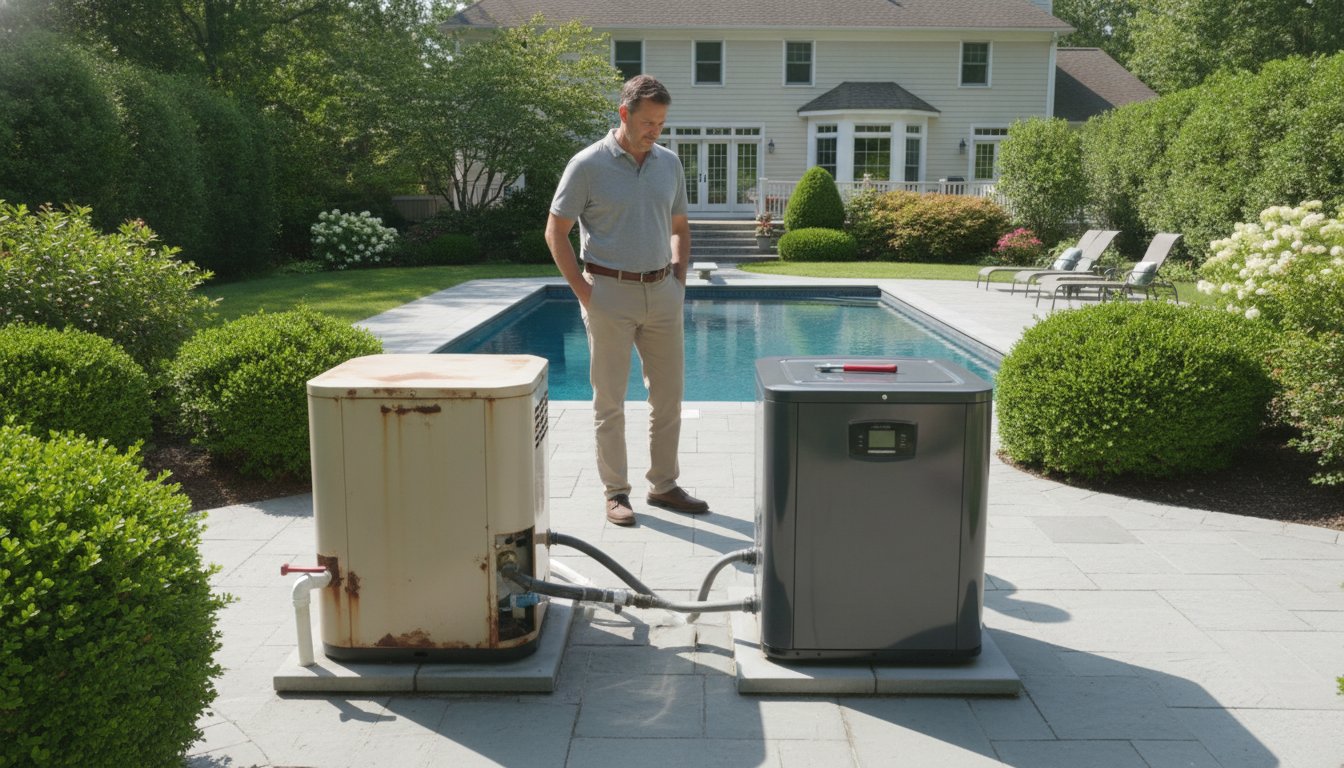
Choosing between a quick fix and a total upgrade shouldn't feel like a gamble. At Right Pool Care, we follow the "50% Rule" for all hayward equipment diagnostics in 2026. If a repair quote for your pump, heater, or salt cell exceeds 50% of the cost of a brand-new unit, replacement is the smarter financial move. Older single-speed motors often cost more to run in a single season than the price of a modern repair. We turn potential equipment nightmares into "miracles in the making" by providing clear, honest assessments that protect your backyard investment.
When to Upgrade Your Hayward Components
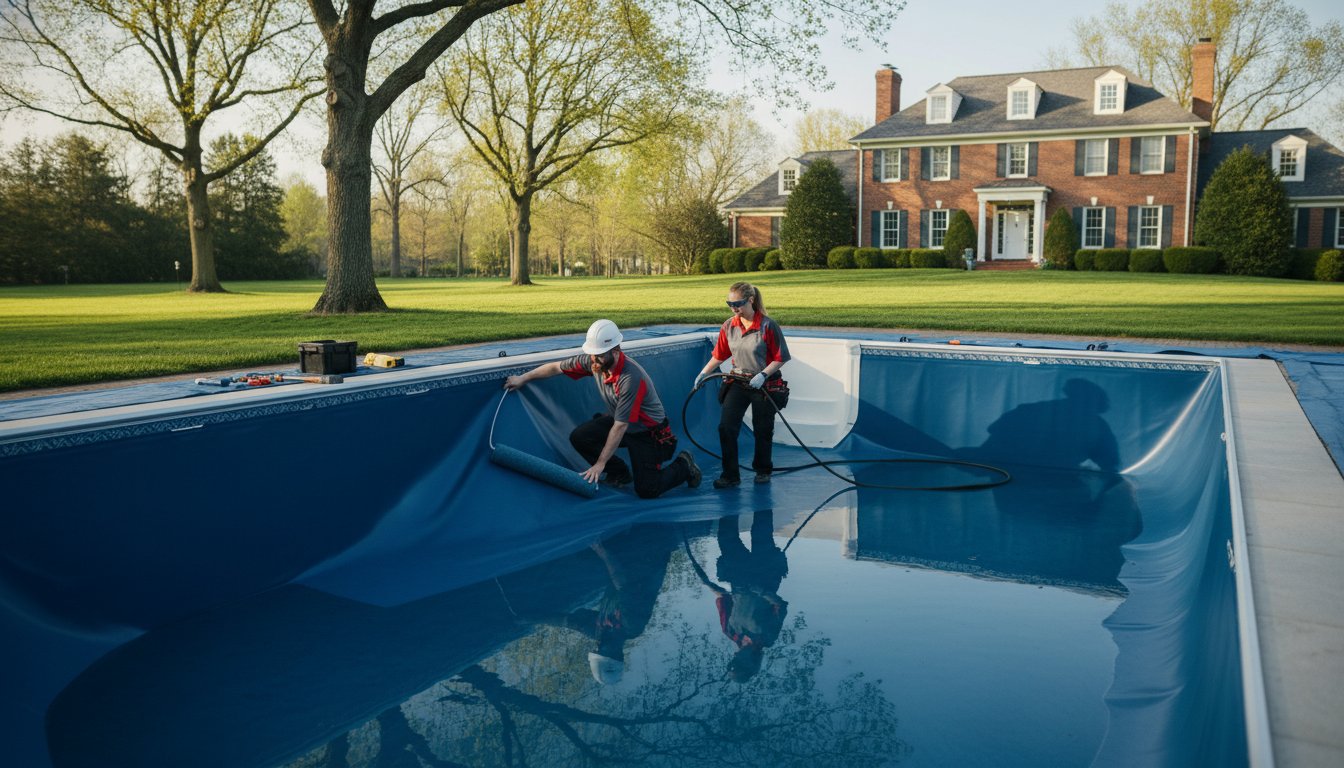
Efficiency is the primary driver for upgrades today. New Jersey homeowners currently benefit from significant energy rebates through programs like NJ Clean Energy when installing hayward Variable Speed (VS) pumps. These units can reduce energy consumption by as much as 90% compared to traditional models. You should also watch for structural signs of failure. If your filter tank shows "fiberglass blooming" or hairline cracks, it has reached the end of its 10 to 15 year structural life. This is the perfect time to coordinate equipment upgrades with other major projects, such as installing new inground pool liners to ensure your entire system is refreshed at once.
- Energy Savings: VS pumps pay for themselves via lower utility bills within two to three seasons.
- Safety First: Replacing aged heaters prevents gas leaks and combustion issues.
- System Synergy: New components work better with modern automation and salt chlorination systems.
Why Professional Installation Matters
Cutting corners on installation voids manufacturer warranties and creates safety hazards. Right Pool Care ensures every installation meets strict Alpine and Tenafly municipal codes, specifically regarding electrical bonding and PVC pressure testing. Our team handles the complex plumbing required to keep your system running at peak hydraulic efficiency. Don't let a DIY attempt lead to a flooded equipment pad or a denied insurance claim. We provide the expert touch needed to keep your water crystal clear and your equipment running silently.
Professional maintenance prevents small leaks from becoming catastrophic failures. By choosing a trusted local expert, you ensure that your pool remains a source of joy rather than a source of stress. Our technicians are trained to spot the subtle signs of wear that an untrained eye might miss.
Optimize Your Pool Performance This Season
Maintaining a high performance pool in Bergen County requires more than just skimming the surface. You've learned that routine filtration checks and professional winterization are essential to survive the North Jersey freeze cycle. When equipment fails, deciding between a quick fix and a full upgrade depends on the age and efficiency of your current system. Right Pool Care brings over 20 years of local experience to homes in Alpine and Closter. As certified hayward equipment specialists, we understand exactly how these systems operate under local conditions. We focus on long term reliability and safety so you can enjoy your water without the stress of mechanical failure. Whether you need a simple pump seal replacement or a complete filter overhaul, our team delivers technical excellence with every visit. We take pride in our work and call it miracles in the making. Let us handle the heavy lifting while you enjoy the results.
Get Expert Hayward Equipment Repair in Bergen County
Your backyard deserves the best care available in New Jersey.
Frequently Asked Questions
How long does a Hayward pool pump typically last in New Jersey?
A Hayward pool pump typically lasts between 8 and 12 years when operating in the Bergen County climate. Harsh New Jersey winters and seasonal startups put extra stress on the motor and internal seals. You can extend this lifespan by replacing the shaft seal every 3 years to prevent water from reaching the motor bearings. Proper winterization is the most critical factor for longevity in our local area.
Can I use generic parts for my Hayward pool filter repair?
You should avoid generic parts for your filter repair because they rarely match the exact tolerances of OEM components. Using non-brand lateral assemblies or O-rings often leads to pressure leaks and poor filtration. Right Pool Care always recommends genuine Hayward parts to ensure your system maintains its safety certifications and operates at peak efficiency. It's the only way to guarantee a perfect fit for your PVC piping.
Why is my Hayward salt cell showing a "low salt" warning when I just added salt?
Your salt cell requires 24 hours of circulation for newly added salt to dissolve and register accurately on the sensors. Cold water below 60 degrees Fahrenheit also causes false "low salt" readings because the water's conductivity changes. If the warning persists after a full day of pump operation, your cell likely has calcium buildup and needs a professional acid wash to restore its functionality.
What is the best Hayward heater for a large pool in Bergen County?
The Hayward Universal H-Series 400,000 BTU Natural Gas heater is the top choice for large residential pools in our region. This model provides the high thermal output needed to combat cool NJ nights and extends your swimming season by 4 weeks. Its cupro-nickel heat exchanger resists corrosion from salt systems and unbalanced chemicals. We consider installing these high-efficiency units as miracles in the making for homeowners who want consistent, rapid heating.
How often should I replace the cartridges in my Hayward SwimClear filter?
You should replace the cartridges in your SwimClear filter every 3 to 5 years depending on your pool's bather load. Over time, the polyester fibers become compacted and lose their ability to trap fine debris. If you notice your filter pressure rises 8 to 10 PSI above the clean starting pressure within a week of cleaning, the fabric is likely exhausted. Regular chemical soaking helps, but physical wear is inevitable.
Is it worth repairing a 15-year-old Hayward sand filter?
Repairing a 15-year-old sand filter is rarely cost-effective because the fiberglass tank often develops structural weaknesses after 15 seasons of pressure cycles. Replacing the internal lateral assembly and multi-port valve can cost 60 percent of the price of a new unit. At this age, a full replacement ensures safety and gives you a fresh 10-year outlook on your filtration system. Right Pool Care focuses on long-term results over quick fixes.
How much can I save on electricity by switching to a Hayward Variable Speed pump?
Switching to a variable speed pump can reduce your pool-related electricity costs by up to 90 percent compared to single-speed models. These pumps allow you to run the motor at lower RPMs for longer periods, which is much more efficient than high-speed bursts. For a typical 20,000-gallon pool in New Jersey, this translates to hundreds of dollars in annual savings based on local utility rates. It's a smart investment for any property owner.
What should I do if my Hayward pump loses its prime after a heavy NJ rainstorm?
Check your skimmer and pump baskets for leaf clogs immediately if your pump loses prime after a heavy storm. High winds in Bergen County often dump enough debris to starve the pump of water in under 30 minutes. If the baskets are clear, inspect the pump lid O-ring for grit or check if the water level rose above the skimmer throat. Air entering the system is the most common culprit after severe weather.