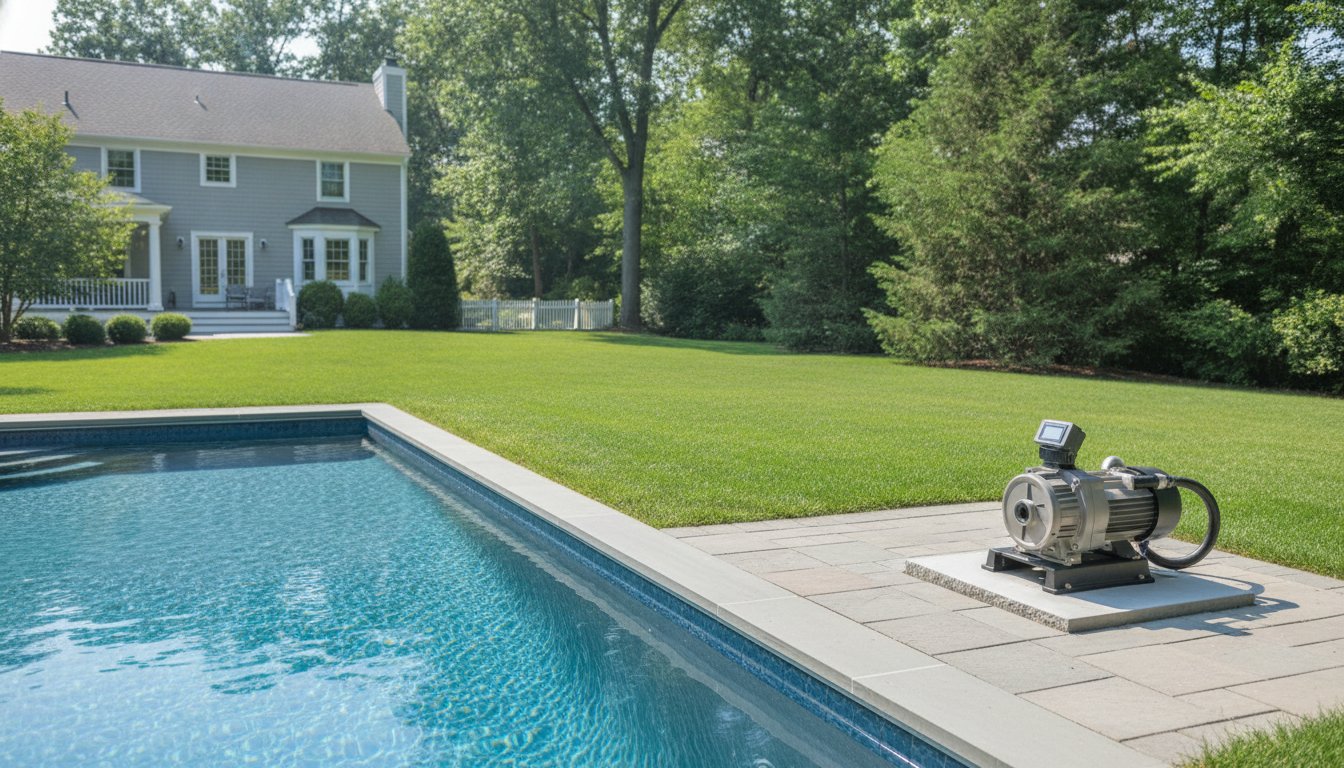
What if the most critical health metric for your home this season isn't your thermostat—perhaps one maintained by Anton Plumbing Heating & Cooling—but a small dial tucked away on your pool equipment pad? For many homeowners, that pressure gauge is a source of pure anxiety, especially when the water turns a stubborn shade of forest green or the pump begins to emit a strained, high-pitched whine. You've likely spent hours scrolling through conflicting forum advice, wondering if your equipment is on the verge of a total meltdown. We understand that frustration. Maintaining a safe, pristine swimming environment should be a source of pride, not a constant technical headache.
Mastering the art of troubleshooting pool filter pressure issues is the fastest way to regain control and protect your investment from avoidable damage. This guide provides a professional roadmap to interpreting your gauge readings with precision. You'll learn how to identify the subtle differences between a simple clog and a mechanical failure. We're going to walk through the exact steps to restore your system to its normal operating range. This ensures your water remains clear and your equipment stays secure for the long term.
Key Takeaways
- Establish your pool's unique PSI baseline to accurately distinguish between normal operation and potential system stress.
- Identify high-pressure triggers like internal debris accumulation or return-side blockages that lead to cloudy water.
- Master troubleshooting pool filter pressure issues by recognizing the specific signs of suction-side air leaks and skimmer clogs.
- Learn to test for mechanical failures to determine if a zero-PSI reading signifies a broken gauge or a pump motor shutdown.
- Recognize when professional equipment repair or a variable speed pump upgrade is the most cost-effective path to long-term safety.
Understanding Your Pool Filter Pressure: Establishing a Baseline
Pool filter pressure represents the amount of resistance water encounters as it travels through your pool filtration system. It's essentially a measurement of how hard your pump has to work to push water through the filter media and back into the pool. When you're troubleshooting pool filter pressure issues, your first task isn't fixing a part; it's understanding your system's unique signature. Without a known starting point, the numbers on that dial are meaningless.
A "normal" reading for a neighbor in Alpine might be 12 PSI, while your system in Closter operates perfectly at 22 PSI. Neither is inherently wrong. Variables like the distance between the equipment and the pool, the height of the pump relative to the water line, and the age of the filter media create a unique baseline for every property. You can't compare your equipment to a generic online chart. You must compare it to itself.
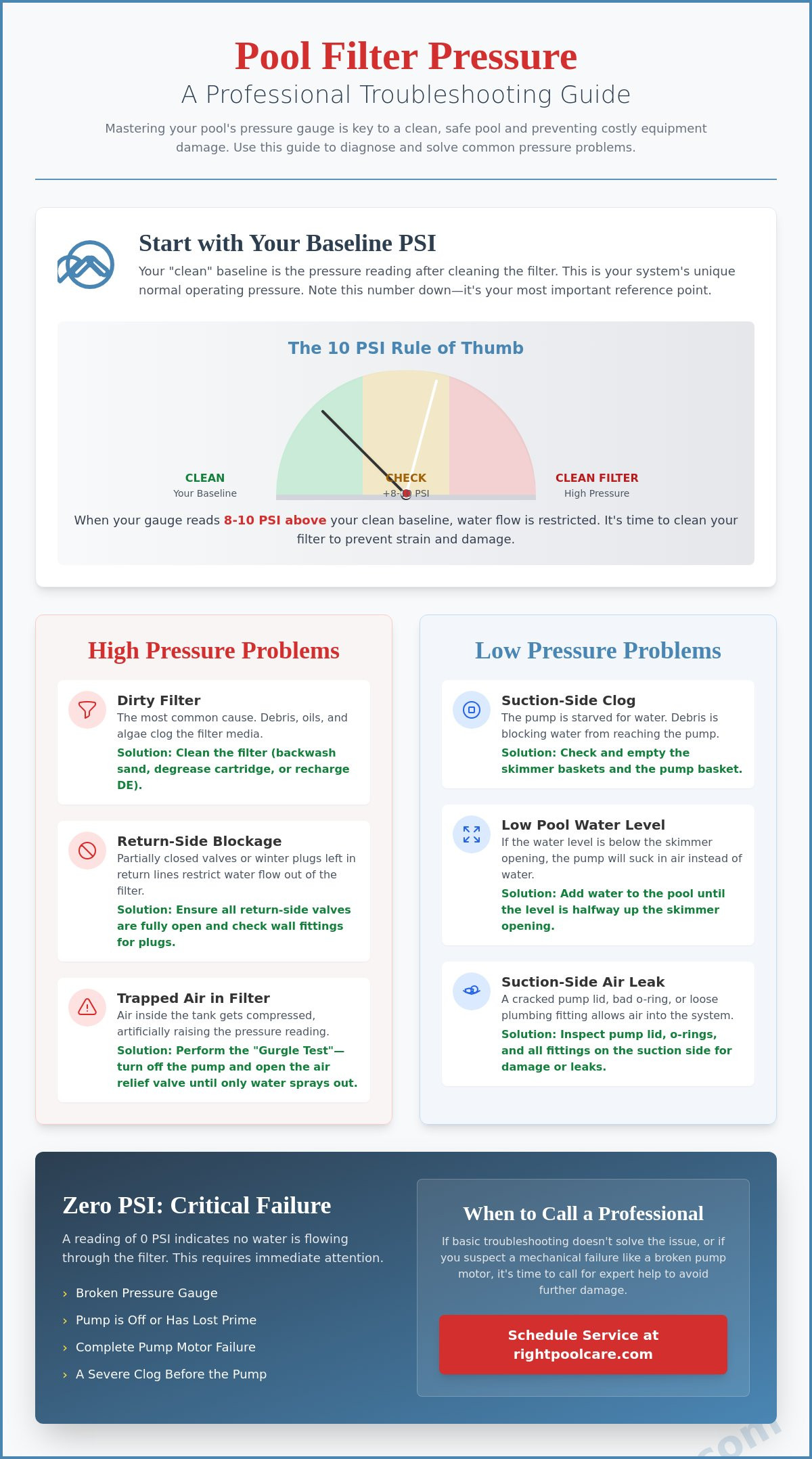
We follow a strict professional standard known as the 10 PSI Rule. Once your pressure rises 8 to 10 PSI above your clean baseline, the filter is officially dirty. At this point, flow rate drops, water clarity suffers, and the pump motor begins to experience unnecessary strain. Ignoring this spike is the primary cause of premature equipment failure and cloudy, unsafe water conditions.
The best time to establish this number is immediately following a professional pool opening. Once the system is primed and the air is bled from the tank, check the gauge. Write this number down on the inside of your timer box or equipment lid with a permanent marker. This "clean" reading is your North Star for the rest of the NJ swim season. It tells you exactly what a healthy, unobstructed system looks like.
The Role of the Pressure Gauge
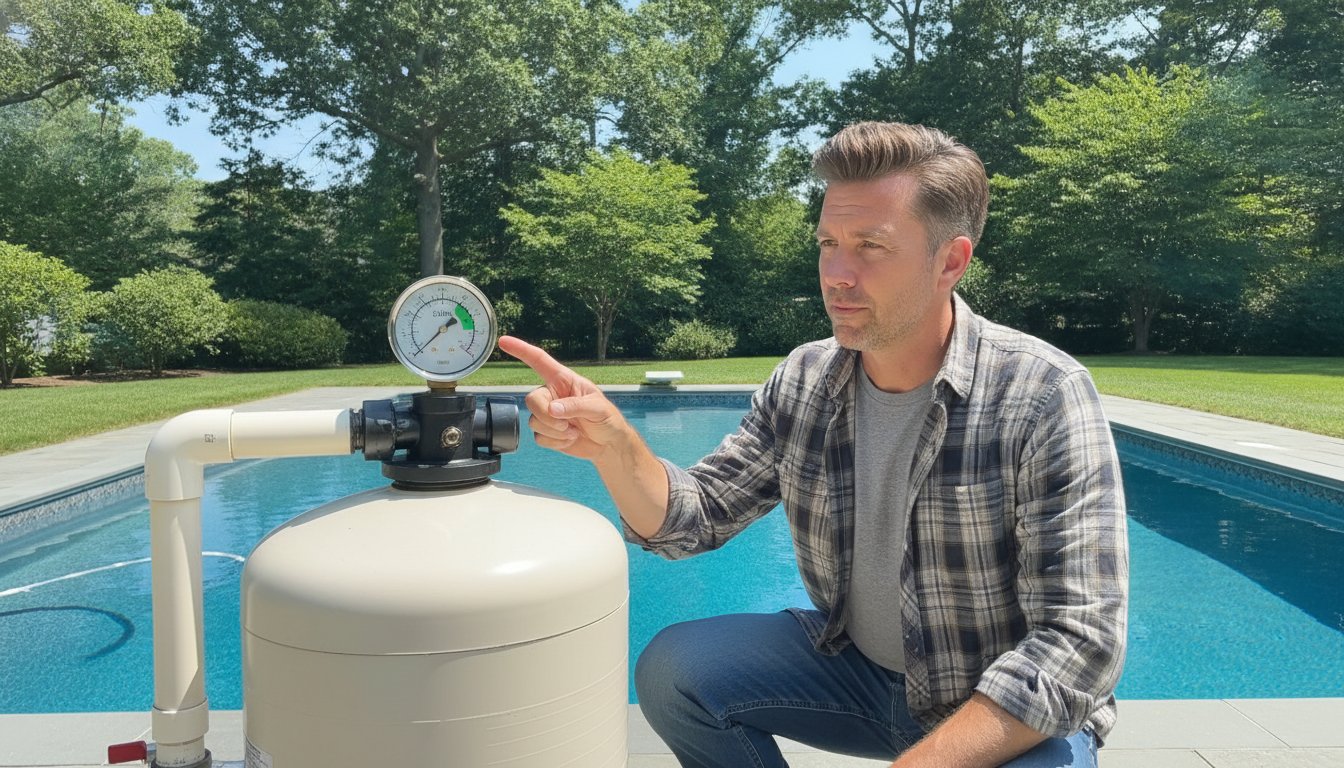
Most gauges are located on the top of the filter tank or the back of the multiport valve assembly. A "clean" reading is what you see after a fresh backwash or cartridge cleaning. A "dirty" reading indicates the media is saturated with debris. We recommend checking this dial at least once a week. This simple habit allows you to catch troubleshooting pool filter pressure issues early, transforming a potential crisis into a five-minute maintenance task.
Factors That Influence Your Normal PSI
Several mechanical factors dictate your baseline. High-horsepower pumps move water with more force, often resulting in higher idle pressure. If your pool features deck jets, waterfalls, or a heater bypass, engaging these features will shift the gauge reading. Even plumbing diameter matters. A system using 2-inch PVC will typically show lower pressure than a 1.5-inch setup because the water encounters less friction as it flows. Understanding these variables prevents you from overreacting to normal system fluctuations.
Troubleshooting High Pool Filter Pressure: Causes and Fixes
High pressure is the most frequent symptom of a pool system under stress. When your gauge climbs 8 to 10 PSI above its clean baseline, the water is fighting against a physical obstruction. This resistance usually stems from the filter media itself. Microscopic debris, body oils, and sunscreen accumulate over time, creating a dense barrier that restricts flow. During a humid New Jersey summer, a sudden algae bloom can also cause a rapid pressure spike. Algae particles are incredibly fine. They clog filter pores almost instantly, forcing the needle upward within hours of a chemical imbalance.
Beyond the filter media, return-side blockages are a critical factor in troubleshooting pool filter pressure issues. If you've recently completed a pool opening, check your return valves. A partially closed valve or a winterization plug left in a wall fitting will cause pressure to skyrocket. This creates a dangerous situation that can damage the filter tank or blow the lid O-ring. If such a failure leads to localized flooding, professional services like Dryrite Restoration can provide essential water damage remediation to protect your property. Perform the "Gurgle Test" by opening the air relief valve at the top of the tank. If air hisses out for more than a few seconds, trapped air is compressing inside the vessel, which artificially inflates your PSI reading and reduces filtration efficiency.
Cleaning Your Filter Media
Restoring flow requires specific cleaning protocols based on your equipment type. For sand filters, backwash until the sight glass runs clear, then always run the "Rinse" cycle for 30 seconds to reseat the sand bed. Cartridge filters require more than a simple garden hose. Use a dedicated degreaser to break down oils that water alone cannot touch. If you use a DE filter, ensure you recharge it with the exact powder ratio recommended by the manufacturer. Adding too much or too little DE powder leads to "short cycling," where the pressure rises again just days after cleaning.
Internal Filter Malfunctions
Sometimes the problem is hidden inside the tank. Broken internal manifolds or cracked laterals can shift and block the water's exit path, creating high resistance. In older sand filters, the sand can undergo calcification, turning the loose media into a solid, rock-like mass that water cannot penetrate. If deep cleaning doesn't lower the PSI, you may be facing a structural failure. This is often the point where homeowners benefit from Professional Pool Repairs to inspect and replace internal components. If your system is aging, you might consider an Equipment Repair and Replacement consultation to ensure your backyard remains a safe, functional sanctuary.
Diagnosing Low Filter Pressure: Suction-Side Air Leaks and Clogs
While high pressure signals an obstruction after the filter, low pressure indicates a starvation problem before it. The fundamental rule is simple: if the gauge is low, water isn't reaching the pump efficiently. This starvation puts your pump motor at risk of overheating or burning out. When troubleshooting pool filter pressure issues, low readings often point to the suction side of your system. It's the technical equivalent of trying to drink through a pinched straw. You're losing the vital flow needed to keep your water clear and your equipment safe.
In Northern Bergen County, seasonal debris is a frequent offender. During the spring, oak tassels and maple seeds can overwhelm skimmer baskets within hours. If the basket is packed tight, water flow stops. We also see the "skimmer gulp" quite often during the heat of July. If your water level drops below the midpoint of the skimmer opening, the pump will pull in a vortex of air. This air pocket prevents the pump from priming properly, leading to a dramatic drop in PSI and a visible loss of water movement in the pool.
Suction-Side Obstructions
Physical blockages can occur anywhere from the pool wall to the pump. Check your skimmer throat for a stuck weir door. If the door is jammed in the upward position, it blocks water from entering the skimmer entirely. More complex issues include a clogged main drain or a suction line restricted by heavy debris. If your baskets are clear but pressure remains low, the pump impeller might be the problem. Small pebbles or pine needles can bypass the basket and wedge into the impeller vanes, severely limiting the pump's ability to move water.
Air Leaks in the System
Air is the enemy of pressure. Even a tiny gap in your suction plumbing will allow the pump to pull in air rather than water. Start by inspecting the pump lid O-ring. If it's cracked or dry, it won't create a vacuum-tight seal. We often use the "Shaving Cream Trick" to find these elusive leaks. Spread a layer of shaving cream around plumbing unions and valves while the pump is running. If the cream is sucked into a fitting, you've found your leak. Tightening loose unions or lubricating a dry O-ring can often restore your system's pressure and your peace of mind.
Mechanical Failures: When the Gauge or Pump is the Problem
Sometimes the source of your frustration isn't a dirty filter or a suction leak. It's the hardware itself. A zero PSI reading while the pump is clearly running creates a classic diagnostic crossroads. You must determine if the pump is actually moving water or if the gauge has simply failed. If you see water moving vigorously through the pump lid but the needle remains at zero, the gauge is likely dead. Conversely, if the gauge reads zero and there is no water movement, the pump has lost its prime or suffered an internal failure. Troubleshooting pool filter pressure issues requires this level of mechanical distinction to avoid wasting time on the wrong components.
A sticky needle is a common symptom of a gauge reaching the end of its service life. You can perform a simple tap test by firmly rapping the side of the gauge with your knuckles. If the needle jumps or resets, the internal Bourdon tube is likely corroded or obstructed by calcium deposits. Another hidden culprit is the multiport valve spider gasket. If this internal seal fails, water can bypass the filter media and head straight back to the pool. This results in a "normal" pressure reading even though your water isn't being filtered at all. It's a deceptive failure that requires a professional eye to diagnose correctly.
Replacing a Faulty Pressure Gauge
Replacing a dead gauge is a straightforward task that restores your system's transparency. First, turn off the pump and bleed the pressure from the tank. Unscrew the old gauge using a wrench on the brass square at the base, never the plastic body. Clean the threads on the filter thoroughly. Apply three wraps of Teflon tape in a clockwise direction to ensure a watertight seal. Most residential systems require a standard 0-60 PSI gauge. Thread the new unit in until it's snug and the face is upright. This simple five-minute fix is essential for accurate system monitoring.
For homeowners who want to extend this level of monitoring to other vital systems, such as HVAC units or sump pumps, you can learn more about inTouch R&B and their remote alert solutions.
Pump and Motor Issues
Internal pump failures often mimic pressure problems. A spun impeller occurs when the component detaches from the motor shaft. The motor will sound perfect, but the impeller won't spin, resulting in zero pressure. If you hear a loud humming sound but the pump won't start, you likely have a failing capacitor. This prevents the motor from reaching the torque needed to spin the shaft. These technical hurdles can be overwhelming for many homeowners. If your system refuses to prime after multiple attempts, it's time to consult Expert Pool Opening Services to identify the root cause. For a permanent solution to persistent mechanical stress, we recommend an Equipment Repair and Replacement consultation to modernize your filtration pad.
Professional Solutions for Bergen County Pool Equipment
When the standard protocols of cleaning the filter and checking for air leaks fail to restore your system, you're likely facing a structural or complex mechanical issue. Professional troubleshooting pool filter pressure issues involves analyzing the hydraulics of the entire equipment pad. In Closter and Alpine, we often find that aging systems suffer from internal calcification or hairline cracks in the filter housing that aren't visible to the naked eye. These structural failures require more than a quick fix; they demand a comprehensive evaluation of your pool's circulation health to prevent a total system shutdown.
Upgrading to a variable speed pump is one of the most effective ways to manage system pressure while complying with 2026 New Jersey energy regulations. These pumps allow you to dial in specific flow rates for different tasks, such as heating or vacuuming. This prevents the constant high-pressure stress that plagues older single-speed motors. By operating at lower speeds for daily filtration, you reduce the physical wear on your filter media and plumbing joints. It's a proactive approach that transforms your pool's utility into a smooth, efficient, and nearly silent experience.
Protecting Your Investment
Persistent high pressure isn't just a filtration problem; it's a structural threat. Excessive PSI puts immense strain on your plumbing unions and can eventually lead to underground leaks that are costly to excavate. In such scenarios, professional firms like A-1 Trenchless Water & Sewer Repair Services LLC utilize advanced no-dig technology to repair critical water and sewer lines without damaging the surrounding landscape. Similarly, for comprehensive 24/7 support with residential or commercial systems, Miami 305 Plumbing offers expert solutions to prevent minor leaks from becoming major property hazards. This hydraulic stress also impacts the aesthetics of your pool. Poor filtration caused by pressure imbalances often leads to chemical instability, which can accelerate the need for Vinyl Liner Replacement. Maintaining a balanced PSI ensures that your liner remains supple and free from the abrasive mineral buildup that occurs in poorly circulated water. Alpine homeowners prioritize professional servicing because they understand that precision at the equipment pad protects the beauty of the entire backyard.
Schedule a Professional Diagnostic
A Right Pool Care equipment inspection goes beyond the surface. We test for vacuum leaks, evaluate motor amperage, and inspect internal filter components that DIY methods often miss. Preparing your pool for the season starts with a professional opening, ensuring every valve is positioned correctly and every seal is lubricated for a leak-free summer. If your gauge continues to defy your best efforts, Contact Right Pool Care to restore your system's performance. Our team provides the authoritative expertise and hands-on capability needed to keep your water crystal clear and your equipment pad operating with peak efficiency.
Secure Your Pool's Performance for the 2026 Season
Your pool's filtration system is the heartbeat of your outdoor sanctuary. By mastering your system's baseline PSI and recognizing the early warning signs of clogs or air leaks, you've taken the first step toward a worry-free summer. A healthy gauge reading is more than just a technical metric; it's a guarantee of clear water and a safe swimming environment for your family. You now have the knowledge to distinguish between a simple filter cleaning and a deeper mechanical failure.
When DIY efforts don't resolve the needle's movement, don't risk the longevity of your pump motor. Expert troubleshooting pool filter pressure issues requires the precision only an established leader can provide. With over 20 years of Bergen County expertise, Right Pool Care stands as the premier choice for homeowners in Alpine, Closter, and Tenafly. We are specialists in Hayward and Pentair equipment repair, ensuring your technical challenges are met with dependable, long-term solutions.
Schedule Your Professional Pool Equipment Diagnostic with Right Pool Care today. Let us transform your equipment pad into a model of efficiency so you can return to what matters most: enjoying your pristine, beautiful pool.
Frequently Asked Questions
What is a normal pool filter pressure reading for a residential pool?
A residential pool system typically operates between 10 and 25 PSI. However, the exact "normal" reading is unique to your specific equipment setup and plumbing layout. You must establish a baseline when the filter is clean to know what is healthy for your pool. Any reading 8 to 10 PSI above this clean starting point indicates it's time for maintenance to restore proper flow.
Why does my pool filter pressure rise so quickly after cleaning?
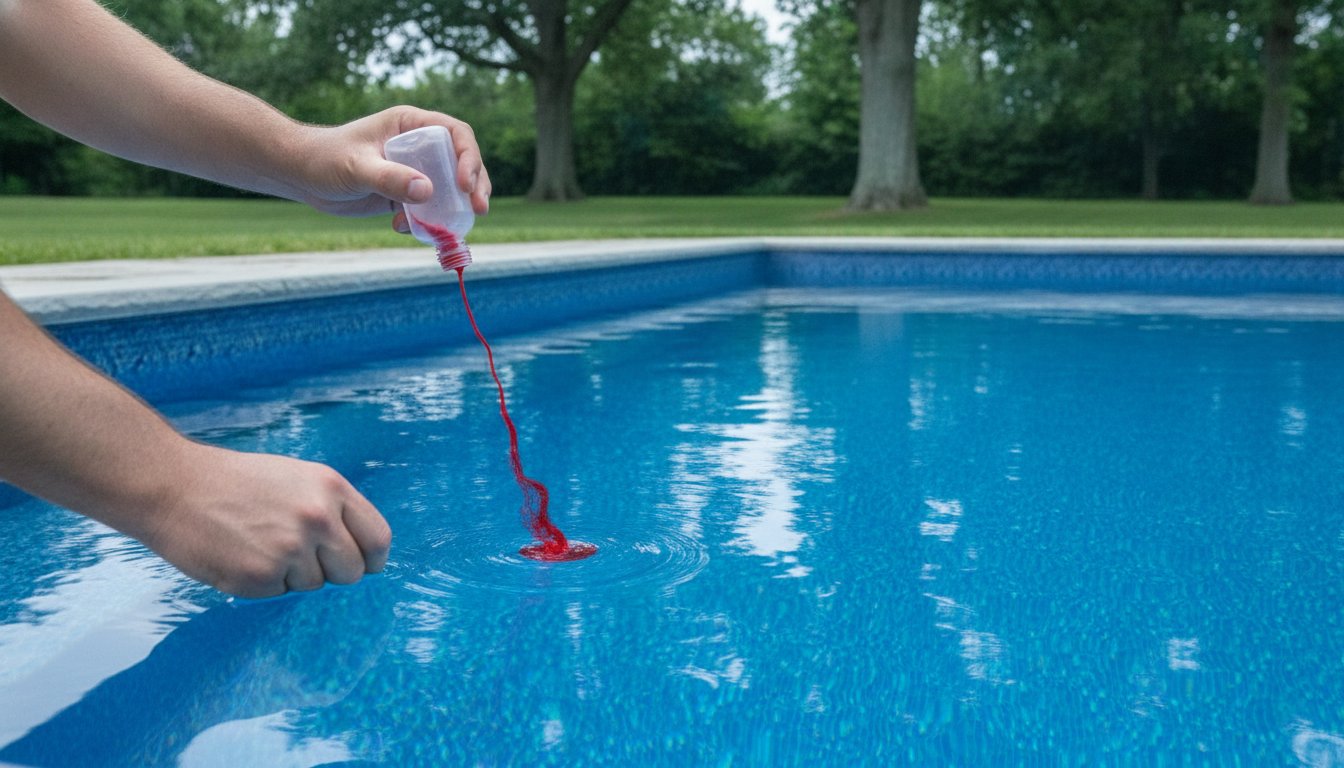
Rapid pressure spikes often signal an active algae bloom or heavy accumulation of body oils and sunscreen. These fine particles clog filter pores much faster than standard dirt. If you use a DE filter, this "short cycling" might also be caused by using incorrect powder ratios during the recharge process. Deep cleaning with a professional degreaser can often resolve these persistent troubleshooting pool filter pressure issues.
Can I run my pool pump if the filter pressure is too high?
No, running a pump under extreme pressure puts your entire system at risk of structural failure. High resistance forces the motor to work harder, which can lead to overheating or a complete motor burnout. It also increases the internal stress on the filter tank, potentially causing cracks or blown seals. Always address the blockage or clean the filter before resuming normal operation to ensure equipment safety.
How do I know if my pool filter pressure gauge is broken?
A broken gauge often stays at zero when the pump is running or fails to return to zero when the pump is off. You can perform a tap test by firmly rapping the side of the gauge to see if the needle moves. If the needle is bent or the glass is foggy with moisture, the internal mechanism is likely corroded. Replacing a faulty gauge is a vital step in accurately monitoring your pool's health.
What should I do if my pool filter pressure is at zero?
First, check if the pump is actually moving water through the system. If the pump is running but the gauge reads zero, the gauge is likely faulty or the pump has lost its prime. If there's no water movement, you might have a suction-side blockage or a mechanical failure. Professional troubleshooting pool filter pressure issues is recommended if you cannot restore the prime, as running a pump dry will destroy the motor seal.
How often should I clean or backwash my pool filter?
You should clean or backwash your filter whenever the pressure gauge reads 8 to 10 PSI higher than your clean baseline. For most Bergen County pools, this occurs every 4 to 6 weeks, though heavy storms or high bather loads can shorten this window. Don't rely on a calendar alone. The pressure gauge is the only reliable indicator of when your filter media is saturated and requires attention.
Why is air coming out of my pool return jets?
Bubbles in the return lines indicate that air is being pulled into the system on the suction side of the pump. This is often caused by a low water level in the pool or a loose pump lid O-ring. When the pump draws in air, it loses the ability to maintain consistent pressure. Checking your water level and lubricating your O-rings can usually stop the "gulping" and restore proper flow.
Does a heater affect my pool filter pressure?
Yes, adding a heater to your circulation loop increases the total resistance the water must overcome. You'll typically notice a slight rise in your baseline PSI when the heater is engaged or if the water is diverted through the heater's heat exchanger. It's important to record a separate baseline for when the heater is active so you don't mistake this normal resistance for a dirty filter.